Brand new high-performance window for the trade from Reynaers

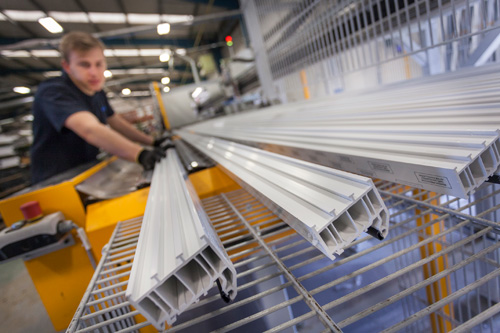
Leading aluminium systems company Reynaers has launched a brand new window for the trade. Designed specifically to meet the needs of UK homeowners, its new Slimline 68 window offers a perfect combination of exceptionally slim frames and the highest levels of performance. Perfectly complementing both contemporary and traditional styles of property, the Slimline 68 window is stylish and timeless in its design. With sleek, clean lines, these windows can transform the appearance of any home, adding value to the property while also making it warmer, brighter and more secure.

Rebecca Cope, Marketing Manager at Reynaers, said: “This window is the first of its kind for Reynaers, in line with our increased focus on the trade market. Whilst Reynaers prides itself in offering specialist and innovative products, we identified a need for a high-quality and high-performance standard casement-style window that will suit the needs of homeowners across the UK. The aluminium SL 68 frames are available in hundreds of colours and combinations, with a choice of handles to suit each individual project. This personalisation makes SL 68 an attractive alternative to the generic uPVC household window systems, with frames that are slimmer, more durable and with a luxury feel.”

SL 68 is designed to offer the ultimate in flexibility. The strength of the aluminium frame and the clever design make it possible to create windows with surprisingly large panes of glass. These factors combined with its ease of maintenance and durability make it the perfect window for homeowners concerned with quality and performance. Available in a huge range of design options, the SL 68 also has industry-leading thermal insulation, weather resistance and security. With triple glazing, a U-value of 1.0 W/m2K and a Window Energy Rating (WER) of A++ can be achieved. With double glazing, the U-value can go down as far as 1.4 W/m2K and an Energy Rating of A. SL 68 security meets PAS24 and Secured by Design standards, as well as achieving Class 4 air tightness. The window has a wind-resistance rating of E2400, and water-resistance of E1050. As the name suggests, SL 68 has a frame depth of 68mm, and can carry a maximum glass thickness of 43mm.

Reynaers’ impressive selection of doors, together with this latest offering means that fabricators and installers are able to choose from a range of trade products of exceptional quality and performance.

The post Brand new high-performance window for the trade from Reynaers appeared first on Windows Active Magazine.

How Much Is A Good Wage In This Industry?

To attract new blood to this industry, money is often used as a way to tempt people into a career in the fenestration industry. There are though varying rates, depending on what you do, your age, your position within the company etc. There are perks for some, but not perks for all. The debate around what is a fair wage is omnipresent in this country.

But what is a fair wage in this industry? What should we be getting paid? How much do you think you are worth? I’m not talking about those in the highest positions. But of those on the ground, doing the selling to home owners and installation. The ones that literally keep the industry moving.

What is a good day rate?

From a fitting point of view, this is where (in theory) the better the money the better talent you can attract to your business. Especially now, given that the talent pool seems to get shallower every year.

Many fitters are still self employed. A few are employed, but this isn’t the norm. Not yet anyway. For those that are self employed, fitting as much as you can during the working week is vital. Many get paid per item fitted, so from a fitter’s perspective they want the company they are working for to sell as many house fulls of windows and doors as they can!

As a daily average though, what should they be coming out with? I know that geography, which part of the country they are living in, is going to have an influence. What should it be though? £100 per day? £150? £200? It’s worth remembering if they are self employed that they will have to take off tax, fuel, van running costs etc. £150 per day can easily be whittled down to £100 when you take all of that into account. In a five day working week is £500 enough? Considering the work involved, I think that’s on the low side. If you’re down south, where living costs are higher than where I live in Wakefield, £500 per week probably is going to get you very far.

What about sales staff? Those who go into people’s homes and try to convince them to spend their hard earned cash with them. It’s nowhere near as physically difficult as the installations side, but it is mentally draining. You work unsociable hours, spend hours in front of screens. A wage isn’t always known either. Those who are employed are most likely on a low basic wage which then has to be topped up with commissions. Security to some degree, but not ideal if you’re going through a dry patch.

Sales people’s wages are calculated on a yearly basis? So what is a good wage for a sales person selling to the general public in the residential sector? £25k per year? £30k? £35k? More? My guess is the average lies somewhere around the £30k mark. That’s £2500 a month, £625 per week. The average yearly wage in the UK is £27,195 for some perspective.

Do I think these amounts are enough? Probably not. Do I believe that we should be doing something to raise wages? Yes. But we’re at a tipping point right now in the industry, and I don’t think we can afford it.

Pay is on the low side

Generally I think fitters, sales people, reps for fabricators etc are underpaid to some degree. I think fitters and sales people suffer the worst. I’m not saying they are badly paid, but I reckon there is room to push things north.

Problem is, we’re in a period in our industry right now that is struggling with major price increases coming in from every direction. Certain demographics appear to be slowing their spending on new windows and doors. Uncertainty around Brexit. It’s not the time to be raising wages as it would be home owners who would have to pay for it and they are particularly sensitive to price increases right now.

Long term though our industry is going to have to raise it’s pay if we are to attract the talent we already desperately need to fill the many gaps that are forming. We will never attract the right people if the pay isn’t good enough, it’s as simple as that. It’s OK for people to be passionate about fenestration, be skilled, be very good at what they do. But if they’re not getting in wages what they believe to be worth then they are going to go elsewhere.

I would love to hear from you on this subject. Are you a fitter and think you should be paid more? Are you being paid the right amount? Are you in sales but believe you are worth more than what you are getting already? You can leave comments anonymously via the section below if you wish, but all thoughts and feedback on this are welcome.

New door styles help Safedoors’ popular Diamond Range shine

Following success with their premium Platinum Range of composite doors, leading door manufacturer Safedoors is adding new door styles to their popular Diamond Range of high-insulation foam core composite doors. The new door styles are designed to guide homeowners through the range and help them to find a door that matches their property and their tastes. Whether it the Traditional style of the Aintree or the Cheltenham which expertly replicates the classic design of timber, the more Contemporary style of the Plumpton with modern glazing options or the Heritage style of the Cottage or the Chepstow. The new styles aim to highlight the vast choice available in the extensive Diamond Range.  “We have seen great success with our new door styles for the Platinum Range, providing even the most discerning homeowner with a vast array of options and choices. We wanted to add that option to our Diamond Range,” comments Sharn Samra, Marketing Director at Safedoors. “Adding the Traditional, Contemporary and Heritage styles along with recently an extended choice of colours, design options and hardware, gives not only our installers an even stronger product to sell but a range of products that can match any property.”

Safedoors have enhanced their Diamond Range of composite doors following demand from installers and customers. They are now available in a further six colours including Aubergine, Duck Egg and Anthracite Grey, and in two new designs; Ascot and York.  The doors can be customised further with an extended range of hardware and glass options. Everything from handles and letter plates to knockers and numerals can be chosen, meaning customers can create a bespoke door to stand out from the crowd or compliment their property.  “Our composite door range allows installers to reach both ends of the market with a superb composite door,” concludes Sharn. “Whether consumers are looking for a timber core, premium composite door or a highly-efficient and durable, foam-core composite door, both the Platinum and Diamond ranges offer a wide range of choices and designs.”

Worcestershire-based Safedoors specialises in high-quality timber and foam core composite doors for the trade market. Building a strong reputation and drawing knowledge and experience from sister company Permadoor – one of the original composite door manufacturers in the new-build and social housing sector, Safedoors has become a trusted partner of installers across the UK.

The post New door styles help Safedoors’ popular Diamond Range shine appeared first on Windows Active Magazine.

Emplas commits £1.4m to machinery investment

Emplas has continued its major investment programme with a £1.4million spend on new machinery – giving it a total output capacity of 2,500 frames on a single shift.

This includes the purchase of a new Rotox eight-head welder and cleaning line, giving Emplas two fully automated lines.

It’s also invested in a new Rotox high speed sash cleaner, increasing sash output by more than 20% and a Rotox five-head inline welder, giving Emplas a total of three five-head welders and one four-head welder.

A second Rotox crucifix welder is also added to Emplas’ machinery inventory, as are two new Rotox bead lines and a second Schirmer machining and cutting centre.

This automates profile cutting and machining, with profile scanning technology to introduce ‘pin prick’ accuracy to positioning of cuts and routs to within 0.3mm. It delivers improved product quality but able to convert a 6m bar length into a fully prepped frame within seconds, it also massively increases Emplas’ production capacity.

Ray Sinclair, operations director, Emplas, said: “The investment we’re making gives us more capacity but it also allows us to drive continuous improvements in our product quality and service.

“We’re looking to grow but to grow sustainably and that means investment in our manufacturing capability, the increased accuracy, efficiencies and productivity that new machinery gives us, allows us to not only improve end quality of product but lower our own overheads and mitigate material costs, benefits, we’re passing directly on to our customers.”

In addition to machinery investment a major extension of Emplas’ operational hub is already well underway. Scheduled for completion in the autumn, it will give the fabricator 18,000 sq ft of additional floor space.

Adding around a third again to Emplas’ manufacturing facility, the new development will also house loading bays and offices.

This investment in machinery and square footage has also been underpinned by a corresponding investment in its IT infrastructure, linking production to its ordering processes, customer tools, as well as increasing visibility of production to Emplas customer services teams.

Sinclair added: “We’re working to improve our workflows, our product quality and the visibility of those processes within our own organisation but also to our customers.

“The machinery investment that we’re making is important but only a part of that wider story. We’re connecting everything, allowing us to deliver ever improving standards of product quality but also improved service to our customers.”

www.emplas.co.uk

The post Emplas commits £1.4m to machinery investment appeared first on Glass & Glazing Products Magazine (GGP).

Pelmets Just Got Quicker!

Synseal Group says it has launched the quickest and easiest to install variable pelmet on the market. Available for their K2, Global and Celsius Solid Roof systems, this refreshingly simple-to-use product gives their roof installers the edge in getting quality installations completed quickly.

The new variable pelmet system covers pitches from 12.5° to 35° and depths ranging from 300 to an impressive 1100mm, giving customers the flexibility to create the right look for every space.

The pelmet has been designed from the ground up to adapt to every roof configuration, and easily accommodates varying roof pitches and valleys seen in P and T-shaped conservatories. This highly adaptable product comes fully prepped, ready for screwing in place – enabling installations to be done in record time with minimal fuss.

Phil Parry, Head of Research and Development at Synseal Group, said:

“Our new variable pelmet gives our conservatory and orangery roof customers more flexibility to design rooms exactly to their customers’ specifications. Previously customers were limited by only being able to work with equal pitches, so we have designed a variable pelmet which is better suited for Victorian and P-shaped conservatories where pitching may vary.

“We are confident that roof customers are going to appreciate the introduction of a variable pelmet which is quicker and easier to fit than market competitors and also comes at a more affordable price. There’s no reason not to give it a try!”

To find out more information about the new variable pelmet please call 01623 444390 or email info@synseal.com.

29

Winkhaus’ aluPilot Saves Aluminium Window Fabricators Time And Money

The innovative aluPilot fitting system from Winkhaus saves aluminium window manufacturers time and money by making the fabrication process more production-friendly and efficient, says the company.

Fabricators can save up to 10 minutes’ production time per window compared to the traditional systems available on the market, according to the company’s calculations.

Multiply those 10 minutes saved per window across weekly production of several thousand windows, for example, and those time savings really start to add up, significantly reducing production costs of the entire window.

Mike Rushen, Winkhaus UK’s National Sales Manager says: “In manufacturing, time really is money. Tests conducted with manufacturers during aluPilot’s development and ensuing roll-out to European systems houses have confirmed these savings.

“aluPilot suits all types of applications, both commercial and residential. Designed as the aluminium window manufacturer’s ‘friend’, it reduces costs through efficient installation.”

Four key concepts – fastening, tooling, innovative design and handling – plus a combination of factors are behind the 10 minutes’ time-saving.

WH_aluPilot_FensterThe fastening concept uses fewer screw positions, which means all the hardware parts can be joined to the sash outerframe using ‘clamp and clip technologies’. The screws don’t enter the profile, so securing components with clamps and clips makes fabrication much faster.

Connecting the sash components are drive rods, which are available in seven fixed lengths.

This eliminates preliminary work steps, such as punching and cutting connecting rods to length. All the main parts arrive already pre-assembled, so these can be installed straightaway in the window.

The aluPilot tooling concept eliminates production steps associated with inserting hardware. Two screwdrivers and an installation lever are all that’s required to install and adjust the components, so no need for time-consuming and costly machines, such as punches.

Thanks to innovative design, fitting components are installed frontally into the fitting groove of the sash or frame without the need to punch out the sash groove. As the fixed lengths are delivered cut to size, all components are simply slid into place.

Finally, there’s much less handling involved during installation as pre-installed components reduce the number of parts in a set of fittings by up to 25%. Everything is supplied pre-assembled to the manufacturer’s bespoke requirements.

Winkhaus aluPilot caters for all types of aluminium window – left or right-hung, with visible or invisible hinges and all the tilt and turn, tilt before turn or turn only options. The standard hardware can take 130 kg sash weight on the invisible hinges (or top-hung style) and can be upgraded up to 180kg. The Concept range, on visible hinges, can take 130kg. Giant, the  new upgraded range, accepts 200kg on a tilt and turn window or 300kg turn only on visible hinges.

Mike adds: “We at Winkhaus see ourselves as a partner working with system houses to make their lives easier. aluPilot is a very easy and simple system to work with. Each systems house can truly have its own bespoke window – each one saving 10 minutes to make!”

For more information, visit www.winkhaus.co.uk, contact Winkhaus on 01536 316091 or email marketing@winkhaus.co.uk.

29

CONSORT CONVERTS HOSPITALITY BUDGET INTO CHARITABLE CHANGE

Picture above:  Jo Reynolds (left), manager of Derbyshire Victim Services meets with Consort’s Jeff Dunn (right).

Consort Ltd is making a positive difference to the lives of disadvantaged people in and around its home town of Nottingham by reassigning money previously budgeted for corporate hospitality.

The fabricator, which has long manufactured PVC-U window systems from the UK’s leading supplier VEKA Group has supported charities such as Emmanuel House – a centre for homeless people – and Fists up for Frankie; a campaign that funds treatment for neuroblastoma (an aggressive form of childhood cancer).

Jeff Dunn, Sales and Marketing Director for Consort explained: “Changes in the law introduced in 2010 left many companies questioning what forms of expenditure would subsequently be considered ‘corporate hospitality’ and what would be seen as ‘bribery’. We chose to avoid any such confusion and instead donate our hospitality budget back into the community that has contributed so much to our success since the company was established in 1950.”

Every year, Consort allocates a sizeable donation to worthy causes. This money would previously have been earmarked for corporate gifts and entertainment.

Jeff continues: “Besides helping to support the most vulnerable and marginalised citizens in and around Nottingham, we are also raising the profile of organisations that rely purely on fundraising and donations to continue their work. Emmanuel House for example, is a recognised cause in the area with a visible presence through its charity shop, but nevertheless receives no statutory funding. Conversely, some of the charities we support do not have the profile that Emmanuel House enjoys, making fundraising even more of a challenge.

“As part of this year’s budget, we have donated £600 to Remedi; a charity that provides restorative services for people affected by conflict in various settings, throughout the midlands and the north. We always ensure though, that our donations make a positive difference for people in our area, so in this case, it has been used to support people in Derbyshire to cope and recover after being victims of crime.

“We have a loyal customer base who rely on Consort for quick and efficient service and industry leading systems from VEKA Group. Every Christmas, we send each of them a letter, thanking them for their continuing support and updating them on the charity donations we have made that year. We like to think that this gives them a ‘share’ in doing something worthwhile for the community, and we’ve received no complaints for redirecting our budget in this way. Many customers have actually done something similar. We look forward to working with more local charitable organisations in the years to come, and making a difference for people who need it the most.”

To learn more about Consort Ltd, visit www.consortwindows.com

Weakest upturn in UK construction output for 12 months in August

August survey data indicated that the UK construction sector continued to experience a ‘slowdown’ this summer. Reduced levels of commercial work were a key source of weakness, which offset robust growth in residential building.

There were also signs of a sustained ‘soft patch’ ahead, with new business volumes falling for the second month running. Survey respondents linked subdued demand to reduced business investment and heightened economic uncertainty. As a result, construction firms exerted greater caution in terms of their staff hiring, with employment numbers rising at the slowest pace since July 2016.

At 51.1 in August, the seasonally adjusted IHS Markit/CIPS UK Construction Purchasing Managers’ Index (PMI) remained above the 50.0 no-change threshold for the twelfth month running. However, the latest reading was down from 51.9 in July and pointed to the weakest overall UK construction performance since August 2016. A key reason for the slowdown was reportedly a lack of new orders to replace completed projects, according the survey respondents.

Residential building was the only area to buck the overall trend in August, with housing activity found to be rising at a robust and accelerated pace since the previous month. Meanwhile, civil engineering activity was found to be ‘close to stagnation’ and commercial work is said to have dropped at the fastest pace since July 2016. Reports from survey respondents widely suggested that concerns about the UK economic outlook had weighed on the commercial development sector, with clients opting to delay spending decisions and, in some cases, scale back planned projects.

Total new order volumes dropped for the second month running in August, although the rate of contraction was only marginal and slower than seen in July. Survey respondents continued to cite reluctance to commit to new construction projects, linked to general economic uncertainty and less favourable market conditions.

On a more positive note, cost pressures were the weakest since September 2016. Survey respondents noted that exchange rate depreciation continued to drive up prices for construction materials, but some commented on successful negotiations with suppliers against a backdrop of softer market conditions.

Duncan Brock, director of customer relationships at the Chartered Institute of Procurement & Supply, said: “The sector hit a roadblock this month as purchasing activity slowed for the third month and new business wins were hard to come by. Reduced government spending, economic uncertainty and Brexit-delayed decision-making among clients were largely to blame.

“The struggling commercial sector drove this disappointment, languishing under the pressure with the fastest drop in activity in over a year. Job creation was nothing to shout about and showed signs of a slowdown, as companies reined back additional spending.

“But any further drag on the construction sector overall was halted by the continuing strong performance by housebuilders, defying expectations with a good month. The sector was also offered some respite from the ongoing march of rising prices as input price inflation weakened.

“This good fortune in prices is unlikely to continue as suppliers scrabble to match the demand for an increasing number of materials in short supply and delivery times lengthened. Price rises will become inevitable if builders have to compete to get what they need.

“In the near-term future, without those new orders waiting in the wings, the performance of the construction sector is likely to continue to be downbeat.”

www.markit.com/product/pmi
www.cips.org

The post Weakest upturn in UK construction output for 12 months in August appeared first on Glass & Glazing Products Magazine (GGP).