
THINKING ARSON IN THE WORKPLACE
Jane Embury is marketing director at Wrightstyle, the advanced glazing systems supplier. She points out the USA has a National Arson Awareness Week, this year in May, and suggests that we should follow suit.
It’s a crime that we tend not to think about because, we assume, it’s relatively rare and could never happen to us.
However, The Arson Prevention Forum estimates that the annual cost of arson in England alone could be as high as £1.45 billion.
Nor is arson as rare as we’d like to think. The latest fire statistics suggest that 47% of all fires attended by fire and rescue services in England were classed as deliberate.
That means that over 76,000 fires in England in 2016/17 were set deliberately. Since 2004, the number of deliberate fires has increased by 11%.
Depressingly, the long-term trend which saw deliberate fires reducing has been on an upward curve in both 2015/16 and 2016/17.
The headline fact is that the total number of deliberate fires increased by 17% last year, the highest number in the past five years.
It’s also an expensive business for companies. In 2015, the average fire claim was £25,544, a 165.4% increase since 2004.
But the cost can be much higher. In February this year, fire caused significant damage to Nottingham railway station. It took ten fire crews to bring under control, closed the station, and a 33-year-old woman was arrested on suspicion of arson.
Grenfell Tower has had an impact. For example, as a result of some local risk assessments conducted following the disaster, some additional car parking and refuse storage restrictions have been introduced.
The fact is that arson is a crime that every business should guard against because the average arsonist, leaving aside insurance fraud, is someone looking for a thrill – or out for revenge. The main age for offending is mid-teens, and they’re mostly opportunists.
Cutting off those opportunities is therefore a good strategy, and starts with a fire safety risk assessment looking at every aspect of the business, not least how materials are stored and what fire precautions are in place. An arson risk assessment should be carried out as part of the fire safety risk assessment procedure required by the Regulatory Reform (Fire Safety) Order 2005.
It means securing the perimeter of the building, with entry restricted, and all outbuildings secured when not in use. Combustible materials should not be left piled up, and never left near to windows or doors.
Apart from those sensible precautions, companies should include arson prevention in regular basic staff training. An organisation’s attitude towards fire safety issues greatly influences the attitude of its staff.
The Arson Prevention Forum emphasises that many companies targeted by arson attack go out of business – so having a plan of action and a business continuity plan should be front of mind for every business owner.
The fact is that some 80% of firms without a business continuity plan will be bankrupt within five years of surviving a major disaster. That plan should be contain every piece of information needed to allow a company to resume trading as quickly as possible.
But if a fire breaks out, it doesn’t immediately matter if it was started deliberately or not. The important thing is to get everybody in that building to safety. The fire risk assessment should, of course, have addressed each issue in the evacuation process.
For example, occupants in a building should generally be able to escape away from the fire. That means having escape routes protected by fire-resistant materials or self-closing fire doors. It also means recognising that fire travels upwards, so that stairways must also be protected.
It also means having exit doors that open outwards to make escape easier and, if there are large numbers of people, minimising the crush risk. (Exterior fire doors should also be checked to ensure that obstructions, such as bulk deliveries, aren’t cluttering them up).
Where possible, it means making escape routes as short as possible, with clear signage, and building in planned (and rehearsed) contingencies for evacuating the elderly or infirm. It also means planning for electricity failure and how to evacuate people in darkness.
At Wrightstyle, our business is about managing fire risk. Our systems stop fire, smoke and toxic gases from spreading for up to 120 minutes – minimising fire damage and allowing occupants to escape.
Our compatible systems, with the glass and steel framing systems tested together, are accredited to EU, US and Asia Pacific standards and our advice is to always specify the glass and steel as one unit.
In a real fire situation, the glass will only be as protective as its frame, and vice versa. Specify each component separately, and you run the risk of one failing – and therefore the whole fire protective barrier failing.
Arson isn’t an issue that we like to think about, but it’s a surprisingly common crime that can, and does, devastate lives and livelihoods.
The USA has a National Arson Awareness Week, this year in May. Perhaps it’s time that we followed suit.

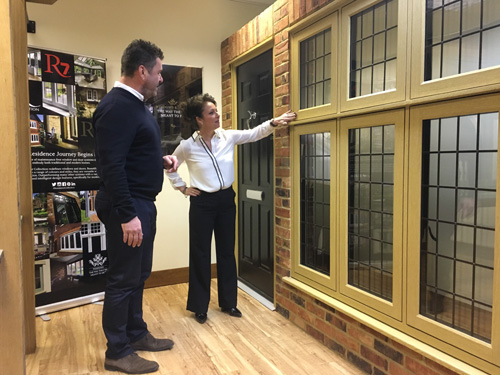 Essex-based Window Tech Trade has ceased production of 400 standard PVC-U window and door frames each week, to solely focus on the manufacture of The Residence Collection.
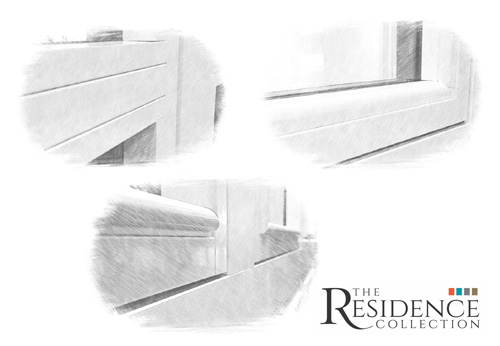 The Residence Collection are said to be experiencing an increase in trade enquiries, thanks in no small part to the integrated nature of the profiles and glazing beads, along with product availability in single lengths. It’s also a system that’s supported by reportedly one of the strongest marketing programmes in the sector.
Recent Comments