GGF lifetime achievement award

To continue its 40 year celebrations, the GGF has announced the launch of ‘The GGF Lifetime Achievement Award.’

This award will be presented at the G17 Awards gala dinner on 17 November at the Park Lane Hilton Hotel, London, to a person who has ‘contributed significantly’ to the glass and glazing industry.

The GGF Lifetime Achievement Award is not exclusive to GGF members – anyone can enter.

To enter yourself or on behalf of someone you think is deserving of the award, the nominee has to have worked most of their working life in the glass and glazing industry and can clearly show a history of achievement in the industry and some examples of their exceptional work.

Entries from all backgrounds and sectors are welcome. The GGF says it could be an expert with a background in technical work, sales and marketing, operations, human resources, customer service, general management and so on.

For an entry form please contact marketing@ggf.org.uk.

The closing date for entry is 29th September 2017.

www.ggf.org.uk

The post GGF lifetime achievement award appeared first on Glass & Glazing Products Magazine (GGP).

SPECTUS FABRICATOR DUNGANNON CELEBRATES 30 YEARS IN BUSINESS

Trade fabricator Dungannon Window Company is celebrating 30 years in business this year and Spectus, which has been part of the Dungannon story for the past 20 years, was keen to celebrate the achievement. Carmen Velilla, Spectus Brand Manager, said: “We’re delighted to see one of our longest-standing customers celebrating such a milestone anniversary. Dungannon is one of the UK’s most respected fabricators of our market-leading Vertical Slider.”

Dungannon fabricates the Spectus Vertical Slider under the Eurosash brand name and the status and expertise of Dungannon is reflected in the part it has played in the history of the market-leading vertical slider. It was recently the first company in the UK to achieve a BFRC A++ energy rated vertical slider, something it achieved using the Spectus Vertical Slider. It was a development that built on previous achievements – Dungannon developed the 12-part sealing system for the Spectus VS in 2009, something that helped it to be the first Spectus fabricator to produce a BFRC A rated vertical slider. Other notable developments include being the first Spectus company to use the cream foiled profile – an early indication of how popular colour would become.

Dungannon fabricates around 300 frames a week from its 20,000 square foot manufacturing plant in County Tyrone, Northern Ireland and is a leading fabricator in Great Britain and Ireland for domestic and commercial contracts. Alongside the Spectus Vertical Slider they also fabricate the Spectus Elite 70, Casement and Tilt & Turn windows plus the Flush Casement, Flush Tilt & Turn systems and the residential door.

While the company is busy celebrating its milestone anniversary, it’s also planning the next phase in its history. Its premises recently underwent expansion, something that included investment of £750,000 in new machinery to take product quality to an even higher level, and a new showroom is planned to help its customers grow their businesses.

Spectus is a systems house renowned for building longstanding relationships with its customers and this is something that is perfectly in evidence in its relationship with Dungannon. What’s also clear is that such relationships deliver benefits to both companies – as well as the wider market.

www.spectus.co.uk

Patiomaster Provides The Perfect Patio Solution

Fabricating your own sliding doors may seem to make perfect business sense, but by buying them in you can benefit from increased profit margins in addition to working with a patio expert. Carmen Velilla, Brand Manager at PatioMaster, explains: “As a specialist patio door manufacturer we take away all the unexpected overheads, hidden costs and sheer disruption of fabricators producing their own sliding doors in-house, leaving them to concentrate on their core product range. Furthermore, in PatioMaster you are working with a nationally recognised and trusted brand.”

PatioMaster’s business model is particularly attractive because of its network of regional fabricating centres. Each fabricator is a patio door expert and operates to the same high standards that mean every door is precision made-to-measure. As Carmen explains: “This means fabricators get the quality and reputation of a national brand with the expertise and support of a fabricator that is local to them.”

Patio doors are seeing a resurgence in popularity at the moment and the PatioMaster door is a best-in-class product, as you’d expect from a specialist fabricator and the nation’s favourite. It’s available in two, three and four pane configurations and features 28mm double glazing. The easy-glide tracking system ensures smooth and effortless use, which makes it a pleasure to use. The Palette colour range delivers 28 shades, 10 of which are stock colours on a 10 day lead time while there is no minimum order quantity on non-stock colours.

A six point lock and ‘anti-jacking’ system means the door is one of the most secure on the market and a Secured by Design option is also available, offering a perfect solution for fabricators that fulfil high security contracts.

The PatioMaster product range is backed up with strong customer support. There’s extensive marketing support, a typical five day turnaround time and the reassurance of a fabricator who’s never far away.

In short, PatioMaster offers the perfect way to make patio doors work for you.

www.patiomaster.co.uk

17th

Second acquisition of 2017 for Conservatory Outlet

The Conservatory Outlet Group has made its second acquisition of 2017 with a deal that welcomes North West retailer, Clearview Home Improvements, to the family, taking the Group’s combined revenue to more than £40million.

This latest deal is described as a ‘firm stake in the ground’ from Group CEO Greg Kane and Conservatory Outlet’s managing director, Michael Giscombe, reportedly bringing together the ‘best of regional’ with the ‘scale of national’.

The purchase of Clearview, combined with the recent acquisition of Pennine Home Improvements, is said to give the Group a ‘sizeable inroad’ to consumer sales. This in turn allows fabricator Conservatory Outlet to pick up valuable insight from two of the North’s leading retail and installation companies to bring the customer closer to the business than ever before.

Greg explained: “We’re absolutely delighted to welcome our long-standing Network partners Clearview to the CO Group. With an unbeatable reputation for local excellence in the North West, the team at Clearview will continue to augment their unique approach to home improvement, imparting their innovative solutions with our Network to stimulate wider growth, we never thought possible a year ago.”

Clearview, with showrooms in Warrington, Preston and Nantwich, has reportedly seen its sales double to around £14million since joining the Network in 2009. The new combined turnover represents a six-fold growth for the Conservatory Outlet Group in just seven years.

Exiting as shareholders of Clearview, Chris Mitchell (managing director) and Andrew Ross (installations director) will remain in their day-to-day roles beyond the deal, together with sales director Gary Oakes, with a longer-term succession plan to follow.

Chris Mitchell said: “We’re thrilled to be part of the Conservatory Outlet Group and the opportunities that it brings for our company. Greg and Michael were the obvious choice to purchase our business, we trust them implicitly and know that they’re as passionate about our company as we are – this move is very much about accelerating our growth.”

Conservatory Outlet says it will remain a B2B company ‘with a strong understanding of the retail market’ – with both Clearview and Pennine running side by side as sister companies within the CO Group. As with Pennine, Clearview will retain exclusivity of its trading area within the network, so the deal does not conflict with any of the group’s 23 other retail partners around the UK.

Greg concluded: “Our existing network of retail installers should be truly motivated by this latest move – the opportunities for growth with CO are stronger and more real than ever before, with a unique culture emerging that sets aside our family as a cut above the rest.

“We’re continuing to actively seek new retailers in untapped areas of the UK – this is a really exciting time to become part of our Network.”

conservatoryoutlet.co.uk
clearviewhome.co.uk

The post Second acquisition of 2017 for Conservatory Outlet appeared first on Glass & Glazing Products Magazine (GGP).

SIG’s the perfect fit for GAP

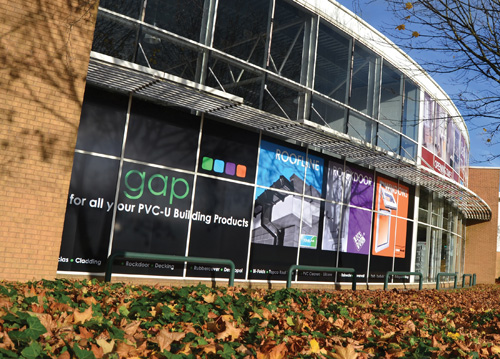
General All-Purpose Plastics (GAP), the Lancashire based manufacturer, stockist and distributor of PVC-U roofline, doors and windows, has announced the acquisition of SIG Building Plastics and SIG Windows from SIG UK Exteriors.

The deal reportedly includes 66 depots and business units plus the staff and the sales and marketing teams that support them directly.

SIG Building Plastics and SIG Windows are made up of four specialist areas of drainage, sheet materials, windows and roofline. They include Scotplas, Omnico, CFS, PBM-DQS, Summers, Armour, Roplas, Toogood, Drainex, Plastics Pipe Supplies and Project Plastics. SIG’s Formerton sheet sales and specialised fixings businesses are also included in the deal. Ownership of all the brand names and trading styles transfers to GAP.

Launched 24 years ago by co-founders Simon Bird and Charles Greensmith, GAP services 31,000 customers nationwide – including several of the UK’s national and regional house builders, maintenance contractors and housing associations – through two factories and a 46 depot network; which is said to have been expanding at the rate of one new facility per month.

GAP co-founder, Simon Bird, said: “Charles and I set out to build a business based on passion and people, and we remind ourselves every day that we owe our success to hiring and retaining amazing staff. Anyone who takes pride in putting customers at the centre of their working day and who thrives in a friendly, supportive, lively and fun environment, will enjoy being part of the growing GAP family.”

GAP’s group sales and marketing director, Paul Sowerby, added: “From the first meeting with SIG we saw a well-organised, profitable business and a focus on supporting local tradesmen with the best quality products at the keenest possible prices. Their network of busy depots is particularly strong in the South of England and so provides us with reach but limited overlap with our own existing network. It all makes for a perfect fit.”

SIG UK Exteriors managing director, Andrew Wakelin, said: “The business environment is highly competitive and constantly changing. This means companies need to be agile, flexible and responsive to the needs of customers. This move is a positive affirmation of those principles and absolutely in line with our commitment to the development and success of our business. We’re confident that the Building Plastics and Windows product ranges have found a good home within GAP.”

The post SIG’s the perfect fit for GAP appeared first on Glass & Glazing Products Magazine (GGP).

Triple Glazing Killing Off Ice Cream Vans?

Now here’s me thinking that triple glazing could be on the way out. I even wrote a post about it last week, exploring the idea that inside ten years triple glazing could be a distant memory. If you want to read up on that before you read on, click here.

How wrong could I be? I was so wrong, that the ever reliable Daily Mail suggested that triple glazing could be the very thing that is causing the demise of the ice cream van.

Check out the Daily Mail article here

Ready? Here we go…

“Blocking out chimes”

Here’s the reasoning that the Daily Mail presents as reasoning behind the story:

Ice cream vans are at risk of dying out because triple glazing is blocking out their chimes, it has been claimed.

There were 250,000 ice cream vans in Britain in the 1970s but now there are only 2,500.

The chief executive of the Ice Cream Association has blamed modern windows which stop children hearing the vans coming, putting them out of business.

Zelica Carr told the Daily Telegraph: ‘These windows are so thick that people cannot hear them coming, unless they happen to have opened them first.

‘Even if a van is right outside their house, people may not hear them. The whole point is to soundproof homes and keep them warm, but they are not good for ice cream vans.’

As you can see, this story was originally published in the Daily Telegraph and appears to have been picked up by this other paper. As you can see, a person called Zelica Carr has come to the conclusion that modern windows are one of the primary reasons that ice cream vans are dying a death. Apparently, modern day windows block out the sounds of ice cream vans coming down the street, leaving kids completely unawares that the van is coming down their street. Presumably all these kids are inside at all times with their curtains permanently closed. Such sheltered lives they live.

If you have read the full article on either the Mail or Telegraph sites, you will notice the distinct lack of scientific evidence provided in order to prove that modern windows are indeed one of the major reasons for the demise in ice cream vans. Those in the industry reading this will know that noise reduction a triple glazing has in fact been a flaky issue in recent months and years, with the science being refuted.

 Garbage headlines with no evidence

The fact that this is even a story is laughable. Then again, it’s August, most newsworthy institutions are on recess right now and I guess most media outlets are trying their best to fill their minor pages with something that could be classed as “news”. To most people, this will not even register as a story worth reading. But for our industry, it will register, if only through irritance-level annoyance because of the stupidity of the article.

Here’s why ice cream vans are on the decline: changing buying habits. Supermarkets are now able to provide in much bigger amounts and for better prices the very same products available out of the sides of these vans. In the 1970’s, when supermarkets weren’t the force they were, ice cream vans were kings when it came to ice cream. But this is 2017, nearly everything we could possibly need as human beings, including ice cream, is now available at a supermarket, and that is what is killing the ice cream van business. Agree with dominance of supermarkets or not, but it certainly is not modern day windows, definitely not triple glazing, that is killing off that particular industry.

This story is total garbage. There is no mention of decibel levels, comparisons between, single, double and triple glazing, modern buying habits or anything substantial to support the theory that triple glazing is a threat to ice cream vans. Inside the industry, we all know that triple glazing is even failing to make a tangible dent in residential sales.

At this point I would say that the 2040 deadline to ban sales of diesel and petrol vehicles poses a bigger threat to the ice cream van industry than triple glazing does.

BPF challenges ‘baffling and misguided’ WWA campaign

The British Plastics Federation (BPF) has refuted what it describes as a ‘baffling and misguided’ pro-wood campaign by the Wood Window Alliance (WWA), which accuses some PVC-U window organisations of circulating ‘fake facts’ and misleading consumers about double glazing.

The WWA, a UK industry body for wood window manufacturers, recently suggested that PVC-U window companies were ‘dressing up misleading statements as facts in order to sell more plastic windows’, launching the #woodyoubelieveit? campaign with an aim to ‘set the record straight’ and ‘encourage consumers to think carefully about competing sales messages and the impact of their choices on their health, homes and the planet’.

The BPF has challenged the WWA’s claims with the following response:

‘In recent years, the European PVC Industry has transformed its environmental performance via the VinylPlus (www.vinyplus.eu) sustainable development programme. VinylPlus is a 10-year voluntary commitment taking important steps in establishing a long-term framework for the ongoing sustainable development of the PVC value chain, including a target to recycle 800,000 tonnes of PVC by 2020.

‘Currently, in the UK alone, over one million PVC post-consumer window frames are being recycled every year. This clearly demonstrates the sustainability credentials of PVC as a building material that can be easily recycled and reused, as well as the ongoing industry commitment to a more circular economy that is not producing waste or pollution.

‘To the contrary, modern factory-finished timber frames are often made from pressure-impregnated softwood, which is not recyclable. The preservative chemicals used in this pressure-impregnation process can cause serious environmental problems when landfilled.

‘The WWA campaign states that “PVC is made from Vinyl Chloride Monomer (VCM), a Class 1 human carcinogen”. Whilst it is true that VCM is a carcinogen, the polymerisation process converts VCM to PVC. PVC is inert and non-toxic, and PVC does not de-polymerise back to VCM. By comparison, sawdust is known to be a human carcinogen – so just as there are risks that need to be controlled during the manufacture of PVC polymer, there are also risks that need to be controlled during the manufacture of timber product. However, it should be realised that the safety statistics for PVC polymer manufacturing are far better than the safety record for the timber and woodworking industry. PVC window frames are a safety-conscious choice.

‘Regarding fire safety, WWA also states that “PVC melts in a fire and gives off dioxins and hydrogen chloride that can cause permanent respiratory disease”. However, all combustible building products emit toxic gases of some kind during combustion. Carbon Monoxide (CO) is by far the most hazardous element in fire. It arises from the burning of any combustible materials – natural or synthetic. The overall toxicity of emissions from PVC in a building fire are comparable to that of some hardwood timbers.

‘In addition, PVC is an inherently fire-resistant plastic and is resistant to ignition. The temperature required to ignite rigid PVC is more than 150⁰C higher than that required to ignite wood.

‘In terms of environmental performance, PVC windows achieve A and A+ grades for domestic and commercial windows respectively in the BRE’s ‘Green Guide to Specification’, effectively the ‘Bible’ for sustainable construction materials in the UK.

‘Another important factor leading to the well-established position of PVC in construction applications is its durability. BRE gives a Reference Service Life of a minimum of 35 years, and PVC-U can be recycled up to 10 times. However, there are records of PVC windows lasting more than 60 years. This has led to its use in millions of homes and businesses with windows that offer excellent durability and long life, insulation, structural integrity and weather resistance, in a cost-effective way.

‘The thermal performance of windows is a combination of both framing profiles and glazing. It is a fact that the vast majority of windows certified at the highest level of performance by BFRC are PVC-U windows.

‘Procurement decisions in favour of PVC products have been made at the highest levels, including at the London 2012 Olympics. The Olympic Delivery Authority concluded that ‘there are cases where for health and safety reasons the only solution is PVC-based material’.

‘Similarly, many UK public procurement bodies now appear to be selecting PVC products in favour of alternatives due to their superior technical and economic performance whilst demonstrating compliance with the fit for purpose and best value requirements of the Public Contracts Regulations.

‘PVC windows not only offer an excellent combination of performance, security, aesthetics, low maintenance and reliability but, as expressed by Chesterfield Borough Council, “In terms of sustainability, there is no contest – PVC wins hands down”.’

The post BPF challenges ‘baffling and misguided’ WWA campaign appeared first on Glass & Glazing Products Magazine (GGP).


TROJAN’S STAINLESS STEEL DOOR KNOCKERS PROVING POPULAR CHOICE

The Trojan Group added two door knockers to its renowned Stainless Steel range last year and they are proving to be a popular addition. Tony Chadwick, Trojan’s Group Managing Director, said: “The aim of the Slim Urn Door Knocker and the Contemporary Door Knocker was to increase the number of design choices on offer and help bring Trojan quality to a wider audience. Sales suggest we’ve done exactly that.”

When you look at the two door knockers it’s easy to see why they’re proving so popular.

They have been designed with the installer in mind because they are face fixed so there is no need to drill through the door, making installation quicker and easier.

Both have a slimline contemporary design that will appeal to today’s discerning consumer. Both suite with all the other products in the Stainless Steel range to provide a totally coordinated approach. Both are available in a full choice of finishes including Polished/Brushed Gold (PVD), Polished/Brushed Stainless, White and Black. And, perhaps most importantly, like all the products in the Stainless Steel range, both products come with a 25 year anti-corrosion guarantee.

Trojan’s Stainless Steel range provides a complete door hardware solution and apart from the door knockers consists of door handles, letterplates, numerals, pull handles, central door knobs and escutcheons. The range has been one of the industry’s biggest success stories of recent years and Tony is clear why: “The Stainless Steel construction means no corrosion and it’s something our customers really appreciate because it puts an end to disappointed homeowners and expensive, time-consuming callbacks.”

The sales of the door knockers demonstrate Trojan’s ability to spot trends and react to them with value-added products that enhance fabricators’ and installers’ portfolios. It’s just one of the reasons why it’s one of the industry leaders when it comes to hardware.

www.trojangroup.com