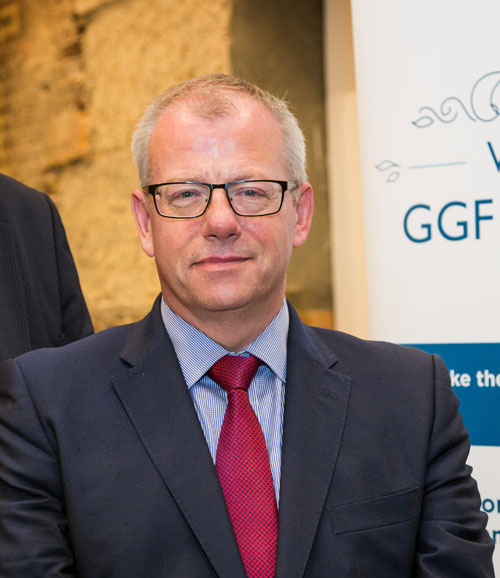
GGF ‘cautiously optimistic’

The Glass and Glazing Federation (GGF) says it is cautiously optimistic in response to housebuilding announcements made at the 2017 Budget.

Despite the Government’s focus on housebuilding, the GGF believes more action is needed to ensure the UK meets the target of building 300,000 homes per year. The GGF was also disappointed the Budget contained no measures to increase the energy efficiency of the UK’s homes, which are said to be some of the worst performing in Europe.

Due to the continued failure to meet house building targets, the GGF says it does not expect to see a sudden surge in housebuilding, but highlights the following announcements from the Chancellor for its members:

£44bn over five years in capital funding to support the housing market and to deliver 300,000 homes per year by mid 2020s, including;

£630m small sites fund to support the delivery of 40,000 homes
£2.7bn to double Housing Infrastructure Fund
£1.1bn for unlocking strategic sites
£400m more for estate regeneration and £8bn of new financial guarantees to support private housebuilding

According to the federation, all housebuilding programmes should be centred on a ‘Whole House Approach’ to ensure new and existing homes are energy efficient and can keep people warm during winter. The GGF was disappointed the Government failed to include measures to ensure housing stock is energy efficient and says it will urge the Government to provide investment in energy efficient glass and glazing products for families and businesses across the country.

GGF Group chief executive, Phil Pluck, commented: “While we welcome the Government’s drive to build 300,000 homes per year, there is some way to go before we realise this objective. Our members are integral to the construction industry, and we will continue to work with Government so they fully appreciate the existing barriers to building more homes.

“Further, we are disappointed the Government did not provide additional funding for energy efficient measures in the UK’s domestic and non-domestic housing stock. It is vital the poor performance of the UK housing stock is urgently improved. The Chancellor announced crackdowns on diesel vehicles, but must also recognise the contribution that energy efficient buildings can make to reducing carbon emissions”.

The post GGF ‘cautiously optimistic’ appeared first on Glass & Glazing Products Magazine (GGP).

Ambitious Glazefix Gears Up For Growth With Eurocell

Image Above: Glazefix MD, Lewis Mayer

Romford-based fabricator Glazefix is the latest fabricator to sign up with Eurocell. Managing Director Lewis Mayer says he changed supplier because of the company’s strong selection of foil windows, which would help Glazefix expand the commercial side of the business. 

“We primarily work with trade, with a smaller proportion of retail, but we can see the potential for more commercial work and the Eurocell range of foil products will support our move into that sector, particularly because it is very keenly priced,” he said. “It’s also important that all the ancillary items such as trims can be supplied in matching colours.”

Roofing products, such as Equinox, also swayed the decision together with the comprehensive 170 plus network of Eurocell branches. 

“Eurocell has a great range of ancillary products that is growing all the time and that’s available through all their branches so we could be working on a job as far away as Cornwall and still get everything we needed, from sealants to conservatory roofs,” Lewis remarked. 

Established in 2011, Glazefix operates from a unit in Havering-atte-Bower on the outskirts of Romford in Essex, where it fabricates around 150 frames per week and employs up to seven staff. Since signing up with Eurocell, the company reports that it has already seen considerable growth already and is planning to acquire new machinery and build a further 56m2 of office and warehouse space.

“Glazefix is the sort of expanding, ambitious company that we look for when we recruit new fabricators,” says Jason Bird, National Business Development Manager. “It has a strong reputation in its area and is keen to grow the business into other areas rather than just stick to what it has done from the start”.

The whole process of switching to Eurocell profiles is streamlined and simple, with each new fabricator being assigned their own field-based technical support engineer who can deliver everything required from initial set-up advice on production efficiency through to trouble-shooting issues. That engineer is supported by a technical helpdesk staffed by industry professionals ready to advise and a skilled team of designers and engineers that can write sample specifications for bespoke projects.

Eurocell technical support extends to BFRC accredited simulators that provide specifications and reports that prove to customers that the products meet the necessary BFRC performance standards. The company also offers product training, either on-site or at its purpose-built research and development centre in Alfreton, which has a dedicated facility for product simulation, prototyping and testing. 

On the marketing side, Eurocell has its own in-house design studio and marketing team to promote the fabricator’s business with services such as the RightSite customer website build service, providing either an off-the-shelf website or create a bespoke design at subsidised rates, bespoke brochures and direct mail. These include effective mailers, sales letters and campaigns to increase leads and prospects.

www.eurocell.co.uk

5th

GGF Cautiously Optimistic With 2017 Budget

Image Above: GGF Group Chief Executive, Phil Pluck

The Glass and Glazing Federation (GGF) was cautiously optimistic in response to housebuilding announcements made at the 2017 Budget. Despite the Government’s focus on housebuilding, the GGF believes more action is needed to ensure the UK meets the target of building 300,000 homes per year. The GGF was also disappointed the Budget contained no measures to increase the energy efficiency of the UK’s homes, some of the worst performing in Europe.

Housebuilding programmes

Governments of all colours have proposed speeding up the planning process and unlocking public sector land, but the UK’s housebuilding rate has remained well below target over the last decade. Therefore, the GGF does not expect to see a sudden surge in housebuilding, particularly at a time when confidence in the construction sector in the year ahead dropped to its lowest level since December 2012*.

Of note to GGF members, the Chancellor announced: 

  • £44bn over five years in capital funding to support housing market and deliver 300,000 homes per year by mid 2020s, including:
    • £630m small sites fund to support the delivery of 40,000 homes
  • £2.7bn to double Housing Infrastructure Fund
  • £1.1bn for unlocking strategic sites
  • £400m more for estate regeneration and £8bn of new financial guarantees to support private housebuilding


The lack of a ‘Whole House Approach’

All housebuilding programmes should be centred on a ‘Whole House Approach’ to ensure new and existing homes are energy efficient and can keep people warm during winter. The GGF was disappointed the Government failed to include measures to ensure housing stock is energy efficient. In order to keep carbon emissions lower, tackle fuel poverty and help reduce energy bills*, the GGF will urge the Government to provide investment in energy efficient glass and glazing products for families and businesses across the country.

GGF Group Chief Executive, Phil Pluck commented:

“While we welcome the Government’s drive to build 300,000 homes per year, there is some way to go before we realise this objective. Our Members are integral to the construction industry, and we will continue to work with Government so they fully appreciate the existing barriers to building more homes.”

“Further, we are disappointed the Government did not provide additional funding for energy efficient measures in the UK’s domestic and non-domestic housing stock. It is vital the poor performance of the UK housing stock is urgently improved. The Chancellor announced crackdowns on diesel vehicles, but must also recognise the contribution that energy efficient buildings can make to reducing carbon emissions”. 

www.ggf.org.uk

5th

GGF Appoints New Commercial Managing Director

The GGF Group is pleased to announce the appointment of Billy Quinn as Managing Director of its commercial subsidiary companies – FENSA, GGFi, BFRC, RISA and Borough IT. 

Billy Quinn is a highly accomplished Business Leader, Commercial Director and Non-Executive Director who brings a wealth of experience to the GGF Group.

Most recently as Commercial Director for the online digital training provider CCUK, he has also successfully held senior commercial roles within several blue chip retailing Groups including HRG, Kingfisher and B&Q. Additionally Billy has experience in the not-for-profit sector holding the position of Non-Executive Board Chair of The Furniture Ombudsman (TFO).

Billy joins the GGF Group at a time of steady growth and also during a transitional period of restructure. With this appointment the GGF Group aims to strengthen its commercial arm which will subsequently benefit all connected to the Federation.

5th

Construction Industry Warns Against Brexit ‘Cliff Edge’ For EU Workers

The construction sector has come together with one voice to warn the Government of the dangers of the industry facing a ‘cliff edge’ regarding access to EU workers.

In an unprecedented show of unity, seven of the construction industry’s major trade bodies have set out what they believe to be the sector’s responsibilities and requirements in a post-Brexit labour market.

The ‘Construction Industry Brexit Manifesto’ commits the sector to doing much more to recruit and train additional UK workers to reduce its future reliance on migrant labour. However, it makes clear that this will not be able to happen overnight and that, for some time, there will likely remain an ongoing need for significant levels of skilled EU workers.

The document sets down the industry’s key messages to the Government on what it will need from a post-Brexit immigration system in order to be able to deliver the Government’s strategic objectives for new housing and infrastructure:

  • The Government should agree a transition period of at least two years as soon as possible, during which time EU workers arriving in the UK should continue to have a path to settled status
  • The post-transitional migration system should be based on key occupations that are in short supply, rather than on arbitrary thresholds based on skill levels or income.

The Manifesto comes with the support of seven major construction trade bodies: Federation of Master Builders, Association for Consultancy & Engineering, Build UK, Civil Engineering Contractors Association, Construction Products Association, Home Builders Federation, and National Federation of Builders

Brian Berry, Chief Executive of the Federation of Master Builders, said: “The construction industry has been criticised in the past for being too disparate but it has come together here with one voice and set of clear messages. We know we need to step up as an industry and train more home-grown talent but we also have to be realistic about the future. There will continue to be some ongoing need for migrant workers and our post-Brexit migration rules will need to be fit for purpose.”

Dr Nelson Ogunshakin OBE, CEO of the Association for Consultancy & Engineering, said:“Without the skills that many EU nationals bring to the industry, we could be facing severe setbacks to the UK’s national infrastructure pipeline. ACE’s own surveys show that there is an increase in the number EU staff leaving the UK for jobs on the continent and this will only get worse if we do not bring certainty to EU workers’ residency rights. This Manifesto provides a road map for both Government and industry to ensure that the UK can continue to access world class talent to deliver world class construction.”

Suzannah Nichol MBE, Chief Executive of Build UK, said: “Construction, like other major industry sectors, has substantial concerns over the impact of Brexit on its ability to recruit, train and retain talent. It is essential that industry works together to present the need for an effective partnership between Government and industry, enabling us to deliver the UK’s infrastructure, homes and communities.”

Marie-Claude Hemming, Director of External Affairs at the Civil Engineering Contractors Association, said: “The UK’s decision to leave the EU will have a notable impact upon the ability of the infrastructure sector to source the skills needed for current and future projects. But if we are to ensure that the UK remains an attractive place to live and work in a post Brexit world, Government must maintain its focus on construction and infrastructure. To this end industry has joined together to publish a skills manifesto which we believe will enable our sector to continue to drive future economic growth. It is vital that industry and Government work together to ensure the UK’s global competitiveness is not impacted upon by delay in the delivery of world-class construction projects.”

Prof. Noble Francis, Economics Director at the Construction Products Association, said:“Access to the right skills will be absolutely critical for the whole construction supply chain in the next few years if it is to help Government achieve its aims of building more affordable housing and improving the UK’s infrastructure, which will be vital for boosting UK productivity.”

John Slaughter, Director of External Affairs at the Home Builders Federation, said: “With the Budget having confirmed a target to deliver 300,000 homes a year by the mid-2020s, home builders will need to continue to bring more skilled people into the industry. Companies are building on their existing investment through the successful work of the CITB-supported Home Building Skills Partnership and are committed to doing even more, but to deliver the national social and economic necessity of an improved housing supply we will also continue to need access to foreign workers under a manageable migration system.”

Richard Beresford, Chief Executive of the National Federation of Builders, said: “With the country facing a shortage of skilled workers and the most acute housing crisis in living memory, the Government needs to provide certainty to existing EU workers in the UK and enable construction SMEs to attract more home-grown talent into the industry.”

www.fmb.org.uk

Emmegi (UK) Selected As Machinery Partner For New AluK Academy

Emmegi (UK) is proud to have been chosen as the machinery partner for AluK’s newly opened training Academy at its flagship Chepstow headquarters.

Emmegi machines take pride of place in the very impressive 3000sq ft training facility, allowing AluK customers to get hands on fabricating training using the very highest quality machines on the market.

From its Coventry base, Emmegi (UK) has equipped the Academy with a broad cross section of its machines to meet the requirements of virtually every aluminium fabricator.  This includes Phantomatic X4 and Nanomatic machining centres, a Radial Star saw, an Itaca Solution crimper, and a full range of specialist bead saws, glueing and end milling machines.

Ian Latimer, Managing Director of Emmegi (UK), said: “This represents a real strengthening of the partnership between AluK and Emmegi and is a really exciting opportunity for us to align our quality, high performance machines with AluK’s quality, high performance systems.

“Our team have worked closely with AluK over the past six months to ensure that all of the machines were prepared perfectly for the opening and we have been delighted to be involved.”

AluK’s Technical Director Nick Cooper, who is responsible for the training Academy, added: “We chose Emmegi machines because they offer the proven quality and durability we need for this kind of training environment, and because we know we can rely on Emmegi (UK) to give us excellent technical back up and service.

“Emmegi machines are the first choice for many of our fabricators as well, so it makes perfect sense for our Academy to reflect the production set ups in their factories.”

Further details of the machines supplied are available at www.emmegi.com and of the Academy course on offer at www.alukacademy.co.uk

30th

Alumen Opens Its Doors In Four-Day Open House Event

Northamptonshire-based aluminium window, door and roof specialists Alumen ran its first ever Open House event in November. Having recently moved to new premises with an impressive new showroom – and with a range of exciting new products to launch – the respected manufacturer celebrated by opening its doors to the press, trade and public for the first time.

Running across four days, the Open House event started with a press preview attended by editors from leading trade and commercial titles, followed by a trade-only day for Alumen’s trade customers. Alumen’s MD Alan Robinson took visitors through the company’s rise from a bi-fold door manufacturer working out of a shed ten years ago, to the multi-range, multi-million pound aluminium specialists they are today. The presentation also drew on the company’s experience and insight to provide a positive analysis of the aluminium market and Alumen’s position within it. Finally, Alan went through the highlights of Alumen’s product offerings, including the exciting new range of Cortizo windows and doors they are launching into the UK market.

Visitors were then given the opportunity to inspect and discuss the manufacturer’s Schueco, Cortizo and SMART windows, doors and roofs up-close – including their stunning new Cor-Vision Plus sliding door – followed by a tour of their new 15,000ft2 factory facility.

Commenting on the Open House, Alumen MD Alan Robinson said: “It was a pleasure to invite people to our new factory and showroom and show them what Alumen is all about. We may not be the most well-known name in the industry, but we’re very proud of what we do, how we’ve grown, and the products we’ve launched into the UK market. I think our visitors could see that and were impressed by it.”

Ken McMichael, Alumen’s Technical Director, comments: “We put a lot of hard work into building our new showroom, so it was good to see our visitors respond so well. They were very interested in the complete Cortizo package we’re launching, including our new Cor 70 casement and hidden sash tilt and turn windows, the Millennium Plus entrance door, the Alumen Bi-Fold and the incredible Cor-Vision Plus sliding door. Everything in the range is innovative and stylish, and yet surprisingly inexpensive. It’s refreshing to see well-priced products of such clever design being introduced to the UK market. Our visitors certainly seemed to be like what they saw.”

“This has been our first ever Open House event, and it’s been a great success for us. We’ll certainly look at doing it again in the future.” Alan concludes.

For more information on Alumen and their wide range of aluminium doors, windows and roofs, please call 01536 737377 or visit www.alumen.co.uk


0071---OCT16---ALUMEN-ROOFLIGHTS-ANIMATED-GIF-(387-X-72)_V2

30th