
N&C invests following demand for Pilkington fire-resistant glass
 N&C Glass, said to be the UK’s largest independent supplier of glass and glazing products, has reportedly invested more than £250,000 in new manufacturing equipment to meet increased demand for shaped Pilkington fire glass and enable the business to become a one-stop shop for fire-resistant glass, regardless of its complexity.
The company, based in Beckton in London’s Docklands, specialises in fire-resistant glass, safety & security glass, window glass and high-performance commercial units. Through its on-site manufacturing facilities and owned distribution network, it supplies sealed units and stock glass to a broad range of customers, from high value commercial projects to independent glaziers.
Over the past 12 months N&C Glass has reportedly experienced increased demand for fire-resistant glass in a variety of shapes, as customers request products that not only meet the necessary safety requirements, but are also aesthetically pleasing. The new investment will enable N&C to deliver a complex product that meets both challenging design and performance requirements.
N&C Glass’ recent investment has seen the company add a state-of-the-art waterjet cutting equipment and new vertical saw to its manufacturing facility. The new kit means N&C Glass can complement demand for straight edged panels with more complex, non-linear shapes. As a result, it has more than doubled its output of cut to size glass, while also reducing lead times for customers.
Graham Ingle, product manager, clear fire protection glass at Pilkington United Kingdom, said: “N&C’s significant investment in two new pieces of equipment reflects the growing demand for shaped fire-resistant glass across the industry. It is now a one-stop shop for the complete range of fire-resistant glass, regardless of its complexity.
“Fire-resistant glass plays a critically important role in protecting both buildings and their occupants, and because of this we only work with a handful of trusted firms across the UK to process and supply Pilkington fire-resistant glass products. N&C has fully met our expectations over the years and we look forward to seeing the business continue to go from strength to strength following its investment.”
Richard Howe, operations director at Nicholls & Clarke Glass, added: “Fire-resistant glass plays a major role in our business and the decision to invest £250,000 in new equipment to meet the increased demand for shaped fire-resistant glass was an obvious one.
“We’ve worked alongside Pilkington for more than two decades now, providing its products to our customers, and our two new machines will enable us to continue to meet customer demand more effectively and efficiently.”
The post N&C invests following demand for Pilkington fire-resistant glass appeared first on Glass & Glazing Products Magazine (GGP).
VIPS Gather To Mark Decade Of Manufacturing
Warm edge experts Edgetech welcomed VIPs from throughout the industry to a celebration marking a decade of UK manufacturing.
The company’s Coventry factory became the first warm edge manufacturing facility in the country back in 2007. Exactly ten years on, dignitaries including Bill Griffiths and George Wilson from parent company Quanex and John Blundell, Deputy Lord Mayor of Coventry, marked the anniversary by officially opening a $1.3m extension to the same site.
Attendees heard presentations from Edgetech UK Managing Director Chris Alderson, President of Quanex IG Systems George Wilson, who has since been promoted to COO of the Quanex Group, Quanex Chairman and CEO Bill Griffiths, as well as industry expert Andrew Scott, Managing Director of Insight Data. Guests were also treated to a virtual tour of the new facilities.
“We were absolutely delighted to welcome so many colleagues, customers, members of the media and others to our HQ to celebrate such a major milestone and unveil our new facilities,” comments Chris Alderson, Edgetech UK Managing Director. “This event has given us a fantastic opportunity to reflect on everything we’ve accomplished over the last decade, and to say thank you to our customers, many of whom have been with us since day one.
“It also gave us the chance to share our vision for the next decade and beyond – and demonstrate both our strong relationship with Quanex, and our unwavering commitment to product research and development.”
The Quanex Chairman’s Safety Award was presented to Works Manager John Stark to recognize Edgetech UK’s impeccable safety record, while Head of Marketing Charlotte Davies received a £1,000 donation from the company towards her efforts for Paddle2Pedal, the all-female event from GM Fundraising that will see 12 fenestration professionals canoe, abseil and cycle hundreds of miles in August to raise money for the Hope House Children’s Hospice.
Attendees made generous charity donations also totaling £1,000 sterling and – reflecting the international guest-list – a further £500 in dollars and euros which brings Charlotte’s fundraising total so far to over £4,000.
The event culminated with a fun-filled medieval banquet, and Edgetech’s annual golf event the following day.
A video of the event is currently in production, and will be published on Edgetech’s website. If you would like a copy, please email Head of Marketing Charlotte Davies on charlotte.davies@edgetechig.com.
For more information on Edgetech’s range of spacers and to stay up-to-date with the latest developments from the company visit: www.edgetechig.co.uk.
For more information on Edgetech and its wide range of products call 02476 639931 or visit www.edgetechig.co.uk

Sales Continue To Soar For Vista’s Xtreme Composite Door
Award-winning panel and composite door supplier Vista has seen incredible growth thanks to increasing demand for XtremeDoor, their best-in-class composite door.
The Merseyside firm has reported a remarkable surge with sales up a full 15% compared to last year. The continued success of XtremeDoor now means Vista produces an astonishing 150 composite doors a day.
“It’s great to see three-years on from its launch, XtremeDoor is continuing to soar,” comments Keith Sadler, Managing Director of Vista. “I firmly believe XtremeDoor’s recent success is down to our expanded range and our brand-new brochure. We added six new door styles at the turn of the year which really freshened up the range and gave our customers everything they were looking for. The latest brochure also has a larger selection of hardware and locking options as well additional colour options. These have all gone down really well with our existing customers and helped us to bring in new clients, who were looking for something different.”
Recent legislation also meant the XtremeDoor had to toughen up even more, Document Q testing lead Vista to double the thickness of the highly-durable GRP skin to 4mm to conform with the cut-through test. This gives composite doors three minutes to survive an attack using a Stanley Knife and two chisels (a 6mm and a 25mm). If in three minutes or less, the tester can cut a 50mm hole which is large enough to get an arm in and open it, the door fails. XtremeDoor passes this test with flying colours and has resulted Vista securing more newbuild work than ever before.
“We’ve worked closely with our marketing partners Purplex to re-launch our consumer facing website (www.xtremedoor.co.uk),” adds Keith. “One of the new features which is gaining a lot of interest is a new door designer. The designer can also be added to our customer’s websites which is a really valuable sales tool and helps to create even stronger relationships with our customers who are the lifeblood of our company.”
“With XtremeDoor, we’ve created something we are incredibly proud of and our trade customers love to sell. It’s great to see increasing demand for XtremeDoor and we will be repaying that with even more innovation, investment and new products later this year.”
For more information call 01516081423 or visit www.vistapanels.co.uk
CPA: UK construction industry growth forecast to slow ‘to lowest in six years’

Noble Francis
Growth prospects for the construction industry in 2018 have been downgraded as the UK prepares to leave the EU, according to the latest forecasts by the Construction Products Association (CPA). Output is expected to ‘soften’ as a slowing economy, falling real wages and rising costs adversely affect the industry, growth for 2018 is therefore only expected to rise by 0.7%, the slowest in six years, and a downward revision from 1.2% in previous forecasts.
For now, activity on site is high and output is expected to rise by 1.6% in 2017, a revision upwards from 1.3% in previous forecasts. This will be partly due to a sharp rise from new contracts and activity in the £6.9 billion public housing repair, maintenance and improvements to deal with short-term urgent measures that will need to be made in light of the Grenfell Tower fire.
An increase in infrastructure activity and private housebuilding are expected to be the primary drivers of growth over the next two years which will help offset a sharp fall in the commercial and industrial sectors. Growth in infrastructure will be due to major projects in rail and water & sewerage such as HS2 and the Thames Tideway Tunnel, with activity forecast to grow by 7.4% in 2017 and 6.4% in 2018. Growth will be reliant on delivery of these projects and the extent of the continued delays to main works at Hinkley Point C have resulted in it no longer included in the CPA forecasts.
Growth for the industry in 2018 will also be heavily reliant on private housebuilding, however the sector is still reliant on Help to Buy equity loans to drive housebuilding numbers. The policy is in place until 2021, which is expected to support demand for new build and drive growth in private housing starts of 3.0% in 2017 and 2.0% in 2018. However, this is slower than in previous years given uncertainties over the strength of consumer confidence and falls in real earnings.
Looking further ahead, growth for 2019 is projected to be 1.8%, but given the unprecedented economic and political uncertainties following the lack of a significant majority for the UK government as the UK leaves the EU, the risks around this forecast are considerable.
Noble Francis, economics director at the Construction Products Association said: “Construction firms are still reporting that activity remains high and there are still lots of cranes around. But there are clear signs that construction output is slowing and that next year, in particular, will be difficult for the industry. Prospects for construction have been adversely affected by slowing UK economic growth and falling real wages on one side and sharp rising costs on the other. A fall in new investment, especially where it is large international investment looking for a long-term rate of return, is forecast to lead to declines in the commercial and industrial sectors.”
“Despite the slowdown in the general housing market, particularly in London, house builders continue to increase supply, albeit more slowly than in recent years. Currently, more than a third of new house building is being sustained by the government’s Help to Buy and should continue to do so over the next 18 months if the wider economy and housing market don’t slow further. However, if economic conditions do deteriorate further, house builders can react quite quickly if necessary.
“Increases in infrastructure investment are also expected to offset these declines and be the key driver of any construction growth going forward. However, concerns regarding rising costs and delays to major projects continue to dog the sector so there remains a high degree of uncertainty around infrastructure growth in the next few years. And this infrastructure investment will be vital for the industry as a whole. Without it, total construction output would fall by 1.0% in 2018.”
The post CPA: UK construction industry growth forecast to slow ‘to lowest in six years’ appeared first on Glass & Glazing Products Magazine (GGP).
SPOTLIGHT SHINES ON THREE ATLAS DESIGN HEROES
The spotlight is shining on three proud Atlas Glazed Roof Solutions installers who have been showing off their very best design and installation skills.
Sherborne Windows, Vision Conservatories and Panoramic Windows have created three spectacular installations and scooped the latest winning places in the Atlas Installation of the Month competition.
A fabulous Skyroom demonstration model at Sherborne Windows’ showroom impressed a family from Ascot in Berkshire. With teenage children to accommodate, the owners wanted to create extra space at the rear of their property and had settled on a traditional Edwardian-style conservatory to mirror their neighbours. They visited the showroom and were inspired by the super modern appearance of the Skyroom. The 5.6 x 4 metre installation, which was the Atlas Installation of the Month winner in June, opened up the back of the property and helped to blend the transition between the interior and exterior.
Chris Long, managing director at Sherborne Windows, said: “This installation was such a triumph, not just because it was a winner in this competition, but because it has roused other neighbours who now want a Skyroom! Many homeowners still feel that a conventional conservatory is the best thing for their home and this lovely installation shows that you can create something far more special by using clever design and innovative products. We’re very proud of it and it goes without saying that the customer is too. It’s the talk of the neighbourhood!”
Vision Conservatories created a real showpiece installation on a period property in Wiltshire which ultimately helped the owners to sell their home. The 4.8 x 4 metre extension was cleverly designed to fill an unsightly dead space in the garden and bring light into an otherwise dark zone. It combined an eclectic mix of building materials – reclaimed bricks, cedar cladding, glass and aluminium – and was crowned with a large pyramid lantern roof to bring a striking and unique flavour to the property.
Mike Keeling, managing director of Vision Conservatories, said: “This beautiful orangery gave this traditional property such a contemporary lift. The owners found their dream home not long after we finished the project and put this property on the market. Without a shadow of a doubt, the orangery was the selling point, and the owners were lucky enough to have four buyers bidding for their home. It proves that well-planned spaces don’t just transform homes, they do actually add value and increase saleability too.”
Bristol-based Panoramic Windows showcased their fine design skills when they created a sensational light-filled Skyroom on a detached village property in North Somerset. The retired owners wanted an elegant extension to connect with their garden and had originally set their minds on a conventional orangery. They had a complete change of heart however when they saw the Atlas Skyroom on display at Panoramic Windows’ showroom. The team at Panoramic went on to create a well-proportioned design which incorporated floor to ceiling glazing to provide uninterrupted views of the garden. Large bi-folding doors were key in helping to merge the new 6 x 3.5 metre extension seamlessly with the outside.
Angus McCubbin, sales and marketing manager at Panoramic Windows, said: “This project was all about maximising light and thermal performance and the owners were really inspired by what they could achieve by thinking outside the box. With its ultra-slim profile and striking good looks, the Skyroom was the perfect choice for them – it brought an abundance of light and space on the inside and contrasted beautifully with their traditionally-styled property on the outside. This project is a stunner and we’re delighted to win an award for it.”
Every month, an installer will win a £200 Screwfix voucher and a £50 Majestic Wine voucher. There’s also trade industry PR and promotion through the Atlas website, as well as entry into the Atlas Installer of the Year award finals which will be held in January 2018. All entries submitted with completed installation pictures will receive an Atlas thermal mug.
For further information, please contact Atlas on 02838 327741 or visit www.atlasroofsolutions.co.uk.
Major Installer Cements Relationship With Polyframe
A leading commercial installer has toasted to its long-standing alliance with Polyframe and is seizing all the benefits of working alongside the UK’s largest PVC-u fabricator, which now offers the industry’s widest range of PVC-u systems.
The Window Company has been sourcing multiple PVC-u systems from Polyframe for more than five years and has driven growth within its business by taking advantage of the unique strengths and skills of Polyframe and its experienced team. The company is now looking forward to greater business opportunities from the recently-enhanced fabricator.
David Thornton, who set up Chelmsford-based The Window Company nearly 20 years ago, says: “We have always been a commercial installer and now have 24 fitting teams installing at least 300 frames a week. In the commercial sector, you have several trades relying on you and there is a huge amount of planning involved to ensure jobs run smoothly. The quality of products and reliability of supply is fundamental to the success of an installation and we only work with suppliers that can meet our exacting requirements and won’t let us down.
Polyframe has worked in partnership with us for many years and has been an enormous asset to our business. We began working with Polyframe because it is a large, well established fabricator with a superb choice of quality PVC-u systems and a solid reputation for delivering a flexible service and a tailored support package that works for customers. We know that we can depend on them to deliver on every job and, even if products are coming from different factories, we know they will arrive on time and in full.
People make Polyframe what it is. The whole team at Polyframe shares a passion for our business and we have a great working relationship with our dedicated account manager which helps ensure that every project runs as it should do. We’re delighted to celebrate our long relationship with them and we’re already making the most of the strengthened Polyframe offering.”
Since its merger with Customade earlier this year, Polyframe now offers five PVC-u systems from Veka, Halo, Eurocell, Rehau and Duraflex. The Window Company currently sources Rehau and Halo systems from Polyframe, depending on the requirements of the installation.
David adds: “For greater security, we have always had a dual-sourcing policy. Rehau and Halo are well-specified systems and our fitting teams like to install them because they are fitter-friendly. With the enhanced capabilities of Polyframe, we can easily source multiple systems if the need arises, which is an advantage for us. By sourcing these systems from a larger fabricator, we also benefit from better economies of scale and we all work to pre-determined delivery days so we can plan installation schedules accordingly.”
The Window Company supplies both PVC-u and aluminium frames to many of the South East’s largest contractors, social housing providers, local authorities, schools, private developers and homeowners. As well as buying PVC-u from Polyframe, the company also sources REAL Aluminium frames from Customade Group and it has welcomed the convenience of sharing the resources of these two well-established industry specialists.
“We were very pleased when Customade and Polyframe came together to form Customade Group because it enables us to tap into a vast product range with all the support of a large group behind it. For me, it is important to work with people who understand the industry and are committed to maintaining high levels of quality and service. The merger has enhanced our productivity because we have one dedicated account manager to look after everything for us. And on the rare occasion that issues arise, they are handled quickly and efficiently,” David says.
Construction growth eases to 11-month low in July
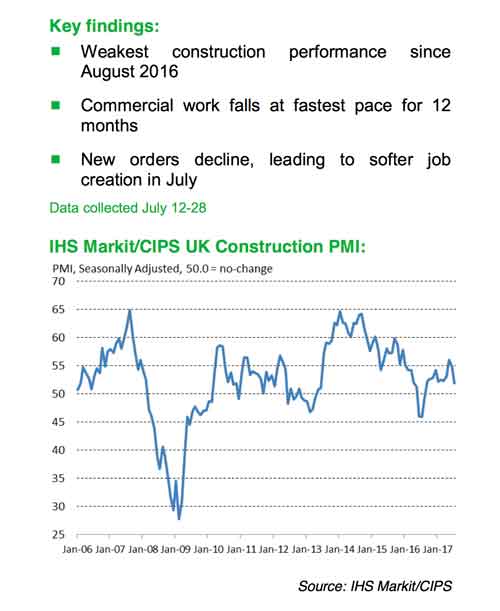 UK construction companies recorded another growth slowdown in July, reflecting lower volumes of commercial building and a softer expansion of housing activity. The latest survey also revealed a reduction in new business volumes for the first time since August 2016, which acted as a headwind to job creation and input buying across the construction sector. Intense supply chain pressures also continued in July and prices for construction materials increased at one of the sharpest rates since the first half of 2011.
Reportedly adjusted for ‘seasonal influences’, the IHS Markit/CIPS UK Construction Purchasing Managers’ Index (PMI) dropped from 54.8 in June to 51.9 in July, to signal the weakest construction performance since August 2016. The latest reading was below the long-run survey average (54.5) and pointed to only a moderate pace of business activity growth.
Tim Moore, associate director at IHS Markit and author of the IHS Markit/CIPS Construction PMI, said: “July data reveals a growth slowdown in the UK construction sector, mainly driven by lower volumes of commercial development and a loss of momentum for house building. Weaker contributions from the cyclically sensitive areas of construction activity more than offset resilience in the civil engineering sector.
“Worries about the economic outlook and heightened political uncertainty were key factors contributing to subdued demand. Construction firms reported that clients were more reluctant to spend and had opted to take longer in committing to new projects.
“There was a knock-on impact for job creation and input buying following the largest downturn in order books since August 2016. However, supply chain pressures remained intense, reflecting low stocks among vendors, and materials prices continued to rise at one of the fastest rates seen for six years.
“The combination of weaker order books and sharply rising construction costs gives concern that an extended soft patch for the construction sector may be on the horizon.”
Construction firms remained upbeat about their growth prospects, but the degree of optimism was the lowest since July 2016. This was attributed to heightened economic uncertainty and subdued confidence among clients.
Duncan Brock, director of customer relationships at the Chartered Institute of Procurement & Supply, said: “The number of new orders dropped significantly this month and at the fastest rate since August 2016, as commitment-averse clients contributed to the sector’s weak trajectory.
“Commercial building activity slowed for the first time in five months and was the main drag on the Index. Housing, the shining light of the sector eased marginally, but produced the slowest growth since April, as parallels with the darker days of Brexit, worries about the UK economy and post-election uncertainty can be seen across the construction sector.
“Continuing price pressures from the weak pound lingered, driving cost inflation near to a six-year peak, stifling purchasing activity and jobs growth. All in all, a challenging start to Q3 and there are possible roadblocks ahead for the sector in the rest of 2017, with longer lead times and suppliers struggling with stock levels, which adds insult to injury.”
Sarah McMonagle, director of external affairs at the Federation of Master Builders (FMB), said: “These figures represent the weakest monthly performance in the UK construction industry for almost one year. Construction companies are suffering from ever-increasing costs and this is starting to act as a drag on growth. More specifically, the increase in construction material prices and higher wages and salaries due to the construction skills shortages will no doubt have contributed to these disappointing results. The commercial sector in particular fell at its fastest pace for 12 months but we also saw a loss of pace among house builders. However, although the construction sector is growing at a slower pace, it is still growing and therefore there is no reason to panic.”
The post Construction growth eases to 11-month low in July appeared first on Glass & Glazing Products Magazine (GGP).
Pages
- 24 Hour Glazier in Islington
- About Us
- Areas
- Bathroom Glass Shelves Installation In Abbey Wood
- Bathroom Glass Shelves Installation In Abbots Langley
- Bathroom Glass Shelves Installation In Acton
- Bathroom Glass Shelves Installation In Addlestone
- Bathroom Glass Shelves Installation In Aldgate
- Bathroom Glass Shelves Installation In Alexandra Palace
- Bathroom Glass Shelves Installation In Archway
- Bathroom Glass Shelves Installation In Ashford
- Bathroom Glass Shelves Installation In Ashtead
- Bathroom Glass Shelves Installation In Balham
- Bathroom Glass Shelves Installation In Banstead
- Bathroom Glass Shelves Installation In Barking
- Bathroom Glass Shelves Installation In Barkingside
- Bathroom Glass Shelves Installation In Barnehurst
- Bathroom Glass Shelves Installation In Barnes
- Bathroom Glass Shelves Installation In Barnet
- Bathroom Glass Shelves Installation In Battersea
- Bathroom Glass Shelves Installation In Bayswater
- Bathroom Glass Shelves Installation In Beckenham
- Bathroom Glass Shelves Installation In Becontree Heath
- Bathroom Glass Shelves Installation In Beddington
- Bathroom Glass Shelves Installation In Belgravia
- Bathroom Glass Shelves Installation In Bellingham
- Bathroom Glass Shelves Installation In Belmont
- Bathroom Glass Shelves Installation In Belvedere
- Bathroom Glass Shelves Installation In Bermondsey
- Bathroom Glass Shelves Installation In Bethnal Green
- Bathroom Glass Shelves Installation In Bexley
- Bathroom Glass Shelves Installation In Bexleyheath
- Bathroom Glass Shelves Installation In Blackheath
- Bathroom Glass Shelves Installation In Bloomsbury
- Bathroom Glass Shelves Installation In Borehamwood
- Bathroom Glass Shelves Installation In Brent Cross
- Bathroom Glass Shelves Installation In Brentford
- Bathroom Glass Shelves Installation In Brixton
- Bathroom Glass Shelves Installation In Brockley
- Bathroom Glass Shelves Installation In Bromley
- Bathroom Glass Shelves Installation In Bromley By Bow
- Bathroom Glass Shelves Installation In Brompton
- Bathroom Glass Shelves Installation In Broxbourne
- Bathroom Glass Shelves Installation In Buckhurst Hill
- Bathroom Glass Shelves Installation In Bushey
- Bathroom Glass Shelves Installation In Camberwell
- Bathroom Glass Shelves Installation In Camden Town
- Bathroom Glass Shelves Installation In Canbury
- Bathroom Glass Shelves Installation In Canning Town
- Bathroom Glass Shelves Installation In Carshalton
- Bathroom Glass Shelves Installation In Caterham
- Bathroom Glass Shelves Installation In Catford
- Bathroom Glass Shelves Installation In Chadwell Heath
- Bathroom Glass Shelves Installation In Charlton
- Bathroom Glass Shelves Installation In Chelsea
- Bathroom Glass Shelves Installation In Chertsey
- Bathroom Glass Shelves Installation In Cheshunt
- Bathroom Glass Shelves Installation In Chessington
- Bathroom Glass Shelves Installation In Chigwell Row
- Bathroom Glass Shelves Installation In Chingford
- Bathroom Glass Shelves Installation In Chislehurst
- Bathroom Glass Shelves Installation In Chiswick
- Bathroom Glass Shelves Installation In Clapham
- Bathroom Glass Shelves Installation In Clapton
- Bathroom Glass Shelves Installation In Clayhall
- Bathroom Glass Shelves Installation In Clerkenwell
- Bathroom Glass Shelves Installation In Cobham
- Bathroom Glass Shelves Installation In Cockfosters
- Bathroom Glass Shelves Installation In Colindale
- Bathroom Glass Shelves Installation In Collier Row
- Bathroom Glass Shelves Installation In Coulsdon
- Bathroom Glass Shelves Installation In Cricklewood
- Bathroom Glass Shelves Installation In Crouch End
- Bathroom Glass Shelves Installation In Croydon
- Bathroom Glass Shelves Installation In Crystal Palace
- Bathroom Glass Shelves Installation In Dagenham
- Bathroom Glass Shelves Installation In Dalston
- Bathroom Glass Shelves Installation In Darenth
- Bathroom Glass Shelves Installation In Dartford
- Bathroom Glass Shelves Installation In Deptford
- Bathroom Glass Shelves Installation In Downside
- Bathroom Glass Shelves Installation In Dulwich
- Bathroom Glass Shelves Installation In Ealing
- Bathroom Glass Shelves Installation In Earls Court
- Bathroom Glass Shelves Installation In Earlsfield
- Bathroom Glass Shelves Installation In East Dulwich
- Bathroom Glass Shelves Installation In East Finchley
- Bathroom Glass Shelves Installation In East Ham
- Bathroom Glass Shelves Installation In East Sheen
- Bathroom Glass Shelves Installation In Edgware
- Bathroom Glass Shelves Installation In Egham
- Bathroom Glass Shelves Installation In Elephant And Castle
- Bathroom Glass Shelves Installation In Elm Park
- Bathroom Glass Shelves Installation In Eltham
- Bathroom Glass Shelves Installation In Enfield
- Bathroom Glass Shelves Installation In Epsom
- Bathroom Glass Shelves Installation In Erith
- Bathroom Glass Shelves Installation In Erith Marshes
- Bathroom Glass Shelves Installation In Esher
- Bathroom Glass Shelves Installation In Ewell
- Bathroom Glass Shelves Installation In Falconwood
- Bathroom Glass Shelves Installation In Farningham
- Bathroom Glass Shelves Installation In Feltham
- Bathroom Glass Shelves Installation In Finchley Central
- Bathroom Glass Shelves Installation In Finsbury Park
- Bathroom Glass Shelves Installation In Foots Cray
- Bathroom Glass Shelves Installation In Forest Gate
- Bathroom Glass Shelves Installation In Forest Hill
- Bathroom Glass Shelves Installation In Friern Barnet
- Bathroom Glass Shelves Installation In Fulham
- Bathroom Glass Shelves Installation In Garston
- Bathroom Glass Shelves Installation In Gidea Park
- Bathroom Glass Shelves Installation In Goffs Oak
- Bathroom Glass Shelves Installation In Golders Green
- Bathroom Glass Shelves Installation In Gordon Hill
- Bathroom Glass Shelves Installation In Gravesend
- Bathroom Glass Shelves Installation In Grays
- Bathroom Glass Shelves Installation In Great Bookham
- Bathroom Glass Shelves Installation In Greenford
- Bathroom Glass Shelves Installation In Greenhithe
- Bathroom Glass Shelves Installation In Greenwich
- Bathroom Glass Shelves Installation In Grove Park
- Bathroom Glass Shelves Installation In Hackney
- Bathroom Glass Shelves Installation In Hammersmith
- Bathroom Glass Shelves Installation In Hampstead
- Bathroom Glass Shelves Installation In Hampton
- Bathroom Glass Shelves Installation In Hampton Hill
- Bathroom Glass Shelves Installation In Hampton Wick
- Bathroom Glass Shelves Installation In Hanwell
- Bathroom Glass Shelves Installation In Harefield
- Bathroom Glass Shelves Installation In Harlesden
- Bathroom Glass Shelves Installation In Harold Wood
- Bathroom Glass Shelves Installation In Harrow
- Bathroom Glass Shelves Installation In Havering Atte Bower
- Bathroom Glass Shelves Installation In Hayes
- Bathroom Glass Shelves Installation In Hayes Ub3
- Bathroom Glass Shelves Installation In Headley
- Bathroom Glass Shelves Installation In Herne Hill
- Bathroom Glass Shelves Installation In Heston
- Bathroom Glass Shelves Installation In Highbury
- Bathroom Glass Shelves Installation In Highgate
- Bathroom Glass Shelves Installation In Hillingdon
- Bathroom Glass Shelves Installation In Hither Green
- Bathroom Glass Shelves Installation In Hoddesdon
- Bathroom Glass Shelves Installation In Holborn
- Bathroom Glass Shelves Installation In Holland Park
- Bathroom Glass Shelves Installation In Holloway
- Bathroom Glass Shelves Installation In Hornchurch
- Bathroom Glass Shelves Installation In Hornsey
- Bathroom Glass Shelves Installation In Hounslow
- Bathroom Glass Shelves Installation In Hounslow West
- Bathroom Glass Shelves Installation In Ilford
- Bathroom Glass Shelves Installation In Isleworth
- Bathroom Glass Shelves Installation In Islington
- Bathroom Glass Shelves Installation In Kensal Green
- Bathroom Glass Shelves Installation In Kensington
- Bathroom Glass Shelves Installation In Kentish Town
- Bathroom Glass Shelves Installation In Kew
- Bathroom Glass Shelves Installation In Kilburn
- Bathroom Glass Shelves Installation In Kings Langley
- Bathroom Glass Shelves Installation In Kingston Upon Thames
- Bathroom Glass Shelves Installation In Ladbroke Grove
- Bathroom Glass Shelves Installation In Lambeth
- Bathroom Glass Shelves Installation In Leatherhead
- Bathroom Glass Shelves Installation In Lee
- Bathroom Glass Shelves Installation In Lewisham
- Bathroom Glass Shelves Installation In Leyton
- Bathroom Glass Shelves Installation In Leytonstone
- Bathroom Glass Shelves Installation In Longfield
- Bathroom Glass Shelves Installation In Loughton
- Bathroom Glass Shelves Installation In Lower Edmonton
- Bathroom Glass Shelves Installation In Maida Vale
- Bathroom Glass Shelves Installation In Manor Park
- Bathroom Glass Shelves Installation In Mayfair
- Bathroom Glass Shelves Installation In Merton
- Bathroom Glass Shelves Installation In Mile End
- Bathroom Glass Shelves Installation In Mill Hill
- Bathroom Glass Shelves Installation In Mitcham
- Bathroom Glass Shelves Installation In Molesey
- Bathroom Glass Shelves Installation In Moorgate
- Bathroom Glass Shelves Installation In Morden Park
- Bathroom Glass Shelves Installation In Mortlake
- Bathroom Glass Shelves Installation In Muswell Hill
- Bathroom Glass Shelves Installation In Neasden
- Bathroom Glass Shelves Installation In New Cross Gate
- Bathroom Glass Shelves Installation In New Malden
- Bathroom Glass Shelves Installation In Newbury Park
- Bathroom Glass Shelves Installation In Nine Elms
- Bathroom Glass Shelves Installation In Norbury
- Bathroom Glass Shelves Installation In North Cheam
- Bathroom Glass Shelves Installation In North Feltham
- Bathroom Glass Shelves Installation In North Finchley
- Bathroom Glass Shelves Installation In North Harrow
- Bathroom Glass Shelves Installation In North Watford
- Bathroom Glass Shelves Installation In Northolt
- Bathroom Glass Shelves Installation In Northwood
- Bathroom Glass Shelves Installation In Norwood Green
- Bathroom Glass Shelves Installation In Notting Hill
- Bathroom Glass Shelves Installation In Olympic Park
- Bathroom Glass Shelves Installation In Orpington
- Bathroom Glass Shelves Installation In Orsett
- Bathroom Glass Shelves Installation In Oxhey
- Bathroom Glass Shelves Installation In Paddington
- Bathroom Glass Shelves Installation In Palmers Green
- Bathroom Glass Shelves Installation In Parsons Green
- Bathroom Glass Shelves Installation In Peckham
- Bathroom Glass Shelves Installation In Penge
- Bathroom Glass Shelves Installation In Perivale
- Bathroom Glass Shelves Installation In Petts Wood
- Bathroom Glass Shelves Installation In Pimlico
- Bathroom Glass Shelves Installation In Pinner
- Bathroom Glass Shelves Installation In Plaistow
- Bathroom Glass Shelves Installation In Ponders End
- Bathroom Glass Shelves Installation In Poplar
- Bathroom Glass Shelves Installation In Potters Bar
- Bathroom Glass Shelves Installation In Purfleet
- Bathroom Glass Shelves Installation In Purley
- Bathroom Glass Shelves Installation In Putney
- Bathroom Glass Shelves Installation In Radlett
- Bathroom Glass Shelves Installation In Rainham
- Bathroom Glass Shelves Installation In Raynes Park
- Bathroom Glass Shelves Installation In Redbridge
- Bathroom Glass Shelves Installation In Regents Park
- Bathroom Glass Shelves Installation In Richmond
- Bathroom Glass Shelves Installation In Richmond Hill
- Bathroom Glass Shelves Installation In Rickmansworth
- Bathroom Glass Shelves Installation In Roehampton
- Bathroom Glass Shelves Installation In Romford
- Bathroom Glass Shelves Installation In Rotherhithe
- Bathroom Glass Shelves Installation In Ruislip
- Bathroom Glass Shelves Installation In Rush Green
- Bathroom Glass Shelves Installation In Seven Kings
- Bathroom Glass Shelves Installation In Seven Sisters
- Bathroom Glass Shelves Installation In Shepherds Bush
- Bathroom Glass Shelves Installation In Shepperton
- Bathroom Glass Shelves Installation In Shoreditch
- Bathroom Glass Shelves Installation In Sidcup
- Bathroom Glass Shelves Installation In Soho
- Bathroom Glass Shelves Installation In South Croydon
- Bathroom Glass Shelves Installation In South Kensington
- Bathroom Glass Shelves Installation In South Lambeth
- Bathroom Glass Shelves Installation In South Norwood
- Bathroom Glass Shelves Installation In South Ockendon
- Bathroom Glass Shelves Installation In South Stifford
- Bathroom Glass Shelves Installation In South Woodford
- Bathroom Glass Shelves Installation In Southall
- Bathroom Glass Shelves Installation In Southfleet
- Bathroom Glass Shelves Installation In Southgate
- Bathroom Glass Shelves Installation In St Johns Wood
- Bathroom Glass Shelves Installation In St Paul’s
- Bathroom Glass Shelves Installation In Staines Upon Thames
- Bathroom Glass Shelves Installation In Stamford Hill
- Bathroom Glass Shelves Installation In Stanmore
- Bathroom Glass Shelves Installation In Stanwell
- Bathroom Glass Shelves Installation In Stockley Park
- Bathroom Glass Shelves Installation In Stockwell
- Bathroom Glass Shelves Installation In Stratford
- Bathroom Glass Shelves Installation In Strawberry Hill
- Bathroom Glass Shelves Installation In Streatham
- Bathroom Glass Shelves Installation In Streatham Hill
- Bathroom Glass Shelves Installation In Sunbury On Thames
- Bathroom Glass Shelves Installation In Surbiton
- Bathroom Glass Shelves Installation In Sutton
- Bathroom Glass Shelves Installation In Swanley
- Bathroom Glass Shelves Installation In Swanscombe
- Bathroom Glass Shelves Installation In Swiss Cottage
- Bathroom Glass Shelves Installation In Sydenham
- Bathroom Glass Shelves Installation In Tadworth
- Bathroom Glass Shelves Installation In Teddington
- Bathroom Glass Shelves Installation In Thames Ditton
- Bathroom Glass Shelves Installation In Thamesmead
- Bathroom Glass Shelves Installation In Thornton Heath
- Bathroom Glass Shelves Installation In Tilbury
- Bathroom Glass Shelves Installation In Tolworth
- Bathroom Glass Shelves Installation In Tooting
- Bathroom Glass Shelves Installation In Tottenham
- Bathroom Glass Shelves Installation In Totteridge
- Bathroom Glass Shelves Installation In Tufnell Park
- Bathroom Glass Shelves Installation In Tulse Hill
- Bathroom Glass Shelves Installation In Twickenham
- Bathroom Glass Shelves Installation In Upminster
- Bathroom Glass Shelves Installation In Upper Edmonton
- Bathroom Glass Shelves Installation In Uxbridge
- Bathroom Glass Shelves Installation In Waltham Abbey
- Bathroom Glass Shelves Installation In Walthamstow
- Bathroom Glass Shelves Installation In Walton On Thames
- Bathroom Glass Shelves Installation In Wandsworth
- Bathroom Glass Shelves Installation In Warlingham
- Bathroom Glass Shelves Installation In Waterloo
- Bathroom Glass Shelves Installation In Watford
- Bathroom Glass Shelves Installation In Wealdstone
- Bathroom Glass Shelves Installation In Wembley
- Bathroom Glass Shelves Installation In Wembley Park
- Bathroom Glass Shelves Installation In West Brompton
- Bathroom Glass Shelves Installation In West Byfleet
- Bathroom Glass Shelves Installation In West Drayton
- Bathroom Glass Shelves Installation In West Ealing
- Bathroom Glass Shelves Installation In West Horsley
- Bathroom Glass Shelves Installation In West Kensington
- Bathroom Glass Shelves Installation In West Watford
- Bathroom Glass Shelves Installation In West Wickham
- Bathroom Glass Shelves Installation In Westcombe Park
- Bathroom Glass Shelves Installation In Weybridge
- Bathroom Glass Shelves Installation In Whitechapel
- Bathroom Glass Shelves Installation In Wimbledon
- Bathroom Glass Shelves Installation In Winchmore Hill
- Bathroom Glass Shelves Installation In Woodford Green
- Bathroom Glass Shelves Installation In Woolwich
- Bathroom Glass Shelves Installation In Worcester Park
- Bathroom Glass Shelves Installation In Yeading
- Blog
- Contact Us
- Double Glazed Installers In Abbey Wood, SE2
- Double Glazed Installers In Abbots Langley, Bedmond, WD5
- Double Glazed Installers In Acton, W3
- Double Glazed Installers In Addlestone, New Haw, Woodham, KT15
- Double Glazed Installers In Aldgate, Monument, Tower Hill , EC3
- Double Glazed Installers In Aldgate, Monument, Tower Hill , EC3
- Double Glazed Installers In Aldgate, Monument, Tower Hill, EC3
- Double Glazed Installers In Alexandra Palace, Wood Green, N22
- Double Glazed Installers In Anerley, Penge, SE20
- Double Glazed Installers In Archway, Tufnell Park, N19
- Double Glazed Installers In Ashford, TW15
- Double Glazed Installers In Ashtead, KT21
- Double Glazed Installers In Balham, SW12
- Double Glazed Installers In Banstead, Woodmansterne, SM7
- Double Glazed Installers In Barbican, Clerkenwell, Finsbury, EC1
- Double Glazed Installers In Barbican, Clerkenwell, Finsbury, EC1
- Double Glazed Installers In Barking, Creekmouth, IG11
- Double Glazed Installers In Barkingside, Hainault , IG6
- Double Glazed Installers In Barnehurst, DA7
- Double Glazed Installers In Barnes, Castelnau, SW13
- Double Glazed Installers In Barnet, High Barnet, Arkley, EN5
- Double Glazed Installers In Barnsbury, Canonbury, Islington, N1
- Double Glazed Installers In Battersea, Clapham Junction, SW11
- Double Glazed Installers In Bayswater, Paddington, W2
- Double Glazed Installers In Beckenham, Elmers End, Park Langley, BR3
- Double Glazed Installers In Belgravia, Pimlico, Westminster, SW1
- Double Glazed Installers In Bellingham, Catford, Hither Green, SE6
- Double Glazed Installers In Belmont, South Sutton, SM2
- Double Glazed Installers In Belvedere, Lessness Heath, DA17
- Double Glazed Installers In Bermondsey, Borough, Southwark, Waterloo, SE1
- Double Glazed Installers In Bethnal Green, Shoreditch, E2
- Double Glazed Installers In Bexley, DA5
- Double Glazed Installers In Bexleyheath, Upton, DA6
- Double Glazed Installers In Blackheath, Westcombe Park, SE3
- Double Glazed Installers In Bloomsbury, Gray’s Inn, WC1
- Double Glazed Installers In Bloomsbury, Gray’s Inn, WC1
- Double Glazed Installers In Borehamwood, Elstree, Well End, WD6
- Double Glazed Installers In Bow, Bromley-by-Bow, E3
- Double Glazed Installers In Brent Cross, Hendon, NW4
- Double Glazed Installers In Brentford, Kew Bridge, , TW8
- Double Glazed Installers In Brixton, Stockwell, SW9
- Double Glazed Installers In Brixton, Streatham Hill, SW2
- Double Glazed Installers In Brockley, Crofton Park, Honor Oak Park, SE4
- Double Glazed Installers In Bromley, Bickley, Downham, BR1
- Double Glazed Installers In Brompton, Chelsea, SW3
- Double Glazed Installers In Broxbourne, EN10
- Double Glazed Installers In Buckhurst Hill, IG9
- Double Glazed Installers In Bushey, Bushey Heath, WD23
- Double Glazed Installers In Byfleet, West Byfleet, KT14
- Double Glazed Installers In Camberwell, SE5
- Double Glazed Installers In Camden Town, Regent’s Park, NW1
- Double Glazed Installers In Canning Town, North Woolwich, E16
- Double Glazed Installers In Carshalton, Carshalton Beeches, SM5
- Double Glazed Installers In Caterham, Chaldon, Woldingham, Whyteleafe, CR3
- Double Glazed Installers In Chadwell Heath, Little Heath, RM6
- Double Glazed Installers In Charlton, SE7
- Double Glazed Installers In Chertsey, Ottershaw, Longcross, KT16
- Double Glazed Installers In Cheshunt, Waltham Cross, , EN8
- Double Glazed Installers In Chessington, Hook, KT9
- Double Glazed Installers In Chigwell, Chigwell Row, IG7
- Double Glazed Installers In Chingford, Highams Park, E4
- Double Glazed Installers In Chislehurst, Elmstead, BR7
- Double Glazed Installers In Chiswick, W4
- Double Glazed Installers In Clapham, SW4
- Double Glazed Installers In Clapton, E5
- Double Glazed Installers In Clayhall, IG5
- Double Glazed Installers In Cobham, Stoke d’Abernon, Downside, KT11
- Double Glazed Installers In Cockfosters, East Barnet, EN4
- Double Glazed Installers In Colindale, Kingsbury, NW9
- Double Glazed Installers In Collier Row, RM5
- Double Glazed Installers In Coulsdon, Old Coulsdon, Chipstead, CR5
- Double Glazed Installers In Covent Garden, Holborn, Strand , WC2
- Double Glazed Installers In Cricklewood, Neasden, NW2
- Double Glazed Installers In Crouch End, Hornsey, N8
- Double Glazed Installers In Croydon, Addiscombe, Selhurst, Shirley, Addington, New Addington, CR0
- Double Glazed Installers In Crystal Palace, Upper Norwood, SE19
- Double Glazed Installers In Dagenham, Becontree, Becontree Heath, RM8
- Double Glazed Installers In Dagenham, RM9, RM10, RM8
- Double Glazed Installers In Darenth, Bean, DA2
- Double Glazed Installers In Dartford, Crayford, DA1
- Double Glazed Installers In Denham, Harefield, UB9
- Double Glazed Installers In Deptford, SE8
- Double Glazed Installers In Dulwich, SE21
- Double Glazed Installers In Ealing, W5
- Double Glazed Installers In Earl’s Court, SW5
- Double Glazed Installers In Earlsfield, Wandsworth, SW18
- Double Glazed Installers In East Dulwich, SE22
- Double Glazed Installers In East Finchley, N2
- Double Glazed Installers In East Ham, Beckton, E6
- Double Glazed Installers In East Sheen, Mortlake, SW14
- Double Glazed Installers In Edgware, Burnt Oak, HA8
- Double Glazed Installers In Egham, Englefield Green, TW20
- Double Glazed Installers In Elephant & Castle, Walworth, SE17
- Double Glazed Installers In Eltham, Mottingham, SE9
- Double Glazed Installers In Enfield , EN1
- Double Glazed Installers In Enfield, Gordon Hill, EN2
- Double Glazed Installers In Epsom, Ewell, Stoneleigh, KT17
- Double Glazed Installers In Epsom, Headley, KT18
- Double Glazed Installers In Epsom, Horton, Longmead, KT19
- Double Glazed Installers In Erith Marshes, DA18
- Double Glazed Installers In Erith, Northumberland Heath, DA8
- Double Glazed Installers In Esher, Claygate, KT10
- Double Glazed Installers In Farningham, Eynsford, Horton Kirby, DA4
- Double Glazed Installers In Feltham, Hanworth, TW13
- Double Glazed Installers In Finchley Central, N3
- Double Glazed Installers In Finsbury Park, Manor House, N4
- Double Glazed Installers In Fleet Street, St Paul’s, EC4
- Double Glazed Installers In Forest Gate, Upton Park, E7
- Double Glazed Installers In Forest Hill, SE23
- Double Glazed Installers In Friern Barnet, New Southgate, N11
- Double Glazed Installers In Fulham, Parson’s Green, SW6
- Double Glazed Installers In Garston, Leavesden, WD25
- Double Glazed Installers In Gidea Park, Heath Park, RM2
- Double Glazed Installers In Goffs Oak, Cheshunt, EN7
- Double Glazed Installers In Golders Green, Hampstead Garden Suburb, NW11
- Double Glazed Installers In Gravesend, Northfleet, DA11
- Double Glazed Installers In Gravesend, Shorne, Cobham, DA12
- Double Glazed Installers In Grays, Badgers Dene, RM17
- Double Glazed Installers In Great Bookham, Little Bookham, KT23
- Double Glazed Installers In Greenford, Perivale, UB6
- Double Glazed Installers In Greenhithe, DA9
- Double Glazed Installers In Greenwich, SE10
- Double Glazed Installers In Grove Park, Lee, SE12
- Double Glazed Installers In Hackney, Dalston, E8
- Double Glazed Installers In Hackney, Homerton, E9
- Double Glazed Installers In Hammersmith, W6
- Double Glazed Installers In Hampstead, Swiss Cottage, NW3
- Double Glazed Installers In Hampton, Hampton Hill, , TW12
- Double Glazed Installers In Hanwell, W7
- Double Glazed Installers In Harlesden, Kensal Green, Willesden, NW10
- Double Glazed Installers In Harold Wood, Harold Hill, Noak Hill, Harold Park, RM3
- Double Glazed Installers In Harrow Weald, Wealdstone, HA3
- Double Glazed Installers In Harrow, Harrow on the Hill, HA1
- Double Glazed Installers In Havering-atte-Bower, Abridge, RM4
- Double Glazed Installers In Hayes, Harlington, UB3, UB4
- Double Glazed Installers In Hayes, Shortlands, Bromley Common, BR2
- Double Glazed Installers In Hayes, Yeading, UB4
- Double Glazed Installers In Herne Hill, SE24
- Double Glazed Installers In Heston, Osterley, TW5
- Double Glazed Installers In Highbury, N5
- Double Glazed Installers In Highgate, N6
- Double Glazed Installers In Hillingdon, Ickenham, UB10
- Double Glazed Installers In Hither Green, Lewisham, SE13
- Double Glazed Installers In Hoddesdon, EN11
- Double Glazed Installers In Holland Park, Notting Hill, W11
- Double Glazed Installers In Holloway, N7
- Double Glazed Installers In Hornchurch, Elm Park, RM12
- Double Glazed Installers In Hornchurch,, RM11, RM12
- Double Glazed Installers In Hounslow West, Hounslow Heath, Cranford , TW4
- Double Glazed Installers In Hounslow, Lampton, TW3
- Double Glazed Installers In Ilford, Loxford, IG1
- Double Glazed Installers In Isle of Dogs, Millwall, Poplar, E14
- Double Glazed Installers In Isleworth, TW7
- Double Glazed Installers In Kensington, W8
- Double Glazed Installers In Kentish Town, NW5
- Double Glazed Installers In Kilburn, Queens Park, West Hampstead, NW6
- Double Glazed Installers In Kings Langley, Chipperfield, WD4
- Double Glazed Installers In Kingston upon Thames, Canbury, Coombe, KT2
- Double Glazed Installers In Kingston upon Thames, Hampton Wick, Norbiton, KT1
- Double Glazed Installers In Ladbroke Grove, North Kensington, W10
- Double Glazed Installers In Lambeth, SE11
- Double Glazed Installers In Leatherhead, Oxshott, Fetcham, KT22
- Double Glazed Installers In Leyton, E10
- Double Glazed Installers In Leytonstone, E11
- Double Glazed Installers In Longfield, Hartley, New Ash Green, DA3
- Double Glazed Installers In Loughton, High Beach , IG10
- Double Glazed Installers In Lower Edmonton, N9
- Double Glazed Installers In Maida Vale, Warwick Avenue, W9
- Double Glazed Installers In Manor Park, E12
- Double Glazed Installers In Marylebone, Mayfair, Soho, W1
- Double Glazed Installers In Meopham, Southfleet, DA13
- Double Glazed Installers In Merton, Wimbledon, SW19
- Double Glazed Installers In Mile End, Stepney, Whitechapel, E1
- Double Glazed Installers In Mile End, Stepney, Whitechapel, E1
- Double Glazed Installers In Mill Hill, NW7
- Double Glazed Installers In Mitcham, Mitcham Common, Pollards Hill, CR4
- Double Glazed Installers In Molesey, East Molesey, West Molesey, KT8
- Double Glazed Installers In Moorgate, Liverpool Street, EC2
- Double Glazed Installers In Morden, Morden Park, SM4
- Double Glazed Installers In Muswell Hill, N10
- Double Glazed Installers In New Cross, New Cross Gate, SE14
- Double Glazed Installers In New Malden, KT3
- Double Glazed Installers In Newbury Park, Gants Hill, IG2
- Double Glazed Installers In Nine Elms, South Lambeth, SW8
- Double Glazed Installers In Norbury, Streatham, SW16
- Double Glazed Installers In North Cheam, Stonecot Hill, SM3
- Double Glazed Installers In North Feltham, East Bedfont, TW14
- Double Glazed Installers In North Finchley, Woodside Park, N12
- Double Glazed Installers In North Harrow, South Harrow, West Harrow,HA2
- Double Glazed Installers In North Watford, WD24
- Double Glazed Installers In Northolt, UB5
- Double Glazed Installers In Northwood, Moor Park, HA6
- Double Glazed Installers In Nunhead, Peckham, SE15
- Double Glazed Installers In Olympic Park, Stratford, E20
- Double Glazed Installers In Orpington, Chelsfield, Downe, BR6
- Double Glazed Installers In Orsett, Chafford Hundred, RM16
- Double Glazed Installers In Oxhey, South Oxhey, WD19
- Double Glazed Installers In Palmers Green, N13
- Double Glazed Installers In Petts Wood, St Mary Cray, BR5
- Double Glazed Installers In Pinner, Eastcote, Hatch End, HA5
- Double Glazed Installers In Plaistow, E13
- Double Glazed Installers In Plumstead, Woolwich, SE18
- Double Glazed Installers In Ponders End, Enfield Wash, EN3
- Double Glazed Installers In Potters Bar, Cuffley, Northaw, EN6
- Double Glazed Installers In Purfleet, RM19
- Double Glazed Installers In Purley, Kenley, CR8
- Double Glazed Installers In Putney, Roehampton, SW15
- Double Glazed Installers In Radlett, Shenley, WD7
- Double Glazed Installers In Rainham, RM13
- Double Glazed Installers In Raynes Park, South Wimbledon, SW20
- Double Glazed Installers In Redbridge, IG4
- Double Glazed Installers In Richmond, Kew, North Sheen , TW9, TW10
- Double Glazed Installers In Richmond, Richmond Hill, Richmond Park, TW10
- Double Glazed Installers In Rickmansworth, Chorleywood, Croxley Green, WD3
- Double Glazed Installers In Romford, Rise Park, RM1
- Double Glazed Installers In Romford, Rush Green, RM7
- Double Glazed Installers In Rotherhithe, South Bermondsey, Surrey Docks, SE16
- Double Glazed Installers In Ruislip, South Ruislip, Ruislip Manor, Ruislip Gardens, HA4
- Double Glazed Installers In Seven Kings, Goodmayes, IG3
- Double Glazed Installers In Seven Sisters, N15
- Double Glazed Installers In Shepherd’s Bush, W12
- Double Glazed Installers In Shepperton, Upper Halliford, TW17
- Double Glazed Installers In Sidcup, DA15
- Double Glazed Installers In Sidcup, Foots Cray, DA14
- Double Glazed Installers In South Croydon, Sanderstead, Selsdon, CR2
- Double Glazed Installers In South Kensington, SW7
- Double Glazed Installers In South Norwood, SE25
- Double Glazed Installers In South Ockendon, RM15
- Double Glazed Installers In South Stifford, West Thurrock, RM20
- Double Glazed Installers In South Woodford, E18
- Double Glazed Installers In Southall , UB1, UB2
- Double Glazed Installers In Southall, Norwood Green, UB2
- Double Glazed Installers In Southgate, N14
- Double Glazed Installers In St John’s Wood, NW8
- Double Glazed Installers In Staines-upon-Thames, Egham Hythe, TW18
- Double Glazed Installers In Stamford Hill, Stoke Newington, N16
- Double Glazed Installers In Stanmore, Queensbury, HA7
- Double Glazed Installers In Stanwell, Stanwell Moor,, TW19
- Double Glazed Installers In Stockley Park, UB11
- Double Glazed Installers In Stratford, West Ham, E15
- Double Glazed Installers In Sunbury-on-Thames, TW16
- Double Glazed Installers In Surbiton, Berrylands, Tolworth, KT5
- Double Glazed Installers In Surbiton, Tolworth, Long Ditton, KT6
- Double Glazed Installers In Sutton, Rose Hill, SM1
- Double Glazed Installers In Swanley, Hextable, Crockenhill, BR8
- Double Glazed Installers In Swanscombe, Ebbsfleet, DA10
- Double Glazed Installers In Sydenham, SE26
- Double Glazed Installers In Tadworth, Kingswood, Mogador, KT20
- Double Glazed Installers In Teddington, Fulwell, TW11
- Double Glazed Installers In Thames Ditton, Weston Green, KT7
- Double Glazed Installers In Thamesmead, SE28
- Double Glazed Installers In Thornton Heath, Broad Green , CR7
- Double Glazed Installers In Tilbury, East Tilbury, West Tilbury, RM18
- Double Glazed Installers In Tooting, SW17
- Double Glazed Installers In Tottenham, N17
- Double Glazed Installers In Totteridge, Whetstone, N20
- Double Glazed Installers In Tulse Hill, West Norwood, SE27
- Double Glazed Installers In Twickenham, St. Margarets, Strawberry Hill , TW1, TW2
- Double Glazed Installers In Twickenham, Whitton, Strawberry Hill, TW2
- Double Glazed Installers In Upminster, North Ockendon, RM14
- Double Glazed Installers In Upper Edmonton, N18
- Double Glazed Installers In Uxbridge, Cowley,, UB8
- Double Glazed Installers In Wallington, Beddington, SM6
- Double Glazed Installers In Waltham Abbey, EN9
- Double Glazed Installers In Walthamstow, E17
- Double Glazed Installers In Walton-on-Thames, Hersham, KT12
- Double Glazed Installers In Warlingham, Chelsham, CR6
- Double Glazed Installers In Watford, Cassiobury, WD17
- Double Glazed Installers In Welling, Falconwood, DA16
- Double Glazed Installers In Wembley Park, HA9
- Double Glazed Installers In Wembley, Alperton, Sudbury, HA0
- Double Glazed Installers In West Brompton, World’s End, SW10
- Double Glazed Installers In West Drayton, Harmondsworth, Sipson, UB7
- Double Glazed Installers In West Ealing, W13
- Double Glazed Installers In West Horsley, East Horsley, Effingham, KT24
- Double Glazed Installers In West Kensington, W14
- Double Glazed Installers In West Watford, Holywell, WD18
- Double Glazed Installers In West Wickham, BR4
- Double Glazed Installers In Weybridge, Oatlands, KT13
- Double Glazed Installers In Winchmore Hill, N21
- Double Glazed Installers In Woodford, Woodford Green, IG8
- Double Glazed Installers In Worcester Park, Cuddington, Stoneleigh, KT4
- Double Glazed Units Abbey Wood, SE2
- Double Glazed Units Abbots Langley, Bedmond, WD5
- Double Glazed Units Acton, W3
- Double Glazed Units Addlestone, New Haw, Woodham, KT15
- Double Glazed Units Aldgate, Monument, Tower Hill, EC3
- Double Glazed Units Alexandra Palace, Wood Green, N22
- Double Glazed Units Anerley, Penge, SE20
- Double Glazed Units Archway, Tufnell Park, N19
- Double Glazed Units Ashford, TW15
- Double Glazed Units Ashtead, KT21
- Double Glazed Units Balham, SW12
- Double Glazed Units Banstead, Woodmansterne, SM7
- Double Glazed Units Barbican, Clerkenwell, Finsbury, EC1
- Double Glazed Units Barking, Creekmouth, IG11
- Double Glazed Units Barkingside, Hainault, IG6
- Double Glazed Units Barnehurst, DA7
- Double Glazed Units Barnes, Castelnau, SW13
- Double Glazed Units Barnet, High Barnet, Arkley, EN5
- Double Glazed Units Barnsbury, Canonbury, Islington, N1
- Double Glazed Units Battersea, Clapham Junction, SW11
- Double Glazed Units Bayswater, Paddington, W2
- Double Glazed Units Beckenham, Elmers End, Park Langley, BR3
- Double Glazed Units Belgravia, Pimlico, Westminster, SW1
- Double Glazed Units Bellingham, Catford, Hither Green, SE6
- Double Glazed Units Belmont, South Sutton, SM2
- Double Glazed Units Belvedere, Lessness Heath, DA17
- Double Glazed Units Bermondsey, Borough, Southwark, Waterloo, SE1
- Double Glazed Units Bethnal Green, Shoreditch, E2
- Double Glazed Units Bexley, DA5
- Double Glazed Units Bexleyheath, Upton, DA6
- Double Glazed Units Blackheath, Westcombe Park, SE3
- Double Glazed Units Bloomsbury, Gray’s Inn, WC1
- Double Glazed Units Borehamwood, Elstree, Well End, WD6
- Double Glazed Units Bow, Bromley-by-Bow, E3
- Double Glazed Units Brent Cross, Hendon, NW4
- Double Glazed Units Brentford, Kew Bridge, TW8
- Double Glazed Units Brixton, Stockwell, SW9
- Double Glazed Units Brixton, Streatham Hill, SW2
- Double Glazed Units Brockley, Crofton Park, Honor Oak Park, SE4
- Double Glazed Units Bromley, Bickley, Downham, BR1
- Double Glazed Units Brompton, Chelsea, SW3
- Double Glazed Units Broxbourne, EN10
- Double Glazed Units Buckhurst Hill, IG9
- Double Glazed Units Bushey, Bushey Heath, WD23
- Double Glazed Units Byfleet, West Byfleet, KT14
- Double Glazed Units Camberwell, SE5
- Double Glazed Units Camden Town, Regent’s Park, NW1
- Double Glazed Units Canning Town, North Woolwich, E16
- Double Glazed Units Carshalton, Carshalton Beeches, SM5
- Double Glazed Units Caterham, Chaldon, Woldingham, CR3
- Double Glazed Units Chadwell Heath, Little Heath, RM6
- Double Glazed Units Charlton, SE7
- Double Glazed Units Chertsey, Ottershaw, Longcross, KT16
- Double Glazed Units Cheshunt, Waltham Cross, EN8
- Double Glazed Units Chessington, Hook, KT9
- Double Glazed Units Chigwell, Chigwell Row, IG7
- Double Glazed Units Chingford, Highams Park, E4
- Double Glazed Units Chislehurst, Elmstead, BR7
- Double Glazed Units Chiswick, W4
- Double Glazed Units Clapham, SW4
- Double Glazed Units Clapton, E5
- Double Glazed Units Clayhall, IG5
- Double Glazed Units Cobham, Stoke d’Abernon, Downside, KT11
- Double Glazed Units Cockfosters, East Barnet, EN4
- Double Glazed Units Colindale, Kingsbury, NW9
- Double Glazed Units Collier Row, RM5
- Double Glazed Units Coulsdon, Old Coulsdon, Chipstead, CR5
- Double Glazed Units Covent Garden, Holborn, Strand, WC2
- Double Glazed Units Cricklewood, Neasden, NW2
- Double Glazed Units Crouch End, Hornsey, N8
- Double Glazed Units Croydon, Addiscombe, Selhurst, CR0
- Double Glazed Units Crystal Palace, Upper Norwood, SE19
- Double Glazed Units Dagenham, Becontree, Becontree Heath, RM8
- Double Glazed Units Dagenham, RM9, RM10, RM8
- Double Glazed Units Darenth, Bean, DA2
- Double Glazed Units Dartford, Crayford, DA1
- Double Glazed Units Denham, Harefield, UB9
- Double Glazed Units Deptford, SE8
- Double Glazed Units Dulwich, SE21
- Double Glazed Units Ealing, W5
- Double Glazed Units Earl’s Court, SW5
- Double Glazed Units Earlsfield, Wandsworth, SW18
- Double Glazed Units East Dulwich, SE22
- Double Glazed Units East Finchley, N2
- Double Glazed Units East Ham, Beckton, E6
- Double Glazed Units East Sheen, Mortlake, SW14
- Double Glazed Units Edgware, Burnt Oak, HA8
- Double Glazed Units Egham, Englefield Green, TW20
- Double Glazed Units Elephant & Castle, Walworth, SE17
- Double Glazed Units Eltham, Mottingham, SE9
- Double Glazed Units Enfield, EN1
- Double Glazed Units Enfield, Gordon Hill, EN2
- Double Glazed Units Epsom, Ewell, Stoneleigh, KT17
- Double Glazed Units Epsom, Headley, KT18
- Double Glazed Units Epsom, Horton, Longmead, KT19
- Double Glazed Units Erith Marshes, DA18
- Double Glazed Units Erith, Northumberland Heath, DA8
- Double Glazed Units Esher, Claygate, KT10
- Double Glazed Units Farningham, Eynsford, Horton Kirby, DA4
- Double Glazed Units Feltham, Hanworth, TW13
- Double Glazed Units Finchley Central, N3
- Double Glazed Units Finsbury Park, Manor House, N4
- Double Glazed Units Fleet Street, St Paul’s, EC4
- Double Glazed Units Forest Gate, Upton Park, E7
- Double Glazed Units Forest Hill, SE23
- Double Glazed Units Friern Barnet, New Southgate, N11
- Double Glazed Units Fulham, Parson’s Green, SW6
- Double Glazed Units Garston, Leavesden, WD25
- Double Glazed Units Gidea Park, Heath Park, RM2
- Double Glazed Units Goffs Oak, Cheshunt, EN7
- Double Glazed Units Golders Green, Hampstead Garden Suburb, NW11
- Double Glazed Units Gravesend, Northfleet, DA11
- Double Glazed Units Gravesend, Shorne, Cobham, DA12
- Double Glazed Units Grays, Badgers Dene, RM17
- Double Glazed Units Great Bookham, Little Bookham, KT23
- Double Glazed Units Greenford, Perivale, UB6
- Double Glazed Units Greenhithe, DA9
- Double Glazed Units Greenwich, SE10
- Double Glazed Units Grove Park, Lee, SE12
- Double Glazed Units Hackney, Dalston, E8
- Double Glazed Units Hackney, Homerton, E9
- Double Glazed Units Hammersmith, W6
- Double Glazed Units Hampstead, Swiss Cottage, NW3
- Double Glazed Units Hampton, Hampton Hill, TW12
- Double Glazed Units Hanwell, W7
- Double Glazed Units Harlesden, Kensal Green, Willesden, NW10
- Double Glazed Units Harold Wood, Harold Hill, Noak Hill, RM3
- Double Glazed Units Harrow Weald, Wealdstone, HA3
- Double Glazed Units Harrow, Harrow on the Hill, HA1
- Double Glazed Units Havering-atte-Bower, Abridge, RM4
- Double Glazed Units Hayes, Harlington, UB3, UB4
- Double Glazed Units Hayes, Shortlands, Bromley Common, BR2
- Double Glazed Units Hayes, Yeading, UB4
- Double Glazed Units Herne Hill, SE24
- Double Glazed Units Heston, Osterley, TW5
- Double Glazed Units Highbury, N5
- Double Glazed Units Highgate, N6
- Double Glazed Units Hillingdon, Ickenham, UB10
- Double Glazed Units Hither Green, Lewisham, SE13
- Double Glazed Units Hoddesdon, EN11
- Double Glazed Units Holland Park, Notting Hill, W11
- Double Glazed Units Holloway, N7
- Double Glazed Units Hornchurch, Elm Park, RM12
- Double Glazed Units Hornchurch, RM11, RM12
- Double Glazed Units Hounslow West, Hounslow Heath, Cranford , TW4
- Double Glazed Units Hounslow, Lampton, TW3
- Double Glazed Units Ilford, Loxford, IG1
- Double Glazed Units Isle of Dogs, Millwall, Poplar, E14
- Double Glazed Units Isleworth, TW7
- Double Glazed Units Kensington, W8
- Double Glazed Units Kentish Town, NW5
- Double Glazed Units Kilburn, Queens Park, West Hampstead, NW6
- Double Glazed Units Kings Langley, Chipperfield, WD4
- Double Glazed Units Kingston upon Thames, Canbury, Coombe, KT2
- Double Glazed Units Kingston upon Thames, Hampton Wick, Norbiton, KT1
- Double Glazed Units Ladbroke Grove, North Kensington, W10
- Double Glazed Units Lambeth, SE11
- Double Glazed Units Leatherhead, Oxshott, Fetcham, KT22
- Double Glazed Units Leyton, E10
- Double Glazed Units Leytonstone, E11
- Double Glazed Units Longfield, Hartley, New Ash Green, DA3
- Double Glazed Units Loughton, High Beach, IG10
- Double Glazed Units Lower Edmonton, N9
- Double Glazed Units Maida Vale, Warwick Avenue, W9
- Double Glazed Units Manor Park, E12
- Double Glazed Units Marylebone, Mayfair, Soho, W1
- Double Glazed Units Meopham, Southfleet, DA13
- Double Glazed Units Merton, Wimbledon, SW19
- Double Glazed Units Mile End, Stepney, Whitechapel, E1
- Double Glazed Units Mill Hill, NW7
- Double Glazed Units Mitcham, Mitcham Common, Pollards Hill, CR4
- Double Glazed Units Molesey, East Molesey, West Molesey, KT8
- Double Glazed Units Moorgate, Liverpool Street, EC2
- Double Glazed Units Morden, Morden Park, SM4
- Double Glazed Units Muswell Hill, N10
- Double Glazed Units New Cross, New Cross Gate, SE14
- Double Glazed Units New Malden, KT3
- Double Glazed Units Newbury Park, Gants Hill, IG2
- Double Glazed Units Nine Elms, South Lambeth, SW8
- Double Glazed Units Norbury, Streatham, SW16
- Double Glazed Units North Cheam, Stonecot Hill, SM3
- Double Glazed Units North Feltham, East Bedfont, TW14
- Double Glazed Units North Finchley, Woodside Park, N12
- Double Glazed Units North Harrow, South Harrow, West Harrow, HA2
- Double Glazed Units North Watford, WD24
- Double Glazed Units Northolt, UB5
- Double Glazed Units Northwood, Moor Park, HA6
- Double Glazed Units Nunhead, Peckham, SE15
- Double Glazed Units Olympic Park, Stratford, E20
- Double Glazed Units Orpington, Chelsfield, Downe, BR6
- Double Glazed Units Orsett, Chafford Hundred, RM16
- Double Glazed Units Oxhey, South Oxhey, WD19
- Double Glazed Units Palmers Green, N13
- Double Glazed Units Petts Wood, St Mary Cray, BR5
- Double Glazed Units Pinner, Eastcote, Hatch End, HA5
- Double Glazed Units Plaistow, E13
- Double Glazed Units Plumstead, Woolwich, SE18
- Double Glazed Units Ponders End, Enfield Wash, EN3
- Double Glazed Units Potters Bar, Cuffley, Northaw, EN6
- Double Glazed Units Purfleet, RM19
- Double Glazed Units Purley, Kenley, CR8
- Double Glazed Units Putney, Roehampton, SW15
- Double Glazed Units Radlett, Shenley, WD7
- Double Glazed Units Rainham, RM13
- Double Glazed Units Raynes Park, South Wimbledon, SW20
- Double Glazed Units Redbridge, IG4
- Double Glazed Units Replacement In Abbey Wood
- Double Glazed Units Replacement In Abbots Langley
- Double Glazed Units Replacement In Acton
- Double Glazed Units Replacement In Addlestone
- Double Glazed Units Replacement In Aldgate
- Double Glazed Units Replacement In Alexandra Palace
- Double Glazed Units Replacement In Archway
- Double Glazed Units Replacement In Ashford
- Double Glazed Units Replacement In Ashtead
- Double Glazed Units Replacement In Balham
- Double Glazed Units Replacement In Banstead
- Double Glazed Units Replacement In Barking
- Double Glazed Units Replacement In Barkingside
- Double Glazed Units Replacement In Barnehurst
- Double Glazed Units Replacement In Barnes
- Double Glazed Units Replacement In Barnet
- Double Glazed Units Replacement In Battersea
- Double Glazed Units Replacement In Bayswater
- Double Glazed Units Replacement In Beckenham
- Double Glazed Units Replacement In Becontree Heath
- Double Glazed Units Replacement In Beddington
- Double Glazed Units Replacement In Belgravia
- Double Glazed Units Replacement In Bellingham
- Double Glazed Units Replacement In Belmont
- Double Glazed Units Replacement In Belvedere
- Double Glazed Units Replacement In Bermondsey
- Double Glazed Units Replacement In Bethnal Green
- Double Glazed Units Replacement In Bexley
- Double Glazed Units Replacement In Bexleyheath
- Double Glazed Units Replacement In Blackheath
- Double Glazed Units Replacement In Bloomsbury
- Double Glazed Units Replacement In Borehamwood
- Double Glazed Units Replacement In Brent Cross
- Double Glazed Units Replacement In Brentford
- Double Glazed Units Replacement In Brixton
- Double Glazed Units Replacement In Brockley
- Double Glazed Units Replacement In Bromley
- Double Glazed Units Replacement In Bromley By Bow
- Double Glazed Units Replacement In Brompton
- Double Glazed Units Replacement In Broxbourne
- Double Glazed Units Replacement In Buckhurst Hill
- Double Glazed Units Replacement In Bushey
- Double Glazed Units Replacement In Camberwell
- Double Glazed Units Replacement In Camden Town
- Double Glazed Units Replacement In Canbury
- Double Glazed Units Replacement In Canning Town
- Double Glazed Units Replacement In Carshalton
- Double Glazed Units Replacement In Caterham
- Double Glazed Units Replacement In Catford
- Double Glazed Units Replacement In Chadwell Heath
- Double Glazed Units Replacement In Charlton
- Double Glazed Units Replacement In Chelsea
- Double Glazed Units Replacement In Chertsey
- Double Glazed Units Replacement In Cheshunt
- Double Glazed Units Replacement In Chessington
- Double Glazed Units Replacement In Chigwell Row
- Double Glazed Units Replacement In Chingford
- Double Glazed Units Replacement In Chislehurst
- Double Glazed Units Replacement In Chiswick
- Double Glazed Units Replacement In Clapham
- Double Glazed Units Replacement In Clapton
- Double Glazed Units Replacement In Clayhall
- Double Glazed Units Replacement In Clerkenwell
- Double Glazed Units Replacement In Cobham
- Double Glazed Units Replacement In Cockfosters
- Double Glazed Units Replacement In Colindale
- Double Glazed Units Replacement In Collier Row
- Double Glazed Units Replacement In Coulsdon
- Double Glazed Units Replacement In Cricklewood
- Double Glazed Units Replacement In Crouch End
- Double Glazed Units Replacement In Croydon
- Double Glazed Units Replacement In Crystal Palace
- Double Glazed Units Replacement In Dagenham
- Double Glazed Units Replacement In Dalston
- Double Glazed Units Replacement In Darenth
- Double Glazed Units Replacement In Dartford
- Double Glazed Units Replacement In Deptford
- Double Glazed Units Replacement In Downside
- Double Glazed Units Replacement In Dulwich
- Double Glazed Units Replacement In Ealing
- Double Glazed Units Replacement In Earls Court
- Double Glazed Units Replacement In Earlsfield
- Double Glazed Units Replacement In East Dulwich
- Double Glazed Units Replacement In East Finchley
- Double Glazed Units Replacement In East Ham
- Double Glazed Units Replacement In East Sheen
- Double Glazed Units Replacement In Edgware
- Double Glazed Units Replacement In Egham
- Double Glazed Units Replacement In Elephant And Castle
- Double Glazed Units Replacement In Elm Park
- Double Glazed Units Replacement In Eltham
- Double Glazed Units Replacement In Enfield
- Double Glazed Units Replacement In Epsom
- Double Glazed Units Replacement In Erith
- Double Glazed Units Replacement In Erith Marshes
- Double Glazed Units Replacement In Esher
- Double Glazed Units Replacement In Ewell
- Double Glazed Units Replacement In Falconwood
- Double Glazed Units Replacement In Farningham
- Double Glazed Units Replacement In Feltham
- Double Glazed Units Replacement In Finchley Central
- Double Glazed Units Replacement In Finsbury Park
- Double Glazed Units Replacement In Foots Cray
- Double Glazed Units Replacement In Forest Gate
- Double Glazed Units Replacement In Forest Hill
- Double Glazed Units Replacement In Friern Barnet
- Double Glazed Units Replacement In Fulham
- Double Glazed Units Replacement In Garston
- Double Glazed Units Replacement In Gidea Park
- Double Glazed Units Replacement In Goffs Oak
- Double Glazed Units Replacement In Golders Green
- Double Glazed Units Replacement In Gordon Hill
- Double Glazed Units Replacement In Gravesend
- Double Glazed Units Replacement In Grays
- Double Glazed Units Replacement In Great Bookham
- Double Glazed Units Replacement In Greenford
- Double Glazed Units Replacement In Greenhithe
- Double Glazed Units Replacement In Greenwich
- Double Glazed Units Replacement In Grove Park
- Double Glazed Units Replacement In Hackney
- Double Glazed Units Replacement In Hammersmith
- Double Glazed Units Replacement In Hampstead
- Double Glazed Units Replacement In Hampton
- Double Glazed Units Replacement In Hampton Hill
- Double Glazed Units Replacement In Hampton Wick
- Double Glazed Units Replacement In Hanwell
- Double Glazed Units Replacement In Harefield
- Double Glazed Units Replacement In Harlesden
- Double Glazed Units Replacement In Harold Wood
- Double Glazed Units Replacement In Harrow
- Double Glazed Units Replacement In Havering Atte Bower
- Double Glazed Units Replacement In Hayes
- Double Glazed Units Replacement In Headley
- Double Glazed Units Replacement In Herne Hill
- Double Glazed Units Replacement In Heston
- Double Glazed Units Replacement In Highbury
- Double Glazed Units Replacement In Highgate
- Double Glazed Units Replacement In Hillingdon
- Double Glazed Units Replacement In Hither Green
- Double Glazed Units Replacement In Hoddesdon
- Double Glazed Units Replacement In Holborn
- Double Glazed Units Replacement In Holland Park
- Double Glazed Units Replacement In Holloway
- Double Glazed Units Replacement In Hornchurch
- Double Glazed Units Replacement In Hornsey
- Double Glazed Units Replacement In Hounslow
- Double Glazed Units Replacement In Hounslow West
- Double Glazed Units Replacement In Ilford
- Double Glazed Units Replacement In Isleworth
- Double Glazed Units Replacement In Islington
- Double Glazed Units Replacement In Kensal Green
- Double Glazed Units Replacement In Kensington
- Double Glazed Units Replacement In Kentish Town
- Double Glazed Units Replacement In Kew
- Double Glazed Units Replacement In Kilburn
- Double Glazed Units Replacement In Kings Langley
- Double Glazed Units Replacement In Kingston Upon Thames
- Double Glazed Units Replacement In Ladbroke Grove
- Double Glazed Units Replacement In Lambeth
- Double Glazed Units Replacement In Leatherhead
- Double Glazed Units Replacement In Lee
- Double Glazed Units Replacement In Lewisham
- Double Glazed Units Replacement In Leyton
- Double Glazed Units Replacement In Leytonstone
- Double Glazed Units Replacement In Longfield
- Double Glazed Units Replacement In Loughton
- Double Glazed Units Replacement In Lower Edmonton
- Double Glazed Units Replacement In Maida Vale
- Double Glazed Units Replacement In Manor Park
- Double Glazed Units Replacement In Mayfair
- Double Glazed Units Replacement In Merton
- Double Glazed Units Replacement In Mile End
- Double Glazed Units Replacement In Mill Hill
- Double Glazed Units Replacement In Mitcham
- Double Glazed Units Replacement In Molesey
- Double Glazed Units Replacement In Moorgate
- Double Glazed Units Replacement In Morden Park
- Double Glazed Units Replacement In Mortlake
- Double Glazed Units Replacement In Muswell Hill
- Double Glazed Units Replacement In Neasden
- Double Glazed Units Replacement In New Cross Gate
- Double Glazed Units Replacement In New Malden
- Double Glazed Units Replacement In Newbury Park
- Double Glazed Units Replacement In Nine Elms
- Double Glazed Units Replacement In Norbury
- Double Glazed Units Replacement In North Cheam
- Double Glazed Units Replacement In North Feltham
- Double Glazed Units Replacement In North Finchley
- Double Glazed Units Replacement In North Harrow
- Double Glazed Units Replacement In North Watford
- Double Glazed Units Replacement In Northolt
- Double Glazed Units Replacement In Northwood
- Double Glazed Units Replacement In Norwood Green
- Double Glazed Units Replacement In Notting Hill
- Double Glazed Units Replacement In Olympic Park
- Double Glazed Units Replacement In Orpington
- Double Glazed Units Replacement In Orsett
- Double Glazed Units Replacement In Oxhey
- Double Glazed Units Replacement In Paddington
- Double Glazed Units Replacement In Palmers Green
- Double Glazed Units Replacement In Parsons Green
- Double Glazed Units Replacement In Peckham
- Double Glazed Units Replacement In Penge
- Double Glazed Units Replacement In Perivale
- Double Glazed Units Replacement In Petts Wood
- Double Glazed Units Replacement In Pimlico
- Double Glazed Units Replacement In Pinner
- Double Glazed Units Replacement In Plaistow
- Double Glazed Units Replacement In Ponders End
- Double Glazed Units Replacement In Poplar
- Double Glazed Units Replacement In Potters Bar
- Double Glazed Units Replacement In Purfleet
- Double Glazed Units Replacement In Purley
- Double Glazed Units Replacement In Putney
- Double Glazed Units Replacement In Radlett
- Double Glazed Units Replacement In Rainham
- Double Glazed Units Replacement In Raynes Park
- Double Glazed Units Replacement In Redbridge
- Double Glazed Units Replacement In Regents Park
- Double Glazed Units Replacement In Richmond
- Double Glazed Units Replacement In Richmond Hill
- Double Glazed Units Replacement In Rickmansworth
- Double Glazed Units Replacement In Roehampton
- Double Glazed Units Replacement In Romford
- Double Glazed Units Replacement In Rotherhithe
- Double Glazed Units Replacement In Ruislip
- Double Glazed Units Replacement In Rush Green
- Double Glazed Units Replacement In Seven Kings
- Double Glazed Units Replacement In Seven Sisters
- Double Glazed Units Replacement In Shepherds Bush
- Double Glazed Units Replacement In Shepperton
- Double Glazed Units Replacement In Shoreditch
- Double Glazed Units Replacement In Sidcup
- Double Glazed Units Replacement In Soho
- Double Glazed Units Replacement In South Croydon
- Double Glazed Units Replacement In South Kensington
- Double Glazed Units Replacement In South Lambeth
- Double Glazed Units Replacement In South Norwood
- Double Glazed Units Replacement In South Ockendon
- Double Glazed Units Replacement In South Stifford
- Double Glazed Units Replacement In South Woodford
- Double Glazed Units Replacement In Southall
- Double Glazed Units Replacement In Southfleet
- Double Glazed Units Replacement In Southgate
- Double Glazed Units Replacement In St Johns Wood
- Double Glazed Units Replacement In St Paul’s
- Double Glazed Units Replacement In Staines Upon Thames
- Double Glazed Units Replacement In Stamford Hill
- Double Glazed Units Replacement In Stanmore
- Double Glazed Units Replacement In Stanwell
- Double Glazed Units Replacement In Stockley Park
- Double Glazed Units Replacement In Stockwell
- Double Glazed Units Replacement In Stratford
- Double Glazed Units Replacement In Strawberry Hill
- Double Glazed Units Replacement In Streatham
- Double Glazed Units Replacement In Streatham Hill
- Double Glazed Units Replacement In Sunbury On Thames
- Double Glazed Units Replacement In Surbiton
- Double Glazed Units Replacement In Sutton
- Double Glazed Units Replacement In Swanley
- Double Glazed Units Replacement In Swanscombe
- Double Glazed Units Replacement In Swiss Cottage
- Double Glazed Units Replacement In Sydenham
- Double Glazed Units Replacement In Tadworth
- Double Glazed Units Replacement In Teddington
- Double Glazed Units Replacement In Thames Ditton
- Double Glazed Units Replacement In Thamesmead
- Double Glazed Units Replacement In Thornton Heath
- Double Glazed Units Replacement In Tilbury
- Double Glazed Units Replacement In Tolworth
- Double Glazed Units Replacement In Tooting
- Double Glazed Units Replacement In Tottenham
- Double Glazed Units Replacement In Totteridge
- Double Glazed Units Replacement In Tufnell Park
- Double Glazed Units Replacement In Tulse Hill
- Double Glazed Units Replacement In Twickenham
- Double Glazed Units Replacement In Upminster
- Double Glazed Units Replacement In Upper Edmonton
- Double Glazed Units Replacement In Uxbridge
- Double Glazed Units Replacement In Waltham Abbey
- Double Glazed Units Replacement In Walthamstow
- Double Glazed Units Replacement In Walton On Thames
- Double Glazed Units Replacement In Wandsworth
- Double Glazed Units Replacement In Warlingham
- Double Glazed Units Replacement In Waterloo
- Double Glazed Units Replacement In Watford
- Double Glazed Units Replacement In Wealdstone
- Double Glazed Units Replacement In Wembley
- Double Glazed Units Replacement In Wembley Park
- Double Glazed Units Replacement In West Brompton
- Double Glazed Units Replacement In West Byfleet
- Double Glazed Units Replacement In West Drayton
- Double Glazed Units Replacement In West Ealing
- Double Glazed Units Replacement In West Horsley
- Double Glazed Units Replacement In West Kensington
- Double Glazed Units Replacement In West Watford
- Double Glazed Units Replacement In West Wickham
- Double Glazed Units Replacement In Westcombe Park
- Double Glazed Units Replacement In Weybridge
- Double Glazed Units Replacement In Whitechapel
- Double Glazed Units Replacement In Wimbledon
- Double Glazed Units Replacement In Winchmore Hill
- Double Glazed Units Replacement In Woodford Green
- Double Glazed Units Replacement In Woolwich
- Double Glazed Units Replacement In Worcester Park
- Double Glazed Units Replacement In Yeading
- Double Glazed Units Richmond, Kew, North Sheen, TW9, TW10
- Double Glazed Units Richmond, Richmond Hill, Richmond Park, TW10
- Double Glazed Units Rickmansworth, Chorleywood, Croxley Green, WD3
- Double Glazed Units Romford, Rise Park, RM1
- Double Glazed Units Romford, Rush Green, RM7
- Double Glazed Units Rotherhithe, South Bermondsey, Surrey Docks, SE16
- Double Glazed Units Ruislip, South Ruislip, Ruislip Manor, Ruislip Gardens, HA4
- Double Glazed Units Seven Kings, Goodmayes, IG3
- Double Glazed Units Seven Sisters, N15
- Double Glazed Units Shepherd’s Bush, W12
- Double Glazed Units Shepperton, Upper Halliford, TW17
- Double Glazed Units Sidcup, DA15
- Double Glazed Units Sidcup, Foots Cray, DA14
- Double Glazed Units South Croydon, Sanderstead, Selsdon, CR2
- Double Glazed Units South Kensington, SW7
- Double Glazed Units South Norwood, SE25
- Double Glazed Units South Ockendon, RM15
- Double Glazed Units South Stifford, West Thurrock, RM20
- Double Glazed Units South Woodford, E18
- Double Glazed Units Southall, Norwood Green, UB2
- Double Glazed Units Southall, UB1, UB2
- Double Glazed Units Southgate, N14
- Double Glazed Units St John’s Wood, NW8
- Double Glazed Units Staines-upon-Thames, Egham Hythe, TW18
- Double Glazed Units Stamford Hill, Stoke Newington, N16
- Double Glazed Units Stanmore, Queensbury, HA7
- Double Glazed Units Stanwell, Stanwell Moor, TW19
- Double Glazed Units Stockley Park, UB11
- Double Glazed Units Stratford, West Ham, E15
- Double Glazed Units Sunbury-on-Thames, TW16
- Double Glazed Units Surbiton, Berrylands, Tolworth, KT5
- Double Glazed Units Surbiton, Tolworth, Long Ditton, KT6
- Double Glazed Units Sutton, Rose Hill, SM1
- Double Glazed Units Swanley, Hextable, Crockenhill, BR8
- Double Glazed Units Swanscombe, Ebbsfleet, DA10
- Double Glazed Units Sydenham, SE26
- Double Glazed Units Tadworth, Kingswood, Mogador, KT20
- Double Glazed Units Teddington, Fulwell, TW11
- Double Glazed Units Thames Ditton, Weston Green, KT7
- Double Glazed Units Thamesmead, SE28
- Double Glazed Units Thornton Heath, Broad Green, CR7
- Double Glazed Units Tilbury, East Tilbury, West Tilbury, RM18
- Double Glazed Units Tooting, SW17
- Double Glazed Units Tottenham, N17
- Double Glazed Units Totteridge, Whetstone, N20
- Double Glazed Units Tulse Hill, West Norwood, SE27
- Double Glazed Units Twickenham, St. Margarets, Strawberry Hill , TW1, TW2
- Double Glazed Units Twickenham, Whitton, Strawberry Hill, TW2
- Double Glazed Units Upminster, North Ockendon, RM14
- Double Glazed Units Upper Edmonton, N18
- Double Glazed Units Uxbridge, Cowley, UB8
- Double Glazed Units Wallington, Beddington, SM6
- Double Glazed Units Waltham Abbey, EN9
- Double Glazed Units Walthamstow, E17
- Double Glazed Units Walton-on-Thames, Hersham, KT12
- Double Glazed Units Warlingham, Chelsham, CR6
- Double Glazed Units Watford, Cassiobury, WD17
- Double Glazed Units Welling, Falconwood, DA16
- Double Glazed Units Wembley Park, HA9
- Double Glazed Units Wembley, Alperton, Sudbury, HA0
- Double Glazed Units West Brompton, World’s End, SW10
- Double Glazed Units West Drayton, Harmondsworth, Sipson, UB7
- Double Glazed Units West Ealing, W13
- Double Glazed Units West Horsley, East Horsley, Effingham, KT24
- Double Glazed Units West Kensington, W14
- Double Glazed Units West Watford, Holywell, WD18
- Double Glazed Units West Wickham, BR4
- Double Glazed Units Weybridge, Oatlands, KT13
- Double Glazed Units Winchmore Hill, N21
- Double Glazed Units Woodford, Woodford Green, IG8
- Double Glazed Units Worcester Park, Cuddington, Stoneleigh, KT4
- Double Glazing Installers Abbey Wood, SE2
- Double Glazing Installers Abbots Langley, Bedmond, WD5
- Double Glazing Installers Acton, W3
- Double Glazing Installers Addlestone, New Haw, Woodham, KT15
- Double Glazing Installers Aldgate, Monument, Tower Hill , EC3
- Double Glazing Installers Alexandra Palace, Wood Green, N22
- Double Glazing Installers Anerley, Penge, SE20
- Double Glazing Installers Archway, Tufnell Park, N19
- Double Glazing Installers Ashford, TW15
- Double Glazing Installers Ashtead, KT21
- Double Glazing Installers Balham, SW12
- Double Glazing Installers Banstead, Woodmansterne, SM7
- Double Glazing Installers Barbican, Clerkenwell, Finsbury, EC1
- Double Glazing Installers Barking, Creekmouth, IG11
- Double Glazing Installers Barkingside, Hainault , IG6
- Double Glazing Installers Barnehurst, DA7
- Double Glazing Installers Barnes, Castelnau, SW13
- Double Glazing Installers Barnet, High Barnet, Arkley, EN5
- Double Glazing Installers Barnsbury, Canonbury, Islington, N1
- Double Glazing Installers Battersea, Clapham Junction, SW11
- Double Glazing Installers Bayswater, Paddington, W2
- Double Glazing Installers Beckenham, Elmers End, Park Langley, BR3
- Double Glazing Installers Belgravia, Pimlico, Westminster, SW1
- Double Glazing Installers Bellingham, Catford, Hither Green, SE6
- Double Glazing Installers Belmont, South Sutton, SM2
- Double Glazing Installers Belvedere, Lessness Heath, DA17
- Double Glazing Installers Bermondsey, Borough, Southwark, Waterloo, SE1
- Double Glazing Installers Bethnal Green, Shoreditch, E2
- Double Glazing Installers Bexley, DA5
- Double Glazing Installers Bexleyheath, Upton, DA6
- Double Glazing Installers Blackheath, Westcombe Park, SE3
- Double Glazing Installers Bloomsbury, Gray’s Inn, WC1
- Double Glazing Installers Borehamwood, Elstree, Well End, WD6
- Double Glazing Installers Bow, Bromley-by-Bow, E3
- Double Glazing Installers Brent Cross, Hendon, NW4
- Double Glazing Installers Brentford, Kew Bridge, TW8
- Double Glazing Installers Brixton, Stockwell, SW9
- Double Glazing Installers Brixton, Streatham Hill, SW2
- Double Glazing Installers Brockley, Crofton Park, Honor Oak Park, SE4
- Double Glazing Installers Bromley, Bickley, Downham, BR1
- Double Glazing Installers Brompton, Chelsea, SW3
- Double Glazing Installers Broxbourne, EN10
- Double Glazing Installers Buckhurst Hill, IG9
- Double Glazing Installers Bushey, Bushey Heath, WD23
- Double Glazing Installers Byfleet, West Byfleet, KT14
- Double Glazing Installers Camberwell, SE5
- Double Glazing Installers Camden Town, Regent’s Park, NW1
- Double Glazing Installers Canning Town, North Woolwich, E16
- Double Glazing Installers Carshalton, Carshalton Beeches, SM5
- Double Glazing Installers Caterham, Chaldon, Woldingham, Whyteleafe, CR3
- Double Glazing Installers Chadwell Heath, Little Heath, RM6
- Double Glazing Installers Charlton, SE7
- Double Glazing Installers Chertsey, Ottershaw, Longcross, KT16
- Double Glazing Installers Cheshunt, Waltham Cross, EN8
- Double Glazing Installers Chessington, Hook, KT9
- Double Glazing Installers Chigwell, Chigwell Row, IG7
- Double Glazing Installers Chingford, Highams Park, E4
- Double Glazing Installers Chislehurst, Elmstead, BR7
- Double Glazing Installers Chiswick, W4
- Double Glazing Installers Clapham, SW4
- Double Glazing Installers Clapton, E5
- Double Glazing Installers Clayhall, IG5
- Double Glazing Installers Cobham, Stoke d’Abernon, Downside, KT11
- Double Glazing Installers Cockfosters, East Barnet, EN4
- Double Glazing Installers Colindale, Kingsbury, NW9
- Double Glazing Installers Collier Row, RM5
- Double Glazing Installers Coulsdon, Old Coulsdon, Chipstead, CR5
- Double Glazing Installers Covent Garden, Holborn, Strand , WC2
- Double Glazing Installers Cricklewood, Neasden, NW2
- Double Glazing Installers Crouch End, Hornsey, N8
- Double Glazing Installers Croydon, Addiscombe, Selhurst, CR0
- Double Glazing Installers Crystal Palace, Upper Norwood, SE19
- Double Glazing Installers Dagenham, Becontree, Becontree Heath, RM8
- Double Glazing Installers Dagenham, RM9, RM10, RM8
- Double Glazing Installers Darenth, Bean, DA2
- Double Glazing Installers Dartford, Crayford, DA1
- Double Glazing Installers Denham, Harefield, UB9
- Double Glazing Installers Deptford, SE8
- Double Glazing Installers Dulwich, SE21
- Double Glazing Installers Ealing, W5
- Double Glazing Installers Earl’s Court, SW5
- Double Glazing Installers Earlsfield, Wandsworth, SW18
- Double Glazing Installers East Dulwich, SE22
- Double Glazing Installers East Finchley, N2
- Double Glazing Installers East Ham, Beckton, E6
- Double Glazing Installers East Sheen, Mortlake, SW14
- Double Glazing Installers Edgware, Burnt Oak, HA8
- Double Glazing Installers Egham, Englefield Green, TW20
- Double Glazing Installers Elephant & Castle, Walworth, SE17
- Double Glazing Installers Eltham, Mottingham, SE9
- Double Glazing Installers Enfield , EN1
- Double Glazing Installers Enfield, Gordon Hill, EN2
- Double Glazing Installers Epsom, Ewell, Stoneleigh, KT17
- Double Glazing Installers Epsom, Headley, KT18
- Double Glazing Installers Epsom, Horton, Longmead, KT19
- Double Glazing Installers Erith Marshes, DA18
- Double Glazing Installers Erith, Northumberland Heath, DA8
- Double Glazing Installers Esher, Claygate, KT10
- Double Glazing Installers Farningham, Eynsford, Horton Kirby, DA4
- Double Glazing Installers Feltham, Hanworth, TW13
- Double Glazing Installers Finchley Central, N3
- Double Glazing Installers Finsbury Park, Manor House, N4
- Double Glazing Installers Fleet Street, St Paul’s, EC4
- Double Glazing Installers Forest Gate, Upton Park, E7
- Double Glazing Installers Forest Hill, SE23
- Double Glazing Installers Friern Barnet, New Southgate, N11
- Double Glazing Installers Fulham, Parson’s Green, SW6
- Double Glazing Installers Garston, Leavesden, WD25
- Double Glazing Installers Gidea Park, Heath Park, RM2
- Double Glazing Installers Goffs Oak, Cheshunt, EN7
- Double Glazing Installers Golders Green, Hampstead Garden Suburb, NW11
- Double Glazing Installers Gravesend, Northfleet, DA11
- Double Glazing Installers Gravesend, Shorne, Cobham, DA12
- Double Glazing Installers Grays, Badgers Dene, RM17
- Double Glazing Installers Great Bookham, Little Bookham, KT23
- Double Glazing Installers Greenford, Perivale, UB6
- Double Glazing Installers Greenhithe, DA9
- Double Glazing Installers Greenwich, SE10
- Double Glazing Installers Grove Park, Lee, SE12
- Double Glazing Installers Hackney, Dalston, E8
- Double Glazing Installers Hackney, Homerton, E9
- Double Glazing Installers Hammersmith, W6
- Double Glazing Installers Hampstead, Swiss Cottage, NW3
- Double Glazing Installers Hampton, Hampton Hill, TW12
- Double Glazing Installers Hanwell, W7
- Double Glazing Installers Harlesden, Kensal Green, Willesden, NW10
- Double Glazing Installers Harold Wood, Harold Hill, Noak Hill, Harold Park, RM3
- Double Glazing Installers Harrow Weald, Wealdstone, HA3
- Double Glazing Installers Harrow, Harrow on the Hill, HA1
- Double Glazing Installers Havering-atte-Bower, Abridge, RM4
- Double Glazing Installers Hayes, Harlington, UB3, UB4
- Double Glazing Installers Hayes, Shortlands, Bromley Common, BR2
- Double Glazing Installers Hayes, Yeading, UB4
- Double Glazing Installers Herne Hill, SE24
- Double Glazing Installers Heston, Osterley, TW5
- Double Glazing Installers Highbury, N5
- Double Glazing Installers Highgate, N6
- Double Glazing Installers Hillingdon, Ickenham, UB10
- Double Glazing Installers Hither Green, Lewisham, SE13
- Double Glazing Installers Hoddesdon, EN11
- Double Glazing Installers Holland Park, Notting Hill, W11
- Double Glazing Installers Holloway, N7
- Double Glazing Installers Hornchurch, Elm Park, RM12
- Double Glazing Installers Hornchurch,, RM11, RM12
- Double Glazing Installers Hounslow West, Hounslow Heath, Cranford , TW4
- Double Glazing Installers Hounslow, Lampton, TW3
- Double Glazing Installers Ilford, Loxford, IG1
- Double Glazing Installers In Abbey Wood
- Double Glazing Installers In Abbots Langley
- Double Glazing Installers In Acton
- Double Glazing Installers In Addlestone
- Double Glazing Installers In Aldgate
- Double Glazing Installers In Alexandra Palace
- Double Glazing Installers In Archway
- Double Glazing Installers In Ashford
- Double Glazing Installers In Ashtead
- Double Glazing Installers In Balham
- Double Glazing Installers In Banstead
- Double Glazing Installers In Barking
- Double Glazing Installers In Barkingside
- Double Glazing Installers In Barnehurst
- Double Glazing Installers In Barnes
- Double Glazing Installers In Barnet
- Double Glazing Installers In Battersea
- Double Glazing Installers In Bayswater
- Double Glazing Installers In Beckenham
- Double Glazing Installers In Becontree Heath
- Double Glazing Installers In Beddington
- Double Glazing Installers In Belgravia
- Double Glazing Installers In Bellingham
- Double Glazing Installers In Belmont
- Double Glazing Installers In Belvedere
- Double Glazing Installers In Bermondsey
- Double Glazing Installers In Bethnal Green
- Double Glazing Installers In Bexley
- Double Glazing Installers In Bexleyheath
- Double Glazing Installers In Blackheath
- Double Glazing Installers In Bloomsbury
- Double Glazing Installers In Borehamwood
- Double Glazing Installers In Brent Cross
- Double Glazing Installers In Brentford
- Double Glazing Installers In Brixton
- Double Glazing Installers In Brockley
- Double Glazing Installers In Bromley
- Double Glazing Installers In Bromley By Bow
- Double Glazing Installers In Brompton
- Double Glazing Installers In Broxbourne
- Double Glazing Installers In Buckhurst Hill
- Double Glazing Installers In Bushey
- Double Glazing Installers In Camberwell
- Double Glazing Installers In Camden Town
- Double Glazing Installers In Canbury
- Double Glazing Installers In Canning Town
- Double Glazing Installers In Carshalton
- Double Glazing Installers In Caterham
- Double Glazing Installers In Catford
- Double Glazing Installers In Chadwell Heath
- Double Glazing Installers In Charlton
- Double Glazing Installers In Chelsea
- Double Glazing Installers In Chertsey
- Double Glazing Installers In Cheshunt
- Double Glazing Installers In Chessington
- Double Glazing Installers In Chigwell Row
- Double Glazing Installers In Chingford
- Double Glazing Installers In Chislehurst
- Double Glazing Installers In Chiswick
- Double Glazing Installers In Clapham
- Double Glazing Installers In Clapton
- Double Glazing Installers In Clayhall
- Double Glazing Installers In Clerkenwell
- Double Glazing Installers In Cobham
- Double Glazing Installers In Cockfosters
- Double Glazing Installers In Colindale
- Double Glazing Installers In Collier Row
- Double Glazing Installers In Coulsdon
- Double Glazing Installers In Cricklewood
- Double Glazing Installers In Crouch End
- Double Glazing Installers In Croydon
- Double Glazing Installers In Crystal Palace
- Double Glazing Installers In Dagenham
- Double Glazing Installers In Dalston
- Double Glazing Installers In Darenth
- Double Glazing Installers In Dartford
- Double Glazing Installers In Deptford
- Double Glazing Installers In Downside
- Double Glazing Installers In Dulwich
- Double Glazing Installers In Ealing
- Double Glazing Installers In Earls Court
- Double Glazing Installers In Earlsfield
- Double Glazing Installers In East Dulwich
- Double Glazing Installers In East Finchley
- Double Glazing Installers In East Ham
- Double Glazing Installers In East Sheen
- Double Glazing Installers In Edgware
- Double Glazing Installers In Egham
- Double Glazing Installers In Elephant And Castle
- Double Glazing Installers In Elm Park
- Double Glazing Installers In Eltham
- Double Glazing Installers In Enfield
- Double Glazing Installers In Epsom
- Double Glazing Installers In Erith
- Double Glazing Installers In Erith Marshes
- Double Glazing Installers In Esher
- Double Glazing Installers In Ewell
- Double Glazing Installers In Falconwood
- Double Glazing Installers In Farningham
- Double Glazing Installers In Feltham
- Double Glazing Installers In Finchley Central
- Double Glazing Installers In Finsbury Park
- Double Glazing Installers In Foots Cray
- Double Glazing Installers In Forest Gate
- Double Glazing Installers In Forest Hill
- Double Glazing Installers In Friern Barnet
- Double Glazing Installers In Fulham
- Double Glazing Installers In Garston
- Double Glazing Installers In Gidea Park
- Double Glazing Installers In Goffs Oak
- Double Glazing Installers In Golders Green
- Double Glazing Installers In Gordon Hill
- Double Glazing Installers In Gravesend
- Double Glazing Installers In Grays
- Double Glazing Installers In Great Bookham
- Double Glazing Installers In Greenford
- Double Glazing Installers In Greenhithe
- Double Glazing Installers In Greenwich
- Double Glazing Installers In Grove Park
- Double Glazing Installers In Hackney
- Double Glazing Installers In Hammersmith
- Double Glazing Installers In Hampstead
- Double Glazing Installers In Hampton
- Double Glazing Installers In Hampton Hill
- Double Glazing Installers In Hampton Wick
- Double Glazing Installers In Hanwell
- Double Glazing Installers In Harefield
- Double Glazing Installers In Harlesden
- Double Glazing Installers In Harold Wood
- Double Glazing Installers In Harrow
- Double Glazing Installers In Havering Atte Bower
- Double Glazing Installers In Hayes
- Double Glazing Installers In Hayes Ub3
- Double Glazing Installers In Headley
- Double Glazing Installers In Herne Hill
- Double Glazing Installers In Heston
- Double Glazing Installers In Highbury
- Double Glazing Installers In Highgate
- Double Glazing Installers In Hillingdon
- Double Glazing Installers In Hither Green
- Double Glazing Installers In Hoddesdon
- Double Glazing Installers In Holborn
- Double Glazing Installers In Holland Park
- Double Glazing Installers In Holloway
- Double Glazing Installers In Hornchurch
- Double Glazing Installers In Hornsey
- Double Glazing Installers In Hounslow
- Double Glazing Installers In Hounslow West
- Double Glazing Installers In Ilford
- Double Glazing Installers In Isleworth
- Double Glazing Installers In Islington
- Double Glazing Installers In Kensal Green
- Double Glazing Installers In Kensington
- Double Glazing Installers In Kentish Town
- Double Glazing Installers In Kew
- Double Glazing Installers In Kilburn
- Double Glazing Installers In Kings Langley
- Double Glazing Installers In Kingston Upon Thames
- Double Glazing Installers In Ladbroke Grove
- Double Glazing Installers In Lambeth
- Double Glazing Installers In Leatherhead
- Double Glazing Installers In Lee
- Double Glazing Installers In Lewisham
- Double Glazing Installers In Leyton
- Double Glazing Installers In Leytonstone
- Double Glazing Installers In Longfield
- Double Glazing Installers In Loughton
- Double Glazing Installers In Lower Edmonton
- Double Glazing Installers In Maida Vale
- Double Glazing Installers In Manor Park
- Double Glazing Installers In Mayfair
- Double Glazing Installers In Merton
- Double Glazing Installers In Mile End
- Double Glazing Installers In Mill Hill
- Double Glazing Installers In Mitcham
- Double Glazing Installers In Molesey
- Double Glazing Installers In Moorgate
- Double Glazing Installers In Morden Park
- Double Glazing Installers In Mortlake
- Double Glazing Installers In Muswell Hill
- Double Glazing Installers In Neasden
- Double Glazing Installers In New Cross Gate
- Double Glazing Installers In New Malden
- Double Glazing Installers In Newbury Park
- Double Glazing Installers In Nine Elms
- Double Glazing Installers In Norbury
- Double Glazing Installers In North Cheam
- Double Glazing Installers In North Feltham
- Double Glazing Installers In North Finchley
- Double Glazing Installers In North Harrow
- Double Glazing Installers In North Watford
- Double Glazing Installers In Northolt
- Double Glazing Installers In Northwood
- Double Glazing Installers In Norwood Green
- Double Glazing Installers In Notting Hill
- Double Glazing Installers In Olympic Park
- Double Glazing Installers In Orpington
- Double Glazing Installers In Orsett
- Double Glazing Installers In Oxhey
- Double Glazing Installers In Paddington
- Double Glazing Installers In Palmers Green
- Double Glazing Installers In Parsons Green
- Double Glazing Installers In Peckham
- Double Glazing Installers In Penge
- Double Glazing Installers In Perivale
- Double Glazing Installers In Petts Wood
- Double Glazing Installers In Pimlico
- Double Glazing Installers In Pinner
- Double Glazing Installers In Plaistow
- Double Glazing Installers In Ponders End
- Double Glazing Installers In Poplar
- Double Glazing Installers In Potters Bar
- Double Glazing Installers In Purfleet
- Double Glazing Installers In Purley
- Double Glazing Installers In Putney
- Double Glazing Installers In Radlett
- Double Glazing Installers In Rainham
- Double Glazing Installers In Raynes Park
- Double Glazing Installers In Redbridge
- Double Glazing Installers In Regents Park
- Double Glazing Installers In Richmond
- Double Glazing Installers In Richmond Hill
- Double Glazing Installers In Rickmansworth
- Double Glazing Installers In Roehampton
- Double Glazing Installers In Romford
- Double Glazing Installers In Rotherhithe
- Double Glazing Installers In Ruislip
- Double Glazing Installers In Rush Green
- Double Glazing Installers In Seven Kings
- Double Glazing Installers In Seven Sisters
- Double Glazing Installers In Shepherds Bush
- Double Glazing Installers In Shepperton
- Double Glazing Installers In Shoreditch
- Double Glazing Installers In Sidcup
- Double Glazing Installers In Soho
- Double Glazing Installers In South Croydon
- Double Glazing Installers In South Kensington
- Double Glazing Installers In South Lambeth
- Double Glazing Installers In South Norwood
- Double Glazing Installers In South Ockendon
- Double Glazing Installers In South Stifford
- Double Glazing Installers In South Woodford
- Double Glazing Installers In Southall
- Double Glazing Installers In Southfleet
- Double Glazing Installers In Southgate
- Double Glazing Installers In St Johns Wood
- Double Glazing Installers In St Paul’s
- Double Glazing Installers In Staines Upon Thames
- Double Glazing Installers In Stamford Hill
- Double Glazing Installers In Stanmore
- Double Glazing Installers In Stanwell
- Double Glazing Installers In Stockley Park
- Double Glazing Installers In Stockwell
- Double Glazing Installers In Stratford
- Double Glazing Installers In Strawberry Hill
- Double Glazing Installers In Streatham
- Double Glazing Installers In Streatham Hill
- Double Glazing Installers In Sunbury On Thames
- Double Glazing Installers In Surbiton
- Double Glazing Installers In Sutton
- Double Glazing Installers In Swanley
- Double Glazing Installers In Swanscombe
- Double Glazing Installers In Swiss Cottage
- Double Glazing Installers In Sydenham
- Double Glazing Installers In Tadworth
- Double Glazing Installers In Teddington
- Double Glazing Installers In Thames Ditton
- Double Glazing Installers In Thamesmead
- Double Glazing Installers In Thornton Heath
- Double Glazing Installers In Tilbury
- Double Glazing Installers In Tolworth
- Double Glazing Installers In Tooting
- Double Glazing Installers In Tottenham
- Double Glazing Installers In Totteridge
- Double Glazing Installers In Tufnell Park
- Double Glazing Installers In Tulse Hill
- Double Glazing Installers In Twickenham
- Double Glazing Installers In Upminster
- Double Glazing Installers In Upper Edmonton
- Double Glazing Installers In Uxbridge
- Double Glazing Installers In Waltham Abbey
- Double Glazing Installers In Walthamstow
- Double Glazing Installers In Walton On Thames
- Double Glazing Installers In Wandsworth
- Double Glazing Installers In Warlingham
- Double Glazing Installers In Waterloo
- Double Glazing Installers In Watford
- Double Glazing Installers In Wealdstone
- Double Glazing Installers In Wembley
- Double Glazing Installers In Wembley Park
- Double Glazing Installers In West Brompton
- Double Glazing Installers In West Byfleet
- Double Glazing Installers In West Drayton
- Double Glazing Installers In West Ealing
- Double Glazing Installers In West Horsley
- Double Glazing Installers In West Kensington
- Double Glazing Installers In West Watford
- Double Glazing Installers In West Wickham
- Double Glazing Installers In Westcombe Park
- Double Glazing Installers In Weybridge
- Double Glazing Installers In Whitechapel
- Double Glazing Installers In Wimbledon
- Double Glazing Installers In Winchmore Hill
- Double Glazing Installers In Woodford Green
- Double Glazing Installers In Woolwich
- Double Glazing Installers In Worcester Park
- Double Glazing Installers In Yeading
- Double Glazing Installers Isle of Dogs, Millwall, Poplar, E14
- Double Glazing Installers Isleworth, TW7
- Double Glazing Installers Kensington, W8
- Double Glazing Installers Kentish Town, NW5
- Double Glazing Installers Kilburn, Queens Park, West Hampstead, NW6
- Double Glazing Installers Kings Langley, Chipperfield, WD4
- Double Glazing Installers Kingston upon Thames, Canbury, Coombe, KT2
- Double Glazing Installers Kingston upon Thames, Hampton Wick, Norbiton, KT1
- Double Glazing Installers Ladbroke Grove, North Kensington, W10
- Double Glazing Installers Lambeth, SE11
- Double Glazing Installers Leatherhead, Oxshott, Fetcham, KT22
- Double Glazing Installers Leyton, E10
- Double Glazing Installers Leytonstone, E11
- Double Glazing Installers Longfield, Hartley, New Ash Green, DA3
- Double Glazing Installers Loughton, High Beach , IG10
- Double Glazing Installers Lower Edmonton, N9
- Double Glazing Installers Maida Vale, Warwick Avenue, W9
- Double Glazing Installers Manor Park, E12
- Double Glazing Installers Marylebone, Mayfair, Soho, W1
- Double Glazing Installers Meopham, Southfleet, DA13
- Double Glazing Installers Merton, Wimbledon, SW19
- Double Glazing Installers Mile End, Stepney, Whitechapel, E1
- Double Glazing Installers Mill Hill, NW7
- Double Glazing Installers Mitcham, Mitcham Common, Pollards Hill, CR4
- Double Glazing Installers Molesey, East Molesey, West Molesey, KT8
- Double Glazing Installers Moorgate, Liverpool Street, EC2
- Double Glazing Installers Morden, Morden Park, SM4
- Double Glazing Installers Muswell Hill, N10
- Double Glazing Installers New Cross, New Cross Gate, SE14
- Double Glazing Installers New Malden, KT3
- Double Glazing Installers Newbury Park, Gants Hill, IG2
- Double Glazing Installers Nine Elms, South Lambeth, SW8
- Double Glazing Installers Norbury, Streatham, SW16
- Double Glazing Installers North Cheam, Stonecot Hill, SM3
- Double Glazing Installers North Feltham, East Bedfont, TW14
- Double Glazing Installers North Finchley, Woodside Park, N12
- Double Glazing Installers North Harrow, South Harrow, West Harrow, HA2
- Double Glazing Installers North Watford, WD24
- Double Glazing Installers Northolt, UB5
- Double Glazing Installers Northwood, Moor Park, HA6
- Double Glazing Installers Nunhead, Peckham, SE15
- Double Glazing Installers Olympic Park, Stratford, E20
- Double Glazing Installers Orpington, Chelsfield, Downe, BR6
- Double Glazing Installers Orsett, Chafford Hundred, RM16
- Double Glazing Installers Oxhey, South Oxhey, WD19
- Double Glazing Installers Palmers Green, N13
- Double Glazing Installers Petts Wood, St Mary Cray, BR5
- Double Glazing Installers Pinner, Eastcote, Hatch End, HA5
- Double Glazing Installers Plaistow, E13
- Double Glazing Installers Plumstead, Woolwich, SE18
- Double Glazing Installers Ponders End, Enfield Wash, EN3
- Double Glazing Installers Potters Bar, Cuffley, Northaw, EN6
- Double Glazing Installers Purfleet, RM19
- Double Glazing Installers Purley, Kenley, CR8
- Double Glazing Installers Putney, Roehampton, SW15
- Double Glazing Installers Radlett, Shenley, WD7
- Double Glazing Installers Rainham, RM13
- Double Glazing Installers Raynes Park, South Wimbledon, SW20
- Double Glazing Installers Redbridge, IG4
- Double Glazing Installers Richmond, Kew, North Sheen , TW9, TW10
- Double Glazing Installers Richmond, Richmond Hill, Richmond Park, TW10
- Double Glazing Installers Rickmansworth, Chorleywood, Croxley Green, WD3
- Double Glazing Installers Romford, Rise Park, RM1
- Double Glazing Installers Romford, Rush Green, RM7
- Double Glazing Installers Rotherhithe, South Bermondsey, Surrey Docks, SE16
- Double Glazing Installers Ruislip, South Ruislip, Ruislip Manor, Ruislip Gardens, HA4
- Double Glazing Installers Seven Kings, Goodmayes, IG3
- Double Glazing Installers Seven Sisters, N15
- Double Glazing Installers Shepherd’s Bush, W12
- Double Glazing Installers Shepperton, Upper Halliford, TW17
- Double Glazing Installers Sidcup, DA15
- Double Glazing Installers Sidcup, Foots Cray, DA14
- Double Glazing Installers South Croydon, Sanderstead, Selsdon, CR2
- Double Glazing Installers South Kensington, SW7
- Double Glazing Installers South Norwood, SE25
- Double Glazing Installers South Ockendon, RM15
- Double Glazing Installers South Stifford, West Thurrock, RM20
- Double Glazing Installers South Woodford, E18
- Double Glazing Installers Southall , UB1, UB2
- Double Glazing Installers Southall, Norwood Green, UB2
- Double Glazing Installers Southgate, N14
- Double Glazing Installers St John’s Wood, NW8
- Double Glazing Installers Staines-upon-Thames, Egham Hythe, TW18
- Double Glazing Installers Stamford Hill, Stoke Newington, N16
- Double Glazing Installers Stanmore, Queensbury, HA7
- Double Glazing Installers Stanwell, Stanwell Moor, TW19
- Double Glazing Installers Stockley Park, UB11
- Double Glazing Installers Stratford, West Ham, E15
- Double Glazing Installers Sunbury-on-Thames, TW16
- Double Glazing Installers Surbiton, Berrylands, Tolworth, KT5
- Double Glazing Installers Surbiton, Tolworth, Long Ditton, KT6
- Double Glazing Installers Sutton, Rose Hill, SM1
- Double Glazing Installers Swanley, Hextable, Crockenhill, BR8
- Double Glazing Installers Swanscombe, Ebbsfleet, DA10
- Double Glazing Installers Sydenham, SE26
- Double Glazing Installers Tadworth, Kingswood, Mogador, KT20
- Double Glazing Installers Teddington, Fulwell, TW11
- Double Glazing Installers Thames Ditton, Weston Green, KT7
- Double Glazing Installers Thamesmead, SE28
- Double Glazing Installers Thornton Heath, Broad Green , CR7
- Double Glazing Installers Tilbury, East Tilbury, West Tilbury, RM18
- Double Glazing Installers Tooting, SW17
- Double Glazing Installers Tottenham, N17
- Double Glazing Installers Totteridge, Whetstone, N20
- Double Glazing Installers Tulse Hill, West Norwood, SE27
- Double Glazing Installers Twickenham, St. Margarets, Strawberry Hill , TW1, TW2
- Double Glazing Installers Twickenham, Whitton, Strawberry Hill, TW2
- Double Glazing Installers Upminster, North Ockendon, RM14
- Double Glazing Installers Upper Edmonton, N18
- Double Glazing Installers Uxbridge, Cowley, UB8
- Double Glazing Installers Wallington, Beddington, SM6
- Double Glazing Installers Waltham Abbey, EN9
- Double Glazing Installers Walthamstow, E17
- Double Glazing Installers Walton-on-Thames, Hersham, KT12
- Double Glazing Installers Warlingham, Chelsham, CR6
- Double Glazing Installers Watford, Cassiobury, WD17
- Double Glazing Installers Welling, Falconwood, DA16
- Double Glazing Installers Wembley Park, HA9
- Double Glazing Installers Wembley, Alperton, Sudbury, HA0
- Double Glazing Installers West Brompton, World’s End, SW10
- Double Glazing Installers West Drayton, Harmondsworth, Sipson, UB7
- Double Glazing Installers West Ealing, W13
- Double Glazing Installers West Horsley, East Horsley, Effingham, KT24
- Double Glazing Installers West Kensington, W14
- Double Glazing Installers West Watford, Holywell, WD18
- Double Glazing Installers West Wickham, BR4
- Double Glazing Installers Weybridge, Oatlands, KT13
- Double Glazing Installers Winchmore Hill, N21
- Double Glazing Installers Woodford, Woodford Green, IG8
- Double Glazing Installers Worcester Park, Cuddington, Stoneleigh, KT4
- Double Glazing Repairs Staines-upon-Thames
- Double Glazing Repairs Warlingham
- Double Glazing Repairs Abbey Wood
- Double Glazing Repairs Abbots Langley
- Double Glazing Repairs Acton
- Double Glazing Repairs Addlestone
- Double Glazing Repairs Aldgate
- Double Glazing Repairs Alexandra Palace
- Double Glazing Repairs Archway
- Double Glazing Repairs Ashford
- Double Glazing Repairs Ashtead
- Double Glazing Repairs Balham
- Double Glazing Repairs Banstead
- Double Glazing Repairs Barking
- Double Glazing Repairs Barkingside
- Double Glazing Repairs Barnehurst
- Double Glazing Repairs Barnes
- Double Glazing Repairs Barnet
- Double Glazing Repairs Battersea
- Double Glazing Repairs Bayswater
- Double Glazing Repairs Beckenham
- Double Glazing Repairs Becontree Heath
- Double Glazing Repairs Beddington
- Double Glazing Repairs Belgravia
- Double Glazing Repairs Bellingham
- Double Glazing Repairs Belmont
- Double Glazing Repairs Belvedere
- Double Glazing Repairs Bermondsey
- Double Glazing Repairs Bethnal Green
- Double Glazing Repairs Bexley
- Double Glazing Repairs Bexleyheath
- Double Glazing Repairs Blackheath
- Double Glazing Repairs Bloomsbury
- Double Glazing Repairs Borehamwood
- Double Glazing Repairs Brent Cross
- Double Glazing Repairs Brentford
- Double Glazing Repairs Brixton
- Double Glazing Repairs Brockley
- Double Glazing Repairs Bromley
- Double Glazing Repairs Bromley-by-Bow
- Double Glazing Repairs Brompton
- Double Glazing Repairs Broxbourne
- Double Glazing Repairs Buckhurst Hill
- Double Glazing Repairs Bushey
- Double Glazing Repairs Camberwell
- Double Glazing Repairs Camden Town
- Double Glazing Repairs Canbury
- Double Glazing Repairs Canning Town
- Double Glazing Repairs Carshalton
- Double Glazing Repairs Caterham
- Double Glazing Repairs Catford
- Double Glazing Repairs Chadwell Heath
- Double Glazing Repairs Charlton
- Double Glazing Repairs Chelsea
- Double Glazing Repairs Chertsey
- Double Glazing Repairs Cheshunt
- Double Glazing Repairs Chessington
- Double Glazing Repairs Chigwell Row
- Double Glazing Repairs Chingford
- Double Glazing Repairs Chislehurst
- Double Glazing Repairs Chiswick
- Double Glazing Repairs Clapham
- Double Glazing Repairs Clapton
- Double Glazing Repairs Clayhall
- Double Glazing Repairs Clerkenwell
- Double Glazing Repairs Cobham
- Double Glazing Repairs Cockfosters
- Double Glazing Repairs Colindale
- Double Glazing Repairs Collier Row
- Double Glazing Repairs Coulsdon
- Double Glazing Repairs Cricklewood
- Double Glazing Repairs Crouch End
- Double Glazing Repairs Croydon
- Double Glazing Repairs Crystal Palace
- Double Glazing Repairs Dagenham
- Double Glazing Repairs Dalston
- Double Glazing Repairs Darenth
- Double Glazing Repairs Dartford
- Double Glazing Repairs Deptford
- Double Glazing Repairs Downside
- Double Glazing Repairs Dulwich
- Double Glazing Repairs Ealing
- Double Glazing Repairs Earl’s Court
- Double Glazing Repairs Earlsfield
- Double Glazing Repairs East Dulwich
- Double Glazing Repairs East Finchley
- Double Glazing Repairs East Ham
- Double Glazing Repairs East Sheen
- Double Glazing Repairs Edgware
- Double Glazing Repairs Elephant & Castle
- Double Glazing Repairs Elm Park
- Double Glazing Repairs Eltham
- Double Glazing Repairs Enfield
- Double Glazing Repairs Epsom
- Double Glazing Repairs Erith
- Double Glazing Repairs Erith Marshes
- Double Glazing Repairs Esher
- Double Glazing Repairs Ewell
- Double Glazing Repairs Falconwood
- Double Glazing Repairs Farningham
- Double Glazing Repairs Feltham
- Double Glazing Repairs Finchley Central
- Double Glazing Repairs Finsbury Park
- Double Glazing Repairs Foots Cray
- Double Glazing Repairs Forest Gate
- Double Glazing Repairs Forest Hill
- Double Glazing Repairs Friern Barnet
- Double Glazing Repairs Fulham
- Double Glazing Repairs Garston
- Double Glazing Repairs Gidea Park
- Double Glazing Repairs Goffs Oak
- Double Glazing Repairs Golders Green
- Double Glazing Repairs Gordon Hill
- Double Glazing Repairs Gravesend
- Double Glazing Repairs Grays
- Double Glazing Repairs Great Bookham
- Double Glazing Repairs Greenford
- Double Glazing Repairs Greenhithe
- Double Glazing Repairs Greenwich
- Double Glazing Repairs Grove Park
- Double Glazing Repairs Hackney
- Double Glazing Repairs Hammersmith
- Double Glazing Repairs Hampstead
- Double Glazing Repairs Hampton
- Double Glazing Repairs Hampton Hill
- Double Glazing Repairs Hampton Wick
- Double Glazing Repairs Hanwell
- Double Glazing Repairs Harefield
- Double Glazing Repairs Harlesden
- Double Glazing Repairs Harold Wood
- Double Glazing Repairs Harrow
- Double Glazing Repairs Havering-atte-Bower
- Double Glazing Repairs Hayes
- Double Glazing Repairs Hayes UB3
- Double Glazing Repairs Headley
- Double Glazing Repairs Herne Hill
- Double Glazing Repairs Heston
- Double Glazing Repairs Highbury
- Double Glazing Repairs Highgate
- Double Glazing Repairs Hillingdon
- Double Glazing Repairs Hither Green
- Double Glazing Repairs Hoddesdon
- Double Glazing Repairs Holborn
- Double Glazing Repairs Holland Park
- Double Glazing Repairs Holloway
- Double Glazing Repairs Hornchurch
- Double Glazing Repairs Hornsey
- Double Glazing Repairs Hounslow
- Double Glazing Repairs Hounslow West
- Double Glazing Repairs Ilford
- Double Glazing Repairs Isleworth
- Double Glazing Repairs Islington
- Double Glazing Repairs Kensal Green
- Double Glazing Repairs Kensington
- Double Glazing Repairs Kentish Town
- Double Glazing Repairs Kew
- Double Glazing Repairs Kilburn
- Double Glazing Repairs Kings Langley
- Double Glazing Repairs Kingston upon Thames
- Double Glazing Repairs Ladbroke Grove
- Double Glazing Repairs Lambeth
- Double Glazing Repairs Leatherhead
- Double Glazing Repairs Lee
- Double Glazing Repairs Lewisham
- Double Glazing Repairs Leyton
- Double Glazing Repairs Leytonstone
- Double Glazing Repairs Longfield
- Double Glazing Repairs Loughton
- Double Glazing Repairs Lower Edmonton
- Double Glazing Repairs Maida Vale
- Double Glazing Repairs Manor Park
- Double Glazing Repairs Mayfair
- Double Glazing Repairs Merton
- Double Glazing Repairs Mile End
- Double Glazing Repairs Mill Hill
- Double Glazing Repairs Mitcham
- Double Glazing Repairs Molesey
- Double Glazing Repairs Moorgate
- Double Glazing Repairs Morden
- Double Glazing Repairs Mortlake
- Double Glazing Repairs Muswell Hill
- Double Glazing Repairs Neasden
- Double Glazing Repairs New Cross Gate
- Double Glazing Repairs New Malden
- Double Glazing Repairs Newbury Park
- Double Glazing Repairs Nine Elms
- Double Glazing Repairs Norbury
- Double Glazing Repairs North Cheam
- Double Glazing Repairs North Feltham
- Double Glazing Repairs North Finchley
- Double Glazing Repairs North Harrow
- Double Glazing Repairs North Watford
- Double Glazing Repairs Northolt
- Double Glazing Repairs Northwood
- Double Glazing Repairs Norwood Green
- Double Glazing Repairs Notting Hill
- Double Glazing Repairs Olympic Park
- Double Glazing Repairs Orpington
- Double Glazing Repairs Orsett
- Double Glazing Repairs Oxhey
- Double Glazing Repairs Paddington
- Double Glazing Repairs Palmers Green
- Double Glazing Repairs Parson’s Green
- Double Glazing Repairs Peckham
- Double Glazing Repairs Penge
- Double Glazing Repairs Perivale
- Double Glazing Repairs Petts Wood
- Double Glazing Repairs Pimlico
- Double Glazing Repairs Pinner
- Double Glazing Repairs Plaistow
- Double Glazing Repairs Plumstead
- Double Glazing Repairs Ponders End
- Double Glazing Repairs Poplar
- Double Glazing Repairs Potters Bar
- Double Glazing Repairs Purfleet
- Double Glazing Repairs Purley
- Double Glazing Repairs Putney
- Double Glazing Repairs Radlett
- Double Glazing Repairs Rainham
- Double Glazing Repairs Raynes Park
- Double Glazing Repairs Redbridge
- Double Glazing Repairs Regent’s Park
- Double Glazing Repairs Richmond
- Double Glazing Repairs Richmond Hill
- Double Glazing Repairs Rickmansworth
- Double Glazing Repairs Roehampton
- Double Glazing Repairs Romford
- Double Glazing Repairs Rotherhithe
- Double Glazing Repairs Ruislip
- Double Glazing Repairs Seven Kings
- Double Glazing Repairs Seven Sisters
- Double Glazing Repairs Shepherd’s Bush
- Double Glazing Repairs Shepperton
- Double Glazing Repairs Shoreditch
- Double Glazing Repairs Sidcup
- Double Glazing Repairs Soho
- Double Glazing Repairs South Croydon
- Double Glazing Repairs South Kensington
- Double Glazing Repairs South Lambeth
- Double Glazing Repairs South Norwood
- Double Glazing Repairs South Ockendon
- Double Glazing Repairs South Stifford
- Double Glazing Repairs South Woodford
- Double Glazing Repairs Southall
- Double Glazing Repairs Southfleet
- Double Glazing Repairs Southgate
- Double Glazing Repairs St John’s Wood
- Double Glazing Repairs St Paul’s
- Double Glazing Repairs Stamford Hill
- Double Glazing Repairs Stanmore
- Double Glazing Repairs Stanwell
- Double Glazing Repairs Stockley Park
- Double Glazing Repairs Stockwell
- Double Glazing Repairs Stratford
- Double Glazing Repairs Strawberry Hill
- Double Glazing Repairs Streatham
- Double Glazing Repairs Streatham Hill
- Double Glazing Repairs Sunbury-on-Thames
- Double Glazing Repairs Surbiton
- Double Glazing Repairs Sutton
- Double Glazing Repairs Swanley
- Double Glazing Repairs Swanscombe
- Double Glazing Repairs Swiss Cottage
- Double Glazing Repairs Sydenham
- Double Glazing Repairs Tadworth
- Double Glazing Repairs Teddington
- Double Glazing Repairs Thames Ditton
- Double Glazing Repairs Thamesmead
- Double Glazing Repairs Thornton Heath
- Double Glazing Repairs Tilbury
- Double Glazing Repairs Tolworth
- Double Glazing Repairs Tooting
- Double Glazing Repairs Tottenham
- Double Glazing Repairs Totteridge
- Double Glazing Repairs Tufnell Park
- Double Glazing Repairs Tulse Hill
- Double Glazing Repairs Twickenham
- Double Glazing Repairs Upminster
- Double Glazing Repairs Upper Edmonton
- Double Glazing Repairs Uxbridge
- Double Glazing Repairs Wallington
- Double Glazing Repairs Waltham Abbey
- Double Glazing Repairs Walthamstow
- Double Glazing Repairs Walton-on-Thames
- Double Glazing Repairs Walworth
- Double Glazing Repairs Wandsworth
- Double Glazing Repairs Waterloo
- Double Glazing Repairs Watford
- Double Glazing Repairs Wealdstone
- Double Glazing Repairs Wembley
- Double Glazing Repairs Wembley Park
- Double Glazing Repairs West Brompton
- Double Glazing Repairs West Byfleet
- Double Glazing Repairs West Drayton
- Double Glazing Repairs West Ealing
- Double Glazing Repairs West Horsley
- Double Glazing Repairs West Kensington
- Double Glazing Repairs West Watford
- Double Glazing Repairs West Wickham
- Double Glazing Repairs Westcombe Park
- Double Glazing Repairs Weybridge
- Double Glazing Repairs Whitechapel
- Double Glazing Repairs Wimbledon
- Double Glazing Repairs Winchmore Hill
- Double Glazing Repairs Woodford Green
- Double Glazing Repairs Woolwich
- Double Glazing Repairs Worcester Park
- Double Glazing Repairs Yeading
- Double Glazing Window Handles Abbey Wood, SE2
- Double Glazing Window Handles Abbots Langley, Bedmond, WD5
- Double Glazing Window Handles Acton, W3
- Double Glazing Window Handles Addlestone, New Haw, Woodham, KT15
- Double Glazing Window Handles Aldgate, Monument, Tower Hill, EC3
- Double Glazing Window Handles Alexandra Palace, Wood Green, N22
- Double Glazing Window Handles Anerley, Penge, SE20
- Double Glazing Window Handles Archway, Tufnell Park, N19
- Double Glazing Window Handles Ashford, TW15
- Double Glazing Window Handles Ashtead, KT21
- Double Glazing Window Handles Balham, SW12
- Double Glazing Window Handles Banstead, Woodmansterne, SM7
- Double Glazing Window Handles Barbican, Clerkenwell, Finsbury, EC1
- Double Glazing Window Handles Barking, Creekmouth, IG11
- Double Glazing Window Handles Barkingside, Hainault, IG6
- Double Glazing Window Handles Barnehurst, DA7
- Double Glazing Window Handles Barnes, Castelnau, SW13
- Double Glazing Window Handles Barnet, High Barnet, Arkley, EN5
- Double Glazing Window Handles Barnsbury, Canonbury, Islington, N1
- Double Glazing Window Handles Battersea, Clapham Junction, SW11
- Double Glazing Window Handles Bayswater, Paddington, W2
- Double Glazing Window Handles Beckenham, Elmers End, Park Langley, BR3
- Double Glazing Window Handles Belgravia, Pimlico, Westminster, SW1
- Double Glazing Window Handles Bellingham, Catford, Hither Green, SE6
- Double Glazing Window Handles Belmont, South Sutton, SM2
- Double Glazing Window Handles Belvedere, Lessness Heath, DA17
- Double Glazing Window Handles Bermondsey, Borough, Southwark, Waterloo, SE1
- Double Glazing Window Handles Bethnal Green, Shoreditch, E2
- Double Glazing Window Handles Bexley, DA5
- Double Glazing Window Handles Bexleyheath, Upton, DA6
- Double Glazing Window Handles Blackheath, Westcombe Park, SE3
- Double Glazing Window Handles Bloomsbury, Gray’s Inn, WC1
- Double Glazing Window Handles Borehamwood, Elstree, Well End, WD6
- Double Glazing Window Handles Bow, Bromley-by-Bow, E3
- Double Glazing Window Handles Brent Cross, Hendon, NW4
- Double Glazing Window Handles Brentford, Kew Bridge, TW8
- Double Glazing Window Handles Brixton, Stockwell, SW9
- Double Glazing Window Handles Brixton, Streatham Hill, SW2
- Double Glazing Window Handles Brockley, Crofton Park, Honor Oak Park, SE4
- Double Glazing Window Handles Bromley, Bickley, Downham, BR1
- Double Glazing Window Handles Brompton, Chelsea, SW3
- Double Glazing Window Handles Broxbourne, EN10
- Double Glazing Window Handles Buckhurst Hill, IG9
- Double Glazing Window Handles Bushey, Bushey Heath, WD23
- Double Glazing Window Handles Byfleet, West Byfleet, KT14
- Double Glazing Window Handles Camberwell, SE5
- Double Glazing Window Handles Camden Town, Regent’s Park, NW1
- Double Glazing Window Handles Canning Town, North Woolwich, E16
- Double Glazing Window Handles Carshalton, Carshalton Beeches, SM5
- Double Glazing Window Handles Caterham, Chaldon, Woldingham, CR3
- Double Glazing Window Handles Chadwell Heath, Little Heath, RM6
- Double Glazing Window Handles Charlton, SE7
- Double Glazing Window Handles Chertsey, Ottershaw, Longcross, KT16
- Double Glazing Window Handles Cheshunt, Waltham Cross, EN8
- Double Glazing Window Handles Chessington, Hook, KT9
- Double Glazing Window Handles Chigwell, Chigwell Row, IG7
- Double Glazing Window Handles Chingford, Highams Park, E4
- Double Glazing Window Handles Chislehurst, Elmstead, BR7
- Double Glazing Window Handles Chiswick, W4
- Double Glazing Window Handles Clapham, SW4
- Double Glazing Window Handles Clapton, E5
- Double Glazing Window Handles Clayhall, IG5
- Double Glazing Window Handles Cobham, Stoke d’Abernon, Downside, KT11
- Double Glazing Window Handles Cockfosters, East Barnet, EN4
- Double Glazing Window Handles Colindale, Kingsbury, NW9
- Double Glazing Window Handles Collier Row, RM5
- Double Glazing Window Handles Coulsdon, Old Coulsdon, Chipstead, CR5
- Double Glazing Window Handles Covent Garden, Holborn, Strand, WC2
- Double Glazing Window Handles Cricklewood, Neasden, NW2
- Double Glazing Window Handles Crouch End, Hornsey, N8
- Double Glazing Window Handles Croydon, Addiscombe, Selhurst, CR0
- Double Glazing Window Handles Crystal Palace, Upper Norwood, SE19
- Double Glazing Window Handles Dagenham, Becontree, Becontree Heath, RM8
- Double Glazing Window Handles Dagenham, RM9, RM10, RM8
- Double Glazing Window Handles Darenth, Bean, DA2
- Double Glazing Window Handles Dartford, Crayford, DA1
- Double Glazing Window Handles Denham, Harefield, UB9
- Double Glazing Window Handles Deptford, SE8
- Double Glazing Window Handles Dulwich, SE21
- Double Glazing Window Handles Ealing, W5
- Double Glazing Window Handles Earl’s Court, SW5
- Double Glazing Window Handles Earlsfield, Wandsworth, SW18
- Double Glazing Window Handles East Dulwich, SE22
- Double Glazing Window Handles East Finchley, N2
- Double Glazing Window Handles East Ham, Beckton, E6
- Double Glazing Window Handles East Sheen, Mortlake, SW14
- Double Glazing Window Handles Edgware, Burnt Oak, HA8
- Double Glazing Window Handles Egham, Englefield Green, TW20
- Double Glazing Window Handles Elephant & Castle, Walworth, SE17
- Double Glazing Window Handles Eltham, Mottingham, SE9
- Double Glazing Window Handles Enfield, EN1
- Double Glazing Window Handles Enfield, Gordon Hill, EN2
- Double Glazing Window Handles Epsom, Ewell, Stoneleigh, KT17
- Double Glazing Window Handles Epsom, Headley, KT18
- Double Glazing Window Handles Epsom, Horton, Longmead, KT19
- Double Glazing Window Handles Erith Marshes, DA18
- Double Glazing Window Handles Erith, Northumberland Heath, DA8
- Double Glazing Window Handles Esher, Claygate, KT10
- Double Glazing Window Handles Farningham, Eynsford, Horton Kirby, DA4
- Double Glazing Window Handles Feltham, Hanworth, TW13
- Double Glazing Window Handles Finchley Central, N3
- Double Glazing Window Handles Finsbury Park, Manor House, N4
- Double Glazing Window Handles Fleet Street, St Paul’s, EC4
- Double Glazing Window Handles Forest Gate, Upton Park, E7
- Double Glazing Window Handles Forest Hill, SE23
- Double Glazing Window Handles Friern Barnet, New Southgate, N11
- Double Glazing Window Handles Fulham, Parson’s Green, SW6
- Double Glazing Window Handles Garston, Leavesden, WD25
- Double Glazing Window Handles Gidea Park, Heath Park, RM2
- Double Glazing Window Handles Goffs Oak, Cheshunt, EN7
- Double Glazing Window Handles Golders Green, Hampstead Garden Suburb, NW11
- Double Glazing Window Handles Gravesend, Northfleet, DA11
- Double Glazing Window Handles Gravesend, Shorne, Cobham, DA12
- Double Glazing Window Handles Grays, Badgers Dene, RM17
- Double Glazing Window Handles Great Bookham, Little Bookham, KT23
- Double Glazing Window Handles Greenford, Perivale, UB6
- Double Glazing Window Handles Greenhithe, DA9
- Double Glazing Window Handles Greenwich, SE10
- Double Glazing Window Handles Grove Park, Lee, SE12
- Double Glazing Window Handles Hackney, Dalston, E8
- Double Glazing Window Handles Hackney, Homerton, E9
- Double Glazing Window Handles Hammersmith, W6
- Double Glazing Window Handles Hampstead, Swiss Cottage, NW3
- Double Glazing Window Handles Hampton, Hampton Hill, TW12
- Double Glazing Window Handles Hanwell, W7
- Double Glazing Window Handles Harlesden, Kensal Green, Willesden, NW10
- Double Glazing Window Handles Harold Wood, Harold Hill, Noak Hill, RM3
- Double Glazing Window Handles Harrow Weald, Wealdstone, HA3
- Double Glazing Window Handles Harrow, Harrow on the Hill, HA1
- Double Glazing Window Handles Havering-atte-Bower, Abridge, RM4
- Double Glazing Window Handles Hayes, Harlington, UB3, UB4
- Double Glazing Window Handles Hayes, Shortlands, Bromley Common, BR2
- Double Glazing Window Handles Hayes, Yeading, UB4
- Double Glazing Window Handles Herne Hill, SE24
- Double Glazing Window Handles Heston, Osterley, TW5
- Double Glazing Window Handles Highbury, N5
- Double Glazing Window Handles Highgate, N6
- Double Glazing Window Handles Hillingdon, Ickenham, UB10
- Double Glazing Window Handles Hither Green, Lewisham, SE13
- Double Glazing Window Handles Hoddesdon, EN11
- Double Glazing Window Handles Holland Park, Notting Hill, W11
- Double Glazing Window Handles Holloway, N7
- Double Glazing Window Handles Hornchurch, Elm Park, RM12
- Double Glazing Window Handles Hornchurch, RM11, RM12
- Double Glazing Window Handles Hounslow West, Hounslow Heath, Cranford , TW4
- Double Glazing Window Handles Hounslow, Lampton, TW3
- Double Glazing Window Handles Ilford, Loxford, IG1
- Double Glazing Window Handles Isle of Dogs, Millwall, Poplar, E14
- Double Glazing Window Handles Isleworth, TW7
- Double Glazing Window Handles Kensington, W8
- Double Glazing Window Handles Kentish Town, NW5
- Double Glazing Window Handles Kilburn, Queens Park, West Hampstead, NW6
- Double Glazing Window Handles Kings Langley, Chipperfield, WD4
- Double Glazing Window Handles Kingston upon Thames, Canbury, Coombe, KT2
- Double Glazing Window Handles Kingston upon Thames, Hampton Wick, Norbiton, KT1
- Double Glazing Window Handles Ladbroke Grove, North Kensington, W10
- Double Glazing Window Handles Lambeth, SE11
- Double Glazing Window Handles Leatherhead, Oxshott, Fetcham, KT22
- Double Glazing Window Handles Leyton, E10
- Double Glazing Window Handles Leytonstone, E11
- Double Glazing Window Handles Longfield, Hartley, New Ash Green, DA3
- Double Glazing Window Handles Loughton, High Beach, IG10
- Double Glazing Window Handles Lower Edmonton, N9
- Double Glazing Window Handles Maida Vale, Warwick Avenue, W9
- Double Glazing Window Handles Manor Park, E12
- Double Glazing Window Handles Marylebone, Mayfair, Soho, W1
- Double Glazing Window Handles Meopham, Southfleet, DA13
- Double Glazing Window Handles Merton, Wimbledon, SW19
- Double Glazing Window Handles Mile End, Stepney, Whitechapel, E1
- Double Glazing Window Handles Mill Hill, NW7
- Double Glazing Window Handles Mitcham, Mitcham Common, Pollards Hill, CR4
- Double Glazing Window Handles Molesey, East Molesey, West Molesey, KT8
- Double Glazing Window Handles Moorgate, Liverpool Street, EC2
- Double Glazing Window Handles Morden, Morden Park, SM4
- Double Glazing Window Handles Muswell Hill, N10
- Double Glazing Window Handles New Cross, New Cross Gate, SE14
- Double Glazing Window Handles New Malden, KT3
- Double Glazing Window Handles Newbury Park, Gants Hill, IG2
- Double Glazing Window Handles Nine Elms, South Lambeth, SW8
- Double Glazing Window Handles Norbury, Streatham, SW16
- Double Glazing Window Handles North Cheam, Stonecot Hill, SM3
- Double Glazing Window Handles North Feltham, East Bedfont, TW14
- Double Glazing Window Handles North Finchley, Woodside Park, N12
- Double Glazing Window Handles North Harrow, South Harrow, West Harrow, HA2
- Double Glazing Window Handles North Watford, WD24
- Double Glazing Window Handles Northolt, UB5
- Double Glazing Window Handles Northwood, Moor Park, HA6
- Double Glazing Window Handles Nunhead, Peckham, SE15
- Double Glazing Window Handles Olympic Park, Stratford, E20
- Double Glazing Window Handles Orpington, Chelsfield, Downe, BR6
- Double Glazing Window Handles Orsett, Chafford Hundred, RM16
- Double Glazing Window Handles Oxhey, South Oxhey, WD19
- Double Glazing Window Handles Palmers Green, N13
- Double Glazing Window Handles Petts Wood, St Mary Cray, BR5
- Double Glazing Window Handles Pinner, Eastcote, Hatch End, HA5
- Double Glazing Window Handles Plaistow, E13
- Double Glazing Window Handles Plumstead, Woolwich, SE18
- Double Glazing Window Handles Ponders End, Enfield Wash, EN3
- Double Glazing Window Handles Potters Bar, Cuffley, Northaw, EN6
- Double Glazing Window Handles Purfleet, RM19
- Double Glazing Window Handles Purley, Kenley, CR8
- Double Glazing Window Handles Putney, Roehampton, SW15
- Double Glazing Window Handles Radlett, Shenley, WD7
- Double Glazing Window Handles Rainham, RM13
- Double Glazing Window Handles Raynes Park, South Wimbledon, SW20
- Double Glazing Window Handles Redbridge, IG4
- Double Glazing Window Handles Replacement In Abbey Wood
- Double Glazing Window Handles Replacement In Abbots Langley
- Double Glazing Window Handles Replacement In Acton
- Double Glazing Window Handles Replacement In Addlestone
- Double Glazing Window Handles Replacement In Aldgate
- Double Glazing Window Handles Replacement In Alexandra Palace
- Double Glazing Window Handles Replacement In Archway
- Double Glazing Window Handles Replacement In Balham
- Double Glazing Window Handles Replacement In Barking
- Double Glazing Window Handles Replacement In Barkingside
- Double Glazing Window Handles Replacement In Barnehurst
- Double Glazing Window Handles Replacement In Barnes
- Double Glazing Window Handles Replacement In Barnet
- Double Glazing Window Handles Replacement In Battersea
- Double Glazing Window Handles Replacement In Bayswater
- Double Glazing Window Handles Replacement In Beckenham
- Double Glazing Window Handles Replacement In Belgravia
- Double Glazing Window Handles Replacement In Bellingham
- Double Glazing Window Handles Replacement In Belvedere
- Double Glazing Window Handles Replacement In Bermondsey
- Double Glazing Window Handles Replacement In Bethnal Green
- Double Glazing Window Handles Replacement In Bexley
- Double Glazing Window Handles Replacement In Bexleyheath
- Double Glazing Window Handles Replacement In Blackheath
- Double Glazing Window Handles Replacement In Bloomsbury
- Double Glazing Window Handles Replacement In Brent Cross
- Double Glazing Window Handles Replacement In Brixton
- Double Glazing Window Handles Replacement In Brockley
- Double Glazing Window Handles Replacement In Bromley
- Double Glazing Window Handles Replacement In Bromley By Bow
- Double Glazing Window Handles Replacement In Brompton
- Double Glazing Window Handles Replacement In Broxbourne
- Double Glazing Window Handles Replacement In Buckhurst Hill
- Double Glazing Window Handles Replacement In Camberwell
- Double Glazing Window Handles Replacement In Camden Town
- Double Glazing Window Handles Replacement In Canbury
- Double Glazing Window Handles Replacement In Canning Town
- Double Glazing Window Handles Replacement In Caterham
- Double Glazing Window Handles Replacement In Catford
- Double Glazing Window Handles Replacement In Charlton
- Double Glazing Window Handles Replacement In Chelsea
- Double Glazing Window Handles Replacement In Chertsey
- Double Glazing Window Handles Replacement In Cheshunt
- Double Glazing Window Handles Replacement In Chessington
- Double Glazing Window Handles Replacement In Chigwell Row
- Double Glazing Window Handles Replacement In Chingford
- Double Glazing Window Handles Replacement In Chislehurst
- Double Glazing Window Handles Replacement In Chiswick
- Double Glazing Window Handles Replacement In Clapham
- Double Glazing Window Handles Replacement In Clapton
- Double Glazing Window Handles Replacement In Clayhall
- Double Glazing Window Handles Replacement In Clerkenwell
- Double Glazing Window Handles Replacement In Cobham
- Double Glazing Window Handles Replacement In Cockfosters
- Double Glazing Window Handles Replacement In Colindale
- Double Glazing Window Handles Replacement In Coulsdon
- Double Glazing Window Handles Replacement In Cricklewood
- Double Glazing Window Handles Replacement In Crouch End
- Double Glazing Window Handles Replacement In Croydon
- Double Glazing Window Handles Replacement In Crystal Palace
- Double Glazing Window Handles Replacement In Dalston
- Double Glazing Window Handles Replacement In Darenth
- Double Glazing Window Handles Replacement In Dartford
- Double Glazing Window Handles Replacement In Deptford
- Double Glazing Window Handles Replacement In Downside
- Double Glazing Window Handles Replacement In Dulwich
- Double Glazing Window Handles Replacement In Ealing
- Double Glazing Window Handles Replacement In Earls Court
- Double Glazing Window Handles Replacement In Earlsfield
- Double Glazing Window Handles Replacement In East Dulwich
- Double Glazing Window Handles Replacement In East Finchley
- Double Glazing Window Handles Replacement In East Ham
- Double Glazing Window Handles Replacement In East Sheen
- Double Glazing Window Handles Replacement In Edgware
- Double Glazing Window Handles Replacement In Elephant And Castle
- Double Glazing Window Handles Replacement In Eltham
- Double Glazing Window Handles Replacement In Enfield
- Double Glazing Window Handles Replacement In Epsom
- Double Glazing Window Handles Replacement In Erith
- Double Glazing Window Handles Replacement In Erith Marshes
- Double Glazing Window Handles Replacement In Esher
- Double Glazing Window Handles Replacement In Ewell
- Double Glazing Window Handles Replacement In Falconwood
- Double Glazing Window Handles Replacement In Farningham
- Double Glazing Window Handles Replacement In Finchley Central
- Double Glazing Window Handles Replacement In Finsbury Park
- Double Glazing Window Handles Replacement In Foots Cray
- Double Glazing Window Handles Replacement In Forest Gate
- Double Glazing Window Handles Replacement In Forest Hill
- Double Glazing Window Handles Replacement In Friern Barnet
- Double Glazing Window Handles Replacement In Fulham
- Double Glazing Window Handles Replacement In Goffs Oak
- Double Glazing Window Handles Replacement In Golders Green
- Double Glazing Window Handles Replacement In Gordon Hill
- Double Glazing Window Handles Replacement In Gravesend
- Double Glazing Window Handles Replacement In Greenhithe
- Double Glazing Window Handles Replacement In Greenwich
- Double Glazing Window Handles Replacement In Grove Park
- Double Glazing Window Handles Replacement In Hackney
- Double Glazing Window Handles Replacement In Hammersmith
- Double Glazing Window Handles Replacement In Hampstead
- Double Glazing Window Handles Replacement In Hampton
- Double Glazing Window Handles Replacement In Hampton Wick
- Double Glazing Window Handles Replacement In Hanwell
- Double Glazing Window Handles Replacement In Harlesden
- Double Glazing Window Handles Replacement In Harrow
- Double Glazing Window Handles Replacement In Hayes
- Double Glazing Window Handles Replacement In Headley
- Double Glazing Window Handles Replacement In Herne Hill
- Double Glazing Window Handles Replacement In Highbury
- Double Glazing Window Handles Replacement In Highgate
- Double Glazing Window Handles Replacement In Hither Green
- Double Glazing Window Handles Replacement In Hoddesdon
- Double Glazing Window Handles Replacement In Holborn
- Double Glazing Window Handles Replacement In Holland Park
- Double Glazing Window Handles Replacement In Holloway
- Double Glazing Window Handles Replacement In Hornsey
- Double Glazing Window Handles Replacement In Ilford
- Double Glazing Window Handles Replacement In Islington
- Double Glazing Window Handles Replacement In Kensal Green
- Double Glazing Window Handles Replacement In Kensington
- Double Glazing Window Handles Replacement In Kentish Town
- Double Glazing Window Handles Replacement In Kilburn
- Double Glazing Window Handles Replacement In Kingston Upon Thames
- Double Glazing Window Handles Replacement In Ladbroke Grove
- Double Glazing Window Handles Replacement In Lambeth
- Double Glazing Window Handles Replacement In Lee
- Double Glazing Window Handles Replacement In Lewisham
- Double Glazing Window Handles Replacement In Leyton
- Double Glazing Window Handles Replacement In Leytonstone
- Double Glazing Window Handles Replacement In Longfield
- Double Glazing Window Handles Replacement In Loughton
- Double Glazing Window Handles Replacement In Lower Edmonton
- Double Glazing Window Handles Replacement In Maida Vale
- Double Glazing Window Handles Replacement In Manor Park
- Double Glazing Window Handles Replacement In Mayfair
- Double Glazing Window Handles Replacement In Merton
- Double Glazing Window Handles Replacement In Mile End
- Double Glazing Window Handles Replacement In Mill Hill
- Double Glazing Window Handles Replacement In Mitcham
- Double Glazing Window Handles Replacement In Molesey
- Double Glazing Window Handles Replacement In Moorgate
- Double Glazing Window Handles Replacement In Mortlake
- Double Glazing Window Handles Replacement In Muswell Hill
- Double Glazing Window Handles Replacement In Neasden
- Double Glazing Window Handles Replacement In New Cross Gate
- Double Glazing Window Handles Replacement In New Malden
- Double Glazing Window Handles Replacement In Newbury Park
- Double Glazing Window Handles Replacement In Nine Elms
- Double Glazing Window Handles Replacement In Norbury
- Double Glazing Window Handles Replacement In North Finchley
- Double Glazing Window Handles Replacement In North Harrow
- Double Glazing Window Handles Replacement In Northwood
- Double Glazing Window Handles Replacement In Notting Hill
- Double Glazing Window Handles Replacement In Olympic Park
- Double Glazing Window Handles Replacement In Orpington
- Double Glazing Window Handles Replacement In Paddington
- Double Glazing Window Handles Replacement In Palmers Green
- Double Glazing Window Handles Replacement In Parsons Green
- Double Glazing Window Handles Replacement In Peckham
- Double Glazing Window Handles Replacement In Penge
- Double Glazing Window Handles Replacement In Petts Wood
- Double Glazing Window Handles Replacement In Pimlico
- Double Glazing Window Handles Replacement In Pinner
- Double Glazing Window Handles Replacement In Plaistow
- Double Glazing Window Handles Replacement In Ponders End
- Double Glazing Window Handles Replacement In Poplar
- Double Glazing Window Handles Replacement In Potters Bar
- Double Glazing Window Handles Replacement In Purley
- Double Glazing Window Handles Replacement In Putney
- Double Glazing Window Handles Replacement In Raynes Park
- Double Glazing Window Handles Replacement In Redbridge
- Double Glazing Window Handles Replacement In Regents Park
- Double Glazing Window Handles Replacement In Roehampton
- Double Glazing Window Handles Replacement In Rotherhithe
- Double Glazing Window Handles Replacement In Ruislip
- Double Glazing Window Handles Replacement In Seven Kings
- Double Glazing Window Handles Replacement In Seven Sisters
- Double Glazing Window Handles Replacement In Shepherds Bush
- Double Glazing Window Handles Replacement In Shoreditch
- Double Glazing Window Handles Replacement In Sidcup
- Double Glazing Window Handles Replacement In Soho
- Double Glazing Window Handles Replacement In South Croydon
- Double Glazing Window Handles Replacement In South Kensington
- Double Glazing Window Handles Replacement In South Lambeth
- Double Glazing Window Handles Replacement In South Norwood
- Double Glazing Window Handles Replacement In South Woodford
- Double Glazing Window Handles Replacement In Southfleet
- Double Glazing Window Handles Replacement In Southgate
- Double Glazing Window Handles Replacement In St Johns Wood
- Double Glazing Window Handles Replacement In St Paul’s
- Double Glazing Window Handles Replacement In St Paul's
- Double Glazing Window Handles Replacement In Stamford Hill
- Double Glazing Window Handles Replacement In Stanmore
- Double Glazing Window Handles Replacement In Stockwell
- Double Glazing Window Handles Replacement In Stratford
- Double Glazing Window Handles Replacement In Streatham
- Double Glazing Window Handles Replacement In Streatham Hill
- Double Glazing Window Handles Replacement In Surbiton
- Double Glazing Window Handles Replacement In Swanley
- Double Glazing Window Handles Replacement In Swanscombe
- Double Glazing Window Handles Replacement In Swiss Cottage
- Double Glazing Window Handles Replacement In Sydenham
- Double Glazing Window Handles Replacement In Tadworth
- Double Glazing Window Handles Replacement In Thames Ditton
- Double Glazing Window Handles Replacement In Thamesmead
- Double Glazing Window Handles Replacement In Thornton Heath
- Double Glazing Window Handles Replacement In Tolworth
- Double Glazing Window Handles Replacement In Tooting
- Double Glazing Window Handles Replacement In Tottenham
- Double Glazing Window Handles Replacement In Totteridge
- Double Glazing Window Handles Replacement In Tufnell Park
- Double Glazing Window Handles Replacement In Tulse Hill
- Double Glazing Window Handles Replacement In Upper Edmonton
- Double Glazing Window Handles Replacement In Waltham Abbey
- Double Glazing Window Handles Replacement In Walthamstow
- Double Glazing Window Handles Replacement In Walton On Thames
- Double Glazing Window Handles Replacement In Wandsworth
- Double Glazing Window Handles Replacement In Warlingham
- Double Glazing Window Handles Replacement In Waterloo
- Double Glazing Window Handles Replacement In Wealdstone
- Double Glazing Window Handles Replacement In Wembley
- Double Glazing Window Handles Replacement In Wembley Park
- Double Glazing Window Handles Replacement In West Brompton
- Double Glazing Window Handles Replacement In West Byfleet
- Double Glazing Window Handles Replacement In West Ealing
- Double Glazing Window Handles Replacement In West Kensington
- Double Glazing Window Handles Replacement In West Wickham
- Double Glazing Window Handles Replacement In Westcombe Park
- Double Glazing Window Handles Replacement In Weybridge
- Double Glazing Window Handles Replacement In Whitechapel
- Double Glazing Window Handles Replacement In Wimbledon
- Double Glazing Window Handles Replacement In Winchmore Hill
- Double Glazing Window Handles Replacement In Woodford Green
- Double Glazing Window Handles Replacement In Woolwich
- Double Glazing Window Handles Replacement In Worcester Park
- Double Glazing Window Handles Richmond, Kew, North Sheen, TW9, TW10
- Double Glazing Window Handles Richmond, Richmond Hill, Richmond Park, TW10
- Double Glazing Window Handles Rickmansworth, Chorleywood, Croxley Green, WD3
- Double Glazing Window Handles Romford, Rise Park, RM1
- Double Glazing Window Handles Romford, Rush Green, RM7
- Double Glazing Window Handles Rotherhithe, South Bermondsey, Surrey Docks, SE16
- Double Glazing Window Handles Ruislip, South Ruislip, Ruislip Manor, Ruislip Gardens, HA4
- Double Glazing Window Handles Seven Kings, Goodmayes, IG3
- Double Glazing Window Handles Seven Sisters, N15
- Double Glazing Window Handles Shepherd’s Bush, W12
- Double Glazing Window Handles Shepperton, Upper Halliford, TW17
- Double Glazing Window Handles Sidcup, DA15
- Double Glazing Window Handles Sidcup, Foots Cray, DA14
- Double Glazing Window Handles South Croydon, Sanderstead, Selsdon, CR2
- Double Glazing Window Handles South Kensington, SW7
- Double Glazing Window Handles South Norwood, SE25
- Double Glazing Window Handles South Ockendon, RM15
- Double Glazing Window Handles South Stifford, West Thurrock, RM20
- Double Glazing Window Handles South Woodford, E18
- Double Glazing Window Handles Southall, Norwood Green, UB2
- Double Glazing Window Handles Southall, UB1, UB2
- Double Glazing Window Handles Southgate, N14
- Double Glazing Window Handles St John’s Wood, NW8
- Double Glazing Window Handles Staines-upon-Thames, Egham Hythe, TW18
- Double Glazing Window Handles Stamford Hill, Stoke Newington, N16
- Double Glazing Window Handles Stanmore, Queensbury, HA7
- Double Glazing Window Handles Stanwell, Stanwell Moor, TW19
- Double Glazing Window Handles Stockley Park, UB11
- Double Glazing Window Handles Stratford, West Ham, E15
- Double Glazing Window Handles Sunbury-on-Thames, TW16
- Double Glazing Window Handles Surbiton, Berrylands, Tolworth, KT5
- Double Glazing Window Handles Surbiton, Tolworth, Long Ditton, KT6
- Double Glazing Window Handles Sutton, Rose Hill, SM1
- Double Glazing Window Handles Swanley, Hextable, Crockenhill, BR8
- Double Glazing Window Handles Swanscombe, Ebbsfleet, DA10
- Double Glazing Window Handles Sydenham, SE26
- Double Glazing Window Handles Tadworth, Kingswood, Mogador, KT20
- Double Glazing Window Handles Teddington, Fulwell, TW11
- Double Glazing Window Handles Thames Ditton, Weston Green, KT7
- Double Glazing Window Handles Thamesmead, SE28
- Double Glazing Window Handles Thornton Heath, Broad Green, CR7
- Double Glazing Window Handles Tilbury, East Tilbury, West Tilbury, RM18
- Double Glazing Window Handles Tooting, SW17
- Double Glazing Window Handles Tottenham, N17
- Double Glazing Window Handles Totteridge, Whetstone, N20
- Double Glazing Window Handles Tulse Hill, West Norwood, SE27
- Double Glazing Window Handles Twickenham, St. Margarets, Strawberry Hill , TW1, TW2
- Double Glazing Window Handles Twickenham, Whitton, Strawberry Hill, TW2
- Double Glazing Window Handles Upminster, North Ockendon, RM14
- Double Glazing Window Handles Upper Edmonton, N18
- Double Glazing Window Handles Uxbridge, Cowley, UB8
- Double Glazing Window Handles Wallington, Beddington, SM6
- Double Glazing Window Handles Waltham Abbey, EN9
- Double Glazing Window Handles Walthamstow, E17
- Double Glazing Window Handles Walton-on-Thames, Hersham, KT12
- Double Glazing Window Handles Warlingham, Chelsham, CR6
- Double Glazing Window Handles Watford, Cassiobury, WD17
- Double Glazing Window Handles Welling, Falconwood, DA16
- Double Glazing Window Handles Wembley Park, HA9
- Double Glazing Window Handles Wembley, Alperton, Sudbury, HA0
- Double Glazing Window Handles West Brompton, World’s End, SW10
- Double Glazing Window Handles West Drayton, Harmondsworth, Sipson, UB7
- Double Glazing Window Handles West Ealing, W13
- Double Glazing Window Handles West Horsley, East Horsley, Effingham, KT24
- Double Glazing Window Handles West Kensington, W14
- Double Glazing Window Handles West Watford, Holywell, WD18
- Double Glazing Window Handles West Wickham, BR4
- Double Glazing Window Handles Weybridge, Oatlands, KT13
- Double Glazing Window Handles Winchmore Hill, N21
- Double Glazing Window Handles Woodford, Woodford Green, IG8
- Double Glazing Window Handles Worcester Park, Cuddington, Stoneleigh, KT4
- Double Glazing Window Locks Abbey Wood, SE2
- Double Glazing Window Locks Abbots Langley, Bedmond, WD5
- Double Glazing Window Locks Acton, W3
- Double Glazing Window Locks Addlestone, New Haw, Woodham, KT15
- Double Glazing Window Locks Aldgate, Monument, Tower Hill, EC3
- Double Glazing Window Locks Alexandra Palace, Wood Green, N22
- Double Glazing Window Locks Anerley, Penge, SE20
- Double Glazing Window Locks Archway, Tufnell Park, N19
- Double Glazing Window Locks Ashford, TW15
- Double Glazing Window Locks Ashtead, KT21
- Double Glazing Window Locks Balham, SW12
- Double Glazing Window Locks Banstead, Woodmansterne, SM7
- Double Glazing Window Locks Barbican, Clerkenwell, Finsbury, EC1
- Double Glazing Window Locks Barking, Creekmouth, IG11
- Double Glazing Window Locks Barkingside, Hainault, IG6
- Double Glazing Window Locks Barnehurst, DA7
- Double Glazing Window Locks Barnes, Castelnau, SW13
- Double Glazing Window Locks Barnet, High Barnet, Arkley, EN5
- Double Glazing Window Locks Barnsbury, Canonbury, Islington, N1
- Double Glazing Window Locks Battersea, Clapham Junction, SW11
- Double Glazing Window Locks Bayswater, Paddington, W2
- Double Glazing Window Locks Beckenham, Elmers End, Park Langley, BR3
- Double Glazing Window Locks Belgravia, Pimlico, Westminster, SW1
- Double Glazing Window Locks Bellingham, Catford, Hither Green, SE6
- Double Glazing Window Locks Belmont, South Sutton, SM2
- Double Glazing Window Locks Belvedere, Lessness Heath, DA17
- Double Glazing Window Locks Bermondsey, Borough, Southwark, Waterloo, SE1
- Double Glazing Window Locks Bethnal Green, Shoreditch, E2
- Double Glazing Window Locks Bexley, DA5
- Double Glazing Window Locks Bexleyheath, Upton, DA6
- Double Glazing Window Locks Blackheath, Westcombe Park, SE3
- Double Glazing Window Locks Bloomsbury, Gray’s Inn, WC1
- Double Glazing Window Locks Borehamwood, Elstree, Well End, WD6
- Double Glazing Window Locks Bow, Bromley-by-Bow, E3
- Double Glazing Window Locks Brent Cross, Hendon, NW4
- Double Glazing Window Locks Brentford, Kew Bridge, TW8
- Double Glazing Window Locks Brixton, Stockwell, SW9
- Double Glazing Window Locks Brixton, Streatham Hill, SW2
- Double Glazing Window Locks Brockley, Crofton Park, Honor Oak Park, SE4
- Double Glazing Window Locks Bromley, Bickley, Downham, BR1
- Double Glazing Window Locks Brompton, Chelsea, SW3
- Double Glazing Window Locks Broxbourne, EN10
- Double Glazing Window Locks Buckhurst Hill, IG9
- Double Glazing Window Locks Bushey, Bushey Heath, WD23
- Double Glazing Window Locks Byfleet, West Byfleet, KT14
- Double Glazing Window Locks Camberwell, SE5
- Double Glazing Window Locks Camden Town, Regent’s Park, NW1
- Double Glazing Window Locks Canning Town, North Woolwich, E16
- Double Glazing Window Locks Carshalton, Carshalton Beeches, SM5
- Double Glazing Window Locks Caterham, Chaldon, Woldingham, CR3
- Double Glazing Window Locks Chadwell Heath, Little Heath, RM6
- Double Glazing Window Locks Charlton, SE7
- Double Glazing Window Locks Chertsey, Ottershaw, Longcross, KT16
- Double Glazing Window Locks Cheshunt, Waltham Cross, EN8
- Double Glazing Window Locks Chessington, Hook, KT9
- Double Glazing Window Locks Chigwell, Chigwell Row, IG7
- Double Glazing Window Locks Chingford, Highams Park, E4
- Double Glazing Window Locks Chislehurst, Elmstead, BR7
- Double Glazing Window Locks Chiswick, W4
- Double Glazing Window Locks Clapham, SW4
- Double Glazing Window Locks Clapton, E5
- Double Glazing Window Locks Clayhall, IG5
- Double Glazing Window Locks Cobham, Stoke d’Abernon, Downside, KT11
- Double Glazing Window Locks Cockfosters, East Barnet, EN4
- Double Glazing Window Locks Colindale, Kingsbury, NW9
- Double Glazing Window Locks Collier Row, RM5
- Double Glazing Window Locks Coulsdon, Old Coulsdon, Chipstead, CR5
- Double Glazing Window Locks Covent Garden, Holborn, Strand, WC2
- Double Glazing Window Locks Cricklewood, Neasden, NW2
- Double Glazing Window Locks Crouch End, Hornsey, N8
- Double Glazing Window Locks Croydon, Addiscombe, Selhurst, CR0
- Double Glazing Window Locks Crystal Palace, Upper Norwood, SE19
- Double Glazing Window Locks Dagenham, Becontree, Becontree Heath, RM8
- Double Glazing Window Locks Dagenham, RM9, RM10, RM8
- Double Glazing Window Locks Darenth, Bean, DA2
- Double Glazing Window Locks Dartford, Crayford, DA1
- Double Glazing Window Locks Denham, Harefield, UB9
- Double Glazing Window Locks Deptford, SE8
- Double Glazing Window Locks Dulwich, SE21
- Double Glazing Window Locks Ealing, W5
- Double Glazing Window Locks Earl’s Court, SW5
- Double Glazing Window Locks Earlsfield, Wandsworth, SW18
- Double Glazing Window Locks East Dulwich, SE22
- Double Glazing Window Locks East Finchley, N2
- Double Glazing Window Locks East Ham, Beckton, E6
- Double Glazing Window Locks East Sheen, Mortlake, SW14
- Double Glazing Window Locks Edgware, Burnt Oak, HA8
- Double Glazing Window Locks Egham, Englefield Green, TW20
- Double Glazing Window Locks Elephant & Castle, Walworth, SE17
- Double Glazing Window Locks Eltham, Mottingham, SE9
- Double Glazing Window Locks Enfield, EN1
- Double Glazing Window Locks Enfield, Gordon Hill, EN2
- Double Glazing Window Locks Epsom, Ewell, Stoneleigh, KT17
- Double Glazing Window Locks Epsom, Headley, KT18
- Double Glazing Window Locks Epsom, Horton, Longmead, KT19
- Double Glazing Window Locks Erith Marshes, DA18
- Double Glazing Window Locks Erith, Northumberland Heath, DA8
- Double Glazing Window Locks Esher, Claygate, KT10
- Double Glazing Window Locks Farningham, Eynsford, Horton Kirby, DA4
- Double Glazing Window Locks Feltham, Hanworth, TW13
- Double Glazing Window Locks Finchley Central, N3
- Double Glazing Window Locks Finsbury Park, Manor House, N4
- Double Glazing Window Locks Fleet Street, St Paul’s, EC4
- Double Glazing Window Locks Forest Gate, Upton Park, E7
- Double Glazing Window Locks Forest Hill, SE23
- Double Glazing Window Locks Friern Barnet, New Southgate, N11
- Double Glazing Window Locks Fulham, Parson’s Green, SW6
- Double Glazing Window Locks Garston, Leavesden, WD25
- Double Glazing Window Locks Gidea Park, Heath Park, RM2
- Double Glazing Window Locks Goffs Oak, Cheshunt, EN7
- Double Glazing Window Locks Golders Green, Hampstead Garden Suburb, NW11
- Double Glazing Window Locks Gravesend, Northfleet, DA11
- Double Glazing Window Locks Gravesend, Shorne, Cobham, DA12
- Double Glazing Window Locks Grays, Badgers Dene, RM17
- Double Glazing Window Locks Great Bookham, Little Bookham, KT23
- Double Glazing Window Locks Greenford, Perivale, UB6
- Double Glazing Window Locks Greenhithe, DA9
- Double Glazing Window Locks Greenwich, SE10
- Double Glazing Window Locks Grove Park, Lee, SE12
- Double Glazing Window Locks Hackney, Dalston, E8
- Double Glazing Window Locks Hackney, Homerton, E9
- Double Glazing Window Locks Hammersmith, W6
- Double Glazing Window Locks Hampstead, Swiss Cottage, NW3
- Double Glazing Window Locks Hampton, Hampton Hill, TW12
- Double Glazing Window Locks Hanwell, W7
- Double Glazing Window Locks Harlesden, Kensal Green, Willesden, NW10
- Double Glazing Window Locks Harold Wood, Harold Hill, Noak Hill, RM3
- Double Glazing Window Locks Harrow Weald, Wealdstone, HA3
- Double Glazing Window Locks Harrow, Harrow on the Hill, HA1
- Double Glazing Window Locks Havering-atte-Bower, Abridge, RM4
- Double Glazing Window Locks Hayes, Harlington, UB3, UB4
- Double Glazing Window Locks Hayes, Shortlands, Bromley Common, BR2
- Double Glazing Window Locks Hayes, Yeading, UB4
- Double Glazing Window Locks Herne Hill, SE24
- Double Glazing Window Locks Heston, Osterley, TW5
- Double Glazing Window Locks Highbury, N5
- Double Glazing Window Locks Highgate, N6
- Double Glazing Window Locks Hillingdon, Ickenham, UB10
- Double Glazing Window Locks Hither Green, Lewisham, SE13
- Double Glazing Window Locks Hoddesdon, EN11
- Double Glazing Window Locks Holland Park, Notting Hill, W11
- Double Glazing Window Locks Holloway, N7
- Double Glazing Window Locks Hornchurch, Elm Park, RM12
- Double Glazing Window Locks Hornchurch, RM11, RM12
- Double Glazing Window Locks Hounslow West, Hounslow Heath, Cranford , TW4
- Double Glazing Window Locks Hounslow, Lampton, TW3
- Double Glazing Window Locks Ilford, Loxford, IG1
- Double Glazing Window Locks Isle of Dogs, Millwall, Poplar, E14
- Double Glazing Window Locks Isleworth, TW7
- Double Glazing Window Locks Kensington, W8
- Double Glazing Window Locks Kentish Town, NW5
- Double Glazing Window Locks Kilburn, Queens Park, West Hampstead, NW6
- Double Glazing Window Locks Kings Langley, Chipperfield, WD4
- Double Glazing Window Locks Kingston upon Thames, Canbury, Coombe, KT2
- Double Glazing Window Locks Kingston upon Thames, Hampton Wick, Norbiton, KT1
- Double Glazing Window Locks Ladbroke Grove, North Kensington, W10
- Double Glazing Window Locks Lambeth, SE11
- Double Glazing Window Locks Leatherhead, Oxshott, Fetcham, KT22
- Double Glazing Window Locks Leyton, E10
- Double Glazing Window Locks Leytonstone, E11
- Double Glazing Window Locks Longfield, Hartley, New Ash Green, DA3
- Double Glazing Window Locks Loughton, High Beach, IG10
- Double Glazing Window Locks Lower Edmonton, N9
- Double Glazing Window Locks Maida Vale, Warwick Avenue, W9
- Double Glazing Window Locks Manor Park, E12
- Double Glazing Window Locks Marylebone, Mayfair, Soho, W1
- Double Glazing Window Locks Meopham, Southfleet, DA13
- Double Glazing Window Locks Merton, Wimbledon, SW19
- Double Glazing Window Locks Mile End, Stepney, Whitechapel, E1
- Double Glazing Window Locks Mill Hill, NW7
- Double Glazing Window Locks Mitcham, Mitcham Common, Pollards Hill, CR4
- Double Glazing Window Locks Molesey, East Molesey, West Molesey, KT8
- Double Glazing Window Locks Moorgate, Liverpool Street, EC2
- Double Glazing Window Locks Morden, Morden Park, SM4
- Double Glazing Window Locks Muswell Hill, N10
- Double Glazing Window Locks New Cross, New Cross Gate, SE14
- Double Glazing Window Locks New Malden, KT3
- Double Glazing Window Locks Newbury Park, Gants Hill, IG2
- Double Glazing Window Locks Nine Elms, South Lambeth, SW8
- Double Glazing Window Locks Norbury, Streatham, SW16
- Double Glazing Window Locks North Cheam, Stonecot Hill, SM3
- Double Glazing Window Locks North Feltham, East Bedfont, TW14
- Double Glazing Window Locks North Finchley, Woodside Park, N12
- Double Glazing Window Locks North Harrow, South Harrow, West Harrow, HA2
- Double Glazing Window Locks North Watford, WD24
- Double Glazing Window Locks Northolt, UB5
- Double Glazing Window Locks Northwood, Moor Park, HA6
- Double Glazing Window Locks Nunhead, Peckham, SE15
- Double Glazing Window Locks Olympic Park, Stratford, E20
- Double Glazing Window Locks Orpington, Chelsfield, Downe, BR6
- Double Glazing Window Locks Orsett, Chafford Hundred, RM16
- Double Glazing Window Locks Oxhey, South Oxhey, WD19
- Double Glazing Window Locks Palmers Green, N13
- Double Glazing Window Locks Petts Wood, St Mary Cray, BR5
- Double Glazing Window Locks Pinner, Eastcote, Hatch End, HA5
- Double Glazing Window Locks Plaistow, E13
- Double Glazing Window Locks Plumstead, Woolwich, SE18
- Double Glazing Window Locks Ponders End, Enfield Wash, EN3
- Double Glazing Window Locks Potters Bar, Cuffley, Northaw, EN6
- Double Glazing Window Locks Purfleet, RM19
- Double Glazing Window Locks Purley, Kenley, CR8
- Double Glazing Window Locks Putney, Roehampton, SW15
- Double Glazing Window Locks Radlett, Shenley, WD7
- Double Glazing Window Locks Rainham, RM13
- Double Glazing Window Locks Raynes Park, South Wimbledon, SW20
- Double Glazing Window Locks Redbridge, IG4
- Double Glazing Window Locks Replacement In Abbey Wood
- Double Glazing Window Locks Replacement In Abbots Langley
- Double Glazing Window Locks Replacement In Acton
- Double Glazing Window Locks Replacement In Addlestone
- Double Glazing Window Locks Replacement In Aldgate
- Double Glazing Window Locks Replacement In Alexandra Palace
- Double Glazing Window Locks Replacement In Archway
- Double Glazing Window Locks Replacement In Ashford
- Double Glazing Window Locks Replacement In Ashtead
- Double Glazing Window Locks Replacement In Balham
- Double Glazing Window Locks Replacement In Banstead
- Double Glazing Window Locks Replacement In Barking
- Double Glazing Window Locks Replacement In Barkingside
- Double Glazing Window Locks Replacement In Barnehurst
- Double Glazing Window Locks Replacement In Barnes
- Double Glazing Window Locks Replacement In Barnet
- Double Glazing Window Locks Replacement In Battersea
- Double Glazing Window Locks Replacement In Bayswater
- Double Glazing Window Locks Replacement In Beckenham
- Double Glazing Window Locks Replacement In Becontree Heath
- Double Glazing Window Locks Replacement In Beddington
- Double Glazing Window Locks Replacement In Belgravia
- Double Glazing Window Locks Replacement In Bellingham
- Double Glazing Window Locks Replacement In Belmont
- Double Glazing Window Locks Replacement In Belvedere
- Double Glazing Window Locks Replacement In Bermondsey
- Double Glazing Window Locks Replacement In Bethnal Green
- Double Glazing Window Locks Replacement In Bexley
- Double Glazing Window Locks Replacement In Bexleyheath
- Double Glazing Window Locks Replacement In Blackheath
- Double Glazing Window Locks Replacement In Bloomsbury
- Double Glazing Window Locks Replacement In Borehamwood
- Double Glazing Window Locks Replacement In Brent Cross
- Double Glazing Window Locks Replacement In Brentford
- Double Glazing Window Locks Replacement In Brixton
- Double Glazing Window Locks Replacement In Brockley
- Double Glazing Window Locks Replacement In Bromley
- Double Glazing Window Locks Replacement In Bromley By Bow
- Double Glazing Window Locks Replacement In Brompton
- Double Glazing Window Locks Replacement In Broxbourne
- Double Glazing Window Locks Replacement In Buckhurst Hill
- Double Glazing Window Locks Replacement In Bushey
- Double Glazing Window Locks Replacement In Camberwell
- Double Glazing Window Locks Replacement In Camden Town
- Double Glazing Window Locks Replacement In Canbury
- Double Glazing Window Locks Replacement In Canning Town
- Double Glazing Window Locks Replacement In Carshalton
- Double Glazing Window Locks Replacement In Caterham
- Double Glazing Window Locks Replacement In Catford
- Double Glazing Window Locks Replacement In Chadwell Heath
- Double Glazing Window Locks Replacement In Charlton
- Double Glazing Window Locks Replacement In Chelsea
- Double Glazing Window Locks Replacement In Chertsey
- Double Glazing Window Locks Replacement In Cheshunt
- Double Glazing Window Locks Replacement In Chessington
- Double Glazing Window Locks Replacement In Chigwell Row
- Double Glazing Window Locks Replacement In Chingford
- Double Glazing Window Locks Replacement In Chislehurst
- Double Glazing Window Locks Replacement In Chiswick
- Double Glazing Window Locks Replacement In Clapham
- Double Glazing Window Locks Replacement In Clapton
- Double Glazing Window Locks Replacement In Clayhall
- Double Glazing Window Locks Replacement In Clerkenwell
- Double Glazing Window Locks Replacement In Cobham
- Double Glazing Window Locks Replacement In Cockfosters
- Double Glazing Window Locks Replacement In Colindale
- Double Glazing Window Locks Replacement In Collier Row
- Double Glazing Window Locks Replacement In Coulsdon
- Double Glazing Window Locks Replacement In Cricklewood
- Double Glazing Window Locks Replacement In Crouch End
- Double Glazing Window Locks Replacement In Croydon
- Double Glazing Window Locks Replacement In Crystal Palace
- Double Glazing Window Locks Replacement In Dagenham
- Double Glazing Window Locks Replacement In Dalston
- Double Glazing Window Locks Replacement In Darenth
- Double Glazing Window Locks Replacement In Dartford
- Double Glazing Window Locks Replacement In Deptford
- Double Glazing Window Locks Replacement In Downside
- Double Glazing Window Locks Replacement In Dulwich
- Double Glazing Window Locks Replacement In Ealing
- Double Glazing Window Locks Replacement In Earls Court
- Double Glazing Window Locks Replacement In Earlsfield
- Double Glazing Window Locks Replacement In East Dulwich
- Double Glazing Window Locks Replacement In East Finchley
- Double Glazing Window Locks Replacement In East Ham
- Double Glazing Window Locks Replacement In East Sheen
- Double Glazing Window Locks Replacement In Edgware
- Double Glazing Window Locks Replacement In Egham
- Double Glazing Window Locks Replacement In Elephant And Castle
- Double Glazing Window Locks Replacement In Elm Park
- Double Glazing Window Locks Replacement In Eltham
- Double Glazing Window Locks Replacement In Enfield
- Double Glazing Window Locks Replacement In Epsom
- Double Glazing Window Locks Replacement In Erith
- Double Glazing Window Locks Replacement In Erith Marshes
- Double Glazing Window Locks Replacement In Esher
- Double Glazing Window Locks Replacement In Ewell
- Double Glazing Window Locks Replacement In Falconwood
- Double Glazing Window Locks Replacement In Farningham
- Double Glazing Window Locks Replacement In Feltham
- Double Glazing Window Locks Replacement In Finchley Central
- Double Glazing Window Locks Replacement In Finsbury Park
- Double Glazing Window Locks Replacement In Foots Cray
- Double Glazing Window Locks Replacement In Forest Gate
- Double Glazing Window Locks Replacement In Forest Hill
- Double Glazing Window Locks Replacement In Friern Barnet
- Double Glazing Window Locks Replacement In Fulham
- Double Glazing Window Locks Replacement In Garston
- Double Glazing Window Locks Replacement In Gidea Park
- Double Glazing Window Locks Replacement In Goffs Oak
- Double Glazing Window Locks Replacement In Golders Green
- Double Glazing Window Locks Replacement In Gordon Hill
- Double Glazing Window Locks Replacement In Gravesend
- Double Glazing Window Locks Replacement In Grays
- Double Glazing Window Locks Replacement In Great Bookham
- Double Glazing Window Locks Replacement In Greenford
- Double Glazing Window Locks Replacement In Greenhithe
- Double Glazing Window Locks Replacement In Greenwich
- Double Glazing Window Locks Replacement In Grove Park
- Double Glazing Window Locks Replacement In Hackney
- Double Glazing Window Locks Replacement In Hammersmith
- Double Glazing Window Locks Replacement In Hampstead
- Double Glazing Window Locks Replacement In Hampton
- Double Glazing Window Locks Replacement In Hampton Hill
- Double Glazing Window Locks Replacement In Hampton Wick
- Double Glazing Window Locks Replacement In Hanwell
- Double Glazing Window Locks Replacement In Harefield
- Double Glazing Window Locks Replacement In Harlesden
- Double Glazing Window Locks Replacement In Harold Wood
- Double Glazing Window Locks Replacement In Harrow
- Double Glazing Window Locks Replacement In Havering Atte Bower
- Double Glazing Window Locks Replacement In Hayes
- Double Glazing Window Locks Replacement In Hayes Ub3
- Double Glazing Window Locks Replacement In Headley
- Double Glazing Window Locks Replacement In Herne Hill
- Double Glazing Window Locks Replacement In Heston
- Double Glazing Window Locks Replacement In Highbury
- Double Glazing Window Locks Replacement In Highgate
- Double Glazing Window Locks Replacement In Hillingdon
- Double Glazing Window Locks Replacement In Hither Green
- Double Glazing Window Locks Replacement In Hoddesdon
- Double Glazing Window Locks Replacement In Holborn
- Double Glazing Window Locks Replacement In Holland Park
- Double Glazing Window Locks Replacement In Holloway
- Double Glazing Window Locks Replacement In Hornchurch
- Double Glazing Window Locks Replacement In Hornsey
- Double Glazing Window Locks Replacement In Hounslow
- Double Glazing Window Locks Replacement In Hounslow West
- Double Glazing Window Locks Replacement In Ilford
- Double Glazing Window Locks Replacement In Isleworth
- Double Glazing Window Locks Replacement In Islington
- Double Glazing Window Locks Replacement In Kensal Green
- Double Glazing Window Locks Replacement In Kensington
- Double Glazing Window Locks Replacement In Kentish Town
- Double Glazing Window Locks Replacement In Kew
- Double Glazing Window Locks Replacement In Kilburn
- Double Glazing Window Locks Replacement In Kings Langley
- Double Glazing Window Locks Replacement In Kingston Upon Thames
- Double Glazing Window Locks Replacement In Ladbroke Grove
- Double Glazing Window Locks Replacement In Lambeth
- Double Glazing Window Locks Replacement In Leatherhead
- Double Glazing Window Locks Replacement In Lee
- Double Glazing Window Locks Replacement In Lewisham
- Double Glazing Window Locks Replacement In Leyton
- Double Glazing Window Locks Replacement In Leytonstone
- Double Glazing Window Locks Replacement In Longfield
- Double Glazing Window Locks Replacement In Loughton
- Double Glazing Window Locks Replacement In Lower Edmonton
- Double Glazing Window Locks Replacement In Maida Vale
- Double Glazing Window Locks Replacement In Manor Park
- Double Glazing Window Locks Replacement In Mayfair
- Double Glazing Window Locks Replacement In Merton
- Double Glazing Window Locks Replacement In Mile End
- Double Glazing Window Locks Replacement In Mill Hill
- Double Glazing Window Locks Replacement In Mitcham
- Double Glazing Window Locks Replacement In Molesey
- Double Glazing Window Locks Replacement In Moorgate
- Double Glazing Window Locks Replacement In Morden Park
- Double Glazing Window Locks Replacement In Mortlake
- Double Glazing Window Locks Replacement In Muswell Hill
- Double Glazing Window Locks Replacement In Neasden
- Double Glazing Window Locks Replacement In New Cross Gate
- Double Glazing Window Locks Replacement In New Malden
- Double Glazing Window Locks Replacement In Newbury Park
- Double Glazing Window Locks Replacement In Nine Elms
- Double Glazing Window Locks Replacement In Norbury
- Double Glazing Window Locks Replacement In North Cheam
- Double Glazing Window Locks Replacement In North Feltham
- Double Glazing Window Locks Replacement In North Finchley
- Double Glazing Window Locks Replacement In North Harrow
- Double Glazing Window Locks Replacement In North Watford
- Double Glazing Window Locks Replacement In Northolt
- Double Glazing Window Locks Replacement In Northwood
- Double Glazing Window Locks Replacement In Norwood Green
- Double Glazing Window Locks Replacement In Notting Hill
- Double Glazing Window Locks Replacement In Olympic Park
- Double Glazing Window Locks Replacement In Orpington
- Double Glazing Window Locks Replacement In Orsett
- Double Glazing Window Locks Replacement In Oxhey
- Double Glazing Window Locks Replacement In Paddington
- Double Glazing Window Locks Replacement In Palmers Green
- Double Glazing Window Locks Replacement In Parsons Green
- Double Glazing Window Locks Replacement In Peckham
- Double Glazing Window Locks Replacement In Penge
- Double Glazing Window Locks Replacement In Perivale
- Double Glazing Window Locks Replacement In Petts Wood
- Double Glazing Window Locks Replacement In Pimlico
- Double Glazing Window Locks Replacement In Pinner
- Double Glazing Window Locks Replacement In Plaistow
- Double Glazing Window Locks Replacement In Ponders End
- Double Glazing Window Locks Replacement In Poplar
- Double Glazing Window Locks Replacement In Potters Bar
- Double Glazing Window Locks Replacement In Purfleet
- Double Glazing Window Locks Replacement In Purley
- Double Glazing Window Locks Replacement In Putney
- Double Glazing Window Locks Replacement In Radlett
- Double Glazing Window Locks Replacement In Rainham
- Double Glazing Window Locks Replacement In Raynes Park
- Double Glazing Window Locks Replacement In Redbridge
- Double Glazing Window Locks Replacement In Regents Park
- Double Glazing Window Locks Replacement In Richmond
- Double Glazing Window Locks Replacement In Richmond Hill
- Double Glazing Window Locks Replacement In Rickmansworth
- Double Glazing Window Locks Replacement In Roehampton
- Double Glazing Window Locks Replacement In Romford
- Double Glazing Window Locks Replacement In Rotherhithe
- Double Glazing Window Locks Replacement In Ruislip
- Double Glazing Window Locks Replacement In Rush Green
- Double Glazing Window Locks Replacement In Seven Kings
- Double Glazing Window Locks Replacement In Seven Sisters
- Double Glazing Window Locks Replacement In Shepherds Bush
- Double Glazing Window Locks Replacement In Shepperton
- Double Glazing Window Locks Replacement In Shoreditch
- Double Glazing Window Locks Replacement In Sidcup
- Double Glazing Window Locks Replacement In Soho
- Double Glazing Window Locks Replacement In South Croydon
- Double Glazing Window Locks Replacement In South Kensington
- Double Glazing Window Locks Replacement In South Lambeth
- Double Glazing Window Locks Replacement In South Norwood
- Double Glazing Window Locks Replacement In South Ockendon
- Double Glazing Window Locks Replacement In South Stifford
- Double Glazing Window Locks Replacement In South Woodford
- Double Glazing Window Locks Replacement In Southall
- Double Glazing Window Locks Replacement In Southfleet
- Double Glazing Window Locks Replacement In Southgate
- Double Glazing Window Locks Replacement In St Johns Wood
- Double Glazing Window Locks Replacement In St Paul’s
- Double Glazing Window Locks Replacement In Staines Upon Thames
- Double Glazing Window Locks Replacement In Stamford Hill
- Double Glazing Window Locks Replacement In Stanmore
- Double Glazing Window Locks Replacement In Stanwell
- Double Glazing Window Locks Replacement In Stockley Park
- Double Glazing Window Locks Replacement In Stockwell
- Double Glazing Window Locks Replacement In Stratford
- Double Glazing Window Locks Replacement In Strawberry Hill
- Double Glazing Window Locks Replacement In Streatham
- Double Glazing Window Locks Replacement In Streatham Hill
- Double Glazing Window Locks Replacement In Sunbury On Thames
- Double Glazing Window Locks Replacement In Surbiton
- Double Glazing Window Locks Replacement In Sutton
- Double Glazing Window Locks Replacement In Swanley
- Double Glazing Window Locks Replacement In Swanscombe
- Double Glazing Window Locks Replacement In Swiss Cottage
- Double Glazing Window Locks Replacement In Sydenham
- Double Glazing Window Locks Replacement In Tadworth
- Double Glazing Window Locks Replacement In Teddington
- Double Glazing Window Locks Replacement In Thames Ditton
- Double Glazing Window Locks Replacement In Thamesmead
- Double Glazing Window Locks Replacement In Thornton Heath
- Double Glazing Window Locks Replacement In Tilbury
- Double Glazing Window Locks Replacement In Tolworth
- Double Glazing Window Locks Replacement In Tooting
- Double Glazing Window Locks Replacement In Tottenham
- Double Glazing Window Locks Replacement In Totteridge
- Double Glazing Window Locks Replacement In Tufnell Park
- Double Glazing Window Locks Replacement In Tulse Hill
- Double Glazing Window Locks Replacement In Twickenham
- Double Glazing Window Locks Replacement In Upminster
- Double Glazing Window Locks Replacement In Upper Edmonton
- Double Glazing Window Locks Replacement In Uxbridge
- Double Glazing Window Locks Replacement In Waltham Abbey
- Double Glazing Window Locks Replacement In Walthamstow
- Double Glazing Window Locks Replacement In Walton On Thames
- Double Glazing Window Locks Replacement In Wandsworth
- Double Glazing Window Locks Replacement In Warlingham
- Double Glazing Window Locks Replacement In Waterloo
- Double Glazing Window Locks Replacement In Watford
- Double Glazing Window Locks Replacement In Wealdstone
- Double Glazing Window Locks Replacement In Wembley
- Double Glazing Window Locks Replacement In Wembley Park
- Double Glazing Window Locks Replacement In West Brompton
- Double Glazing Window Locks Replacement In West Byfleet
- Double Glazing Window Locks Replacement In West Drayton
- Double Glazing Window Locks Replacement In West Ealing
- Double Glazing Window Locks Replacement In West Horsley
- Double Glazing Window Locks Replacement In West Kensington
- Double Glazing Window Locks Replacement In West Watford
- Double Glazing Window Locks Replacement In West Wickham
- Double Glazing Window Locks Replacement In Westcombe Park
- Double Glazing Window Locks Replacement In Weybridge
- Double Glazing Window Locks Replacement In Whitechapel
- Double Glazing Window Locks Replacement In Wimbledon
- Double Glazing Window Locks Replacement In Winchmore Hill
- Double Glazing Window Locks Replacement In Woodford Green
- Double Glazing Window Locks Replacement In Woolwich
- Double Glazing Window Locks Replacement In Worcester Park
- Double Glazing Window Locks Replacement In Yeading
- Double Glazing Window Locks Richmond, Kew, North Sheen, TW9, TW10
- Double Glazing Window Locks Richmond, Richmond Hill, Richmond Park, TW10
- Double Glazing Window Locks Rickmansworth, Chorleywood, Croxley Green, WD3
- Double Glazing Window Locks Romford, Rise Park, RM1
- Double Glazing Window Locks Romford, Rush Green, RM7
- Double Glazing Window Locks Rotherhithe, South Bermondsey, Surrey Docks, SE16
- Double Glazing Window Locks Ruislip, South Ruislip, Ruislip Manor, Ruislip Gardens, HA4
- Double Glazing Window Locks Seven Kings, Goodmayes, IG3
- Double Glazing Window Locks Seven Sisters, N15
- Double Glazing Window Locks Shepherd’s Bush, W12
- Double Glazing Window Locks Shepperton, Upper Halliford, TW17
- Double Glazing Window Locks Sidcup, DA15
- Double Glazing Window Locks Sidcup, Foots Cray, DA14
- Double Glazing Window Locks South Croydon, Sanderstead, Selsdon, CR2
- Double Glazing Window Locks South Kensington, SW7
- Double Glazing Window Locks South Norwood, SE25
- Double Glazing Window Locks South Ockendon, RM15
- Double Glazing Window Locks South Stifford, West Thurrock, RM20
- Double Glazing Window Locks South Woodford, E18
- Double Glazing Window Locks Southall, Norwood Green, UB2
- Double Glazing Window Locks Southall, UB1, UB2
- Double Glazing Window Locks Southgate, N14
- Double Glazing Window Locks St John’s Wood, NW8
- Double Glazing Window Locks Staines-upon-Thames, Egham Hythe, TW18
- Double Glazing Window Locks Stamford Hill, Stoke Newington, N16
- Double Glazing Window Locks Stanmore, Queensbury, HA7
- Double Glazing Window Locks Stanwell, Stanwell Moor, TW19
- Double Glazing Window Locks Stockley Park, UB11
- Double Glazing Window Locks Stratford, West Ham, E15
- Double Glazing Window Locks Sunbury-on-Thames, TW16
- Double Glazing Window Locks Surbiton, Berrylands, Tolworth, KT5
- Double Glazing Window Locks Surbiton, Tolworth, Long Ditton, KT6
- Double Glazing Window Locks Sutton, Rose Hill, SM1
- Double Glazing Window Locks Swanley, Hextable, Crockenhill, BR8
- Double Glazing Window Locks Swanscombe, Ebbsfleet, DA10
- Double Glazing Window Locks Sydenham, SE26
- Double Glazing Window Locks Tadworth, Kingswood, Mogador, KT20
- Double Glazing Window Locks Teddington, Fulwell, TW11
- Double Glazing Window Locks Thames Ditton, Weston Green, KT7
- Double Glazing Window Locks Thamesmead, SE28
- Double Glazing Window Locks Thornton Heath, Broad Green, CR7
- Double Glazing Window Locks Tilbury, East Tilbury, West Tilbury, RM18
- Double Glazing Window Locks Tooting, SW17
- Double Glazing Window Locks Tottenham, N17
- Double Glazing Window Locks Totteridge, Whetstone, N20
- Double Glazing Window Locks Tulse Hill, West Norwood, SE27
- Double Glazing Window Locks Twickenham, St. Margarets, Strawberry Hill , TW1, TW2
- Double Glazing Window Locks Twickenham, Whitton, Strawberry Hill, TW2
- Double Glazing Window Locks Upminster, North Ockendon, RM14
- Double Glazing Window Locks Upper Edmonton, N18
- Double Glazing Window Locks Uxbridge, Cowley, UB8
- Double Glazing Window Locks Wallington, Beddington, SM6
- Double Glazing Window Locks Waltham Abbey, EN9
- Double Glazing Window Locks Walthamstow, E17
- Double Glazing Window Locks Walton-on-Thames, Hersham, KT12
- Double Glazing Window Locks Warlingham, Chelsham, CR6
- Double Glazing Window Locks Watford, Cassiobury, WD17
- Double Glazing Window Locks Welling, Falconwood, DA16
- Double Glazing Window Locks Wembley Park, HA9
- Double Glazing Window Locks Wembley, Alperton, Sudbury, HA0
- Double Glazing Window Locks West Brompton, World’s End, SW10
- Double Glazing Window Locks West Drayton, Harmondsworth, Sipson, UB7
- Double Glazing Window Locks West Ealing, W13
- Double Glazing Window Locks West Horsley, East Horsley, Effingham, KT24
- Double Glazing Window Locks West Kensington, W14
- Double Glazing Window Locks West Watford, Holywell, WD18
- Double Glazing Window Locks West Wickham, BR4
- Double Glazing Window Locks Weybridge, Oatlands, KT13
- Double Glazing Window Locks Winchmore Hill, N21
- Double Glazing Window Locks Woodford, Woodford Green, IG8
- Double Glazing Window Locks Worcester Park, Cuddington, Stoneleigh, KT4
- Enclosures Glass Table Tops Installation In Abbey Wood
- Enclosures Glass Table Tops Installation In Abbots Langley
- Enclosures Glass Table Tops Installation In Acton
- Enclosures Glass Table Tops Installation In Addlestone
- Enclosures Glass Table Tops Installation In Aldgate
- Enclosures Glass Table Tops Installation In Alexandra Palace
- Enclosures Glass Table Tops Installation In Archway
- Enclosures Glass Table Tops Installation In Ashford
- Enclosures Glass Table Tops Installation In Ashtead
- Enclosures Glass Table Tops Installation In Balham
- Enclosures Glass Table Tops Installation In Banstead
- Enclosures Glass Table Tops Installation In Barking
- Enclosures Glass Table Tops Installation In Barkingside
- Enclosures Glass Table Tops Installation In Barnehurst
- Enclosures Glass Table Tops Installation In Barnes
- Enclosures Glass Table Tops Installation In Barnet
- Enclosures Glass Table Tops Installation In Battersea
- Enclosures Glass Table Tops Installation In Bayswater
- Enclosures Glass Table Tops Installation In Beckenham
- Enclosures Glass Table Tops Installation In Becontree Heath
- Enclosures Glass Table Tops Installation In Beddington
- Enclosures Glass Table Tops Installation In Belgravia
- Enclosures Glass Table Tops Installation In Bellingham
- Enclosures Glass Table Tops Installation In Belmont
- Enclosures Glass Table Tops Installation In Belvedere
- Enclosures Glass Table Tops Installation In Bermondsey
- Enclosures Glass Table Tops Installation In Bethnal Green
- Enclosures Glass Table Tops Installation In Bexley
- Enclosures Glass Table Tops Installation In Bexleyheath
- Enclosures Glass Table Tops Installation In Blackheath
- Enclosures Glass Table Tops Installation In Bloomsbury
- Enclosures Glass Table Tops Installation In Borehamwood
- Enclosures Glass Table Tops Installation In Brent Cross
- Enclosures Glass Table Tops Installation In Brentford
- Enclosures Glass Table Tops Installation In Brixton
- Enclosures Glass Table Tops Installation In Brockley
- Enclosures Glass Table Tops Installation In Bromley
- Enclosures Glass Table Tops Installation In Bromley By Bow
- Enclosures Glass Table Tops Installation In Brompton
- Enclosures Glass Table Tops Installation In Broxbourne
- Enclosures Glass Table Tops Installation In Buckhurst Hill
- Enclosures Glass Table Tops Installation In Bushey
- Enclosures Glass Table Tops Installation In Camberwell
- Enclosures Glass Table Tops Installation In Camden Town
- Enclosures Glass Table Tops Installation In Canbury
- Enclosures Glass Table Tops Installation In Canning Town
- Enclosures Glass Table Tops Installation In Carshalton
- Enclosures Glass Table Tops Installation In Caterham
- Enclosures Glass Table Tops Installation In Catford
- Enclosures Glass Table Tops Installation In Chadwell Heath
- Enclosures Glass Table Tops Installation In Charlton
- Enclosures Glass Table Tops Installation In Chelsea
- Enclosures Glass Table Tops Installation In Chertsey
- Enclosures Glass Table Tops Installation In Cheshunt
- Enclosures Glass Table Tops Installation In Chessington
- Enclosures Glass Table Tops Installation In Chigwell Row
- Enclosures Glass Table Tops Installation In Chingford
- Enclosures Glass Table Tops Installation In Chislehurst
- Enclosures Glass Table Tops Installation In Chiswick
- Enclosures Glass Table Tops Installation In Clapham
- Enclosures Glass Table Tops Installation In Clapton
- Enclosures Glass Table Tops Installation In Clayhall
- Enclosures Glass Table Tops Installation In Clerkenwell
- Enclosures Glass Table Tops Installation In Cobham
- Enclosures Glass Table Tops Installation In Cockfosters
- Enclosures Glass Table Tops Installation In Colindale
- Enclosures Glass Table Tops Installation In Collier Row
- Enclosures Glass Table Tops Installation In Coulsdon
- Enclosures Glass Table Tops Installation In Cricklewood
- Enclosures Glass Table Tops Installation In Crouch End
- Enclosures Glass Table Tops Installation In Croydon
- Enclosures Glass Table Tops Installation In Crystal Palace
- Enclosures Glass Table Tops Installation In Dagenham
- Enclosures Glass Table Tops Installation In Dalston
- Enclosures Glass Table Tops Installation In Darenth
- Enclosures Glass Table Tops Installation In Dartford
- Enclosures Glass Table Tops Installation In Deptford
- Enclosures Glass Table Tops Installation In Downside
- Enclosures Glass Table Tops Installation In Dulwich
- Enclosures Glass Table Tops Installation In Ealing
- Enclosures Glass Table Tops Installation In Earls Court
- Enclosures Glass Table Tops Installation In Earlsfield
- Enclosures Glass Table Tops Installation In East Dulwich
- Enclosures Glass Table Tops Installation In East Finchley
- Enclosures Glass Table Tops Installation In East Ham
- Enclosures Glass Table Tops Installation In East Sheen
- Enclosures Glass Table Tops Installation In Edgware
- Enclosures Glass Table Tops Installation In Egham
- Enclosures Glass Table Tops Installation In Elephant And Castle
- Enclosures Glass Table Tops Installation In Elm Park
- Enclosures Glass Table Tops Installation In Eltham
- Enclosures Glass Table Tops Installation In Enfield
- Enclosures Glass Table Tops Installation In Epsom
- Enclosures Glass Table Tops Installation In Erith
- Enclosures Glass Table Tops Installation In Erith Marshes
- Enclosures Glass Table Tops Installation In Esher
- Enclosures Glass Table Tops Installation In Ewell
- Enclosures Glass Table Tops Installation In Falconwood
- Enclosures Glass Table Tops Installation In Farningham
- Enclosures Glass Table Tops Installation In Feltham
- Enclosures Glass Table Tops Installation In Finchley Central
- Enclosures Glass Table Tops Installation In Finsbury Park
- Enclosures Glass Table Tops Installation In Foots Cray
- Enclosures Glass Table Tops Installation In Forest Gate
- Enclosures Glass Table Tops Installation In Forest Hill
- Enclosures Glass Table Tops Installation In Friern Barnet
- Enclosures Glass Table Tops Installation In Fulham
- Enclosures Glass Table Tops Installation In Garston
- Enclosures Glass Table Tops Installation In Gidea Park
- Enclosures Glass Table Tops Installation In Goffs Oak
- Enclosures Glass Table Tops Installation In Golders Green
- Enclosures Glass Table Tops Installation In Gordon Hill
- Enclosures Glass Table Tops Installation In Gravesend
- Enclosures Glass Table Tops Installation In Grays
- Enclosures Glass Table Tops Installation In Great Bookham
- Enclosures Glass Table Tops Installation In Greenford
- Enclosures Glass Table Tops Installation In Greenhithe
- Enclosures Glass Table Tops Installation In Greenwich
- Enclosures Glass Table Tops Installation In Grove Park
- Enclosures Glass Table Tops Installation In Hackney
- Enclosures Glass Table Tops Installation In Hammersmith
- Enclosures Glass Table Tops Installation In Hampstead
- Enclosures Glass Table Tops Installation In Hampton
- Enclosures Glass Table Tops Installation In Hampton Hill
- Enclosures Glass Table Tops Installation In Hampton Wick
- Enclosures Glass Table Tops Installation In Hanwell
- Enclosures Glass Table Tops Installation In Harefield
- Enclosures Glass Table Tops Installation In Harlesden
- Enclosures Glass Table Tops Installation In Harold Wood
- Enclosures Glass Table Tops Installation In Harrow
- Enclosures Glass Table Tops Installation In Havering Atte Bower
- Enclosures Glass Table Tops Installation In Hayes
- Enclosures Glass Table Tops Installation In Hayes Ub3
- Enclosures Glass Table Tops Installation In Headley
- Enclosures Glass Table Tops Installation In Herne Hill
- Enclosures Glass Table Tops Installation In Heston
- Enclosures Glass Table Tops Installation In Highbury
- Enclosures Glass Table Tops Installation In Highgate
- Enclosures Glass Table Tops Installation In Hillingdon
- Enclosures Glass Table Tops Installation In Hither Green
- Enclosures Glass Table Tops Installation In Hoddesdon
- Enclosures Glass Table Tops Installation In Holborn
- Enclosures Glass Table Tops Installation In Holland Park
- Enclosures Glass Table Tops Installation In Holloway
- Enclosures Glass Table Tops Installation In Hornchurch
- Enclosures Glass Table Tops Installation In Hornsey
- Enclosures Glass Table Tops Installation In Hounslow
- Enclosures Glass Table Tops Installation In Hounslow West
- Enclosures Glass Table Tops Installation In Ilford
- Enclosures Glass Table Tops Installation In Isleworth
- Enclosures Glass Table Tops Installation In Islington
- Enclosures Glass Table Tops Installation In Kensal Green
- Enclosures Glass Table Tops Installation In Kensington
- Enclosures Glass Table Tops Installation In Kentish Town
- Enclosures Glass Table Tops Installation In Kew
- Enclosures Glass Table Tops Installation In Kilburn
- Enclosures Glass Table Tops Installation In Kings Langley
- Enclosures Glass Table Tops Installation In Kingston Upon Thames
- Enclosures Glass Table Tops Installation In Ladbroke Grove
- Enclosures Glass Table Tops Installation In Lambeth
- Enclosures Glass Table Tops Installation In Leatherhead
- Enclosures Glass Table Tops Installation In Lee
- Enclosures Glass Table Tops Installation In Lewisham
- Enclosures Glass Table Tops Installation In Leyton
- Enclosures Glass Table Tops Installation In Leytonstone
- Enclosures Glass Table Tops Installation In Longfield
- Enclosures Glass Table Tops Installation In Loughton
- Enclosures Glass Table Tops Installation In Lower Edmonton
- Enclosures Glass Table Tops Installation In Maida Vale
- Enclosures Glass Table Tops Installation In Manor Park
- Enclosures Glass Table Tops Installation In Mayfair
- Enclosures Glass Table Tops Installation In Merton
- Enclosures Glass Table Tops Installation In Mile End
- Enclosures Glass Table Tops Installation In Mill Hill
- Enclosures Glass Table Tops Installation In Mitcham
- Enclosures Glass Table Tops Installation In Molesey
- Enclosures Glass Table Tops Installation In Moorgate
- Enclosures Glass Table Tops Installation In Morden Park
- Enclosures Glass Table Tops Installation In Mortlake
- Enclosures Glass Table Tops Installation In Muswell Hill
- Enclosures Glass Table Tops Installation In Neasden
- Enclosures Glass Table Tops Installation In New Cross Gate
- Enclosures Glass Table Tops Installation In New Malden
- Enclosures Glass Table Tops Installation In Newbury Park
- Enclosures Glass Table Tops Installation In Nine Elms
- Enclosures Glass Table Tops Installation In Norbury
- Enclosures Glass Table Tops Installation In North Cheam
- Enclosures Glass Table Tops Installation In North Feltham
- Enclosures Glass Table Tops Installation In North Finchley
- Enclosures Glass Table Tops Installation In North Harrow
- Enclosures Glass Table Tops Installation In North Watford
- Enclosures Glass Table Tops Installation In Northolt
- Enclosures Glass Table Tops Installation In Northwood
- Enclosures Glass Table Tops Installation In Norwood Green
- Enclosures Glass Table Tops Installation In Notting Hill
- Enclosures Glass Table Tops Installation In Olympic Park
- Enclosures Glass Table Tops Installation In Orpington
- Enclosures Glass Table Tops Installation In Orsett
- Enclosures Glass Table Tops Installation In Oxhey
- Enclosures Glass Table Tops Installation In Paddington
- Enclosures Glass Table Tops Installation In Palmers Green
- Enclosures Glass Table Tops Installation In Parsons Green
- Enclosures Glass Table Tops Installation In Peckham
- Enclosures Glass Table Tops Installation In Penge
- Enclosures Glass Table Tops Installation In Perivale
- Enclosures Glass Table Tops Installation In Petts Wood
- Enclosures Glass Table Tops Installation In Pimlico
- Enclosures Glass Table Tops Installation In Pinner
- Enclosures Glass Table Tops Installation In Plaistow
- Enclosures Glass Table Tops Installation In Ponders End
- Enclosures Glass Table Tops Installation In Poplar
- Enclosures Glass Table Tops Installation In Potters Bar
- Enclosures Glass Table Tops Installation In Purfleet
- Enclosures Glass Table Tops Installation In Purley
- Enclosures Glass Table Tops Installation In Putney
- Enclosures Glass Table Tops Installation In Radlett
- Enclosures Glass Table Tops Installation In Rainham
- Enclosures Glass Table Tops Installation In Raynes Park
- Enclosures Glass Table Tops Installation In Redbridge
- Enclosures Glass Table Tops Installation In Regents Park
- Enclosures Glass Table Tops Installation In Richmond
- Enclosures Glass Table Tops Installation In Richmond Hill
- Enclosures Glass Table Tops Installation In Rickmansworth
- Enclosures Glass Table Tops Installation In Roehampton
- Enclosures Glass Table Tops Installation In Romford
- Enclosures Glass Table Tops Installation In Rotherhithe
- Enclosures Glass Table Tops Installation In Ruislip
- Enclosures Glass Table Tops Installation In Rush Green
- Enclosures Glass Table Tops Installation In Seven Kings
- Enclosures Glass Table Tops Installation In Seven Sisters
- Enclosures Glass Table Tops Installation In Shepherds Bush
- Enclosures Glass Table Tops Installation In Shepperton
- Enclosures Glass Table Tops Installation In Shoreditch
- Enclosures Glass Table Tops Installation In Sidcup
- Enclosures Glass Table Tops Installation In Soho
- Enclosures Glass Table Tops Installation In South Croydon
- Enclosures Glass Table Tops Installation In South Kensington
- Enclosures Glass Table Tops Installation In South Lambeth
- Enclosures Glass Table Tops Installation In South Norwood
- Enclosures Glass Table Tops Installation In South Ockendon
- Enclosures Glass Table Tops Installation In South Stifford
- Enclosures Glass Table Tops Installation In South Woodford
- Enclosures Glass Table Tops Installation In Southall
- Enclosures Glass Table Tops Installation In Southfleet
- Enclosures Glass Table Tops Installation In Southgate
- Enclosures Glass Table Tops Installation In St Johns Wood
- Enclosures Glass Table Tops Installation In St Paul’s
- Enclosures Glass Table Tops Installation In Staines Upon Thames
- Enclosures Glass Table Tops Installation In Stamford Hill
- Enclosures Glass Table Tops Installation In Stanmore
- Enclosures Glass Table Tops Installation In Stanwell
- Enclosures Glass Table Tops Installation In Stockley Park
- Enclosures Glass Table Tops Installation In Stockwell
- Enclosures Glass Table Tops Installation In Stratford
- Enclosures Glass Table Tops Installation In Strawberry Hill
- Enclosures Glass Table Tops Installation In Streatham
- Enclosures Glass Table Tops Installation In Streatham Hill
- Enclosures Glass Table Tops Installation In Sunbury On Thames
- Enclosures Glass Table Tops Installation In Surbiton
- Enclosures Glass Table Tops Installation In Sutton
- Enclosures Glass Table Tops Installation In Swanley
- Enclosures Glass Table Tops Installation In Swanscombe
- Enclosures Glass Table Tops Installation In Swiss Cottage
- Enclosures Glass Table Tops Installation In Sydenham
- Enclosures Glass Table Tops Installation In Tadworth
- Enclosures Glass Table Tops Installation In Teddington
- Enclosures Glass Table Tops Installation In Thames Ditton
- Enclosures Glass Table Tops Installation In Thamesmead
- Enclosures Glass Table Tops Installation In Thornton Heath
- Enclosures Glass Table Tops Installation In Tilbury
- Enclosures Glass Table Tops Installation In Tolworth
- Enclosures Glass Table Tops Installation In Tooting
- Enclosures Glass Table Tops Installation In Tottenham
- Enclosures Glass Table Tops Installation In Totteridge
- Enclosures Glass Table Tops Installation In Tufnell Park
- Enclosures Glass Table Tops Installation In Tulse Hill
- Enclosures Glass Table Tops Installation In Twickenham
- Enclosures Glass Table Tops Installation In Upminster
- Enclosures Glass Table Tops Installation In Upper Edmonton
- Enclosures Glass Table Tops Installation In Uxbridge
- Enclosures Glass Table Tops Installation In Waltham Abbey
- Enclosures Glass Table Tops Installation In Walthamstow
- Enclosures Glass Table Tops Installation In Walton On Thames
- Enclosures Glass Table Tops Installation In Wandsworth
- Enclosures Glass Table Tops Installation In Warlingham
- Enclosures Glass Table Tops Installation In Waterloo
- Enclosures Glass Table Tops Installation In Watford
- Enclosures Glass Table Tops Installation In Wealdstone
- Enclosures Glass Table Tops Installation In Wembley
- Enclosures Glass Table Tops Installation In Wembley Park
- Enclosures Glass Table Tops Installation In West Brompton
- Enclosures Glass Table Tops Installation In West Byfleet
- Enclosures Glass Table Tops Installation In West Drayton
- Enclosures Glass Table Tops Installation In West Ealing
- Enclosures Glass Table Tops Installation In West Horsley
- Enclosures Glass Table Tops Installation In West Kensington
- Enclosures Glass Table Tops Installation In West Watford
- Enclosures Glass Table Tops Installation In West Wickham
- Enclosures Glass Table Tops Installation In Westcombe Park
- Enclosures Glass Table Tops Installation In Weybridge
- Enclosures Glass Table Tops Installation In Whitechapel
- Enclosures Glass Table Tops Installation In Wimbledon
- Enclosures Glass Table Tops Installation In Winchmore Hill
- Enclosures Glass Table Tops Installation In Woodford Green
- Enclosures Glass Table Tops Installation In Woolwich
- Enclosures Glass Table Tops Installation In Worcester Park
- Enclosures Glass Table Tops Installation In Yeading
- FENSA
- Floating Glass Shelves Installation In Abbey Wood
- Floating Glass Shelves Installation In Abbots Langley
- Floating Glass Shelves Installation In Acton
- Floating Glass Shelves Installation In Addlestone
- Floating Glass Shelves Installation In Aldgate
- Floating Glass Shelves Installation In Alexandra Palace
- Floating Glass Shelves Installation In Archway
- Floating Glass Shelves Installation In Ashford
- Floating Glass Shelves Installation In Ashtead
- Floating Glass Shelves Installation In Balham
- Floating Glass Shelves Installation In Banstead
- Floating Glass Shelves Installation In Barking
- Floating Glass Shelves Installation In Barkingside
- Floating Glass Shelves Installation In Barnehurst
- Floating Glass Shelves Installation In Barnes
- Floating Glass Shelves Installation In Barnet
- Floating Glass Shelves Installation In Battersea
- Floating Glass Shelves Installation In Bayswater
- Floating Glass Shelves Installation In Beckenham
- Floating Glass Shelves Installation In Becontree Heath
- Floating Glass Shelves Installation In Beddington
- Floating Glass Shelves Installation In Belgravia
- Floating Glass Shelves Installation In Bellingham
- Floating Glass Shelves Installation In Belmont
- Floating Glass Shelves Installation In Belvedere
- Floating Glass Shelves Installation In Bermondsey
- Floating Glass Shelves Installation In Bethnal Green
- Floating Glass Shelves Installation In Bexley
- Floating Glass Shelves Installation In Bexleyheath
- Floating Glass Shelves Installation In Blackheath
- Floating Glass Shelves Installation In Bloomsbury
- Floating Glass Shelves Installation In Borehamwood
- Floating Glass Shelves Installation In Brent Cross
- Floating Glass Shelves Installation In Brentford
- Floating Glass Shelves Installation In Brixton
- Floating Glass Shelves Installation In Brockley
- Floating Glass Shelves Installation In Bromley
- Floating Glass Shelves Installation In Bromley By Bow
- Floating Glass Shelves Installation In Brompton
- Floating Glass Shelves Installation In Broxbourne
- Floating Glass Shelves Installation In Buckhurst Hill
- Floating Glass Shelves Installation In Bushey
- Floating Glass Shelves Installation In Camberwell
- Floating Glass Shelves Installation In Camden Town
- Floating Glass Shelves Installation In Canbury
- Floating Glass Shelves Installation In Canning Town
- Floating Glass Shelves Installation In Carshalton
- Floating Glass Shelves Installation In Caterham
- Floating Glass Shelves Installation In Catford
- Floating Glass Shelves Installation In Chadwell Heath
- Floating Glass Shelves Installation In Charlton
- Floating Glass Shelves Installation In Chelsea
- Floating Glass Shelves Installation In Chertsey
- Floating Glass Shelves Installation In Cheshunt
- Floating Glass Shelves Installation In Chessington
- Floating Glass Shelves Installation In Chigwell Row
- Floating Glass Shelves Installation In Chingford
- Floating Glass Shelves Installation In Chislehurst
- Floating Glass Shelves Installation In Chiswick
- Floating Glass Shelves Installation In Clapham
- Floating Glass Shelves Installation In Clapton
- Floating Glass Shelves Installation In Clayhall
- Floating Glass Shelves Installation In Clerkenwell
- Floating Glass Shelves Installation In Cobham
- Floating Glass Shelves Installation In Cockfosters
- Floating Glass Shelves Installation In Colindale
- Floating Glass Shelves Installation In Collier Row
- Floating Glass Shelves Installation In Coulsdon
- Floating Glass Shelves Installation In Cricklewood
- Floating Glass Shelves Installation In Crouch End
- Floating Glass Shelves Installation In Croydon
- Floating Glass Shelves Installation In Crystal Palace
- Floating Glass Shelves Installation In Dagenham
- Floating Glass Shelves Installation In Dalston
- Floating Glass Shelves Installation In Darenth
- Floating Glass Shelves Installation In Dartford
- Floating Glass Shelves Installation In Deptford
- Floating Glass Shelves Installation In Downside
- Floating Glass Shelves Installation In Dulwich
- Floating Glass Shelves Installation In Ealing
- Floating Glass Shelves Installation In Earls Court
- Floating Glass Shelves Installation In Earlsfield
- Floating Glass Shelves Installation In East Dulwich
- Floating Glass Shelves Installation In East Finchley
- Floating Glass Shelves Installation In East Ham
- Floating Glass Shelves Installation In East Sheen
- Floating Glass Shelves Installation In Edgware
- Floating Glass Shelves Installation In Egham
- Floating Glass Shelves Installation In Elephant And Castle
- Floating Glass Shelves Installation In Elm Park
- Floating Glass Shelves Installation In Eltham
- Floating Glass Shelves Installation In Enfield
- Floating Glass Shelves Installation In Epsom
- Floating Glass Shelves Installation In Erith
- Floating Glass Shelves Installation In Erith Marshes
- Floating Glass Shelves Installation In Esher
- Floating Glass Shelves Installation In Ewell
- Floating Glass Shelves Installation In Falconwood
- Floating Glass Shelves Installation In Farningham
- Floating Glass Shelves Installation In Feltham
- Floating Glass Shelves Installation In Finchley Central
- Floating Glass Shelves Installation In Finsbury Park
- Floating Glass Shelves Installation In Foots Cray
- Floating Glass Shelves Installation In Forest Gate
- Floating Glass Shelves Installation In Forest Hill
- Floating Glass Shelves Installation In Friern Barnet
- Floating Glass Shelves Installation In Fulham
- Floating Glass Shelves Installation In Garston
- Floating Glass Shelves Installation In Gidea Park
- Floating Glass Shelves Installation In Goffs Oak
- Floating Glass Shelves Installation In Golders Green
- Floating Glass Shelves Installation In Gordon Hill
- Floating Glass Shelves Installation In Gravesend
- Floating Glass Shelves Installation In Grays
- Floating Glass Shelves Installation In Great Bookham
- Floating Glass Shelves Installation In Greenford
- Floating Glass Shelves Installation In Greenhithe
- Floating Glass Shelves Installation In Greenwich
- Floating Glass Shelves Installation In Grove Park
- Floating Glass Shelves Installation In Hackney
- Floating Glass Shelves Installation In Hammersmith
- Floating Glass Shelves Installation In Hampstead
- Floating Glass Shelves Installation In Hampton
- Floating Glass Shelves Installation In Hampton Hill
- Floating Glass Shelves Installation In Hampton Wick
- Floating Glass Shelves Installation In Hanwell
- Floating Glass Shelves Installation In Harefield
- Floating Glass Shelves Installation In Harlesden
- Floating Glass Shelves Installation In Harold Wood
- Floating Glass Shelves Installation In Harrow
- Floating Glass Shelves Installation In Havering Atte Bower
- Floating Glass Shelves Installation In Hayes
- Floating Glass Shelves Installation In Hayes Ub3
- Floating Glass Shelves Installation In Headley
- Floating Glass Shelves Installation In Herne Hill
- Floating Glass Shelves Installation In Heston
- Floating Glass Shelves Installation In Highbury
- Floating Glass Shelves Installation In Highgate
- Floating Glass Shelves Installation In Hillingdon
- Floating Glass Shelves Installation In Hither Green
- Floating Glass Shelves Installation In Hoddesdon
- Floating Glass Shelves Installation In Holborn
- Floating Glass Shelves Installation In Holland Park
- Floating Glass Shelves Installation In Holloway
- Floating Glass Shelves Installation In Hornchurch
- Floating Glass Shelves Installation In Hornsey
- Floating Glass Shelves Installation In Hounslow
- Floating Glass Shelves Installation In Hounslow West
- Floating Glass Shelves Installation In Ilford
- Floating Glass Shelves Installation In Isleworth
- Floating Glass Shelves Installation In Islington
- Floating Glass Shelves Installation In Kensal Green
- Floating Glass Shelves Installation In Kensington
- Floating Glass Shelves Installation In Kentish Town
- Floating Glass Shelves Installation In Kew
- Floating Glass Shelves Installation In Kilburn
- Floating Glass Shelves Installation In Kings Langley
- Floating Glass Shelves Installation In Kingston Upon Thames
- Floating Glass Shelves Installation In Ladbroke Grove
- Floating Glass Shelves Installation In Lambeth
- Floating Glass Shelves Installation In Leatherhead
- Floating Glass Shelves Installation In Lee
- Floating Glass Shelves Installation In Lewisham
- Floating Glass Shelves Installation In Leyton
- Floating Glass Shelves Installation In Leytonstone
- Floating Glass Shelves Installation In Longfield
- Floating Glass Shelves Installation In Loughton
- Floating Glass Shelves Installation In Lower Edmonton
- Floating Glass Shelves Installation In Maida Vale
- Floating Glass Shelves Installation In Manor Park
- Floating Glass Shelves Installation In Mayfair
- Floating Glass Shelves Installation In Merton
- Floating Glass Shelves Installation In Mile End
- Floating Glass Shelves Installation In Mill Hill
- Floating Glass Shelves Installation In Mitcham
- Floating Glass Shelves Installation In Molesey
- Floating Glass Shelves Installation In Moorgate
- Floating Glass Shelves Installation In Morden Park
- Floating Glass Shelves Installation In Mortlake
- Floating Glass Shelves Installation In Muswell Hill
- Floating Glass Shelves Installation In Neasden
- Floating Glass Shelves Installation In New Cross Gate
- Floating Glass Shelves Installation In New Malden
- Floating Glass Shelves Installation In Newbury Park
- Floating Glass Shelves Installation In Nine Elms
- Floating Glass Shelves Installation In Norbury
- Floating Glass Shelves Installation In North Cheam
- Floating Glass Shelves Installation In North Feltham
- Floating Glass Shelves Installation In North Finchley
- Floating Glass Shelves Installation In North Harrow
- Floating Glass Shelves Installation In North Watford
- Floating Glass Shelves Installation In Northolt
- Floating Glass Shelves Installation In Northwood
- Floating Glass Shelves Installation In Norwood Green
- Floating Glass Shelves Installation In Notting Hill
- Floating Glass Shelves Installation In Olympic Park
- Floating Glass Shelves Installation In Orpington
- Floating Glass Shelves Installation In Orsett
- Floating Glass Shelves Installation In Oxhey
- Floating Glass Shelves Installation In Paddington
- Floating Glass Shelves Installation In Palmers Green
- Floating Glass Shelves Installation In Parsons Green
- Floating Glass Shelves Installation In Peckham
- Floating Glass Shelves Installation In Penge
- Floating Glass Shelves Installation In Perivale
- Floating Glass Shelves Installation In Petts Wood
- Floating Glass Shelves Installation In Pimlico
- Floating Glass Shelves Installation In Pinner
- Floating Glass Shelves Installation In Plaistow
- Floating Glass Shelves Installation In Ponders End
- Floating Glass Shelves Installation In Poplar
- Floating Glass Shelves Installation In Potters Bar
- Floating Glass Shelves Installation In Purfleet
- Floating Glass Shelves Installation In Purley
- Floating Glass Shelves Installation In Putney
- Floating Glass Shelves Installation In Radlett
- Floating Glass Shelves Installation In Rainham
- Floating Glass Shelves Installation In Raynes Park
- Floating Glass Shelves Installation In Redbridge
- Floating Glass Shelves Installation In Regents Park
- Floating Glass Shelves Installation In Richmond
- Floating Glass Shelves Installation In Richmond Hill
- Floating Glass Shelves Installation In Rickmansworth
- Floating Glass Shelves Installation In Roehampton
- Floating Glass Shelves Installation In Romford
- Floating Glass Shelves Installation In Rotherhithe
- Floating Glass Shelves Installation In Ruislip
- Floating Glass Shelves Installation In Rush Green
- Floating Glass Shelves Installation In Seven Kings
- Floating Glass Shelves Installation In Seven Sisters
- Floating Glass Shelves Installation In Shepherds Bush
- Floating Glass Shelves Installation In Shepperton
- Floating Glass Shelves Installation In Shoreditch
- Floating Glass Shelves Installation In Sidcup
- Floating Glass Shelves Installation In Soho
- Floating Glass Shelves Installation In South Croydon
- Floating Glass Shelves Installation In South Kensington
- Floating Glass Shelves Installation In South Lambeth
- Floating Glass Shelves Installation In South Norwood
- Floating Glass Shelves Installation In South Ockendon
- Floating Glass Shelves Installation In South Stifford
- Floating Glass Shelves Installation In South Woodford
- Floating Glass Shelves Installation In Southall
- Floating Glass Shelves Installation In Southfleet
- Floating Glass Shelves Installation In Southgate
- Floating Glass Shelves Installation In St Johns Wood
- Floating Glass Shelves Installation In St Paul’s
- Floating Glass Shelves Installation In Staines Upon Thames
- Floating Glass Shelves Installation In Stamford Hill
- Floating Glass Shelves Installation In Stanmore
- Floating Glass Shelves Installation In Stanwell
- Floating Glass Shelves Installation In Stockley Park
- Floating Glass Shelves Installation In Stockwell
- Floating Glass Shelves Installation In Stratford
- Floating Glass Shelves Installation In Strawberry Hill
- Floating Glass Shelves Installation In Streatham
- Floating Glass Shelves Installation In Streatham Hill
- Floating Glass Shelves Installation In Sunbury On Thames
- Floating Glass Shelves Installation In Surbiton
- Floating Glass Shelves Installation In Sutton
- Floating Glass Shelves Installation In Swanley
- Floating Glass Shelves Installation In Swanscombe
- Floating Glass Shelves Installation In Swiss Cottage
- Floating Glass Shelves Installation In Sydenham
- Floating Glass Shelves Installation In Tadworth
- Floating Glass Shelves Installation In Teddington
- Floating Glass Shelves Installation In Thames Ditton
- Floating Glass Shelves Installation In Thamesmead
- Floating Glass Shelves Installation In Thornton Heath
- Floating Glass Shelves Installation In Tilbury
- Floating Glass Shelves Installation In Tolworth
- Floating Glass Shelves Installation In Tooting
- Floating Glass Shelves Installation In Tottenham
- Floating Glass Shelves Installation In Totteridge
- Floating Glass Shelves Installation In Tufnell Park
- Floating Glass Shelves Installation In Tulse Hill
- Floating Glass Shelves Installation In Twickenham
- Floating Glass Shelves Installation In Upminster
- Floating Glass Shelves Installation In Upper Edmonton
- Floating Glass Shelves Installation In Uxbridge
- Floating Glass Shelves Installation In Waltham Abbey
- Floating Glass Shelves Installation In Walthamstow
- Floating Glass Shelves Installation In Walton On Thames
- Floating Glass Shelves Installation In Wandsworth
- Floating Glass Shelves Installation In Warlingham
- Floating Glass Shelves Installation In Waterloo
- Floating Glass Shelves Installation In Watford
- Floating Glass Shelves Installation In Wealdstone
- Floating Glass Shelves Installation In Wembley
- Floating Glass Shelves Installation In Wembley Park
- Floating Glass Shelves Installation In West Brompton
- Floating Glass Shelves Installation In West Byfleet
- Floating Glass Shelves Installation In West Drayton
- Floating Glass Shelves Installation In West Ealing
- Floating Glass Shelves Installation In West Horsley
- Floating Glass Shelves Installation In West Kensington
- Floating Glass Shelves Installation In West Watford
- Floating Glass Shelves Installation In West Wickham
- Floating Glass Shelves Installation In Westcombe Park
- Floating Glass Shelves Installation In Weybridge
- Floating Glass Shelves Installation In Whitechapel
- Floating Glass Shelves Installation In Wimbledon
- Floating Glass Shelves Installation In Winchmore Hill
- Floating Glass Shelves Installation In Woodford Green
- Floating Glass Shelves Installation In Woolwich
- Floating Glass Shelves Installation In Worcester Park
- Floating Glass Shelves Installation In Yeading
- Glass Fitters Abbey Wood, SE2
- Glass Fitters Abbots Langley, Bedmond, WD5
- Glass Fitters Acton, W3
- Glass Fitters Addlestone, New Haw, Woodham, KT15
- Glass Fitters Aldgate, Monument, Tower Hill, EC3
- Glass Fitters Alexandra Palace, Wood Green, N22
- Glass Fitters Anerley, Penge, SE20
- Glass Fitters Archway, Tufnell Park, N19
- Glass Fitters Ashford, TW15
- Glass Fitters Ashtead, KT21
- Glass Fitters Balham, SW12
- Glass Fitters Banstead, Woodmansterne, SM7
- Glass Fitters Barbican, Clerkenwell, Finsbury, EC1
- Glass Fitters Barking, Creekmouth, IG11
- Glass Fitters Barkingside, Hainault, IG6
- Glass Fitters Barnehurst, DA7
- Glass Fitters Barnes, Castelnau, SW13
- Glass Fitters Barnet, High Barnet, Arkley, EN5
- Glass Fitters Barnsbury, Canonbury, Islington, N1
- Glass Fitters Battersea, Clapham Junction, SW11
- Glass Fitters Bayswater, Paddington, W2
- Glass Fitters Beckenham, Elmers End, Park Langley, BR3
- Glass Fitters Belgravia, Pimlico, Westminster, SW1
- Glass Fitters Bellingham, Catford, Hither Green, SE6
- Glass Fitters Belmont, South Sutton, SM2
- Glass Fitters Belvedere, Lessness Heath, DA17
- Glass Fitters Bermondsey, Borough, Southwark, Waterloo, SE1
- Glass Fitters Bethnal Green, Shoreditch, E2
- Glass Fitters Bexley, DA5
- Glass Fitters Bexleyheath, Upton, DA6
- Glass Fitters Blackheath, Westcombe Park, SE3
- Glass Fitters Bloomsbury, Gray’s Inn, WC1
- Glass Fitters Borehamwood, Elstree, Well End, WD6
- Glass Fitters Bow, Bromley-by-Bow, E3
- Glass Fitters Brent Cross, Hendon, NW4
- Glass Fitters Brentford, Kew Bridge, TW8
- Glass Fitters Brixton, Stockwell, SW9
- Glass Fitters Brixton, Streatham Hill, SW2
- Glass Fitters Brockley, Crofton Park, Honor Oak Park, SE4
- Glass Fitters Bromley, Bickley, Downham, BR1
- Glass Fitters Brompton, Chelsea, SW3
- Glass Fitters Broxbourne, EN10
- Glass Fitters Buckhurst Hill, IG9
- Glass Fitters Bushey, Bushey Heath, WD23
- Glass Fitters Byfleet, West Byfleet, KT14
- Glass Fitters Camberwell, SE5
- Glass Fitters Camden Town, Regent’s Park, NW1
- Glass Fitters Canning Town, North Woolwich, E16
- Glass Fitters Carshalton, Carshalton Beeches, SM5
- Glass Fitters Caterham, Chaldon, Woldingham, CR3
- Glass Fitters Chadwell Heath, Little Heath, RM6
- Glass Fitters Charlton, SE7
- Glass Fitters Chertsey, Ottershaw, Longcross, KT16
- Glass Fitters Cheshunt, Waltham Cross, EN8
- Glass Fitters Chessington, Hook, KT9
- Glass Fitters Chigwell, Chigwell Row, IG7
- Glass Fitters Chingford, Highams Park, E4
- Glass Fitters Chislehurst, Elmstead, BR7
- Glass Fitters Chiswick, W4
- Glass Fitters Clapham, SW4
- Glass Fitters Clapton, E5
- Glass Fitters Clayhall, IG5
- Glass Fitters Cobham, Stoke d’Abernon, Downside, KT11
- Glass Fitters Cockfosters, East Barnet, EN4
- Glass Fitters Colindale, Kingsbury, NW9
- Glass Fitters Collier Row, RM5
- Glass Fitters Coulsdon, Old Coulsdon, Chipstead, CR5
- Glass Fitters Covent Garden, Holborn, Strand, WC2
- Glass Fitters Cricklewood, Neasden, NW2
- Glass Fitters Crouch End, Hornsey, N8
- Glass Fitters Croydon, Addiscombe, Selhurst, CR0
- Glass Fitters Crystal Palace, Upper Norwood, SE19
- Glass Fitters Dagenham, Becontree, Becontree Heath, RM8
- Glass Fitters Dagenham, RM9, RM10, RM8
- Glass Fitters Darenth, Bean, DA2
- Glass Fitters Dartford, Crayford, DA1
- Glass Fitters Denham, Harefield, UB9
- Glass Fitters Deptford, SE8
- Glass Fitters Dulwich, SE21
- Glass Fitters Ealing, W5
- Glass Fitters Earl’s Court, SW5
- Glass Fitters Earlsfield, Wandsworth, SW18
- Glass Fitters East Dulwich, SE22
- Glass Fitters East Finchley, N2
- Glass Fitters East Ham, Beckton, E6
- Glass Fitters East Sheen, Mortlake, SW14
- Glass Fitters Edgware, Burnt Oak, HA8
- Glass Fitters Egham, Englefield Green, TW20
- Glass Fitters Elephant & Castle, Walworth, SE17
- Glass Fitters Eltham, Mottingham, SE9
- Glass Fitters Enfield, EN1
- Glass Fitters Enfield, Gordon Hill, EN2
- Glass Fitters Epsom, Ewell, Stoneleigh, KT17
- Glass Fitters Epsom, Headley, KT18
- Glass Fitters Epsom, Horton, Longmead, KT19
- Glass Fitters Erith Marshes, DA18
- Glass Fitters Erith, Northumberland Heath, DA8
- Glass Fitters Esher, Claygate, KT10
- Glass Fitters Farningham, Eynsford, Horton Kirby, DA4
- Glass Fitters Feltham, Hanworth, TW13
- Glass Fitters Finchley Central, N3
- Glass Fitters Finsbury Park, Manor House, N4
- Glass Fitters Fleet Street, St Paul’s, EC4
- Glass Fitters Forest Gate, Upton Park, E7
- Glass Fitters Forest Hill, SE23
- Glass Fitters Friern Barnet, New Southgate, N11
- Glass Fitters Fulham, Parson’s Green, SW6
- Glass Fitters Garston, Leavesden, WD25
- Glass Fitters Gidea Park, Heath Park, RM2
- Glass Fitters Goffs Oak, Cheshunt, EN7
- Glass Fitters Golders Green, Hampstead Garden Suburb, NW11
- Glass Fitters Gravesend, Northfleet, DA11
- Glass Fitters Gravesend, Shorne, Cobham, DA12
- Glass Fitters Grays, Badgers Dene, RM17
- Glass Fitters Great Bookham, Little Bookham, KT23
- Glass Fitters Greenford, Perivale, UB6
- Glass Fitters Greenhithe, DA9
- Glass Fitters Greenwich, SE10
- Glass Fitters Grove Park, Lee, SE12
- Glass Fitters Hackney, Dalston, E8
- Glass Fitters Hackney, Homerton, E9
- Glass Fitters Hammersmith, W6
- Glass Fitters Hampstead, Swiss Cottage, NW3
- Glass Fitters Hampton, Hampton Hill, TW12
- Glass Fitters Hanwell, W7
- Glass Fitters Harlesden, Kensal Green, Willesden, NW10
- Glass Fitters Harold Wood, Harold Hill, Noak Hill, RM3
- Glass Fitters Harrow Weald, Wealdstone, HA3
- Glass Fitters Harrow, Harrow on the Hill, HA1
- Glass Fitters Havering-atte-Bower, Abridge, RM4
- Glass Fitters Hayes, Harlington, UB3, UB4
- Glass Fitters Hayes, Shortlands, Bromley Common, BR2
- Glass Fitters Hayes, Yeading, UB4
- Glass Fitters Herne Hill, SE24
- Glass Fitters Heston, Osterley, TW5
- Glass Fitters Highbury, N5
- Glass Fitters Highgate, N6
- Glass Fitters Hillingdon, Ickenham, UB10
- Glass Fitters Hither Green, Lewisham, SE13
- Glass Fitters Hoddesdon, EN11
- Glass Fitters Holland Park, Notting Hill, W11
- Glass Fitters Holloway, N7
- Glass Fitters Hornchurch, Elm Park, RM12
- Glass Fitters Hornchurch, RM11, RM12
- Glass Fitters Hounslow West, Hounslow Heath, Cranford , TW4
- Glass Fitters Hounslow, Lampton, TW3
- Glass Fitters Ilford, Loxford, IG1
- Glass Fitters In Abbey Wood
- Glass Fitters In Abbots Langley
- Glass Fitters In Acton
- Glass Fitters In Addlestone
- Glass Fitters In Aldgate
- Glass Fitters In Alexandra Palace
- Glass Fitters In Archway
- Glass Fitters In Ashford
- Glass Fitters In Ashtead
- Glass Fitters In Balham
- Glass Fitters In Banstead
- Glass Fitters In Barking
- Glass Fitters In Barkingside
- Glass Fitters In Barnehurst
- Glass Fitters In Barnes
- Glass Fitters In Barnet
- Glass Fitters In Battersea
- Glass Fitters In Bayswater
- Glass Fitters In Beckenham
- Glass Fitters In Becontree Heath
- Glass Fitters In Beddington
- Glass Fitters In Belgravia
- Glass Fitters In Bellingham
- Glass Fitters In Belmont
- Glass Fitters In Belvedere
- Glass Fitters In Bermondsey
- Glass Fitters In Bethnal Green
- Glass Fitters In Bexley
- Glass Fitters In Bexleyheath
- Glass Fitters In Blackheath
- Glass Fitters In Bloomsbury
- Glass Fitters In Borehamwood
- Glass Fitters In Brent Cross
- Glass Fitters In Brentford
- Glass Fitters In Brixton
- Glass Fitters In Brockley
- Glass Fitters In Bromley
- Glass Fitters In Bromley By Bow
- Glass Fitters In Brompton
- Glass Fitters In Broxbourne
- Glass Fitters In Buckhurst Hill
- Glass Fitters In Bushey
- Glass Fitters In Camberwell
- Glass Fitters In Camden Town
- Glass Fitters In Canbury
- Glass Fitters In Canning Town
- Glass Fitters In Carshalton
- Glass Fitters In Caterham
- Glass Fitters In Catford
- Glass Fitters In Chadwell Heath
- Glass Fitters In Charlton
- Glass Fitters In Chelsea
- Glass Fitters In Chertsey
- Glass Fitters In Cheshunt
- Glass Fitters In Chessington
- Glass Fitters In Chigwell Row
- Glass Fitters In Chingford
- Glass Fitters In Chislehurst
- Glass Fitters In Chiswick
- Glass Fitters In Clapham
- Glass Fitters In Clapton
- Glass Fitters In Clayhall
- Glass Fitters In Clerkenwell
- Glass Fitters In Cobham
- Glass Fitters In Cockfosters
- Glass Fitters In Colindale
- Glass Fitters In Collier Row
- Glass Fitters In Coulsdon
- Glass Fitters In Cricklewood
- Glass Fitters In Crouch End
- Glass Fitters In Croydon
- Glass Fitters In Crystal Palace
- Glass Fitters In Dagenham
- Glass Fitters In Dalston
- Glass Fitters In Darenth
- Glass Fitters In Dartford
- Glass Fitters In Deptford
- Glass Fitters In Downside
- Glass Fitters In Dulwich
- Glass Fitters In Ealing
- Glass Fitters In Earls Court
- Glass Fitters In Earlsfield
- Glass Fitters In East Dulwich
- Glass Fitters In East Finchley
- Glass Fitters In East Ham
- Glass Fitters In East Sheen
- Glass Fitters In Edgware
- Glass Fitters In Egham
- Glass Fitters In Elephant And Castle
- Glass Fitters In Elm Park
- Glass Fitters In Eltham
- Glass Fitters In Enfield
- Glass Fitters In Epsom
- Glass Fitters In Erith
- Glass Fitters In Erith Marshes
- Glass Fitters In Esher
- Glass Fitters In Ewell
- Glass Fitters In Falconwood
- Glass Fitters In Farningham
- Glass Fitters In Feltham
- Glass Fitters In Finchley Central
- Glass Fitters In Finsbury Park
- Glass Fitters In Foots Cray
- Glass Fitters In Forest Gate
- Glass Fitters In Forest Hill
- Glass Fitters In Friern Barnet
- Glass Fitters In Fulham
- Glass Fitters In Garston
- Glass Fitters In Gidea Park
- Glass Fitters In Goffs Oak
- Glass Fitters In Golders Green
- Glass Fitters In Gordon Hill
- Glass Fitters In Gravesend
- Glass Fitters In Grays
- Glass Fitters In Great Bookham
- Glass Fitters In Greenford
- Glass Fitters In Greenhithe
- Glass Fitters In Greenwich
- Glass Fitters In Grove Park
- Glass Fitters In Hackney
- Glass Fitters In Hammersmith
- Glass Fitters In Hampstead
- Glass Fitters In Hampton
- Glass Fitters In Hampton Hill
- Glass Fitters In Hampton Wick
- Glass Fitters In Hanwell
- Glass Fitters In Harefield
- Glass Fitters In Harlesden
- Glass Fitters In Harold Wood
- Glass Fitters In Harrow
- Glass Fitters In Havering Atte Bower
- Glass Fitters In Hayes
- Glass Fitters In Hayes Ub3
- Glass Fitters In Headley
- Glass Fitters In Herne Hill
- Glass Fitters In Heston
- Glass Fitters In Highbury
- Glass Fitters In Highgate
- Glass Fitters In Hillingdon
- Glass Fitters In Hither Green
- Glass Fitters In Hoddesdon
- Glass Fitters In Holborn
- Glass Fitters In Holland Park
- Glass Fitters In Holloway
- Glass Fitters In Hornchurch
- Glass Fitters In Hornsey
- Glass Fitters In Hounslow
- Glass Fitters In Hounslow West
- Glass Fitters In Ilford
- Glass Fitters In Isleworth
- Glass Fitters In Islington
- Glass Fitters In Kensal Green
- Glass Fitters In Kensington
- Glass Fitters In Kentish Town
- Glass Fitters In Kew
- Glass Fitters In Kilburn
- Glass Fitters In Kings Langley
- Glass Fitters In Kingston Upon Thames
- Glass Fitters In Ladbroke Grove
- Glass Fitters In Lambeth
- Glass Fitters In Leatherhead
- Glass Fitters In Lee
- Glass Fitters In Lewisham
- Glass Fitters In Leyton
- Glass Fitters In Leytonstone
- Glass Fitters In Longfield
- Glass Fitters In Loughton
- Glass Fitters In Lower Edmonton
- Glass Fitters In Maida Vale
- Glass Fitters In Manor Park
- Glass Fitters In Mayfair
- Glass Fitters In Merton
- Glass Fitters In Mile End
- Glass Fitters In Mill Hill
- Glass Fitters In Mitcham
- Glass Fitters In Molesey
- Glass Fitters In Moorgate
- Glass Fitters In Morden Park
- Glass Fitters In Mortlake
- Glass Fitters In Muswell Hill
- Glass Fitters In Neasden
- Glass Fitters In New Cross Gate
- Glass Fitters In New Malden
- Glass Fitters In Newbury Park
- Glass Fitters In Nine Elms
- Glass Fitters In Norbury
- Glass Fitters In North Cheam
- Glass Fitters In North Feltham
- Glass Fitters In North Finchley
- Glass Fitters In North Harrow
- Glass Fitters In North Watford
- Glass Fitters In Northolt
- Glass Fitters In Northwood
- Glass Fitters In Norwood Green
- Glass Fitters In Notting Hill
- Glass Fitters In Olympic Park
- Glass Fitters In Orpington
- Glass Fitters In Orsett
- Glass Fitters In Oxhey
- Glass Fitters In Paddington
- Glass Fitters In Palmers Green
- Glass Fitters In Parsons Green
- Glass Fitters In Peckham
- Glass Fitters In Penge
- Glass Fitters In Perivale
- Glass Fitters In Petts Wood
- Glass Fitters In Pimlico
- Glass Fitters In Pinner
- Glass Fitters In Plaistow
- Glass Fitters In Ponders End
- Glass Fitters In Poplar
- Glass Fitters In Potters Bar
- Glass Fitters In Purfleet
- Glass Fitters In Purley
- Glass Fitters In Putney
- Glass Fitters In Radlett
- Glass Fitters In Rainham
- Glass Fitters In Raynes Park
- Glass Fitters In Redbridge
- Glass Fitters In Regents Park
- Glass Fitters In Richmond
- Glass Fitters In Richmond Hill
- Glass Fitters In Rickmansworth
- Glass Fitters In Roehampton
- Glass Fitters In Romford
- Glass Fitters In Rotherhithe
- Glass Fitters In Ruislip
- Glass Fitters In Rush Green
- Glass Fitters In Seven Kings
- Glass Fitters In Seven Sisters
- Glass Fitters In Shepherds Bush
- Glass Fitters In Shepperton
- Glass Fitters In Shoreditch
- Glass Fitters In Sidcup
- Glass Fitters In Soho
- Glass Fitters In South Croydon
- Glass Fitters In South Kensington
- Glass Fitters In South Lambeth
- Glass Fitters In South Norwood
- Glass Fitters In South Ockendon
- Glass Fitters In South Stifford
- Glass Fitters In South Woodford
- Glass Fitters In Southall
- Glass Fitters In Southfleet
- Glass Fitters In Southgate
- Glass Fitters In St Johns Wood
- Glass Fitters In St Paul’s
- Glass Fitters In Staines Upon Thames
- Glass Fitters In Stamford Hill
- Glass Fitters In Stanmore
- Glass Fitters In Stanwell
- Glass Fitters In Stockley Park
- Glass Fitters In Stockwell
- Glass Fitters In Stratford
- Glass Fitters In Strawberry Hill
- Glass Fitters In Streatham
- Glass Fitters In Streatham Hill
- Glass Fitters In Sunbury On Thames
- Glass Fitters In Surbiton
- Glass Fitters In Sutton
- Glass Fitters In Swanley
- Glass Fitters In Swanscombe
- Glass Fitters In Swiss Cottage
- Glass Fitters In Sydenham
- Glass Fitters In Tadworth
- Glass Fitters In Teddington
- Glass Fitters In Thames Ditton
- Glass Fitters In Thamesmead
- Glass Fitters In Thornton Heath
- Glass Fitters In Tilbury
- Glass Fitters In Tolworth
- Glass Fitters In Tooting
- Glass Fitters In Tottenham
- Glass Fitters In Totteridge
- Glass Fitters In Tufnell Park
- Glass Fitters In Tulse Hill
- Glass Fitters In Twickenham
- Glass Fitters In Upminster
- Glass Fitters In Upper Edmonton
- Glass Fitters In Uxbridge
- Glass Fitters In Waltham Abbey
- Glass Fitters In Walthamstow
- Glass Fitters In Walton On Thames
- Glass Fitters In Wandsworth
- Glass Fitters In Warlingham
- Glass Fitters In Waterloo
- Glass Fitters In Watford
- Glass Fitters In Wealdstone
- Glass Fitters In Wembley
- Glass Fitters In Wembley Park
- Glass Fitters In West Brompton
- Glass Fitters In West Byfleet
- Glass Fitters In West Drayton
- Glass Fitters In West Ealing
- Glass Fitters In West Horsley
- Glass Fitters In West Kensington
- Glass Fitters In West Watford
- Glass Fitters In West Wickham
- Glass Fitters In Westcombe Park
- Glass Fitters In Weybridge
- Glass Fitters In Whitechapel
- Glass Fitters In Wimbledon
- Glass Fitters In Winchmore Hill
- Glass Fitters In Woodford Green
- Glass Fitters In Woolwich
- Glass Fitters In Worcester Park
- Glass Fitters In Yeading
- Glass Fitters Isle of Dogs, Millwall, Poplar, E14
- Glass Fitters Isleworth, TW7
- Glass Fitters Kensington, W8
- Glass Fitters Kentish Town, NW5
- Glass Fitters Kilburn, Queens Park, West Hampstead, NW6
- Glass Fitters Kings Langley, Chipperfield, WD4
- Glass Fitters Kingston upon Thames, Canbury, Coombe, KT2
- Glass Fitters Kingston upon Thames, Hampton Wick, Norbiton, KT1
- Glass Fitters Ladbroke Grove, North Kensington, W10
- Glass Fitters Lambeth, SE11
- Glass Fitters Leatherhead, Oxshott, Fetcham, KT22
- Glass Fitters Leyton, E10
- Glass Fitters Leytonstone, E11
- Glass Fitters Longfield, Hartley, New Ash Green, DA3
- Glass Fitters Loughton, High Beach, IG10
- Glass Fitters Lower Edmonton, N9
- Glass Fitters Maida Vale, Warwick Avenue, W9
- Glass Fitters Manor Park, E12
- Glass Fitters Marylebone, Mayfair, Soho, W1
- Glass Fitters Meopham, Southfleet, DA13
- Glass Fitters Merton, Wimbledon, SW19
- Glass Fitters Mile End, Stepney, Whitechapel, E1
- Glass Fitters Mill Hill, NW7
- Glass Fitters Mitcham, Mitcham Common, Pollards Hill, CR4
- Glass Fitters Molesey, East Molesey, West Molesey, KT8
- Glass Fitters Moorgate, Liverpool Street, EC2
- Glass Fitters Morden, Morden Park, SM4
- Glass Fitters Muswell Hill, N10
- Glass Fitters New Cross, New Cross Gate, SE14
- Glass Fitters New Malden, KT3
- Glass Fitters Newbury Park, Gants Hill, IG2
- Glass Fitters Nine Elms, South Lambeth, SW8
- Glass Fitters Norbury, Streatham, SW16
- Glass Fitters North Cheam, Stonecot Hill, SM3
- Glass Fitters North Feltham, East Bedfont, TW14
- Glass Fitters North Finchley, Woodside Park, N12
- Glass Fitters North Harrow, South Harrow, West Harrow, HA2
- Glass Fitters North Watford, WD24
- Glass Fitters Northolt, UB5
- Glass Fitters Northwood, Moor Park, HA6
- Glass Fitters Nunhead, Peckham, SE15
- Glass Fitters Olympic Park, Stratford, E20
- Glass Fitters Orpington, Chelsfield, Downe, BR6
- Glass Fitters Orsett, Chafford Hundred, RM16
- Glass Fitters Oxhey, South Oxhey, WD19
- Glass Fitters Palmers Green, N13
- Glass Fitters Petts Wood, St Mary Cray, BR5
- Glass Fitters Pinner, Eastcote, Hatch End, HA5
- Glass Fitters Plaistow, E13
- Glass Fitters Plumstead, Woolwich, SE18
- Glass Fitters Ponders End, Enfield Wash, EN3
- Glass Fitters Potters Bar, Cuffley, Northaw, EN6
- Glass Fitters Purfleet, RM19
- Glass Fitters Purley, Kenley, CR8
- Glass Fitters Putney, Roehampton, SW15
- Glass Fitters Radlett, Shenley, WD7
- Glass Fitters Rainham, RM13
- Glass Fitters Raynes Park, South Wimbledon, SW20
- Glass Fitters Redbridge, IG4
- Glass Fitters Richmond, Kew, North Sheen, TW9, TW10
- Glass Fitters Richmond, Richmond Hill, Richmond Park, TW10
- Glass Fitters Rickmansworth, Chorleywood, Croxley Green, WD3
- Glass Fitters Romford, Rise Park, RM1
- Glass Fitters Romford, Rush Green, RM7
- Glass Fitters Rotherhithe, South Bermondsey, Surrey Docks, SE16
- Glass Fitters Ruislip, South Ruislip, Ruislip Manor, Ruislip Gardens, HA4
- Glass Fitters Seven Kings, Goodmayes, IG3
- Glass Fitters Seven Sisters, N15
- Glass Fitters Shepherd’s Bush, W12
- Glass Fitters Shepperton, Upper Halliford, TW17
- Glass Fitters Sidcup, DA15
- Glass Fitters Sidcup, Foots Cray, DA14
- Glass Fitters South Croydon, Sanderstead, Selsdon, CR2
- Glass Fitters South Kensington, SW7
- Glass Fitters South Norwood, SE25
- Glass Fitters South Ockendon, RM15
- Glass Fitters South Stifford, West Thurrock, RM20
- Glass Fitters South Woodford, E18
- Glass Fitters Southall, Norwood Green, UB2
- Glass Fitters Southall, UB1, UB2
- Glass Fitters Southgate, N14
- Glass Fitters St John’s Wood, NW8
- Glass Fitters Staines-upon-Thames, Egham Hythe, TW18
- Glass Fitters Stamford Hill, Stoke Newington, N16
- Glass Fitters Stanmore, Queensbury, HA7
- Glass Fitters Stanwell, Stanwell Moor, TW19
- Glass Fitters Stockley Park, UB11
- Glass Fitters Stratford, West Ham, E15
- Glass Fitters Sunbury-on-Thames, TW16
- Glass Fitters Surbiton, Berrylands, Tolworth, KT5
- Glass Fitters Surbiton, Tolworth, Long Ditton, KT6
- Glass Fitters Sutton, Rose Hill, SM1
- Glass Fitters Swanley, Hextable, Crockenhill, BR8
- Glass Fitters Swanscombe, Ebbsfleet, DA10
- Glass Fitters Sydenham, SE26
- Glass Fitters Tadworth, Kingswood, Mogador, KT20
- Glass Fitters Teddington, Fulwell, TW11
- Glass Fitters Thames Ditton, Weston Green, KT7
- Glass Fitters Thamesmead, SE28
- Glass Fitters Thornton Heath, Broad Green, CR7
- Glass Fitters Tilbury, East Tilbury, West Tilbury, RM18
- Glass Fitters Tooting, SW17
- Glass Fitters Tottenham, N17
- Glass Fitters Totteridge, Whetstone, N20
- Glass Fitters Tulse Hill, West Norwood, SE27
- Glass Fitters Twickenham, St. Margarets, Strawberry Hill , TW1, TW2
- Glass Fitters Twickenham, Whitton, Strawberry Hill, TW2
- Glass Fitters Upminster, North Ockendon, RM14
- Glass Fitters Upper Edmonton, N18
- Glass Fitters Uxbridge, Cowley, UB8
- Glass Fitters Wallington, Beddington, SM6
- Glass Fitters Waltham Abbey, EN9
- Glass Fitters Walthamstow, E17
- Glass Fitters Walton-on-Thames, Hersham, KT12
- Glass Fitters Warlingham, Chelsham, CR6
- Glass Fitters Watford, Cassiobury, WD17
- Glass Fitters Welling, Falconwood, DA16
- Glass Fitters Wembley Park, HA9
- Glass Fitters Wembley, Alperton, Sudbury, HA0
- Glass Fitters West Brompton, World’s End, SW10
- Glass Fitters West Drayton, Harmondsworth, Sipson, UB7
- Glass Fitters West Ealing, W13
- Glass Fitters West Horsley, East Horsley, Effingham, KT24
- Glass Fitters West Kensington, W14
- Glass Fitters West Watford, Holywell, WD18
- Glass Fitters West Wickham, BR4
- Glass Fitters Weybridge, Oatlands, KT13
- Glass Fitters Winchmore Hill, N21
- Glass Fitters Woodford, Woodford Green, IG8
- Glass Fitters Worcester Park, Cuddington, Stoneleigh, KT4
- Glass Repairs Abbey Wood
- Glass Repairs Abbots Langley
- Glass Repairs Acton
- Glass Repairs Addlestone
- Glass Repairs Aldgate
- Glass Repairs Alexandra Palace
- Glass Repairs Archway
- Glass Repairs Ashford
- Glass Repairs Ashtead
- Glass Repairs Balham
- Glass Repairs Banstead
- Glass Repairs Barking
- Glass Repairs Barkingside
- Glass Repairs Barnehurst
- Glass Repairs Barnes
- Glass Repairs Barnet
- Glass Repairs Battersea
- Glass Repairs Bayswater
- Glass Repairs Beckenham
- Glass Repairs Becontree Heath
- Glass Repairs Beddington
- Glass Repairs Belgravia
- Glass Repairs Bellingham
- Glass Repairs Belmont
- Glass Repairs Belvedere
- Glass Repairs Bermondsey
- Glass Repairs Bethnal Green
- Glass Repairs Bexley
- Glass Repairs Bexleyheath
- Glass Repairs Blackheath
- Glass Repairs Bloomsbury
- Glass Repairs Borehamwood
- Glass Repairs Brent Cross
- Glass Repairs Brentford
- Glass Repairs Brixton
- Glass Repairs Brockley
- Glass Repairs Bromley
- Glass Repairs Bromley-by-Bow
- Glass Repairs Brompton
- Glass Repairs Broxbourne
- Glass Repairs Buckhurst Hill
- Glass Repairs Bushey
- Glass Repairs Camberwell
- Glass Repairs Camden Town
- Glass Repairs Canbury
- Glass Repairs Canning Town
- Glass Repairs Carshalton
- Glass Repairs Caterham
- Glass Repairs Catford
- Glass Repairs Chadwell Heath
- Glass Repairs Charlton
- Glass Repairs Chelsea
- Glass Repairs Chertsey
- Glass Repairs Cheshunt
- Glass Repairs Chessington
- Glass Repairs Chigwell Row
- Glass Repairs Chingford
- Glass Repairs Chislehurst
- Glass Repairs Chiswick
- Glass Repairs Clapham
- Glass Repairs Clapton
- Glass Repairs Clayhall
- Glass Repairs Clerkenwell
- Glass Repairs Cobham
- Glass Repairs Cockfosters
- Glass Repairs Colindale
- Glass Repairs Collier Row
- Glass Repairs Coulsdon
- Glass Repairs Cricklewood
- Glass Repairs Crouch End
- Glass Repairs Croydon
- Glass Repairs Crystal Palace
- Glass Repairs Dagenham
- Glass Repairs Dalston
- Glass Repairs Darenth
- Glass Repairs Dartford
- Glass Repairs Deptford
- Glass Repairs Downside
- Glass Repairs Dulwich
- Glass Repairs Ealing
- Glass Repairs Earl’s Court
- Glass Repairs Earlsfield
- Glass Repairs East Dulwich
- Glass Repairs East Finchley
- Glass Repairs East Ham
- Glass Repairs East Sheen
- Glass Repairs Edgware
- Glass Repairs Egham
- Glass Repairs Elephant & Castle
- Glass Repairs Elm Park
- Glass Repairs Eltham
- Glass Repairs Enfield
- Glass Repairs Epsom
- Glass Repairs Erith
- Glass Repairs Erith Marshes
- Glass Repairs Esher
- Glass Repairs Ewell
- Glass Repairs Falconwood
- Glass Repairs Farningham
- Glass Repairs Feltham
- Glass Repairs Finchley Central
- Glass Repairs Finsbury Park
- Glass Repairs Foots Cray
- Glass Repairs Forest Gate
- Glass Repairs Forest Hill
- Glass Repairs Friern Barnet
- Glass Repairs Fulham
- Glass Repairs Garston
- Glass Repairs Gidea Park
- Glass Repairs Goffs Oak
- Glass Repairs Golders Green
- Glass Repairs Gordon Hill
- Glass Repairs Gravesend
- Glass Repairs Grays
- Glass Repairs Great Bookham
- Glass Repairs Greenford
- Glass Repairs Greenwich
- Glass Repairs Grove Park
- Glass Repairs Hackney
- Glass Repairs Hammersmith
- Glass Repairs Hampstead
- Glass Repairs Hampton
- Glass Repairs Hampton Hill
- Glass Repairs Hampton Wick
- Glass Repairs Hanwell
- Glass Repairs Harefield
- Glass Repairs Harlesden
- Glass Repairs Harold Wood
- Glass Repairs Harrow
- Glass Repairs Havering-atte-Bower
- Glass Repairs Hayes
- Glass Repairs Hayes UB3
- Glass Repairs Headley
- Glass Repairs Herne Hill
- Glass Repairs Heston
- Glass Repairs Highbury
- Glass Repairs Highgate
- Glass Repairs Hillingdon
- Glass Repairs Hither Green
- Glass Repairs Hoddesdon
- Glass Repairs Holborn
- Glass Repairs Holland Park
- Glass Repairs Holloway
- Glass Repairs Hornchurch
- Glass Repairs Hornsey
- Glass Repairs Hounslow
- Glass Repairs Hounslow West
- Glass Repairs Ilford
- Glass Repairs Isleworth
- Glass Repairs Islington
- Glass Repairs Kensal Green
- Glass Repairs Kensington
- Glass Repairs Kentish Town
- Glass Repairs Kew
- Glass Repairs Kilburn
- Glass Repairs Kings Langley
- Glass Repairs Kingston upon Thames
- Glass Repairs Ladbroke Grove
- Glass Repairs Lambeth
- Glass Repairs Leatherhead
- Glass Repairs Lee
- Glass Repairs Lewisham
- Glass Repairs Leyton
- Glass Repairs Leytonstone
- Glass Repairs Longfield
- Glass Repairs Loughton
- Glass Repairs Lower Edmonton
- Glass Repairs Maida Vale
- Glass Repairs Manor Park
- Glass Repairs Mayfair
- Glass Repairs Merton
- Glass Repairs Mile End
- Glass Repairs Mill Hill
- Glass Repairs Mitcham
- Glass Repairs Molesey
- Glass Repairs Moorgate
- Glass Repairs Morden Park
- Glass Repairs Mortlake
- Glass Repairs Muswell Hill
- Glass Repairs Neasden
- Glass Repairs New Cross Gate
- Glass Repairs New Malden
- Glass Repairs Newbury Park
- Glass Repairs Nine Elms
- Glass Repairs Norbury
- Glass Repairs North Cheam
- Glass Repairs North Feltham
- Glass Repairs North Finchley
- Glass Repairs North Harrow
- Glass Repairs North Watford
- Glass Repairs Northolt
- Glass Repairs Northwood
- Glass Repairs Norwood Green
- Glass Repairs Notting Hill
- Glass Repairs Olympic Park
- Glass Repairs Orpington
- Glass Repairs Orsett
- Glass Repairs Oxhey
- Glass Repairs Paddington
- Glass Repairs Palmers Green
- Glass Repairs Parson’s Green
- Glass Repairs Peckham
- Glass Repairs Penge
- Glass Repairs Perivale
- Glass Repairs Petts Wood
- Glass Repairs Pimlico
- Glass Repairs Pinner
- Glass Repairs Plaistow
- Glass Repairs Plumstead
- Glass Repairs Ponders End
- Glass Repairs Poplar
- Glass Repairs Potters Bar
- Glass Repairs Purfleet
- Glass Repairs Purley
- Glass Repairs Putney
- Glass Repairs Radlett
- Glass Repairs Rainham
- Glass Repairs Raynes Park
- Glass Repairs Redbridge
- Glass Repairs Regent’s Park
- Glass Repairs Richmond
- Glass Repairs Richmond Hill
- Glass Repairs Rickmansworth
- Glass Repairs Roehampton
- Glass Repairs Romford
- Glass Repairs Rotherhithe
- Glass Repairs Ruislip
- Glass Repairs Rush Green
- Glass Repairs Seven Kings
- Glass Repairs Seven Sisters
- Glass Repairs Shepherd’s Bush
- Glass Repairs Shepperton
- Glass Repairs Sidcup
- Glass Repairs Soho
- Glass Repairs South Croydon
- Glass Repairs South Kensington
- Glass Repairs South Lambeth
- Glass Repairs South Norwood
- Glass Repairs South Ockendon
- Glass Repairs South Stifford
- Glass Repairs South Woodford
- Glass Repairs Southall
- Glass Repairs Southfleet
- Glass Repairs Southgate
- Glass Repairs St John’s Wood
- Glass Repairs St Paul’s
- Glass Repairs Staines-upon-Thames
- Glass Repairs Stamford Hill
- Glass Repairs Stanmore
- Glass Repairs Stanwell
- Glass Repairs Stockley Park
- Glass Repairs Stockwell
- Glass Repairs Stratford
- Glass Repairs Strawberry Hill
- Glass Repairs Streatham
- Glass Repairs Streatham Hill
- Glass Repairs Sunbury-on-Thames,
- Glass Repairs Surbiton
- Glass Repairs Sutton
- Glass Repairs Swanley
- Glass Repairs Swanscombe
- Glass Repairs Swiss Cottage
- Glass Repairs Sydenham
- Glass Repairs Tadworth
- Glass Repairs Teddington
- Glass Repairs Thames Ditton
- Glass Repairs Thamesmead
- Glass Repairs Thornton Heath
- Glass Repairs Tilbury
- Glass Repairs Tolworth
- Glass Repairs Tooting
- Glass Repairs Tottenham
- Glass Repairs Totteridge
- Glass Repairs Tufnell Park
- Glass Repairs Tulse Hill
- Glass Repairs Twickenham
- Glass Repairs Upminster
- Glass Repairs Upper Edmonton
- Glass Repairs Uxbridge
- Glass Repairs Wallington
- Glass Repairs Waltham Abbey
- Glass Repairs Walthamstow
- Glass Repairs Walton-on-Thames
- Glass Repairs Walworth
- Glass Repairs Wandsworth
- Glass Repairs Warlingham
- Glass Repairs Waterloo
- Glass Repairs Watford
- Glass Repairs Wealdstone
- Glass Repairs Wembley
- Glass Repairs Wembley Park
- Glass Repairs West Brompton
- Glass Repairs West Byfleet
- Glass Repairs West Drayton
- Glass Repairs West Ealing
- Glass Repairs West Horsley
- Glass Repairs West Kensington
- Glass Repairs West Watford
- Glass Repairs West Wickham
- Glass Repairs Westcombe Park
- Glass Repairs Weybridge
- Glass Repairs Wimbledon
- Glass Repairs Winchmore Hill
- Glass Repairs Woodford Green
- Glass Repairs Woolwich
- Glass Repairs Worcester Park
- Glass Repairs Yeading
- Glass Shelves Installation In Abbey Wood
- Glass Shelves Installation In Abbots Langley
- Glass Shelves Installation In Acton
- Glass Shelves Installation In Addlestone
- Glass Shelves Installation In Aldgate
- Glass Shelves Installation In Alexandra Palace
- Glass Shelves Installation In Archway
- Glass Shelves Installation In Ashford
- Glass Shelves Installation In Ashtead
- Glass Shelves Installation In Balham
- Glass Shelves Installation In Banstead
- Glass Shelves Installation In Barking
- Glass Shelves Installation In Barkingside
- Glass Shelves Installation In Barnehurst
- Glass Shelves Installation In Barnes
- Glass Shelves Installation In Barnet
- Glass Shelves Installation In Battersea
- Glass Shelves Installation In Bayswater
- Glass Shelves Installation In Beckenham
- Glass Shelves Installation In Becontree Heath
- Glass Shelves Installation In Beddington
- Glass Shelves Installation In Belgravia
- Glass Shelves Installation In Bellingham
- Glass Shelves Installation In Belmont
- Glass Shelves Installation In Belvedere
- Glass Shelves Installation In Bermondsey
- Glass Shelves Installation In Bethnal Green
- Glass Shelves Installation In Bexley
- Glass Shelves Installation In Bexleyheath
- Glass Shelves Installation In Blackheath
- Glass Shelves Installation In Bloomsbury
- Glass Shelves Installation In Borehamwood
- Glass Shelves Installation In Brent Cross
- Glass Shelves Installation In Brentford
- Glass Shelves Installation In Brixton
- Glass Shelves Installation In Brockley
- Glass Shelves Installation In Bromley
- Glass Shelves Installation In Bromley By Bow
- Glass Shelves Installation In Brompton
- Glass Shelves Installation In Broxbourne
- Glass Shelves Installation In Buckhurst Hill
- Glass Shelves Installation In Bushey
- Glass Shelves Installation In Camberwell
- Glass Shelves Installation In Camden Town
- Glass Shelves Installation In Canbury
- Glass Shelves Installation In Canning Town
- Glass Shelves Installation In Carshalton
- Glass Shelves Installation In Caterham
- Glass Shelves Installation In Catford
- Glass Shelves Installation In Chadwell Heath
- Glass Shelves Installation In Charlton
- Glass Shelves Installation In Chelsea
- Glass Shelves Installation In Chertsey
- Glass Shelves Installation In Cheshunt
- Glass Shelves Installation In Chessington
- Glass Shelves Installation In Chigwell Row
- Glass Shelves Installation In Chingford
- Glass Shelves Installation In Chislehurst
- Glass Shelves Installation In Chiswick
- Glass Shelves Installation In Clapham
- Glass Shelves Installation In Clapton
- Glass Shelves Installation In Clayhall
- Glass Shelves Installation In Clerkenwell
- Glass Shelves Installation In Cobham
- Glass Shelves Installation In Cockfosters
- Glass Shelves Installation In Colindale
- Glass Shelves Installation In Collier Row
- Glass Shelves Installation In Coulsdon
- Glass Shelves Installation In Cricklewood
- Glass Shelves Installation In Crouch End
- Glass Shelves Installation In Croydon
- Glass Shelves Installation In Crystal Palace
- Glass Shelves Installation In Dagenham
- Glass Shelves Installation In Dalston
- Glass Shelves Installation In Darenth
- Glass Shelves Installation In Dartford
- Glass Shelves Installation In Deptford
- Glass Shelves Installation In Downside
- Glass Shelves Installation In Dulwich
- Glass Shelves Installation In Ealing
- Glass Shelves Installation In Earls Court
- Glass Shelves Installation In Earlsfield
- Glass Shelves Installation In East Dulwich
- Glass Shelves Installation In East Finchley
- Glass Shelves Installation In East Ham
- Glass Shelves Installation In East Sheen
- Glass Shelves Installation In Edgware
- Glass Shelves Installation In Egham
- Glass Shelves Installation In Elephant And Castle
- Glass Shelves Installation In Elm Park
- Glass Shelves Installation In Eltham
- Glass Shelves Installation In Enfield
- Glass Shelves Installation In Epsom
- Glass Shelves Installation In Erith
- Glass Shelves Installation In Erith Marshes
- Glass Shelves Installation In Esher
- Glass Shelves Installation In Ewell
- Glass Shelves Installation In Falconwood
- Glass Shelves Installation In Farningham
- Glass Shelves Installation In Feltham
- Glass Shelves Installation In Finchley Central
- Glass Shelves Installation In Finsbury Park
- Glass Shelves Installation In Foots Cray
- Glass Shelves Installation In Forest Gate
- Glass Shelves Installation In Forest Hill
- Glass Shelves Installation In Friern Barnet
- Glass Shelves Installation In Fulham
- Glass Shelves Installation In Garston
- Glass Shelves Installation In Gidea Park
- Glass Shelves Installation In Goffs Oak
- Glass Shelves Installation In Golders Green
- Glass Shelves Installation In Gordon Hill
- Glass Shelves Installation In Gravesend
- Glass Shelves Installation In Grays
- Glass Shelves Installation In Great Bookham
- Glass Shelves Installation In Greenford
- Glass Shelves Installation In Greenhithe
- Glass Shelves Installation In Greenwich
- Glass Shelves Installation In Grove Park
- Glass Shelves Installation In Hackney
- Glass Shelves Installation In Hammersmith
- Glass Shelves Installation In Hampstead
- Glass Shelves Installation In Hampton
- Glass Shelves Installation In Hampton Hill
- Glass Shelves Installation In Hampton Wick
- Glass Shelves Installation In Hanwell
- Glass Shelves Installation In Harefield
- Glass Shelves Installation In Harlesden
- Glass Shelves Installation In Harold Wood
- Glass Shelves Installation In Harrow
- Glass Shelves Installation In Havering Atte Bower
- Glass Shelves Installation In Hayes
- Glass Shelves Installation In Hayes Ub3
- Glass Shelves Installation In Headley
- Glass Shelves Installation In Herne Hill
- Glass Shelves Installation In Heston
- Glass Shelves Installation In Highbury
- Glass Shelves Installation In Highgate
- Glass Shelves Installation In Hillingdon
- Glass Shelves Installation In Hither Green
- Glass Shelves Installation In Hoddesdon
- Glass Shelves Installation In Holborn
- Glass Shelves Installation In Holland Park
- Glass Shelves Installation In Holloway
- Glass Shelves Installation In Hornchurch
- Glass Shelves Installation In Hornsey
- Glass Shelves Installation In Hounslow
- Glass Shelves Installation In Hounslow West
- Glass Shelves Installation In Ilford
- Glass Shelves Installation In Isleworth
- Glass Shelves Installation In Islington
- Glass Shelves Installation In Kensal Green
- Glass Shelves Installation In Kensington
- Glass Shelves Installation In Kentish Town
- Glass Shelves Installation In Kew
- Glass Shelves Installation In Kilburn
- Glass Shelves Installation In Kings Langley
- Glass Shelves Installation In Kingston Upon Thames
- Glass Shelves Installation In Ladbroke Grove
- Glass Shelves Installation In Lambeth
- Glass Shelves Installation In Leatherhead
- Glass Shelves Installation In Lee
- Glass Shelves Installation In Lewisham
- Glass Shelves Installation In Leyton
- Glass Shelves Installation In Leytonstone
- Glass Shelves Installation In Longfield
- Glass Shelves Installation In Loughton
- Glass Shelves Installation In Lower Edmonton
- Glass Shelves Installation In Maida Vale
- Glass Shelves Installation In Manor Park
- Glass Shelves Installation In Mayfair
- Glass Shelves Installation In Merton
- Glass Shelves Installation In Mile End
- Glass Shelves Installation In Mill Hill
- Glass Shelves Installation In Mitcham
- Glass Shelves Installation In Molesey
- Glass Shelves Installation In Moorgate
- Glass Shelves Installation In Morden Park
- Glass Shelves Installation In Mortlake
- Glass Shelves Installation In Muswell Hill
- Glass Shelves Installation In Neasden
- Glass Shelves Installation In New Cross Gate
- Glass Shelves Installation In New Malden
- Glass Shelves Installation In Newbury Park
- Glass Shelves Installation In Nine Elms
- Glass Shelves Installation In Norbury
- Glass Shelves Installation In North Cheam
- Glass Shelves Installation In North Feltham
- Glass Shelves Installation In North Finchley
- Glass Shelves Installation In North Harrow
- Glass Shelves Installation In North Watford
- Glass Shelves Installation In Northolt
- Glass Shelves Installation In Northwood
- Glass Shelves Installation In Norwood Green
- Glass Shelves Installation In Notting Hill
- Glass Shelves Installation In Olympic Park
- Glass Shelves Installation In Orpington
- Glass Shelves Installation In Orsett
- Glass Shelves Installation In Oxhey
- Glass Shelves Installation In Paddington
- Glass Shelves Installation In Palmers Green
- Glass Shelves Installation In Parsons Green
- Glass Shelves Installation In Peckham
- Glass Shelves Installation In Penge
- Glass Shelves Installation In Perivale
- Glass Shelves Installation In Petts Wood
- Glass Shelves Installation In Pimlico
- Glass Shelves Installation In Pinner
- Glass Shelves Installation In Plaistow
- Glass Shelves Installation In Ponders End
- Glass Shelves Installation In Poplar
- Glass Shelves Installation In Potters Bar
- Glass Shelves Installation In Purfleet
- Glass Shelves Installation In Purley
- Glass Shelves Installation In Putney
- Glass Shelves Installation In Radlett
- Glass Shelves Installation In Rainham
- Glass Shelves Installation In Raynes Park
- Glass Shelves Installation In Redbridge
- Glass Shelves Installation In Regents Park
- Glass Shelves Installation In Richmond
- Glass Shelves Installation In Richmond Hill
- Glass Shelves Installation In Rickmansworth
- Glass Shelves Installation In Roehampton
- Glass Shelves Installation In Romford
- Glass Shelves Installation In Rotherhithe
- Glass Shelves Installation In Ruislip
- Glass Shelves Installation In Rush Green
- Glass Shelves Installation In Seven Kings
- Glass Shelves Installation In Seven Sisters
- Glass Shelves Installation In Shepherds Bush
- Glass Shelves Installation In Shepperton
- Glass Shelves Installation In Shoreditch
- Glass Shelves Installation In Sidcup
- Glass Shelves Installation In Soho
- Glass Shelves Installation In South Croydon
- Glass Shelves Installation In South Kensington
- Glass Shelves Installation In South Lambeth
- Glass Shelves Installation In South Norwood
- Glass Shelves Installation In South Ockendon
- Glass Shelves Installation In South Stifford
- Glass Shelves Installation In South Woodford
- Glass Shelves Installation In Southall
- Glass Shelves Installation In Southfleet
- Glass Shelves Installation In Southgate
- Glass Shelves Installation In St Johns Wood
- Glass Shelves Installation In St Paul’s
- Glass Shelves Installation In Staines Upon Thames
- Glass Shelves Installation In Stamford Hill
- Glass Shelves Installation In Stanmore
- Glass Shelves Installation In Stanwell
- Glass Shelves Installation In Stockley Park
- Glass Shelves Installation In Stockwell
- Glass Shelves Installation In Stratford
- Glass Shelves Installation In Strawberry Hill
- Glass Shelves Installation In Streatham
- Glass Shelves Installation In Streatham Hill
- Glass Shelves Installation In Sunbury On Thames
- Glass Shelves Installation In Surbiton
- Glass Shelves Installation In Sutton
- Glass Shelves Installation In Swanley
- Glass Shelves Installation In Swanscombe
- Glass Shelves Installation In Swiss Cottage
- Glass Shelves Installation In Sydenham
- Glass Shelves Installation In Tadworth
- Glass Shelves Installation In Teddington
- Glass Shelves Installation In Thames Ditton
- Glass Shelves Installation In Thamesmead
- Glass Shelves Installation In Thornton Heath
- Glass Shelves Installation In Tilbury
- Glass Shelves Installation In Tolworth
- Glass Shelves Installation In Tooting
- Glass Shelves Installation In Tottenham
- Glass Shelves Installation In Totteridge
- Glass Shelves Installation In Tufnell Park
- Glass Shelves Installation In Tulse Hill
- Glass Shelves Installation In Twickenham
- Glass Shelves Installation In Upminster
- Glass Shelves Installation In Upper Edmonton
- Glass Shelves Installation In Uxbridge
- Glass Shelves Installation In Waltham Abbey
- Glass Shelves Installation In Walthamstow
- Glass Shelves Installation In Walton On Thames
- Glass Shelves Installation In Wandsworth
- Glass Shelves Installation In Warlingham
- Glass Shelves Installation In Waterloo
- Glass Shelves Installation In Watford
- Glass Shelves Installation In Wealdstone
- Glass Shelves Installation In Wembley
- Glass Shelves Installation In Wembley Park
- Glass Shelves Installation In West Brompton
- Glass Shelves Installation In West Byfleet
- Glass Shelves Installation In West Drayton
- Glass Shelves Installation In West Ealing
- Glass Shelves Installation In West Horsley
- Glass Shelves Installation In West Kensington
- Glass Shelves Installation In West Watford
- Glass Shelves Installation In West Wickham
- Glass Shelves Installation In Westcombe Park
- Glass Shelves Installation In Weybridge
- Glass Shelves Installation In Whitechapel
- Glass Shelves Installation In Wimbledon
- Glass Shelves Installation In Winchmore Hill
- Glass Shelves Installation In Woodford Green
- Glass Shelves Installation In Woolwich
- Glass Shelves Installation In Worcester Park
- Glass Shelves Installation In Yeading
- Glass Shower Screens Installation Abbey Wood
- Glass Shower Screens Installation Abbots Langley
- Glass Shower Screens Installation Acton
- Glass Shower Screens Installation Addlestone
- Glass Shower Screens Installation Aldgate
- Glass Shower Screens Installation Alexandra Palace
- Glass Shower Screens Installation Archway
- Glass Shower Screens Installation Ashford
- Glass Shower Screens Installation Ashtead
- Glass Shower Screens Installation Balham
- Glass Shower Screens Installation Banstead
- Glass Shower Screens Installation Barking
- Glass Shower Screens Installation Barkingside
- Glass Shower Screens Installation Barnehurst
- Glass Shower Screens Installation Barnes
- Glass Shower Screens Installation Barnet
- Glass Shower Screens Installation Battersea
- Glass Shower Screens Installation Bayswater
- Glass Shower Screens Installation Beckenham
- Glass Shower Screens Installation Becontree Heath
- Glass Shower Screens Installation Beddington
- Glass Shower Screens Installation Belgravia
- Glass Shower Screens Installation Bellingham
- Glass Shower Screens Installation Belmont
- Glass Shower Screens Installation Belvedere
- Glass Shower Screens Installation Bermondsey
- Glass Shower Screens Installation Bethnal Green
- Glass Shower Screens Installation Bexley
- Glass Shower Screens Installation Bexleyheath
- Glass Shower Screens Installation Blackheath
- Glass Shower Screens Installation Bloomsbury
- Glass Shower Screens Installation Borehamwood
- Glass Shower Screens Installation Brent Cross
- Glass Shower Screens Installation Brentford
- Glass Shower Screens Installation Brixton
- Glass Shower Screens Installation Brockley
- Glass Shower Screens Installation Bromley
- Glass Shower Screens Installation Bromley By Bow
- Glass Shower Screens Installation Brompton
- Glass Shower Screens Installation Broxbourne
- Glass Shower Screens Installation Buckhurst Hill
- Glass Shower Screens Installation Bushey
- Glass Shower Screens Installation Camberwell
- Glass Shower Screens Installation Camden Town
- Glass Shower Screens Installation Canbury
- Glass Shower Screens Installation Canning Town
- Glass Shower Screens Installation Carshalton
- Glass Shower Screens Installation Caterham
- Glass Shower Screens Installation Catford
- Glass Shower Screens Installation Chadwell Heath
- Glass Shower Screens Installation Charlton
- Glass Shower Screens Installation Chelsea
- Glass Shower Screens Installation Chertsey
- Glass Shower Screens Installation Cheshunt
- Glass Shower Screens Installation Chessington
- Glass Shower Screens Installation Chigwell Row
- Glass Shower Screens Installation Chingford
- Glass Shower Screens Installation Chislehurst
- Glass Shower Screens Installation Chiswick
- Glass Shower Screens Installation Clapham
- Glass Shower Screens Installation Clapton
- Glass Shower Screens Installation Clayhall
- Glass Shower Screens Installation Clerkenwell
- Glass Shower Screens Installation Cobham
- Glass Shower Screens Installation Cockfosters
- Glass Shower Screens Installation Colindale
- Glass Shower Screens Installation Collier Row
- Glass Shower Screens Installation Coulsdon
- Glass Shower Screens Installation Cricklewood
- Glass Shower Screens Installation Crouch End
- Glass Shower Screens Installation Croydon
- Glass Shower Screens Installation Crystal Palace
- Glass Shower Screens Installation Dagenham
- Glass Shower Screens Installation Dalston
- Glass Shower Screens Installation Darenth
- Glass Shower Screens Installation Dartford
- Glass Shower Screens Installation Deptford
- Glass Shower Screens Installation Downside
- Glass Shower Screens Installation Dulwich
- Glass Shower Screens Installation Ealing
- Glass Shower Screens Installation Earls Court
- Glass Shower Screens Installation Earlsfield
- Glass Shower Screens Installation East Dulwich
- Glass Shower Screens Installation East Finchley
- Glass Shower Screens Installation East Ham
- Glass Shower Screens Installation East Sheen
- Glass Shower Screens Installation Edgware
- Glass Shower Screens Installation Egham
- Glass Shower Screens Installation Elephant And Castle
- Glass Shower Screens Installation Elm Park
- Glass Shower Screens Installation Eltham
- Glass Shower Screens Installation Enfield
- Glass Shower Screens Installation Epsom
- Glass Shower Screens Installation Erith
- Glass Shower Screens Installation Erith Marshes
- Glass Shower Screens Installation Esher
- Glass Shower Screens Installation Ewell
- Glass Shower Screens Installation Falconwood
- Glass Shower Screens Installation Farningham
- Glass Shower Screens Installation Feltham
- Glass Shower Screens Installation Finchley Central
- Glass Shower Screens Installation Finsbury Park
- Glass Shower Screens Installation Foots Cray
- Glass Shower Screens Installation Forest Gate
- Glass Shower Screens Installation Forest Hill
- Glass Shower Screens Installation Friern Barnet
- Glass Shower Screens Installation Fulham
- Glass Shower Screens Installation Garston
- Glass Shower Screens Installation Gidea Park
- Glass Shower Screens Installation Goffs Oak
- Glass Shower Screens Installation Golders Green
- Glass Shower Screens Installation Gordon Hill
- Glass Shower Screens Installation Gravesend
- Glass Shower Screens Installation Grays
- Glass Shower Screens Installation Great Bookham
- Glass Shower Screens Installation Greenford
- Glass Shower Screens Installation Greenhithe
- Glass Shower Screens Installation Greenwich
- Glass Shower Screens Installation Grove Park
- Glass Shower Screens Installation Hackney
- Glass Shower Screens Installation Hammersmith
- Glass Shower Screens Installation Hampstead
- Glass Shower Screens Installation Hampton
- Glass Shower Screens Installation Hampton Hill
- Glass Shower Screens Installation Hampton Wick
- Glass Shower Screens Installation Hanwell
- Glass Shower Screens Installation Harefield
- Glass Shower Screens Installation Harlesden
- Glass Shower Screens Installation Harold Wood
- Glass Shower Screens Installation Harrow
- Glass Shower Screens Installation Havering Atte Bower
- Glass Shower Screens Installation Hayes
- Glass Shower Screens Installation Hayes Ub3
- Glass Shower Screens Installation Headley
- Glass Shower Screens Installation Herne Hill
- Glass Shower Screens Installation Heston
- Glass Shower Screens Installation Highbury
- Glass Shower Screens Installation Highgate
- Glass Shower Screens Installation Hillingdon
- Glass Shower Screens Installation Hither Green
- Glass Shower Screens Installation Hoddesdon
- Glass Shower Screens Installation Holborn
- Glass Shower Screens Installation Holland Park
- Glass Shower Screens Installation Holloway
- Glass Shower Screens Installation Hornchurch
- Glass Shower Screens Installation Hornsey
- Glass Shower Screens Installation Hounslow
- Glass Shower Screens Installation Hounslow West
- Glass Shower Screens Installation Ilford
- Glass Shower Screens Installation Isleworth
- Glass Shower Screens Installation Islington
- Glass Shower Screens Installation Kensal Green
- Glass Shower Screens Installation Kensington
- Glass Shower Screens Installation Kentish Town
- Glass Shower Screens Installation Kew
- Glass Shower Screens Installation Kilburn
- Glass Shower Screens Installation Kings Langley
- Glass Shower Screens Installation Kingston Upon Thames
- Glass Shower Screens Installation Ladbroke Grove
- Glass Shower Screens Installation Lambeth
- Glass Shower Screens Installation Leatherhead
- Glass Shower Screens Installation Lee
- Glass Shower Screens Installation Lewisham
- Glass Shower Screens Installation Leyton
- Glass Shower Screens Installation Leytonstone
- Glass Shower Screens Installation Longfield
- Glass Shower Screens Installation Loughton
- Glass Shower Screens Installation Lower Edmonton
- Glass Shower Screens Installation Maida Vale
- Glass Shower Screens Installation Manor Park
- Glass Shower Screens Installation Mayfair
- Glass Shower Screens Installation Merton
- Glass Shower Screens Installation Mile End
- Glass Shower Screens Installation Mill Hill
- Glass Shower Screens Installation Mitcham
- Glass Shower Screens Installation Molesey
- Glass Shower Screens Installation Moorgate
- Glass Shower Screens Installation Morden Park
- Glass Shower Screens Installation Mortlake
- Glass Shower Screens Installation Muswell Hill
- Glass Shower Screens Installation Neasden
- Glass Shower Screens Installation New Cross Gate
- Glass Shower Screens Installation New Malden
- Glass Shower Screens Installation Newbury Park
- Glass Shower Screens Installation Nine Elms
- Glass Shower Screens Installation Norbury
- Glass Shower Screens Installation North Cheam
- Glass Shower Screens Installation North Feltham
- Glass Shower Screens Installation North Finchley
- Glass Shower Screens Installation North Harrow
- Glass Shower Screens Installation North Watford
- Glass Shower Screens Installation Northolt
- Glass Shower Screens Installation Northwood
- Glass Shower Screens Installation Norwood Green
- Glass Shower Screens Installation Notting Hill
- Glass Shower Screens Installation Olympic Park
- Glass Shower Screens Installation Orpington
- Glass Shower Screens Installation Orsett
- Glass Shower Screens Installation Oxhey
- Glass Shower Screens Installation Paddington
- Glass Shower Screens Installation Palmers Green
- Glass Shower Screens Installation Parsons Green
- Glass Shower Screens Installation Peckham
- Glass Shower Screens Installation Penge
- Glass Shower Screens Installation Perivale
- Glass Shower Screens Installation Petts Wood
- Glass Shower Screens Installation Pimlico
- Glass Shower Screens Installation Pinner
- Glass Shower Screens Installation Plaistow
- Glass Shower Screens Installation Ponders End
- Glass Shower Screens Installation Poplar
- Glass Shower Screens Installation Potters Bar
- Glass Shower Screens Installation Purfleet
- Glass Shower Screens Installation Purley
- Glass Shower Screens Installation Putney
- Glass Shower Screens Installation Radlett
- Glass Shower Screens Installation Rainham
- Glass Shower Screens Installation Raynes Park
- Glass Shower Screens Installation Redbridge
- Glass Shower Screens Installation Regents Park
- Glass Shower Screens Installation Richmond
- Glass Shower Screens Installation Richmond Hill
- Glass Shower Screens Installation Rickmansworth
- Glass Shower Screens Installation Roehampton
- Glass Shower Screens Installation Romford
- Glass Shower Screens Installation Rotherhithe
- Glass Shower Screens Installation Ruislip
- Glass Shower Screens Installation Rush Green
- Glass Shower Screens Installation Seven Kings
- Glass Shower Screens Installation Seven Sisters
- Glass Shower Screens Installation Shepherds Bush
- Glass Shower Screens Installation Shepperton
- Glass Shower Screens Installation Shoreditch
- Glass Shower Screens Installation Sidcup
- Glass Shower Screens Installation Soho
- Glass Shower Screens Installation South Croydon
- Glass Shower Screens Installation South Kensington
- Glass Shower Screens Installation South Lambeth
- Glass Shower Screens Installation South Norwood
- Glass Shower Screens Installation South Ockendon
- Glass Shower Screens Installation South Stifford
- Glass Shower Screens Installation South Woodford
- Glass Shower Screens Installation Southall
- Glass Shower Screens Installation Southfleet
- Glass Shower Screens Installation Southgate
- Glass Shower Screens Installation St Johns Wood
- Glass Shower Screens Installation St Paul’s
- Glass Shower Screens Installation Staines Upon Thames
- Glass Shower Screens Installation Stamford Hill
- Glass Shower Screens Installation Stanmore
- Glass Shower Screens Installation Stanwell
- Glass Shower Screens Installation Stockley Park
- Glass Shower Screens Installation Stockwell
- Glass Shower Screens Installation Stratford
- Glass Shower Screens Installation Strawberry Hill
- Glass Shower Screens Installation Streatham
- Glass Shower Screens Installation Streatham Hill
- Glass Shower Screens Installation Sunbury On Thames
- Glass Shower Screens Installation Surbiton
- Glass Shower Screens Installation Sutton
- Glass Shower Screens Installation Swanley
- Glass Shower Screens Installation Swanscombe
- Glass Shower Screens Installation Swiss Cottage
- Glass Shower Screens Installation Sydenham
- Glass Shower Screens Installation Tadworth
- Glass Shower Screens Installation Teddington
- Glass Shower Screens Installation Thames Ditton
- Glass Shower Screens Installation Thamesmead
- Glass Shower Screens Installation Thornton Heath
- Glass Shower Screens Installation Tilbury
- Glass Shower Screens Installation Tolworth
- Glass Shower Screens Installation Tooting
- Glass Shower Screens Installation Tottenham
- Glass Shower Screens Installation Totteridge
- Glass Shower Screens Installation Tufnell Park
- Glass Shower Screens Installation Tulse Hill
- Glass Shower Screens Installation Twickenham
- Glass Shower Screens Installation Upminster
- Glass Shower Screens Installation Upper Edmonton
- Glass Shower Screens Installation Uxbridge
- Glass Shower Screens Installation Waltham Abbey
- Glass Shower Screens Installation Walthamstow
- Glass Shower Screens Installation Walton On Thames
- Glass Shower Screens Installation Wandsworth
- Glass Shower Screens Installation Warlingham
- Glass Shower Screens Installation Waterloo
- Glass Shower Screens Installation Watford
- Glass Shower Screens Installation Wealdstone
- Glass Shower Screens Installation Wembley
- Glass Shower Screens Installation Wembley Park
- Glass Shower Screens Installation West Brompton
- Glass Shower Screens Installation West Byfleet
- Glass Shower Screens Installation West Drayton
- Glass Shower Screens Installation West Ealing
- Glass Shower Screens Installation West Horsley
- Glass Shower Screens Installation West Kensington
- Glass Shower Screens Installation West Watford
- Glass Shower Screens Installation West Wickham
- Glass Shower Screens Installation Westcombe Park
- Glass Shower Screens Installation Weybridge
- Glass Shower Screens Installation Whitechapel
- Glass Shower Screens Installation Wimbledon
- Glass Shower Screens Installation Winchmore Hill
- Glass Shower Screens Installation Woodford Green
- Glass Shower Screens Installation Woolwich
- Glass Shower Screens Installation Worcester Park
- Glass Shower Screens Installation Yeading
- Glass Splashbacks Installation In Abbey Wood
- Glass Splashbacks Installation In Abbots Langley
- Glass Splashbacks Installation In Acton
- Glass Splashbacks Installation In Addlestone
- Glass Splashbacks Installation In Aldgate
- Glass Splashbacks Installation In Alexandra Palace
- Glass Splashbacks Installation In Archway
- Glass Splashbacks Installation In Ashford
- Glass Splashbacks Installation In Ashtead
- Glass Splashbacks Installation In Balham
- Glass Splashbacks Installation In Banstead
- Glass Splashbacks Installation In Barking
- Glass Splashbacks Installation In Barkingside
- Glass Splashbacks Installation In Barnehurst
- Glass Splashbacks Installation In Barnes
- Glass Splashbacks Installation In Barnet
- Glass Splashbacks Installation In Battersea
- Glass Splashbacks Installation In Bayswater
- Glass Splashbacks Installation In Beckenham
- Glass Splashbacks Installation In Becontree Heath
- Glass Splashbacks Installation In Beddington
- Glass Splashbacks Installation In Belgravia
- Glass Splashbacks Installation In Bellingham
- Glass Splashbacks Installation In Belmont
- Glass Splashbacks Installation In Belvedere
- Glass Splashbacks Installation In Bermondsey
- Glass Splashbacks Installation In Bethnal Green
- Glass Splashbacks Installation In Bexley
- Glass Splashbacks Installation In Bexleyheath
- Glass Splashbacks Installation In Blackheath
- Glass Splashbacks Installation In Bloomsbury
- Glass Splashbacks Installation In Borehamwood
- Glass Splashbacks Installation In Brent Cross
- Glass Splashbacks Installation In Brentford
- Glass Splashbacks Installation In Brixton
- Glass Splashbacks Installation In Brockley
- Glass Splashbacks Installation In Bromley
- Glass Splashbacks Installation In Bromley By Bow
- Glass Splashbacks Installation In Brompton
- Glass Splashbacks Installation In Broxbourne
- Glass Splashbacks Installation In Buckhurst Hill
- Glass Splashbacks Installation In Bushey
- Glass Splashbacks Installation In Camberwell
- Glass Splashbacks Installation In Camden Town
- Glass Splashbacks Installation In Canbury
- Glass Splashbacks Installation In Canning Town
- Glass Splashbacks Installation In Carshalton
- Glass Splashbacks Installation In Caterham
- Glass Splashbacks Installation In Catford
- Glass Splashbacks Installation In Chadwell Heath
- Glass Splashbacks Installation In Charlton
- Glass Splashbacks Installation In Chelsea
- Glass Splashbacks Installation In Chertsey
- Glass Splashbacks Installation In Cheshunt
- Glass Splashbacks Installation In Chessington
- Glass Splashbacks Installation In Chigwell Row
- Glass Splashbacks Installation In Chingford
- Glass Splashbacks Installation In Chislehurst
- Glass Splashbacks Installation In Chiswick
- Glass Splashbacks Installation In Clapham
- Glass Splashbacks Installation In Clapton
- Glass Splashbacks Installation In Clayhall
- Glass Splashbacks Installation In Clerkenwell
- Glass Splashbacks Installation In Cobham
- Glass Splashbacks Installation In Cockfosters
- Glass Splashbacks Installation In Colindale
- Glass Splashbacks Installation In Collier Row
- Glass Splashbacks Installation In Coulsdon
- Glass Splashbacks Installation In Cricklewood
- Glass Splashbacks Installation In Crouch End
- Glass Splashbacks Installation In Croydon
- Glass Splashbacks Installation In Crystal Palace
- Glass Splashbacks Installation In Dagenham
- Glass Splashbacks Installation In Dalston
- Glass Splashbacks Installation In Darenth
- Glass Splashbacks Installation In Dartford
- Glass Splashbacks Installation In Deptford
- Glass Splashbacks Installation In Downside
- Glass Splashbacks Installation In Dulwich
- Glass Splashbacks Installation In Ealing
- Glass Splashbacks Installation In Earls Court
- Glass Splashbacks Installation In Earlsfield
- Glass Splashbacks Installation In East Dulwich
- Glass Splashbacks Installation In East Finchley
- Glass Splashbacks Installation In East Ham
- Glass Splashbacks Installation In East Sheen
- Glass Splashbacks Installation In Edgware
- Glass Splashbacks Installation In Egham
- Glass Splashbacks Installation In Elephant And Castle
- Glass Splashbacks Installation In Elm Park
- Glass Splashbacks Installation In Eltham
- Glass Splashbacks Installation In Enfield
- Glass Splashbacks Installation In Epsom
- Glass Splashbacks Installation In Erith
- Glass Splashbacks Installation In Erith Marshes
- Glass Splashbacks Installation In Esher
- Glass Splashbacks Installation In Ewell
- Glass Splashbacks Installation In Falconwood
- Glass Splashbacks Installation In Farningham
- Glass Splashbacks Installation In Feltham
- Glass Splashbacks Installation In Finchley Central
- Glass Splashbacks Installation In Finsbury Park
- Glass Splashbacks Installation In Foots Cray
- Glass Splashbacks Installation In Forest Gate
- Glass Splashbacks Installation In Forest Hill
- Glass Splashbacks Installation In Friern Barnet
- Glass Splashbacks Installation In Fulham
- Glass Splashbacks Installation In Garston
- Glass Splashbacks Installation In Gidea Park
- Glass Splashbacks Installation In Goffs Oak
- Glass Splashbacks Installation In Golders Green
- Glass Splashbacks Installation In Gordon Hill
- Glass Splashbacks Installation In Gravesend
- Glass Splashbacks Installation In Grays
- Glass Splashbacks Installation In Great Bookham
- Glass Splashbacks Installation In Greenford
- Glass Splashbacks Installation In Greenhithe
- Glass Splashbacks Installation In Greenwich
- Glass Splashbacks Installation In Grove Park
- Glass Splashbacks Installation In Hackney
- Glass Splashbacks Installation In Hammersmith
- Glass Splashbacks Installation In Hampstead
- Glass Splashbacks Installation In Hampton
- Glass Splashbacks Installation In Hampton Hill
- Glass Splashbacks Installation In Hampton Wick
- Glass Splashbacks Installation In Hanwell
- Glass Splashbacks Installation In Harefield
- Glass Splashbacks Installation In Harlesden
- Glass Splashbacks Installation In Harold Wood
- Glass Splashbacks Installation In Harrow
- Glass Splashbacks Installation In Havering Atte Bower
- Glass Splashbacks Installation In Hayes
- Glass Splashbacks Installation In Hayes Ub3
- Glass Splashbacks Installation In Headley
- Glass Splashbacks Installation In Herne Hill
- Glass Splashbacks Installation In Heston
- Glass Splashbacks Installation In Highbury
- Glass Splashbacks Installation In Highgate
- Glass Splashbacks Installation In Hillingdon
- Glass Splashbacks Installation In Hither Green
- Glass Splashbacks Installation In Hoddesdon
- Glass Splashbacks Installation In Holborn
- Glass Splashbacks Installation In Holland Park
- Glass Splashbacks Installation In Holloway
- Glass Splashbacks Installation In Hornchurch
- Glass Splashbacks Installation In Hornsey
- Glass Splashbacks Installation In Hounslow
- Glass Splashbacks Installation In Hounslow West
- Glass Splashbacks Installation In Ilford
- Glass Splashbacks Installation In Isleworth
- Glass Splashbacks Installation In Islington
- Glass Splashbacks Installation In Kensal Green
- Glass Splashbacks Installation In Kensington
- Glass Splashbacks Installation In Kentish Town
- Glass Splashbacks Installation In Kew
- Glass Splashbacks Installation In Kilburn
- Glass Splashbacks Installation In Kings Langley
- Glass Splashbacks Installation In Kingston Upon Thames
- Glass Splashbacks Installation In Ladbroke Grove
- Glass Splashbacks Installation In Lambeth
- Glass Splashbacks Installation In Leatherhead
- Glass Splashbacks Installation In Lee
- Glass Splashbacks Installation In Lewisham
- Glass Splashbacks Installation In Leyton
- Glass Splashbacks Installation In Leytonstone
- Glass Splashbacks Installation In Longfield
- Glass Splashbacks Installation In Loughton
- Glass Splashbacks Installation In Lower Edmonton
- Glass Splashbacks Installation In Maida Vale
- Glass Splashbacks Installation In Manor Park
- Glass Splashbacks Installation In Mayfair
- Glass Splashbacks Installation In Merton
- Glass Splashbacks Installation In Mile End
- Glass Splashbacks Installation In Mill Hill
- Glass Splashbacks Installation In Mitcham
- Glass Splashbacks Installation In Molesey
- Glass Splashbacks Installation In Moorgate
- Glass Splashbacks Installation In Morden Park
- Glass Splashbacks Installation In Mortlake
- Glass Splashbacks Installation In Muswell Hill
- Glass Splashbacks Installation In Neasden
- Glass Splashbacks Installation In New Cross Gate
- Glass Splashbacks Installation In New Malden
- Glass Splashbacks Installation In Newbury Park
- Glass Splashbacks Installation In Nine Elms
- Glass Splashbacks Installation In Norbury
- Glass Splashbacks Installation In North Cheam
- Glass Splashbacks Installation In North Feltham
- Glass Splashbacks Installation In North Finchley
- Glass Splashbacks Installation In North Harrow
- Glass Splashbacks Installation In North Watford
- Glass Splashbacks Installation In Northolt
- Glass Splashbacks Installation In Northwood
- Glass Splashbacks Installation In Norwood Green
- Glass Splashbacks Installation In Notting Hill
- Glass Splashbacks Installation In Olympic Park
- Glass Splashbacks Installation In Orpington
- Glass Splashbacks Installation In Orsett
- Glass Splashbacks Installation In Oxhey
- Glass Splashbacks Installation In Paddington
- Glass Splashbacks Installation In Palmers Green
- Glass Splashbacks Installation In Parsons Green
- Glass Splashbacks Installation In Peckham
- Glass Splashbacks Installation In Penge
- Glass Splashbacks Installation In Perivale
- Glass Splashbacks Installation In Petts Wood
- Glass Splashbacks Installation In Pimlico
- Glass Splashbacks Installation In Pinner
- Glass Splashbacks Installation In Plaistow
- Glass Splashbacks Installation In Ponders End
- Glass Splashbacks Installation In Poplar
- Glass Splashbacks Installation In Potters Bar
- Glass Splashbacks Installation In Purfleet
- Glass Splashbacks Installation In Purley
- Glass Splashbacks Installation In Putney
- Glass Splashbacks Installation In Radlett
- Glass Splashbacks Installation In Rainham
- Glass Splashbacks Installation In Raynes Park
- Glass Splashbacks Installation In Redbridge
- Glass Splashbacks Installation In Regents Park
- Glass Splashbacks Installation In Richmond
- Glass Splashbacks Installation In Richmond Hill
- Glass Splashbacks Installation In Rickmansworth
- Glass Splashbacks Installation In Roehampton
- Glass Splashbacks Installation In Romford
- Glass Splashbacks Installation In Rotherhithe
- Glass Splashbacks Installation In Ruislip
- Glass Splashbacks Installation In Rush Green
- Glass Splashbacks Installation In Seven Kings
- Glass Splashbacks Installation In Seven Sisters
- Glass Splashbacks Installation In Shepherds Bush
- Glass Splashbacks Installation In Shepperton
- Glass Splashbacks Installation In Shoreditch
- Glass Splashbacks Installation In Sidcup
- Glass Splashbacks Installation In Soho
- Glass Splashbacks Installation In South Croydon
- Glass Splashbacks Installation In South Kensington
- Glass Splashbacks Installation In South Lambeth
- Glass Splashbacks Installation In South Norwood
- Glass Splashbacks Installation In South Ockendon
- Glass Splashbacks Installation In South Stifford
- Glass Splashbacks Installation In South Woodford
- Glass Splashbacks Installation In Southall
- Glass Splashbacks Installation In Southfleet
- Glass Splashbacks Installation In Southgate
- Glass Splashbacks Installation In St Johns Wood
- Glass Splashbacks Installation In St Paul’s
- Glass Splashbacks Installation In Staines Upon Thames
- Glass Splashbacks Installation In Stamford Hill
- Glass Splashbacks Installation In Stanmore
- Glass Splashbacks Installation In Stanwell
- Glass Splashbacks Installation In Stockley Park
- Glass Splashbacks Installation In Stockwell
- Glass Splashbacks Installation In Stratford
- Glass Splashbacks Installation In Strawberry Hill
- Glass Splashbacks Installation In Streatham
- Glass Splashbacks Installation In Streatham Hill
- Glass Splashbacks Installation In Sunbury On Thames
- Glass Splashbacks Installation In Surbiton
- Glass Splashbacks Installation In Sutton
- Glass Splashbacks Installation In Swanley
- Glass Splashbacks Installation In Swanscombe
- Glass Splashbacks Installation In Swiss Cottage
- Glass Splashbacks Installation In Sydenham
- Glass Splashbacks Installation In Tadworth
- Glass Splashbacks Installation In Teddington
- Glass Splashbacks Installation In Thames Ditton
- Glass Splashbacks Installation In Thamesmead
- Glass Splashbacks Installation In Thornton Heath
- Glass Splashbacks Installation In Tilbury
- Glass Splashbacks Installation In Tolworth
- Glass Splashbacks Installation In Tooting
- Glass Splashbacks Installation In Tottenham
- Glass Splashbacks Installation In Totteridge
- Glass Splashbacks Installation In Tufnell Park
- Glass Splashbacks Installation In Tulse Hill
- Glass Splashbacks Installation In Twickenham
- Glass Splashbacks Installation In Upminster
- Glass Splashbacks Installation In Upper Edmonton
- Glass Splashbacks Installation In Uxbridge
- Glass Splashbacks Installation In Waltham Abbey
- Glass Splashbacks Installation In Walthamstow
- Glass Splashbacks Installation In Walton On Thames
- Glass Splashbacks Installation In Wandsworth
- Glass Splashbacks Installation In Warlingham
- Glass Splashbacks Installation In Waterloo
- Glass Splashbacks Installation In Watford
- Glass Splashbacks Installation In Wealdstone
- Glass Splashbacks Installation In Wembley
- Glass Splashbacks Installation In Wembley Park
- Glass Splashbacks Installation In West Brompton
- Glass Splashbacks Installation In West Byfleet
- Glass Splashbacks Installation In West Drayton
- Glass Splashbacks Installation In West Ealing
- Glass Splashbacks Installation In West Horsley
- Glass Splashbacks Installation In West Kensington
- Glass Splashbacks Installation In West Watford
- Glass Splashbacks Installation In West Wickham
- Glass Splashbacks Installation In Westcombe Park
- Glass Splashbacks Installation In Weybridge
- Glass Splashbacks Installation In Whitechapel
- Glass Splashbacks Installation In Wimbledon
- Glass Splashbacks Installation In Winchmore Hill
- Glass Splashbacks Installation In Woodford Green
- Glass Splashbacks Installation In Woolwich
- Glass Splashbacks Installation In Worcester Park
- Glass Splashbacks Installation In Yeading
- Glass Wall Shelves Installation In Abbey Wood
- Glass Wall Shelves Installation In Abbots Langley
- Glass Wall Shelves Installation In Acton
- Glass Wall Shelves Installation In Addlestone
- Glass Wall Shelves Installation In Aldgate
- Glass Wall Shelves Installation In Alexandra Palace
- Glass Wall Shelves Installation In Archway
- Glass Wall Shelves Installation In Ashford
- Glass Wall Shelves Installation In Ashtead
- Glass Wall Shelves Installation In Balham
- Glass Wall Shelves Installation In Banstead
- Glass Wall Shelves Installation In Barking
- Glass Wall Shelves Installation In Barkingside
- Glass Wall Shelves Installation In Barnehurst
- Glass Wall Shelves Installation In Barnes
- Glass Wall Shelves Installation In Barnet
- Glass Wall Shelves Installation In Battersea
- Glass Wall Shelves Installation In Bayswater
- Glass Wall Shelves Installation In Beckenham
- Glass Wall Shelves Installation In Becontree Heath
- Glass Wall Shelves Installation In Beddington
- Glass Wall Shelves Installation In Belgravia
- Glass Wall Shelves Installation In Bellingham
- Glass Wall Shelves Installation In Belmont
- Glass Wall Shelves Installation In Belvedere
- Glass Wall Shelves Installation In Bermondsey
- Glass Wall Shelves Installation In Bethnal Green
- Glass Wall Shelves Installation In Bexley
- Glass Wall Shelves Installation In Bexleyheath
- Glass Wall Shelves Installation In Blackheath
- Glass Wall Shelves Installation In Bloomsbury
- Glass Wall Shelves Installation In Borehamwood
- Glass Wall Shelves Installation In Brent Cross
- Glass Wall Shelves Installation In Brentford
- Glass Wall Shelves Installation In Brixton
- Glass Wall Shelves Installation In Brockley
- Glass Wall Shelves Installation In Bromley
- Glass Wall Shelves Installation In Bromley By Bow
- Glass Wall Shelves Installation In Brompton
- Glass Wall Shelves Installation In Broxbourne
- Glass Wall Shelves Installation In Buckhurst Hill
- Glass Wall Shelves Installation In Bushey
- Glass Wall Shelves Installation In Camberwell
- Glass Wall Shelves Installation In Camden Town
- Glass Wall Shelves Installation In Canbury
- Glass Wall Shelves Installation In Canning Town
- Glass Wall Shelves Installation In Carshalton
- Glass Wall Shelves Installation In Caterham
- Glass Wall Shelves Installation In Catford
- Glass Wall Shelves Installation In Chadwell Heath
- Glass Wall Shelves Installation In Charlton
- Glass Wall Shelves Installation In Chelsea
- Glass Wall Shelves Installation In Chertsey
- Glass Wall Shelves Installation In Cheshunt
- Glass Wall Shelves Installation In Chessington
- Glass Wall Shelves Installation In Chigwell Row
- Glass Wall Shelves Installation In Chingford
- Glass Wall Shelves Installation In Chislehurst
- Glass Wall Shelves Installation In Chiswick
- Glass Wall Shelves Installation In Clapham
- Glass Wall Shelves Installation In Clapton
- Glass Wall Shelves Installation In Clayhall
- Glass Wall Shelves Installation In Clerkenwell
- Glass Wall Shelves Installation In Cobham
- Glass Wall Shelves Installation In Cockfosters
- Glass Wall Shelves Installation In Colindale
- Glass Wall Shelves Installation In Collier Row
- Glass Wall Shelves Installation In Coulsdon
- Glass Wall Shelves Installation In Cricklewood
- Glass Wall Shelves Installation In Crouch End
- Glass Wall Shelves Installation In Croydon
- Glass Wall Shelves Installation In Crystal Palace
- Glass Wall Shelves Installation In Dagenham
- Glass Wall Shelves Installation In Dalston
- Glass Wall Shelves Installation In Darenth
- Glass Wall Shelves Installation In Dartford
- Glass Wall Shelves Installation In Deptford
- Glass Wall Shelves Installation In Downside
- Glass Wall Shelves Installation In Dulwich
- Glass Wall Shelves Installation In Ealing
- Glass Wall Shelves Installation In Earls Court
- Glass Wall Shelves Installation In Earlsfield
- Glass Wall Shelves Installation In East Dulwich
- Glass Wall Shelves Installation In East Finchley
- Glass Wall Shelves Installation In East Ham
- Glass Wall Shelves Installation In East Sheen
- Glass Wall Shelves Installation In Edgware
- Glass Wall Shelves Installation In Egham
- Glass Wall Shelves Installation In Elephant And Castle
- Glass Wall Shelves Installation In Elm Park
- Glass Wall Shelves Installation In Eltham
- Glass Wall Shelves Installation In Enfield
- Glass Wall Shelves Installation In Epsom
- Glass Wall Shelves Installation In Erith
- Glass Wall Shelves Installation In Erith Marshes
- Glass Wall Shelves Installation In Esher
- Glass Wall Shelves Installation In Ewell
- Glass Wall Shelves Installation In Falconwood
- Glass Wall Shelves Installation In Farningham
- Glass Wall Shelves Installation In Feltham
- Glass Wall Shelves Installation In Finchley Central
- Glass Wall Shelves Installation In Finsbury Park
- Glass Wall Shelves Installation In Foots Cray
- Glass Wall Shelves Installation In Forest Gate
- Glass Wall Shelves Installation In Forest Hill
- Glass Wall Shelves Installation In Friern Barnet
- Glass Wall Shelves Installation In Fulham
- Glass Wall Shelves Installation In Garston
- Glass Wall Shelves Installation In Gidea Park
- Glass Wall Shelves Installation In Goffs Oak
- Glass Wall Shelves Installation In Golders Green
- Glass Wall Shelves Installation In Gordon Hill
- Glass Wall Shelves Installation In Gravesend
- Glass Wall Shelves Installation In Grays
- Glass Wall Shelves Installation In Great Bookham
- Glass Wall Shelves Installation In Greenford
- Glass Wall Shelves Installation In Greenhithe
- Glass Wall Shelves Installation In Greenwich
- Glass Wall Shelves Installation In Grove Park
- Glass Wall Shelves Installation In Hackney
- Glass Wall Shelves Installation In Hammersmith
- Glass Wall Shelves Installation In Hampstead
- Glass Wall Shelves Installation In Hampton
- Glass Wall Shelves Installation In Hampton Hill
- Glass Wall Shelves Installation In Hampton Wick
- Glass Wall Shelves Installation In Hanwell
- Glass Wall Shelves Installation In Harefield
- Glass Wall Shelves Installation In Harlesden
- Glass Wall Shelves Installation In Harold Wood
- Glass Wall Shelves Installation In Harrow
- Glass Wall Shelves Installation In Havering Atte Bower
- Glass Wall Shelves Installation In Hayes
- Glass Wall Shelves Installation In Hayes Ub3
- Glass Wall Shelves Installation In Headley
- Glass Wall Shelves Installation In Herne Hill
- Glass Wall Shelves Installation In Heston
- Glass Wall Shelves Installation In Highbury
- Glass Wall Shelves Installation In Highgate
- Glass Wall Shelves Installation In Hillingdon
- Glass Wall Shelves Installation In Hither Green
- Glass Wall Shelves Installation In Hoddesdon
- Glass Wall Shelves Installation In Holborn
- Glass Wall Shelves Installation In Holland Park
- Glass Wall Shelves Installation In Holloway
- Glass Wall Shelves Installation In Hornchurch
- Glass Wall Shelves Installation In Hornsey
- Glass Wall Shelves Installation In Hounslow
- Glass Wall Shelves Installation In Hounslow West
- Glass Wall Shelves Installation In Ilford
- Glass Wall Shelves Installation In Isleworth
- Glass Wall Shelves Installation In Islington
- Glass Wall Shelves Installation In Kensal Green
- Glass Wall Shelves Installation In Kensington
- Glass Wall Shelves Installation In Kentish Town
- Glass Wall Shelves Installation In Kew
- Glass Wall Shelves Installation In Kilburn
- Glass Wall Shelves Installation In Kings Langley
- Glass Wall Shelves Installation In Kingston Upon Thames
- Glass Wall Shelves Installation In Ladbroke Grove
- Glass Wall Shelves Installation In Lambeth
- Glass Wall Shelves Installation In Leatherhead
- Glass Wall Shelves Installation In Lee
- Glass Wall Shelves Installation In Lewisham
- Glass Wall Shelves Installation In Leyton
- Glass Wall Shelves Installation In Leytonstone
- Glass Wall Shelves Installation In Longfield
- Glass Wall Shelves Installation In Loughton
- Glass Wall Shelves Installation In Lower Edmonton
- Glass Wall Shelves Installation In Maida Vale
- Glass Wall Shelves Installation In Manor Park
- Glass Wall Shelves Installation In Mayfair
- Glass Wall Shelves Installation In Merton
- Glass Wall Shelves Installation In Mile End
- Glass Wall Shelves Installation In Mill Hill
- Glass Wall Shelves Installation In Mitcham
- Glass Wall Shelves Installation In Molesey
- Glass Wall Shelves Installation In Moorgate
- Glass Wall Shelves Installation In Morden Park
- Glass Wall Shelves Installation In Mortlake
- Glass Wall Shelves Installation In Muswell Hill
- Glass Wall Shelves Installation In Neasden
- Glass Wall Shelves Installation In New Cross Gate
- Glass Wall Shelves Installation In New Malden
- Glass Wall Shelves Installation In Newbury Park
- Glass Wall Shelves Installation In Nine Elms
- Glass Wall Shelves Installation In Norbury
- Glass Wall Shelves Installation In North Cheam
- Glass Wall Shelves Installation In North Feltham
- Glass Wall Shelves Installation In North Finchley
- Glass Wall Shelves Installation In North Harrow
- Glass Wall Shelves Installation In North Watford
- Glass Wall Shelves Installation In Northolt
- Glass Wall Shelves Installation In Northwood
- Glass Wall Shelves Installation In Norwood Green
- Glass Wall Shelves Installation In Notting Hill
- Glass Wall Shelves Installation In Olympic Park
- Glass Wall Shelves Installation In Orpington
- Glass Wall Shelves Installation In Orsett
- Glass Wall Shelves Installation In Oxhey
- Glass Wall Shelves Installation In Paddington
- Glass Wall Shelves Installation In Palmers Green
- Glass Wall Shelves Installation In Parsons Green
- Glass Wall Shelves Installation In Peckham
- Glass Wall Shelves Installation In Penge
- Glass Wall Shelves Installation In Perivale
- Glass Wall Shelves Installation In Petts Wood
- Glass Wall Shelves Installation In Pimlico
- Glass Wall Shelves Installation In Pinner
- Glass Wall Shelves Installation In Plaistow
- Glass Wall Shelves Installation In Ponders End
- Glass Wall Shelves Installation In Poplar
- Glass Wall Shelves Installation In Potters Bar
- Glass Wall Shelves Installation In Purfleet
- Glass Wall Shelves Installation In Purley
- Glass Wall Shelves Installation In Putney
- Glass Wall Shelves Installation In Radlett
- Glass Wall Shelves Installation In Rainham
- Glass Wall Shelves Installation In Raynes Park
- Glass Wall Shelves Installation In Redbridge
- Glass Wall Shelves Installation In Regents Park
- Glass Wall Shelves Installation In Richmond
- Glass Wall Shelves Installation In Richmond Hill
- Glass Wall Shelves Installation In Rickmansworth
- Glass Wall Shelves Installation In Roehampton
- Glass Wall Shelves Installation In Romford
- Glass Wall Shelves Installation In Rotherhithe
- Glass Wall Shelves Installation In Ruislip
- Glass Wall Shelves Installation In Rush Green
- Glass Wall Shelves Installation In Seven Kings
- Glass Wall Shelves Installation In Seven Sisters
- Glass Wall Shelves Installation In Shepherds Bush
- Glass Wall Shelves Installation In Shepperton
- Glass Wall Shelves Installation In Shoreditch
- Glass Wall Shelves Installation In Sidcup
- Glass Wall Shelves Installation In Soho
- Glass Wall Shelves Installation In South Croydon
- Glass Wall Shelves Installation In South Kensington
- Glass Wall Shelves Installation In South Lambeth
- Glass Wall Shelves Installation In South Norwood
- Glass Wall Shelves Installation In South Ockendon
- Glass Wall Shelves Installation In South Stifford
- Glass Wall Shelves Installation In South Woodford
- Glass Wall Shelves Installation In Southall
- Glass Wall Shelves Installation In Southfleet
- Glass Wall Shelves Installation In Southgate
- Glass Wall Shelves Installation In St Johns Wood
- Glass Wall Shelves Installation In St Paul’s
- Glass Wall Shelves Installation In Staines Upon Thames
- Glass Wall Shelves Installation In Stamford Hill
- Glass Wall Shelves Installation In Stanmore
- Glass Wall Shelves Installation In Stanwell
- Glass Wall Shelves Installation In Stockley Park
- Glass Wall Shelves Installation In Stockwell
- Glass Wall Shelves Installation In Stratford
- Glass Wall Shelves Installation In Strawberry Hill
- Glass Wall Shelves Installation In Streatham
- Glass Wall Shelves Installation In Streatham Hill
- Glass Wall Shelves Installation In Sunbury On Thames
- Glass Wall Shelves Installation In Surbiton
- Glass Wall Shelves Installation In Sutton
- Glass Wall Shelves Installation In Swanley
- Glass Wall Shelves Installation In Swanscombe
- Glass Wall Shelves Installation In Swiss Cottage
- Glass Wall Shelves Installation In Sydenham
- Glass Wall Shelves Installation In Tadworth
- Glass Wall Shelves Installation In Teddington
- Glass Wall Shelves Installation In Thames Ditton
- Glass Wall Shelves Installation In Thamesmead
- Glass Wall Shelves Installation In Thornton Heath
- Glass Wall Shelves Installation In Tilbury
- Glass Wall Shelves Installation In Tolworth
- Glass Wall Shelves Installation In Tooting
- Glass Wall Shelves Installation In Tottenham
- Glass Wall Shelves Installation In Totteridge
- Glass Wall Shelves Installation In Tufnell Park
- Glass Wall Shelves Installation In Tulse Hill
- Glass Wall Shelves Installation In Twickenham
- Glass Wall Shelves Installation In Upminster
- Glass Wall Shelves Installation In Upper Edmonton
- Glass Wall Shelves Installation In Uxbridge
- Glass Wall Shelves Installation In Waltham Abbey
- Glass Wall Shelves Installation In Walthamstow
- Glass Wall Shelves Installation In Walton On Thames
- Glass Wall Shelves Installation In Wandsworth
- Glass Wall Shelves Installation In Warlingham
- Glass Wall Shelves Installation In Waterloo
- Glass Wall Shelves Installation In Watford
- Glass Wall Shelves Installation In Wealdstone
- Glass Wall Shelves Installation In Wembley
- Glass Wall Shelves Installation In Wembley Park
- Glass Wall Shelves Installation In West Brompton
- Glass Wall Shelves Installation In West Byfleet
- Glass Wall Shelves Installation In West Drayton
- Glass Wall Shelves Installation In West Ealing
- Glass Wall Shelves Installation In West Horsley
- Glass Wall Shelves Installation In West Kensington
- Glass Wall Shelves Installation In West Watford
- Glass Wall Shelves Installation In West Wickham
- Glass Wall Shelves Installation In Westcombe Park
- Glass Wall Shelves Installation In Weybridge
- Glass Wall Shelves Installation In Whitechapel
- Glass Wall Shelves Installation In Wimbledon
- Glass Wall Shelves Installation In Winchmore Hill
- Glass Wall Shelves Installation In Woodford Green
- Glass Wall Shelves Installation In Woolwich
- Glass Wall Shelves Installation In Worcester Park
- Glass Wall Shelves Installation In Yeading
- Glass Worktops Installation In Abbey Wood
- Glass Worktops Installation In Abbots Langley
- Glass Worktops Installation In Acton
- Glass Worktops Installation In Addlestone
- Glass Worktops Installation In Aldgate
- Glass Worktops Installation In Alexandra Palace
- Glass Worktops Installation In Archway
- Glass Worktops Installation In Ashford
- Glass Worktops Installation In Ashtead
- Glass Worktops Installation In Balham
- Glass Worktops Installation In Banstead
- Glass Worktops Installation In Barking
- Glass Worktops Installation In Barkingside
- Glass Worktops Installation In Barnehurst
- Glass Worktops Installation In Barnes
- Glass Worktops Installation In Barnet
- Glass Worktops Installation In Battersea
- Glass Worktops Installation In Bayswater
- Glass Worktops Installation In Beckenham
- Glass Worktops Installation In Becontree Heath
- Glass Worktops Installation In Beddington
- Glass Worktops Installation In Belgravia
- Glass Worktops Installation In Bellingham
- Glass Worktops Installation In Belmont
- Glass Worktops Installation In Belvedere
- Glass Worktops Installation In Bermondsey
- Glass Worktops Installation In Bethnal Green
- Glass Worktops Installation In Bexley
- Glass Worktops Installation In Bexleyheath
- Glass Worktops Installation In Blackheath
- Glass Worktops Installation In Bloomsbury
- Glass Worktops Installation In Borehamwood
- Glass Worktops Installation In Brent Cross
- Glass Worktops Installation In Brentford
- Glass Worktops Installation In Brixton
- Glass Worktops Installation In Brockley
- Glass Worktops Installation In Bromley
- Glass Worktops Installation In Bromley By Bow
- Glass Worktops Installation In Brompton
- Glass Worktops Installation In Broxbourne
- Glass Worktops Installation In Buckhurst Hill
- Glass Worktops Installation In Bushey
- Glass Worktops Installation In Camberwell
- Glass Worktops Installation In Camden Town
- Glass Worktops Installation In Canbury
- Glass Worktops Installation In Canning Town
- Glass Worktops Installation In Carshalton
- Glass Worktops Installation In Caterham
- Glass Worktops Installation In Catford
- Glass Worktops Installation In Chadwell Heath
- Glass Worktops Installation In Charlton
- Glass Worktops Installation In Chelsea
- Glass Worktops Installation In Chertsey
- Glass Worktops Installation In Cheshunt
- Glass Worktops Installation In Chessington
- Glass Worktops Installation In Chigwell Row
- Glass Worktops Installation In Chingford
- Glass Worktops Installation In Chislehurst
- Glass Worktops Installation In Chiswick
- Glass Worktops Installation In Clapham
- Glass Worktops Installation In Clapton
- Glass Worktops Installation In Clayhall
- Glass Worktops Installation In Clerkenwell
- Glass Worktops Installation In Cobham
- Glass Worktops Installation In Cockfosters
- Glass Worktops Installation In Colindale
- Glass Worktops Installation In Collier Row
- Glass Worktops Installation In Coulsdon
- Glass Worktops Installation In Cricklewood
- Glass Worktops Installation In Crouch End
- Glass Worktops Installation In Croydon
- Glass Worktops Installation In Crystal Palace
- Glass Worktops Installation In Dagenham
- Glass Worktops Installation In Dalston
- Glass Worktops Installation In Darenth
- Glass Worktops Installation In Dartford
- Glass Worktops Installation In Deptford
- Glass Worktops Installation In Downside
- Glass Worktops Installation In Dulwich
- Glass Worktops Installation In Ealing
- Glass Worktops Installation In Earls Court
- Glass Worktops Installation In Earlsfield
- Glass Worktops Installation In East Dulwich
- Glass Worktops Installation In East Finchley
- Glass Worktops Installation In East Ham
- Glass Worktops Installation In East Sheen
- Glass Worktops Installation In Edgware
- Glass Worktops Installation In Egham
- Glass Worktops Installation In Elephant And Castle
- Glass Worktops Installation In Elm Park
- Glass Worktops Installation In Eltham
- Glass Worktops Installation In Enfield
- Glass Worktops Installation In Epsom
- Glass Worktops Installation In Erith
- Glass Worktops Installation In Erith Marshes
- Glass Worktops Installation In Esher
- Glass Worktops Installation In Ewell
- Glass Worktops Installation In Falconwood
- Glass Worktops Installation In Farningham
- Glass Worktops Installation In Feltham
- Glass Worktops Installation In Finchley Central
- Glass Worktops Installation In Finsbury Park
- Glass Worktops Installation In Foots Cray
- Glass Worktops Installation In Forest Gate
- Glass Worktops Installation In Forest Hill
- Glass Worktops Installation In Friern Barnet
- Glass Worktops Installation In Fulham
- Glass Worktops Installation In Garston
- Glass Worktops Installation In Gidea Park
- Glass Worktops Installation In Goffs Oak
- Glass Worktops Installation In Golders Green
- Glass Worktops Installation In Gordon Hill
- Glass Worktops Installation In Gravesend
- Glass Worktops Installation In Grays
- Glass Worktops Installation In Great Bookham
- Glass Worktops Installation In Greenford
- Glass Worktops Installation In Greenhithe
- Glass Worktops Installation In Greenwich
- Glass Worktops Installation In Grove Park
- Glass Worktops Installation In Hackney
- Glass Worktops Installation In Hammersmith
- Glass Worktops Installation In Hampstead
- Glass Worktops Installation In Hampton
- Glass Worktops Installation In Hampton Hill
- Glass Worktops Installation In Hampton Wick
- Glass Worktops Installation In Hanwell
- Glass Worktops Installation In Harefield
- Glass Worktops Installation In Harlesden
- Glass Worktops Installation In Harold Wood
- Glass Worktops Installation In Harrow
- Glass Worktops Installation In Havering Atte Bower
- Glass Worktops Installation In Hayes
- Glass Worktops Installation In Hayes Ub3
- Glass Worktops Installation In Headley
- Glass Worktops Installation In Herne Hill
- Glass Worktops Installation In Heston
- Glass Worktops Installation In Highbury
- Glass Worktops Installation In Highgate
- Glass Worktops Installation In Hillingdon
- Glass Worktops Installation In Hither Green
- Glass Worktops Installation In Hoddesdon
- Glass Worktops Installation In Holborn
- Glass Worktops Installation In Holland Park
- Glass Worktops Installation In Holloway
- Glass Worktops Installation In Hornchurch
- Glass Worktops Installation In Hornsey
- Glass Worktops Installation In Hounslow
- Glass Worktops Installation In Hounslow West
- Glass Worktops Installation In Ilford
- Glass Worktops Installation In Isleworth
- Glass Worktops Installation In Islington
- Glass Worktops Installation In Kensal Green
- Glass Worktops Installation In Kensington
- Glass Worktops Installation In Kentish Town
- Glass Worktops Installation In Kew
- Glass Worktops Installation In Kilburn
- Glass Worktops Installation In Kings Langley
- Glass Worktops Installation In Kingston Upon Thames
- Glass Worktops Installation In Ladbroke Grove
- Glass Worktops Installation In Lambeth
- Glass Worktops Installation In Leatherhead
- Glass Worktops Installation In Lee
- Glass Worktops Installation In Lewisham
- Glass Worktops Installation In Leyton
- Glass Worktops Installation In Leytonstone
- Glass Worktops Installation In Longfield
- Glass Worktops Installation In Loughton
- Glass Worktops Installation In Lower Edmonton
- Glass Worktops Installation In Maida Vale
- Glass Worktops Installation In Manor Park
- Glass Worktops Installation In Mayfair
- Glass Worktops Installation In Merton
- Glass Worktops Installation In Mile End
- Glass Worktops Installation In Mill Hill
- Glass Worktops Installation In Mitcham
- Glass Worktops Installation In Molesey
- Glass Worktops Installation In Moorgate
- Glass Worktops Installation In Morden Park
- Glass Worktops Installation In Mortlake
- Glass Worktops Installation In Muswell Hill
- Glass Worktops Installation In Neasden
- Glass Worktops Installation In New Cross Gate
- Glass Worktops Installation In New Malden
- Glass Worktops Installation In Newbury Park
- Glass Worktops Installation In Nine Elms
- Glass Worktops Installation In Norbury
- Glass Worktops Installation In North Cheam
- Glass Worktops Installation In North Feltham
- Glass Worktops Installation In North Finchley
- Glass Worktops Installation In North Harrow
- Glass Worktops Installation In North Watford
- Glass Worktops Installation In Northolt
- Glass Worktops Installation In Northwood
- Glass Worktops Installation In Norwood Green
- Glass Worktops Installation In Notting Hill
- Glass Worktops Installation In Olympic Park
- Glass Worktops Installation In Orpington
- Glass Worktops Installation In Orsett
- Glass Worktops Installation In Oxhey
- Glass Worktops Installation In Paddington
- Glass Worktops Installation In Palmers Green
- Glass Worktops Installation In Parsons Green
- Glass Worktops Installation In Peckham
- Glass Worktops Installation In Penge
- Glass Worktops Installation In Perivale
- Glass Worktops Installation In Petts Wood
- Glass Worktops Installation In Pimlico
- Glass Worktops Installation In Pinner
- Glass Worktops Installation In Plaistow
- Glass Worktops Installation In Ponders End
- Glass Worktops Installation In Poplar
- Glass Worktops Installation In Potters Bar
- Glass Worktops Installation In Purfleet
- Glass Worktops Installation In Purley
- Glass Worktops Installation In Putney
- Glass Worktops Installation In Radlett
- Glass Worktops Installation In Rainham
- Glass Worktops Installation In Raynes Park
- Glass Worktops Installation In Redbridge
- Glass Worktops Installation In Regents Park
- Glass Worktops Installation In Richmond
- Glass Worktops Installation In Richmond Hill
- Glass Worktops Installation In Rickmansworth
- Glass Worktops Installation In Roehampton
- Glass Worktops Installation In Romford
- Glass Worktops Installation In Rotherhithe
- Glass Worktops Installation In Ruislip
- Glass Worktops Installation In Rush Green
- Glass Worktops Installation In Seven Kings
- Glass Worktops Installation In Seven Sisters
- Glass Worktops Installation In Shepherds Bush
- Glass Worktops Installation In Shepperton
- Glass Worktops Installation In Shoreditch
- Glass Worktops Installation In Sidcup
- Glass Worktops Installation In Soho
- Glass Worktops Installation In South Croydon
- Glass Worktops Installation In South Kensington
- Glass Worktops Installation In South Lambeth
- Glass Worktops Installation In South Norwood
- Glass Worktops Installation In South Ockendon
- Glass Worktops Installation In South Stifford
- Glass Worktops Installation In South Woodford
- Glass Worktops Installation In Southall
- Glass Worktops Installation In Southfleet
- Glass Worktops Installation In Southgate
- Glass Worktops Installation In St Johns Wood
- Glass Worktops Installation In St Paul’s
- Glass Worktops Installation In Staines Upon Thames
- Glass Worktops Installation In Stamford Hill
- Glass Worktops Installation In Stanmore
- Glass Worktops Installation In Stanwell
- Glass Worktops Installation In Stockley Park
- Glass Worktops Installation In Stockwell
- Glass Worktops Installation In Stratford
- Glass Worktops Installation In Strawberry Hill
- Glass Worktops Installation In Streatham
- Glass Worktops Installation In Streatham Hill
- Glass Worktops Installation In Sunbury On Thames
- Glass Worktops Installation In Surbiton
- Glass Worktops Installation In Sutton
- Glass Worktops Installation In Swanley
- Glass Worktops Installation In Swanscombe
- Glass Worktops Installation In Swiss Cottage
- Glass Worktops Installation In Sydenham
- Glass Worktops Installation In Tadworth
- Glass Worktops Installation In Teddington
- Glass Worktops Installation In Thames Ditton
- Glass Worktops Installation In Thamesmead
- Glass Worktops Installation In Thornton Heath
- Glass Worktops Installation In Tilbury
- Glass Worktops Installation In Tolworth
- Glass Worktops Installation In Tooting
- Glass Worktops Installation In Tottenham
- Glass Worktops Installation In Totteridge
- Glass Worktops Installation In Tufnell Park
- Glass Worktops Installation In Tulse Hill
- Glass Worktops Installation In Twickenham
- Glass Worktops Installation In Upminster
- Glass Worktops Installation In Upper Edmonton
- Glass Worktops Installation In Uxbridge
- Glass Worktops Installation In Waltham Abbey
- Glass Worktops Installation In Walthamstow
- Glass Worktops Installation In Walton On Thames
- Glass Worktops Installation In Wandsworth
- Glass Worktops Installation In Warlingham
- Glass Worktops Installation In Waterloo
- Glass Worktops Installation In Watford
- Glass Worktops Installation In Wealdstone
- Glass Worktops Installation In Wembley
- Glass Worktops Installation In Wembley Park
- Glass Worktops Installation In West Brompton
- Glass Worktops Installation In West Byfleet
- Glass Worktops Installation In West Drayton
- Glass Worktops Installation In West Ealing
- Glass Worktops Installation In West Horsley
- Glass Worktops Installation In West Kensington
- Glass Worktops Installation In West Watford
- Glass Worktops Installation In West Wickham
- Glass Worktops Installation In Westcombe Park
- Glass Worktops Installation In Weybridge
- Glass Worktops Installation In Whitechapel
- Glass Worktops Installation In Wimbledon
- Glass Worktops Installation In Winchmore Hill
- Glass Worktops Installation In Woodford Green
- Glass Worktops Installation In Woolwich
- Glass Worktops Installation In Worcester Park
- Glass Worktops Installation In Yeading
- Glazier in Abbey Wood
- Glazier in Battersea
- Glazier in Richmond
- Glaziers Abbey Wood
- Glaziers Abbots Langley
- Glaziers Acton
- Glaziers Addlestone
- Glaziers Aldgate
- Glaziers Alexandra Palace
- Glaziers Areas
- Glaziers Ashford
- Glaziers Ashtead
- Glaziers Balham
- Glaziers Banstead
- Glaziers Barking
- Glaziers Barkingside
- Glaziers Barnehurst
- Glaziers Barnes
- Glaziers Barnet
- Glaziers Battersea
- Glaziers Bayswater
- Glaziers Beckenham
- Glaziers Becontree Heath
- Glaziers Beddington
- Glaziers Belgravia
- Glaziers Bellingham
- Glaziers Belmont
- Glaziers Belvedere
- Glaziers Bermondsey
- Glaziers Bethnal Green
- Glaziers Bexley
- Glaziers Bexleyheath
- Glaziers Blackheath
- Glaziers Bloomsbury
- Glaziers Borehamwood
- Glaziers Brent Cross
- Glaziers Brentford
- Glaziers Brixton
- Glaziers Brockley
- Glaziers Bromley
- Glaziers Bromley-by-Bow
- Glaziers Brompton
- Glaziers Broxbourne
- Glaziers Buckhurst Hill
- Glaziers Bushey
- Glaziers Camberwell
- Glaziers Camden Town
- Glaziers Canbury
- Glaziers Canning Town
- Glaziers Carshalton
- Glaziers Caterham
- Glaziers Catford
- Glaziers Chadwell Heath
- Glaziers Charlton
- Glaziers Chelsea
- Glaziers Chertsey
- Glaziers Cheshunt
- Glaziers Chessington
- Glaziers Chigwell
- Glaziers Chingford
- Glaziers Chislehurst
- Glaziers Chiswick
- Glaziers Clapham
- Glaziers Clapton
- Glaziers Clayhall
- Glaziers Clerkenwell
- Glaziers Cobham
- Glaziers Cockfosters
- Glaziers Colindale
- Glaziers Collier Row
- Glaziers Coulsdon
- Glaziers Cricklewood
- Glaziers Crouch End
- Glaziers Croydon
- Glaziers Crystal Palace
- Glaziers Dagenham
- Glaziers Dalston
- Glaziers Darenth
- Glaziers Dartford
- Glaziers Deptford
- Glaziers Downside
- Glaziers Dulwich
- Glaziers Ealing
- Glaziers Earl’s Court
- Glaziers Earlsfield
- Glaziers East Dulwich
- Glaziers East Finchley
- Glaziers East Ham
- Glaziers East Sheen
- Glaziers Edgware
- Glaziers Egham
- Glaziers Elephant & Castle
- Glaziers Elm Park
- Glaziers Eltham
- Glaziers Enfield
- Glaziers Epsom
- Glaziers Erith
- Glaziers Erith Marshes
- Glaziers Esher
- Glaziers Ewell
- Glaziers Falconwood
- Glaziers Farningham
- Glaziers Feltham
- Glaziers Finchley
- Glaziers Finsbury Park
- Glaziers Foots Cray
- Glaziers Forest Gate
- Glaziers Forest Hill
- Glaziers Friern Barnet
- Glaziers Fulham
- Glaziers Garston
- Glaziers Gidea Park
- Glaziers Goffs Oak
- Glaziers Golders Green
- Glaziers Gordon Hill
- Glaziers Gravesend
- Glaziers Grays
- Glaziers Great Bookham
- Glaziers Greenford
- Glaziers Greenhithe
- Glaziers Greenwich
- Glaziers Grove Park
- Glaziers Hackney
- Glaziers Hammersmith
- Glaziers Hampstead
- Glaziers Hampton
- Glaziers Hampton Hill
- Glaziers Hampton Wick
- Glaziers Hanwell
- Glaziers Harefield
- Glaziers Harlesden
- Glaziers Harold Wood
- Glaziers Harrow
- Glaziers Havering-atte-Bower
- Glaziers Hayes
- Glaziers Headley
- Glaziers Herne Hill
- Glaziers Heston
- Glaziers Highbury
- Glaziers Highgate
- Glaziers Hillingdon
- Glaziers Hither Green
- Glaziers Hoddesdon
- Glaziers Holborn
- Glaziers Holland Park
- Glaziers Holloway
- Glaziers Hornchurch
- Glaziers Hornsey
- Glaziers Hounslow
- Glaziers Hounslow West
- Glaziers Ilford
- Glaziers in East London
- Glaziers Isleworth
- Glaziers Islington
- Glaziers Kensal Green
- Glaziers Kensington
- Glaziers Kentish Town
- Glaziers Kew
- Glaziers Kings Langley
- Glaziers Kingston upon Thames
- Glaziers Ladbroke Grove
- Glaziers Lambeth
- Glaziers Leatherhead
- Glaziers Lee
- Glaziers Lewisham
- Glaziers Leyton
- Glaziers Leytonstone
- Glaziers Longfield
- Glaziers Loughton
- Glaziers Lower Edmonton
- Glaziers Maida Vale
- Glaziers Manor Park
- Glaziers Mayfair
- Glaziers Merton
- Glaziers Mile End
- Glaziers Mill Hill
- Glaziers Mitcham
- Glaziers Molesey
- Glaziers Moorgate
- Glaziers Morden Park
- Glaziers Mortlake
- Glaziers Muswell Hill
- Glaziers Neasden
- Glaziers New Cross Gate
- Glaziers New Malden
- Glaziers Newbury Park
- Glaziers Nine Elms
- Glaziers Norbury
- Glaziers North Cheam
- Glaziers North Feltham
- Glaziers North Finchley
- Glaziers North Harrow
- Glaziers North Watford
- Glaziers Northolt
- Glaziers Northwood
- Glaziers Norwood Green
- Glaziers Notting Hill
- Glaziers Olympic Park
- Glaziers Orpington
- Glaziers Orsett
- Glaziers Oxhey
- Glaziers Paddington
- Glaziers Palmers Green
- Glaziers Parson’s Green
- Glaziers Peckham
- Glaziers Penge
- Glaziers Perivale
- Glaziers Petts Wood
- Glaziers Pimlico
- Glaziers Pinner
- Glaziers Plaistow
- Glaziers Plumstead
- Glaziers Ponders End
- Glaziers Poplar
- Glaziers Potters Bar
- Glaziers Purfleet
- Glaziers Purley
- Glaziers Putney
- Glaziers Radlett
- Glaziers Rainham
- Glaziers Raynes Park
- Glaziers Redbridge
- Glaziers Regent’s Park
- Glaziers Richmond
- Glaziers Richmond Hill
- Glaziers Rickmansworth
- Glaziers Roehampton
- Glaziers Romford
- Glaziers Rotherhithe
- Glaziers Ruislip
- Glaziers Rush Green
- Glaziers Seven Kings
- Glaziers Seven Sisters
- Glaziers Shepherd’s Bush
- Glaziers Shepperton
- Glaziers Shoreditch
- Glaziers Soho
- Glaziers South Croydon
- Glaziers South Kensington
- Glaziers South Lambeth
- Glaziers South Norwood
- Glaziers South Ockendon
- Glaziers South Stifford
- Glaziers South Woodford
- Glaziers Southall
- Glaziers Southfleet
- Glaziers Southgate
- Glaziers St John’s Wood
- Glaziers St Paul’s
- Glaziers Staines-upon-Thames
- Glaziers Stamford Hill
- Glaziers Stanmore
- Glaziers Stanwell
- Glaziers Stockley Park
- Glaziers Stockwell
- Glaziers Stratford
- Glaziers Strawberry Hill
- Glaziers Streatham
- Glaziers Streatham Hill
- Glaziers Sunbury-on-Thames
- Glaziers Surbiton
- Glaziers Sutton
- Glaziers Swanley
- Glaziers Swanscombe
- Glaziers Sydenham
- Glaziers Tadworth
- Glaziers Teddington
- Glaziers Thames Ditton
- Glaziers Thamesmead
- Glaziers Thornton Heath
- Glaziers Tilbury
- Glaziers Tolworth
- Glaziers Tooting
- Glaziers Tottenham
- Glaziers Tufnell Park
- Glaziers Tulse Hill
- Glaziers Twickenham
- Glaziers Upminster
- Glaziers Upper Edmonton
- Glaziers Uxbridge
- Glaziers Wallington
- Glaziers Waltham Abbey
- Glaziers Walthamstow
- Glaziers Walton-on-Thames
- Glaziers Walworth
- Glaziers Wandsworth
- Glaziers Warlingham
- Glaziers Waterloo
- Glaziers Watford
- Glaziers Wealdstone
- Glaziers Wembley
- Glaziers Wembley Park
- Glaziers West Brompton
- Glaziers West Byfleet
- Glaziers West Drayton
- Glaziers West Ealing
- Glaziers West Horsley
- Glaziers West Kensington
- Glaziers West Watford
- Glaziers West Wickham
- Glaziers Westcombe Park
- Glaziers Weybridge
- Glaziers Whitechapel
- Glaziers Wimbledon
- Glaziers Winchmore Hill
- Glaziers Woodford Green
- Glaziers Woolwich
- Glaziers Worcester Park
- Glaziers Yeading
- Glazing London, Emergency Glazing London, Emergency Glaziers London
- Glazing Repairs Abbey Wood, SE2
- Glazing Repairs Abbots Langley, Bedmond, WD5
- Glazing Repairs Acton, W3
- Glazing Repairs Addlestone, New Haw, Woodham, KT15
- Glazing Repairs Aldgate, Monument, Tower Hill, EC3
- Glazing Repairs Alexandra Palace, Wood Green, N22
- Glazing Repairs Anerley, Penge, SE20
- Glazing Repairs Archway, Tufnell Park, N19
- Glazing Repairs Ashford, TW15
- Glazing Repairs Ashtead, KT21
- Glazing Repairs Balham, SW12
- Glazing Repairs Banstead, Woodmansterne, SM7
- Glazing Repairs Barbican, Clerkenwell, Finsbury, EC1
- Glazing Repairs Barking, Creekmouth, IG11
- Glazing Repairs Barkingside, Hainault, IG6
- Glazing Repairs Barnehurst, DA7
- Glazing Repairs Barnes, Castelnau, SW13
- Glazing Repairs Barnet, High Barnet, Arkley, EN5
- Glazing Repairs Barnsbury, Canonbury, Islington, N1
- Glazing Repairs Battersea, Clapham Junction, SW11
- Glazing Repairs Bayswater, Paddington, W2
- Glazing Repairs Beckenham, Elmers End, Park Langley, BR3
- Glazing Repairs Belgravia, Pimlico, Westminster, SW1
- Glazing Repairs Bellingham, Catford, Hither Green, SE6
- Glazing Repairs Belmont, South Sutton, SM2
- Glazing Repairs Belvedere, Lessness Heath, DA17
- Glazing Repairs Bermondsey, Borough, Southwark, Waterloo, SE1
- Glazing Repairs Bethnal Green, Shoreditch, E2
- Glazing Repairs Bexley, DA5
- Glazing Repairs Bexleyheath, Upton, DA6
- Glazing Repairs Blackheath, Westcombe Park, SE3
- Glazing Repairs Bloomsbury, Gray’s Inn, WC1
- Glazing Repairs Borehamwood, Elstree, Well End, WD6
- Glazing Repairs Bow, Bromley-by-Bow, E3
- Glazing Repairs Brent Cross, Hendon, NW4
- Glazing Repairs Brentford, Kew Bridge, TW8
- Glazing Repairs Brixton, Stockwell, SW9
- Glazing Repairs Brixton, Streatham Hill, SW2
- Glazing Repairs Brockley, Crofton Park, Honor Oak Park, SE4
- Glazing Repairs Bromley, Bickley, Downham, BR1
- Glazing Repairs Brompton, Chelsea, SW3
- Glazing Repairs Broxbourne, EN10
- Glazing Repairs Buckhurst Hill, IG9
- Glazing Repairs Bushey, Bushey Heath, WD23
- Glazing Repairs Byfleet, West Byfleet, KT14
- Glazing Repairs Camberwell, SE5
- Glazing Repairs Camden Town, Regent’s Park, NW1
- Glazing Repairs Canning Town, North Woolwich, E16
- Glazing Repairs Carshalton, Carshalton Beeches, SM5
- Glazing Repairs Caterham, Chaldon, Woldingham, CR3
- Glazing Repairs Chadwell Heath, Little Heath, RM6
- Glazing Repairs Charlton, SE7
- Glazing Repairs Chertsey, Ottershaw, Longcross, KT16
- Glazing Repairs Cheshunt, Waltham Cross, EN8
- Glazing Repairs Chessington, Hook, KT9
- Glazing Repairs Chigwell, Chigwell Row, IG7
- Glazing Repairs Chingford, Highams Park, E4
- Glazing Repairs Chislehurst, Elmstead, BR7
- Glazing Repairs Chiswick, W4
- Glazing Repairs Clapham, SW4
- Glazing Repairs Clapton, E5
- Glazing Repairs Clayhall, IG5
- Glazing Repairs Cobham, Stoke d’Abernon, Downside, KT11
- Glazing Repairs Cockfosters, East Barnet, EN4
- Glazing Repairs Colindale, Kingsbury, NW9
- Glazing Repairs Collier Row, RM5
- Glazing Repairs Coulsdon, Old Coulsdon, Chipstead, CR5
- Glazing Repairs Covent Garden, Holborn, Strand, WC2
- Glazing Repairs Cricklewood, Neasden, NW2
- Glazing Repairs Crouch End, Hornsey, N8
- Glazing Repairs Croydon, Addiscombe, Selhurst, CR0
- Glazing Repairs Crystal Palace, Upper Norwood, SE19
- Glazing Repairs Dagenham, Becontree, Becontree Heath, RM8
- Glazing Repairs Dagenham, RM9, RM10, RM8
- Glazing Repairs Darenth, Bean, DA2
- Glazing Repairs Dartford, Crayford, DA1
- Glazing Repairs Denham, Harefield, UB9
- Glazing Repairs Deptford, SE8
- Glazing Repairs Dulwich, SE21
- Glazing Repairs Ealing, W5
- Glazing Repairs Earl’s Court, SW5
- Glazing Repairs Earlsfield, Wandsworth, SW18
- Glazing Repairs East Dulwich, SE22
- Glazing Repairs East Finchley, N2
- Glazing Repairs East Ham, Beckton, E6
- Glazing Repairs East Sheen, Mortlake, SW14
- Glazing Repairs Edgware, Burnt Oak, HA8
- Glazing Repairs Egham, Englefield Green, TW20
- Glazing Repairs Elephant & Castle, Walworth, SE17
- Glazing Repairs Eltham, Mottingham, SE9
- Glazing Repairs Enfield, EN1
- Glazing Repairs Enfield, Gordon Hill, EN2
- Glazing Repairs Epsom, Ewell, Stoneleigh, KT17
- Glazing Repairs Epsom, Headley, KT18
- Glazing Repairs Epsom, Horton, Longmead, KT19
- Glazing Repairs Erith Marshes, DA18
- Glazing Repairs Erith, Northumberland Heath, DA8
- Glazing Repairs Esher, Claygate, KT10
- Glazing Repairs Farningham, Eynsford, Horton Kirby, DA4
- Glazing Repairs Feltham, Hanworth, TW13
- Glazing Repairs Finchley Central, N3
- Glazing Repairs Finsbury Park, Manor House, N4
- Glazing Repairs Fleet Street, St Paul’s, EC4
- Glazing Repairs Forest Gate, Upton Park, E7
- Glazing Repairs Forest Hill, SE23
- Glazing Repairs Friern Barnet, New Southgate, N11
- Glazing Repairs Fulham, Parson’s Green, SW6
- Glazing Repairs Garston, Leavesden, WD25
- Glazing Repairs Gidea Park, Heath Park, RM2
- Glazing Repairs Goffs Oak, Cheshunt, EN7
- Glazing Repairs Golders Green, Hampstead Garden Suburb, NW11
- Glazing Repairs Gravesend, Northfleet, DA11
- Glazing Repairs Gravesend, Shorne, Cobham, DA12
- Glazing Repairs Grays, Badgers Dene, RM17
- Glazing Repairs Great Bookham, Little Bookham, KT23
- Glazing Repairs Greenford, Perivale, UB6
- Glazing Repairs Greenhithe, DA9
- Glazing Repairs Greenwich, SE10
- Glazing Repairs Grove Park, Lee, SE12
- Glazing Repairs Hackney, Dalston, E8
- Glazing Repairs Hackney, Homerton, E9
- Glazing Repairs Hammersmith, W6
- Glazing Repairs Hampstead, Swiss Cottage, NW3
- Glazing Repairs Hampton, Hampton Hill, TW12
- Glazing Repairs Hanwell, W7
- Glazing Repairs Harlesden, Kensal Green, Willesden, NW10
- Glazing Repairs Harold Wood, Harold Hill, Noak Hill, RM3
- Glazing Repairs Harrow Weald, Wealdstone, HA3
- Glazing Repairs Harrow, Harrow on the Hill, HA1
- Glazing Repairs Havering-atte-Bower, Abridge, RM4
- Glazing Repairs Hayes, Harlington, UB3, UB4
- Glazing Repairs Hayes, Shortlands, Bromley Common, BR2
- Glazing Repairs Hayes, Yeading, UB4
- Glazing Repairs Herne Hill, SE24
- Glazing Repairs Heston, Osterley, TW5
- Glazing Repairs Highbury, N5
- Glazing Repairs Highgate, N6
- Glazing Repairs Hillingdon, Ickenham, UB10
- Glazing Repairs Hither Green, Lewisham, SE13
- Glazing Repairs Hoddesdon, EN11
- Glazing Repairs Holland Park, Notting Hill, W11
- Glazing Repairs Holloway, N7
- Glazing Repairs Hornchurch, Elm Park, RM12
- Glazing Repairs Hornchurch, RM11, RM12
- Glazing Repairs Hounslow West, Hounslow Heath, Cranford , TW4
- Glazing Repairs Hounslow, Lampton, TW3
- Glazing Repairs Ilford, Loxford, IG1
- Glazing Repairs In Abbey Wood
- Glazing Repairs In Abbots Langley
- Glazing Repairs In Acton
- Glazing Repairs In Addlestone
- Glazing Repairs In Aldgate
- Glazing Repairs In Alexandra Palace
- Glazing Repairs In Archway
- Glazing Repairs In Ashford
- Glazing Repairs In Ashtead
- Glazing Repairs In Balham
- Glazing Repairs In Banstead
- Glazing Repairs In Barking
- Glazing Repairs In Barkingside
- Glazing Repairs In Barnehurst
- Glazing Repairs In Barnes
- Glazing Repairs In Barnet
- Glazing Repairs In Battersea
- Glazing Repairs In Bayswater
- Glazing Repairs In Beckenham
- Glazing Repairs In Becontree Heath
- Glazing Repairs In Beddington
- Glazing Repairs In Belgravia
- Glazing Repairs In Bellingham
- Glazing Repairs In Belmont
- Glazing Repairs In Belvedere
- Glazing Repairs In Bermondsey
- Glazing Repairs In Bethnal Green
- Glazing Repairs In Bexley
- Glazing Repairs In Bexleyheath
- Glazing Repairs In Blackheath
- Glazing Repairs In Bloomsbury
- Glazing Repairs In Borehamwood
- Glazing Repairs In Brent Cross
- Glazing Repairs In Brentford
- Glazing Repairs In Brixton
- Glazing Repairs In Brockley
- Glazing Repairs In Bromley
- Glazing Repairs In Bromley By Bow
- Glazing Repairs In Brompton
- Glazing Repairs In Broxbourne
- Glazing Repairs In Buckhurst Hill
- Glazing Repairs In Bushey
- Glazing Repairs In Camberwell
- Glazing Repairs In Camden Town
- Glazing Repairs In Canbury
- Glazing Repairs In Canning Town
- Glazing Repairs In Carshalton
- Glazing Repairs In Caterham
- Glazing Repairs In Catford
- Glazing Repairs In Chadwell Heath
- Glazing Repairs In Charlton
- Glazing Repairs In Chelsea
- Glazing Repairs In Chertsey
- Glazing Repairs In Cheshunt
- Glazing Repairs In Chessington
- Glazing Repairs In Chigwell Row
- Glazing Repairs In Chingford
- Glazing Repairs In Chislehurst
- Glazing Repairs In Chiswick
- Glazing Repairs In Clapham
- Glazing Repairs In Clapton
- Glazing Repairs In Clayhall
- Glazing Repairs In Clerkenwell
- Glazing Repairs In Cobham
- Glazing Repairs In Cockfosters
- Glazing Repairs In Colindale
- Glazing Repairs In Collier Row
- Glazing Repairs In Coulsdon
- Glazing Repairs In Cricklewood
- Glazing Repairs In Crouch End
- Glazing Repairs In Croydon
- Glazing Repairs In Crystal Palace
- Glazing Repairs In Dagenham
- Glazing Repairs In Dalston
- Glazing Repairs In Darenth
- Glazing Repairs In Dartford
- Glazing Repairs In Deptford
- Glazing Repairs In Downside
- Glazing Repairs In Dulwich
- Glazing Repairs In Ealing
- Glazing Repairs In Earls Court
- Glazing Repairs In Earlsfield
- Glazing Repairs In East Dulwich
- Glazing Repairs In East Finchley
- Glazing Repairs In East Ham
- Glazing Repairs In East Sheen
- Glazing Repairs In Edgware
- Glazing Repairs In Egham
- Glazing Repairs In Elephant And Castle
- Glazing Repairs In Elm Park
- Glazing Repairs In Eltham
- Glazing Repairs In Enfield
- Glazing Repairs In Epsom
- Glazing Repairs In Erith
- Glazing Repairs In Erith Marshes
- Glazing Repairs In Esher
- Glazing Repairs In Ewell
- Glazing Repairs In Falconwood
- Glazing Repairs In Farningham
- Glazing Repairs In Feltham
- Glazing Repairs In Finchley Central
- Glazing Repairs In Finsbury Park
- Glazing Repairs In Foots Cray
- Glazing Repairs In Forest Gate
- Glazing Repairs In Forest Hill
- Glazing Repairs In Friern Barnet
- Glazing Repairs In Fulham
- Glazing Repairs In Garston
- Glazing Repairs In Gidea Park
- Glazing Repairs In Goffs Oak
- Glazing Repairs In Golders Green
- Glazing Repairs In Gordon Hill
- Glazing Repairs In Gravesend
- Glazing Repairs In Grays
- Glazing Repairs In Great Bookham
- Glazing Repairs In Greenford
- Glazing Repairs In Greenhithe
- Glazing Repairs In Greenwich
- Glazing Repairs In Grove Park
- Glazing Repairs In Hackney
- Glazing Repairs In Hammersmith
- Glazing Repairs In Hampstead
- Glazing Repairs In Hampton
- Glazing Repairs In Hampton Hill
- Glazing Repairs In Hampton Wick
- Glazing Repairs In Hanwell
- Glazing Repairs In Harefield
- Glazing Repairs In Harlesden
- Glazing Repairs In Harold Wood
- Glazing Repairs In Harrow
- Glazing Repairs In Havering Atte Bower
- Glazing Repairs In Hayes
- Glazing Repairs In Hayes Ub3
- Glazing Repairs In Headley
- Glazing Repairs In Herne Hill
- Glazing Repairs In Heston
- Glazing Repairs In Highbury
- Glazing Repairs In Highgate
- Glazing Repairs In Hillingdon
- Glazing Repairs In Hither Green
- Glazing Repairs In Hoddesdon
- Glazing Repairs In Holborn
- Glazing Repairs In Holland Park
- Glazing Repairs In Holloway
- Glazing Repairs In Hornchurch
- Glazing Repairs In Hornsey
- Glazing Repairs In Hounslow
- Glazing Repairs In Hounslow West
- Glazing Repairs In Ilford
- Glazing Repairs In Isleworth
- Glazing Repairs In Islington
- Glazing Repairs In Kensal Green
- Glazing Repairs In Kensington
- Glazing Repairs In Kentish Town
- Glazing Repairs In Kew
- Glazing Repairs In Kilburn
- Glazing Repairs In Kings Langley
- Glazing Repairs In Kingston Upon Thames
- Glazing Repairs In Ladbroke Grove
- Glazing Repairs In Lambeth
- Glazing Repairs In Leatherhead
- Glazing Repairs In Lee
- Glazing Repairs In Lewisham
- Glazing Repairs In Leyton
- Glazing Repairs In Leytonstone
- Glazing Repairs In Longfield
- Glazing Repairs In Loughton
- Glazing Repairs In Lower Edmonton
- Glazing Repairs In Maida Vale
- Glazing Repairs In Manor Park
- Glazing Repairs In Mayfair
- Glazing Repairs In Merton
- Glazing Repairs In Mile End
- Glazing Repairs In Mill Hill
- Glazing Repairs In Mitcham
- Glazing Repairs In Molesey
- Glazing Repairs In Moorgate
- Glazing Repairs In Morden Park
- Glazing Repairs In Mortlake
- Glazing Repairs In Muswell Hill
- Glazing Repairs In Neasden
- Glazing Repairs In New Cross Gate
- Glazing Repairs In New Malden
- Glazing Repairs In Newbury Park
- Glazing Repairs In Nine Elms
- Glazing Repairs In Norbury
- Glazing Repairs In North Cheam
- Glazing Repairs In North Feltham
- Glazing Repairs In North Finchley
- Glazing Repairs In North Harrow
- Glazing Repairs In North Watford
- Glazing Repairs In Northolt
- Glazing Repairs In Northwood
- Glazing Repairs In Norwood Green
- Glazing Repairs In Notting Hill
- Glazing Repairs In Olympic Park
- Glazing Repairs In Orpington
- Glazing Repairs In Orsett
- Glazing Repairs In Oxhey
- Glazing Repairs In Paddington
- Glazing Repairs In Palmers Green
- Glazing Repairs In Parsons Green
- Glazing Repairs In Peckham
- Glazing Repairs In Penge
- Glazing Repairs In Perivale
- Glazing Repairs In Petts Wood
- Glazing Repairs In Pimlico
- Glazing Repairs In Pinner
- Glazing Repairs In Plaistow
- Glazing Repairs In Ponders End
- Glazing Repairs In Poplar
- Glazing Repairs In Potters Bar
- Glazing Repairs In Purfleet
- Glazing Repairs In Purley
- Glazing Repairs In Putney
- Glazing Repairs In Radlett
- Glazing Repairs In Rainham
- Glazing Repairs In Raynes Park
- Glazing Repairs In Redbridge
- Glazing Repairs In Regents Park
- Glazing Repairs In Richmond
- Glazing Repairs In Richmond Hill
- Glazing Repairs In Rickmansworth
- Glazing Repairs In Roehampton
- Glazing Repairs In Romford
- Glazing Repairs In Rotherhithe
- Glazing Repairs In Ruislip
- Glazing Repairs In Rush Green
- Glazing Repairs In Seven Kings
- Glazing Repairs In Seven Sisters
- Glazing Repairs In Shepherds Bush
- Glazing Repairs In Shepperton
- Glazing Repairs In Shoreditch
- Glazing Repairs In Sidcup
- Glazing Repairs In Soho
- Glazing Repairs In South Croydon
- Glazing Repairs In South Kensington
- Glazing Repairs In South Lambeth
- Glazing Repairs In South Norwood
- Glazing Repairs In South Ockendon
- Glazing Repairs In South Stifford
- Glazing Repairs In South Woodford
- Glazing Repairs In Southall
- Glazing Repairs In Southfleet
- Glazing Repairs In Southgate
- Glazing Repairs In St Johns Wood
- Glazing Repairs In St Paul’s
- Glazing Repairs In Staines Upon Thames
- Glazing Repairs In Stamford Hill
- Glazing Repairs In Stanmore
- Glazing Repairs In Stanwell
- Glazing Repairs In Stockley Park
- Glazing Repairs In Stockwell
- Glazing Repairs In Stratford
- Glazing Repairs In Strawberry Hill
- Glazing Repairs In Streatham
- Glazing Repairs In Streatham Hill
- Glazing Repairs In Sunbury On Thames
- Glazing Repairs In Surbiton
- Glazing Repairs In Sutton
- Glazing Repairs In Swanley
- Glazing Repairs In Swanscombe
- Glazing Repairs In Swiss Cottage
- Glazing Repairs In Sydenham
- Glazing Repairs In Tadworth
- Glazing Repairs In Teddington
- Glazing Repairs In Thames Ditton
- Glazing Repairs In Thamesmead
- Glazing Repairs In Thornton Heath
- Glazing Repairs In Tilbury
- Glazing Repairs In Tolworth
- Glazing Repairs In Tooting
- Glazing Repairs In Tottenham
- Glazing Repairs In Totteridge
- Glazing Repairs In Tufnell Park
- Glazing Repairs In Tulse Hill
- Glazing Repairs In Twickenham
- Glazing Repairs In Upminster
- Glazing Repairs In Upper Edmonton
- Glazing Repairs In Uxbridge
- Glazing Repairs In Waltham Abbey
- Glazing Repairs In Walthamstow
- Glazing Repairs In Walton On Thames
- Glazing Repairs In Wandsworth
- Glazing Repairs In Warlingham
- Glazing Repairs In Waterloo
- Glazing Repairs In Watford
- Glazing Repairs In Wealdstone
- Glazing Repairs In Wembley
- Glazing Repairs In Wembley Park
- Glazing Repairs In West Brompton
- Glazing Repairs In West Byfleet
- Glazing Repairs In West Drayton
- Glazing Repairs In West Ealing
- Glazing Repairs In West Horsley
- Glazing Repairs In West Kensington
- Glazing Repairs In West Watford
- Glazing Repairs In West Wickham
- Glazing Repairs In Westcombe Park
- Glazing Repairs In Weybridge
- Glazing Repairs In Whitechapel
- Glazing Repairs In Wimbledon
- Glazing Repairs In Winchmore Hill
- Glazing Repairs In Woodford Green
- Glazing Repairs In Woolwich
- Glazing Repairs In Worcester Park
- Glazing Repairs In Yeading
- Glazing Repairs Isle of Dogs, Millwall, Poplar, E14
- Glazing Repairs Isleworth, TW7
- Glazing Repairs Kensington, W8
- Glazing Repairs Kentish Town, NW5
- Glazing Repairs Kilburn, Queens Park, West Hampstead, NW6
- Glazing Repairs Kings Langley, Chipperfield, WD4
- Glazing Repairs Kingston upon Thames, Canbury, Coombe, KT2
- Glazing Repairs Kingston upon Thames, Hampton Wick, Norbiton, KT1
- Glazing Repairs Ladbroke Grove, North Kensington, W10
- Glazing Repairs Lambeth, SE11
- Glazing Repairs Leatherhead, Oxshott, Fetcham, KT22
- Glazing Repairs Leyton, E10
- Glazing Repairs Leytonstone, E11
- Glazing Repairs Longfield, Hartley, New Ash Green, DA3
- Glazing Repairs Loughton, High Beach, IG10
- Glazing Repairs Lower Edmonton, N9
- Glazing Repairs Maida Vale, Warwick Avenue, W9
- Glazing Repairs Manor Park, E12
- Glazing Repairs Marylebone, Mayfair, Soho, W1
- Glazing Repairs Meopham, Southfleet, DA13
- Glazing Repairs Merton, Wimbledon, SW19
- Glazing Repairs Mile End, Stepney, Whitechapel, E1
- Glazing Repairs Mill Hill, NW7
- Glazing Repairs Mitcham, Mitcham Common, Pollards Hill, CR4
- Glazing Repairs Molesey, East Molesey, West Molesey, KT8
- Glazing Repairs Moorgate, Liverpool Street, EC2
- Glazing Repairs Morden, Morden Park, SM4
- Glazing Repairs Muswell Hill, N10
- Glazing Repairs New Cross, New Cross Gate, SE14
- Glazing Repairs New Malden, KT3
- Glazing Repairs Newbury Park, Gants Hill, IG2
- Glazing Repairs Nine Elms, South Lambeth, SW8
- Glazing Repairs Norbury, Streatham, SW16
- Glazing Repairs North Cheam, Stonecot Hill, SM3
- Glazing Repairs North Feltham, East Bedfont, TW14
- Glazing Repairs North Finchley, Woodside Park, N12
- Glazing Repairs North Harrow, South Harrow, West Harrow, HA2
- Glazing Repairs North Watford, WD24
- Glazing Repairs Northolt, UB5
- Glazing Repairs Northwood, Moor Park, HA6
- Glazing Repairs Nunhead, Peckham, SE15
- Glazing Repairs Olympic Park, Stratford, E20
- Glazing Repairs Orpington, Chelsfield, Downe, BR6
- Glazing Repairs Orsett, Chafford Hundred, RM16
- Glazing Repairs Oxhey, South Oxhey, WD19
- Glazing Repairs Palmers Green, N13
- Glazing Repairs Petts Wood, St Mary Cray, BR5
- Glazing Repairs Pinner, Eastcote, Hatch End, HA5
- Glazing Repairs Plaistow, E13
- Glazing Repairs Plumstead, Woolwich, SE18
- Glazing Repairs Ponders End, Enfield Wash, EN3
- Glazing Repairs Potters Bar, Cuffley, Northaw, EN6
- Glazing Repairs Purfleet, RM19
- Glazing Repairs Purley, Kenley, CR8
- Glazing Repairs Putney, Roehampton, SW15
- Glazing Repairs Radlett, Shenley, WD7
- Glazing Repairs Rainham, RM13
- Glazing Repairs Raynes Park, South Wimbledon, SW20
- Glazing Repairs Redbridge, IG4
- Glazing Repairs Richmond, Kew, North Sheen, TW9, TW10
- Glazing Repairs Richmond, Richmond Hill, Richmond Park, TW10
- Glazing Repairs Rickmansworth, Chorleywood, Croxley Green, WD3
- Glazing Repairs Romford, Rise Park, RM1
- Glazing Repairs Romford, Rush Green, RM7
- Glazing Repairs Rotherhithe, South Bermondsey, Surrey Docks, SE16
- Glazing Repairs Ruislip, South Ruislip, Ruislip Manor, Ruislip Gardens, HA4
- Glazing Repairs Seven Kings, Goodmayes, IG3
- Glazing Repairs Seven Sisters, N15
- Glazing Repairs Shepherd’s Bush, W12
- Glazing Repairs Shepperton, Upper Halliford, TW17
- Glazing Repairs Sidcup, DA15
- Glazing Repairs Sidcup, Foots Cray, DA14
- Glazing Repairs South Croydon, Sanderstead, Selsdon, CR2
- Glazing Repairs South Kensington, SW7
- Glazing Repairs South Norwood, SE25
- Glazing Repairs South Ockendon, RM15
- Glazing Repairs South Stifford, West Thurrock, RM20
- Glazing Repairs South Woodford, E18
- Glazing Repairs Southall, Norwood Green, UB2
- Glazing Repairs Southall, UB1, UB2
- Glazing Repairs Southgate, N14
- Glazing Repairs St John’s Wood, NW8
- Glazing Repairs Staines-upon-Thames, Egham Hythe, TW18
- Glazing Repairs Stamford Hill, Stoke Newington, N16
- Glazing Repairs Stanmore, Queensbury, HA7
- Glazing Repairs Stanwell, Stanwell Moor, TW19
- Glazing Repairs Stockley Park, UB11
- Glazing Repairs Stratford, West Ham, E15
- Glazing Repairs Sunbury-on-Thames, TW16
- Glazing Repairs Surbiton, Berrylands, Tolworth, KT5
- Glazing Repairs Surbiton, Tolworth, Long Ditton, KT6
- Glazing Repairs Sutton, Rose Hill, SM1
- Glazing Repairs Swanley, Hextable, Crockenhill, BR8
- Glazing Repairs Swanscombe, Ebbsfleet, DA10
- Glazing Repairs Sydenham, SE26
- Glazing Repairs Tadworth, Kingswood, Mogador, KT20
- Glazing Repairs Teddington, Fulwell, TW11
- Glazing Repairs Thames Ditton, Weston Green, KT7
- Glazing Repairs Thamesmead, SE28
- Glazing Repairs Thornton Heath, Broad Green, CR7
- Glazing Repairs Tilbury, East Tilbury, West Tilbury, RM18
- Glazing Repairs Tooting, SW17
- Glazing Repairs Tottenham, N17
- Glazing Repairs Totteridge, Whetstone, N20
- Glazing Repairs Tulse Hill, West Norwood, SE27
- Glazing Repairs Twickenham, St. Margarets, Strawberry Hill , TW1, TW2
- Glazing Repairs Twickenham, Whitton, Strawberry Hill, TW2
- Glazing Repairs Upminster, North Ockendon, RM14
- Glazing Repairs Upper Edmonton, N18
- Glazing Repairs Uxbridge, Cowley, UB8
- Glazing Repairs Wallington, Beddington, SM6
- Glazing Repairs Waltham Abbey, EN9
- Glazing Repairs Walthamstow, E17
- Glazing Repairs Walton-on-Thames, Hersham, KT12
- Glazing Repairs Warlingham, Chelsham, CR6
- Glazing Repairs Watford, Cassiobury, WD17
- Glazing Repairs Welling, Falconwood, DA16
- Glazing Repairs Wembley Park, HA9
- Glazing Repairs Wembley, Alperton, Sudbury, HA0
- Glazing Repairs West Brompton, World’s End, SW10
- Glazing Repairs West Drayton, Harmondsworth, Sipson, UB7
- Glazing Repairs West Ealing, W13
- Glazing Repairs West Horsley, East Horsley, Effingham, KT24
- Glazing Repairs West Kensington, W14
- Glazing Repairs West Watford, Holywell, WD18
- Glazing Repairs West Wickham, BR4
- Glazing Repairs Weybridge, Oatlands, KT13
- Glazing Repairs Winchmore Hill, N21
- Glazing Repairs Woodford, Woodford Green, IG8
- Glazing Repairs Worcester Park, Cuddington, Stoneleigh, KT4
- Glazing service in Aldgate – EC3
- Glazing service in Barbican -? EC1
- Glazing service in Moorgate – EC2
- North London glaziers
- Our Services
- Replacement Double Glazed Units Abbey Wood, SE2
- Replacement Double Glazed Units Abbots Langley, Bedmond, WD5
- Replacement Double Glazed Units Acton, W3
- Replacement Double Glazed Units Addlestone, New Haw, Woodham, KT15
- Replacement Double Glazed Units Aldgate, Monument, Tower Hill, EC3
- Replacement Double Glazed Units Alexandra Palace, Wood Green, N22
- Replacement Double Glazed Units Anerley, Penge, SE20
- Replacement Double Glazed Units Archway, Tufnell Park, N19
- Replacement Double Glazed Units Ashford, TW15
- Replacement Double Glazed Units Ashtead, KT21
- Replacement Double Glazed Units Balham, SW12
- Replacement Double Glazed Units Banstead, Woodmansterne, SM7
- Replacement Double Glazed Units Barbican, Clerkenwell, Finsbury, EC1
- Replacement Double Glazed Units Barking, Creekmouth, IG11
- Replacement Double Glazed Units Barkingside, Hainault, IG6
- Replacement Double Glazed Units Barnehurst, DA7
- Replacement Double Glazed Units Barnes, Castelnau, SW13
- Replacement Double Glazed Units Barnet, High Barnet, Arkley, EN5
- Replacement Double Glazed Units Barnsbury, Canonbury, Islington, N1
- Replacement Double Glazed Units Battersea, Clapham Junction, SW11
- Replacement Double Glazed Units Bayswater, Paddington, W2
- Replacement Double Glazed Units Beckenham, Elmers End, Park Langley, BR3
- Replacement Double Glazed Units Belgravia, Pimlico, Westminster, SW1
- Replacement Double Glazed Units Bellingham, Catford, Hither Green, SE6
- Replacement Double Glazed Units Belmont, South Sutton, SM2
- Replacement Double Glazed Units Belvedere, Lessness Heath, DA17
- Replacement Double Glazed Units Bermondsey, Borough, Southwark, Waterloo, SE1
- Replacement Double Glazed Units Bethnal Green, Shoreditch, E2
- Replacement Double Glazed Units Bexley, DA5
- Replacement Double Glazed Units Bexleyheath, Upton, DA6
- Replacement Double Glazed Units Blackheath, Westcombe Park, SE3
- Replacement Double Glazed Units Bloomsbury, Gray’s Inn, WC1
- Replacement Double Glazed Units Borehamwood, Elstree, Well End, WD6
- Replacement Double Glazed Units Bow, Bromley-by-Bow, E3
- Replacement Double Glazed Units Brent Cross, Hendon, NW4
- Replacement Double Glazed Units Brentford, Kew Bridge, TW8
- Replacement Double Glazed Units Brixton, Stockwell, SW9
- Replacement Double Glazed Units Brixton, Streatham Hill, SW2
- Replacement Double Glazed Units Brockley, Crofton Park, Honor Oak Park, SE4
- Replacement Double Glazed Units Bromley, Bickley, Downham, BR1
- Replacement Double Glazed Units Brompton, Chelsea, SW3
- Replacement Double Glazed Units Broxbourne, EN10
- Replacement Double Glazed Units Buckhurst Hill, IG9
- Replacement Double Glazed Units Bushey, Bushey Heath, WD23
- Replacement Double Glazed Units Byfleet, West Byfleet, KT14
- Replacement Double Glazed Units Camberwell, SE5
- Replacement Double Glazed Units Camden Town, Regent’s Park, NW1
- Replacement Double Glazed Units Canning Town, North Woolwich, E16
- Replacement Double Glazed Units Carshalton, Carshalton Beeches, SM5
- Replacement Double Glazed Units Caterham, Chaldon, Woldingham, CR3
- Replacement Double Glazed Units Chadwell Heath, Little Heath, RM6
- Replacement Double Glazed Units Charlton, SE7
- Replacement Double Glazed Units Chertsey, Ottershaw, Longcross, KT16
- Replacement Double Glazed Units Cheshunt, Waltham Cross, EN8
- Replacement Double Glazed Units Chessington, Hook, KT9
- Replacement Double Glazed Units Chigwell, Chigwell Row, IG7
- Replacement Double Glazed Units Chingford, Highams Park, E4
- Replacement Double Glazed Units Chislehurst, Elmstead, BR7
- Replacement Double Glazed Units Chiswick, W4
- Replacement Double Glazed Units Clapham, SW4
- Replacement Double Glazed Units Clapton, E5
- Replacement Double Glazed Units Clayhall, IG5
- Replacement Double Glazed Units Cobham, Stoke d’Abernon, Downside, KT11
- Replacement Double Glazed Units Cockfosters, East Barnet, EN4
- Replacement Double Glazed Units Colindale, Kingsbury, NW9
- Replacement Double Glazed Units Collier Row, RM5
- Replacement Double Glazed Units Coulsdon, Old Coulsdon, Chipstead, CR5
- Replacement Double Glazed Units Covent Garden, Holborn, Strand, WC2
- Replacement Double Glazed Units Cricklewood, Neasden, NW2
- Replacement Double Glazed Units Crouch End, Hornsey, N8
- Replacement Double Glazed Units Croydon, Addiscombe, Selhurst, CR0
- Replacement Double Glazed Units Crystal Palace, Upper Norwood, SE19
- Replacement Double Glazed Units Dagenham, Becontree, Becontree Heath, RM8
- Replacement Double Glazed Units Dagenham, RM9, RM10, RM8
- Replacement Double Glazed Units Darenth, Bean, DA2
- Replacement Double Glazed Units Dartford, Crayford, DA1
- Replacement Double Glazed Units Denham, Harefield, UB9
- Replacement Double Glazed Units Deptford, SE8
- Replacement Double Glazed Units Dulwich, SE21
- Replacement Double Glazed Units Ealing, W5
- Replacement Double Glazed Units Earl’s Court, SW5
- Replacement Double Glazed Units Earlsfield, Wandsworth, SW18
- Replacement Double Glazed Units East Dulwich, SE22
- Replacement Double Glazed Units East Finchley, N2
- Replacement Double Glazed Units East Ham, Beckton, E6
- Replacement Double Glazed Units East Sheen, Mortlake, SW14
- Replacement Double Glazed Units Edgware, Burnt Oak, HA8
- Replacement Double Glazed Units Egham, Englefield Green, TW20
- Replacement Double Glazed Units Elephant & Castle, Walworth, SE17
- Replacement Double Glazed Units Eltham, Mottingham, SE9
- Replacement Double Glazed Units Enfield, EN1
- Replacement Double Glazed Units Enfield, Gordon Hill, EN2
- Replacement Double Glazed Units Epsom, Ewell, Stoneleigh, KT17
- Replacement Double Glazed Units Epsom, Headley, KT18
- Replacement Double Glazed Units Epsom, Horton, Longmead, KT19
- Replacement Double Glazed Units Erith Marshes, DA18
- Replacement Double Glazed Units Erith, Northumberland Heath, DA8
- Replacement Double Glazed Units Esher, Claygate, KT10
- Replacement Double Glazed Units Farningham, Eynsford, Horton Kirby, DA4
- Replacement Double Glazed Units Feltham, Hanworth, TW13
- Replacement Double Glazed Units Finchley Central, N3
- Replacement Double Glazed Units Finsbury Park, Manor House, N4
- Replacement Double Glazed Units Fleet Street, St Paul’s, EC4
- Replacement Double Glazed Units Forest Gate, Upton Park, E7
- Replacement Double Glazed Units Forest Hill, SE23
- Replacement Double Glazed Units Friern Barnet, New Southgate, N11
- Replacement Double Glazed Units Fulham, Parson’s Green, SW6
- Replacement Double Glazed Units Garston, Leavesden, WD25
- Replacement Double Glazed Units Gidea Park, Heath Park, RM2
- Replacement Double Glazed Units Goffs Oak, Cheshunt, EN7
- Replacement Double Glazed Units Golders Green, Hampstead Garden Suburb, NW11
- Replacement Double Glazed Units Gravesend, Northfleet, DA11
- Replacement Double Glazed Units Gravesend, Shorne, Cobham, DA12
- Replacement Double Glazed Units Grays, Badgers Dene, RM17
- Replacement Double Glazed Units Great Bookham, Little Bookham, KT23
- Replacement Double Glazed Units Greenford, Perivale, UB6
- Replacement Double Glazed Units Greenhithe, DA9
- Replacement Double Glazed Units Greenwich, SE10
- Replacement Double Glazed Units Grove Park, Lee, SE12
- Replacement Double Glazed Units Hackney, Dalston, E8
- Replacement Double Glazed Units Hackney, Homerton, E9
- Replacement Double Glazed Units Hammersmith, W6
- Replacement Double Glazed Units Hampstead, Swiss Cottage, NW3
- Replacement Double Glazed Units Hampton, Hampton Hill, TW12
- Replacement Double Glazed Units Hanwell, W7
- Replacement Double Glazed Units Harlesden, Kensal Green, Willesden, NW10
- Replacement Double Glazed Units Harold Wood, Harold Hill, Noak Hill, RM3
- Replacement Double Glazed Units Harrow Weald, Wealdstone, HA3
- Replacement Double Glazed Units Harrow, Harrow on the Hill, HA1
- Replacement Double Glazed Units Havering-atte-Bower, Abridge, RM4
- Replacement Double Glazed Units Hayes, Harlington, UB3, UB4
- Replacement Double Glazed Units Hayes, Shortlands, Bromley Common, BR2
- Replacement Double Glazed Units Hayes, Yeading, UB4
- Replacement Double Glazed Units Herne Hill, SE24
- Replacement Double Glazed Units Heston, Osterley, TW5
- Replacement Double Glazed Units Highbury, N5
- Replacement Double Glazed Units Highgate, N6
- Replacement Double Glazed Units Hillingdon, Ickenham, UB10
- Replacement Double Glazed Units Hither Green, Lewisham, SE13
- Replacement Double Glazed Units Hoddesdon, EN11
- Replacement Double Glazed Units Holland Park, Notting Hill, W11
- Replacement Double Glazed Units Holloway, N7
- Replacement Double Glazed Units Hornchurch, Elm Park, RM12
- Replacement Double Glazed Units Hornchurch, RM11, RM12
- Replacement Double Glazed Units Hounslow West, Hounslow Heath, Cranford , TW4
- Replacement Double Glazed Units Hounslow, Lampton, TW3
- Replacement Double Glazed Units Ilford, Loxford, IG1
- Replacement Double Glazed Units Isle of Dogs, Millwall, Poplar, E14
- Replacement Double Glazed Units Isleworth, TW7
- Replacement Double Glazed Units Kensington, W8
- Replacement Double Glazed Units Kentish Town, NW5
- Replacement Double Glazed Units Kilburn, Queens Park, West Hampstead, NW6
- Replacement Double Glazed Units Kings Langley, Chipperfield, WD4
- Replacement Double Glazed Units Kingston upon Thames, Canbury, Coombe, KT2
- Replacement Double Glazed Units Kingston upon Thames, Hampton Wick, Norbiton, KT1
- Replacement Double Glazed Units Ladbroke Grove, North Kensington, W10
- Replacement Double Glazed Units Lambeth, SE11
- Replacement Double Glazed Units Leatherhead, Oxshott, Fetcham, KT22
- Replacement Double Glazed Units Leyton, E10
- Replacement Double Glazed Units Leytonstone, E11
- Replacement Double Glazed Units Longfield, Hartley, New Ash Green, DA3
- Replacement Double Glazed Units Loughton, High Beach, IG10
- Replacement Double Glazed Units Lower Edmonton, N9
- Replacement Double Glazed Units Maida Vale, Warwick Avenue, W9
- Replacement Double Glazed Units Manor Park, E12
- Replacement Double Glazed Units Marylebone, Mayfair, Soho, W1
- Replacement Double Glazed Units Meopham, Southfleet, DA13
- Replacement Double Glazed Units Merton, Wimbledon, SW19
- Replacement Double Glazed Units Mile End, Stepney, Whitechapel, E1
- Replacement Double Glazed Units Mill Hill, NW7
- Replacement Double Glazed Units Mitcham, Mitcham Common, Pollards Hill, CR4
- Replacement Double Glazed Units Molesey, East Molesey, West Molesey, KT8
- Replacement Double Glazed Units Moorgate, Liverpool Street, EC2
- Replacement Double Glazed Units Morden, Morden Park, SM4
- Replacement Double Glazed Units Muswell Hill, N10
- Replacement Double Glazed Units New Cross, New Cross Gate, SE14
- Replacement Double Glazed Units New Malden, KT3
- Replacement Double Glazed Units Newbury Park, Gants Hill, IG2
- Replacement Double Glazed Units Nine Elms, South Lambeth, SW8
- Replacement Double Glazed Units Norbury, Streatham, SW16
- Replacement Double Glazed Units North Cheam, Stonecot Hill, SM3
- Replacement Double Glazed Units North Feltham, East Bedfont, TW14
- Replacement Double Glazed Units North Finchley, Woodside Park, N12
- Replacement Double Glazed Units North Harrow, South Harrow, West Harrow, HA2
- Replacement Double Glazed Units North Watford, WD24
- Replacement Double Glazed Units Northolt, UB5
- Replacement Double Glazed Units Northwood, Moor Park, HA6
- Replacement Double Glazed Units Nunhead, Peckham, SE15
- Replacement Double Glazed Units Olympic Park, Stratford, E20
- Replacement Double Glazed Units Orpington, Chelsfield, Downe, BR6
- Replacement Double Glazed Units Orsett, Chafford Hundred, RM16
- Replacement Double Glazed Units Oxhey, South Oxhey, WD19
- Replacement Double Glazed Units Palmers Green, N13
- Replacement Double Glazed Units Petts Wood, St Mary Cray, BR5
- Replacement Double Glazed Units Pinner, Eastcote, Hatch End, HA5
- Replacement Double Glazed Units Plaistow, E13
- Replacement Double Glazed Units Plumstead, Woolwich, SE18
- Replacement Double Glazed Units Ponders End, Enfield Wash, EN3
- Replacement Double Glazed Units Potters Bar, Cuffley, Northaw, EN6
- Replacement Double Glazed Units Purfleet, RM19
- Replacement Double Glazed Units Purley, Kenley, CR8
- Replacement Double Glazed Units Putney, Roehampton, SW15
- Replacement Double Glazed Units Radlett, Shenley, WD7
- Replacement Double Glazed Units Rainham, RM13
- Replacement Double Glazed Units Raynes Park, South Wimbledon, SW20
- Replacement Double Glazed Units Redbridge, IG4
- Replacement Double Glazed Units Richmond, Kew, North Sheen, TW9, TW10
- Replacement Double Glazed Units Richmond, Richmond Hill, Richmond Park, TW10
- Replacement Double Glazed Units Rickmansworth, Chorleywood, Croxley Green, WD3
- Replacement Double Glazed Units Romford, Rise Park, RM1
- Replacement Double Glazed Units Romford, Rush Green, RM7
- Replacement Double Glazed Units Rotherhithe, South Bermondsey, Surrey Docks, SE16
- Replacement Double Glazed Units Ruislip, South Ruislip, Ruislip Manor, Ruislip Gardens, HA4
- Replacement Double Glazed Units Seven Kings, Goodmayes, IG3
- Replacement Double Glazed Units Seven Sisters, N15
- Replacement Double Glazed Units Shepherd’s Bush, W12
- Replacement Double Glazed Units Shepperton, Upper Halliford, TW17
- Replacement Double Glazed Units Sidcup, DA15
- Replacement Double Glazed Units Sidcup, Foots Cray, DA14
- Replacement Double Glazed Units South Croydon, Sanderstead, Selsdon, CR2
- Replacement Double Glazed Units South Kensington, SW7
- Replacement Double Glazed Units South Norwood, SE25
- Replacement Double Glazed Units South Ockendon, RM15
- Replacement Double Glazed Units South Stifford, West Thurrock, RM20
- Replacement Double Glazed Units South Woodford, E18
- Replacement Double Glazed Units Southall, Norwood Green, UB2
- Replacement Double Glazed Units Southall, UB1, UB2
- Replacement Double Glazed Units Southgate, N14
- Replacement Double Glazed Units St John’s Wood, NW8
- Replacement Double Glazed Units Staines-upon-Thames, Egham Hythe, TW18
- Replacement Double Glazed Units Stamford Hill, Stoke Newington, N16
- Replacement Double Glazed Units Stanmore, Queensbury, HA7
- Replacement Double Glazed Units Stanwell, Stanwell Moor, TW19
- Replacement Double Glazed Units Stockley Park, UB11
- Replacement Double Glazed Units Stratford, West Ham, E15
- Replacement Double Glazed Units Sunbury-on-Thames, TW16
- Replacement Double Glazed Units Surbiton, Berrylands, Tolworth, KT5
- Replacement Double Glazed Units Surbiton, Tolworth, Long Ditton, KT6
- Replacement Double Glazed Units Sutton, Rose Hill, SM1
- Replacement Double Glazed Units Swanley, Hextable, Crockenhill, BR8
- Replacement Double Glazed Units Swanscombe, Ebbsfleet, DA10
- Replacement Double Glazed Units Sydenham, SE26
- Replacement Double Glazed Units Tadworth, Kingswood, Mogador, KT20
- Replacement Double Glazed Units Teddington, Fulwell, TW11
- Replacement Double Glazed Units Thames Ditton, Weston Green, KT7
- Replacement Double Glazed Units Thamesmead, SE28
- Replacement Double Glazed Units Thornton Heath, Broad Green, CR7
- Replacement Double Glazed Units Tilbury, East Tilbury, West Tilbury, RM18
- Replacement Double Glazed Units Tooting, SW17
- Replacement Double Glazed Units Tottenham, N17
- Replacement Double Glazed Units Totteridge, Whetstone, N20
- Replacement Double Glazed Units Tulse Hill, West Norwood, SE27
- Replacement Double Glazed Units Twickenham, St. Margarets, Strawberry Hill , TW1, TW2
- Replacement Double Glazed Units Twickenham, Whitton, Strawberry Hill, TW2
- Replacement Double Glazed Units Upminster, North Ockendon, RM14
- Replacement Double Glazed Units Upper Edmonton, N18
- Replacement Double Glazed Units Uxbridge, Cowley, UB8
- Replacement Double Glazed Units Wallington, Beddington, SM6
- Replacement Double Glazed Units Waltham Abbey, EN9
- Replacement Double Glazed Units Walthamstow, E17
- Replacement Double Glazed Units Walton-on-Thames, Hersham, KT12
- Replacement Double Glazed Units Warlingham, Chelsham, CR6
- Replacement Double Glazed Units Watford, Cassiobury, WD17
- Replacement Double Glazed Units Welling, Falconwood, DA16
- Replacement Double Glazed Units Wembley Park, HA9
- Replacement Double Glazed Units Wembley, Alperton, Sudbury, HA0
- Replacement Double Glazed Units West Brompton, World’s End, SW10
- Replacement Double Glazed Units West Drayton, Harmondsworth, Sipson, UB7
- Replacement Double Glazed Units West Ealing, W13
- Replacement Double Glazed Units West Horsley, East Horsley, Effingham, KT24
- Replacement Double Glazed Units West Kensington, W14
- Replacement Double Glazed Units West Watford, Holywell, WD18
- Replacement Double Glazed Units West Wickham, BR4
- Replacement Double Glazed Units Weybridge, Oatlands, KT13
- Replacement Double Glazed Units Winchmore Hill, N21
- Replacement Double Glazed Units Woodford, Woodford Green, IG8
- Replacement Double Glazed Units Worcester Park, Cuddington, Stoneleigh, KT4
- Replacement Double Glazing Abbey Wood, SE2
- Replacement Double Glazing Abbots Langley, Bedmond, WD5
- Replacement Double Glazing Acton, W3
- Replacement Double Glazing Addlestone, New Haw, Woodham, KT15
- Replacement Double Glazing Aldgate, Monument, Tower Hill, EC3
- Replacement Double Glazing Alexandra Palace, Wood Green, N22
- Replacement Double Glazing Anerley, Penge, SE20
- Replacement Double Glazing Archway, Tufnell Park, N19
- Replacement Double Glazing Ashford, TW15
- Replacement Double Glazing Ashtead, KT21
- Replacement Double Glazing Balham, SW12
- Replacement Double Glazing Banstead, Woodmansterne, SM7
- Replacement Double Glazing Barbican, Clerkenwell, Finsbury, EC1
- Replacement Double Glazing Barking, Creekmouth, IG11
- Replacement Double Glazing Barkingside, Hainault, IG6
- Replacement Double Glazing Barnehurst, DA7
- Replacement Double Glazing Barnes, Castelnau, SW13
- Replacement Double Glazing Barnet, High Barnet, Arkley, EN5
- Replacement Double Glazing Barnsbury, Canonbury, Islington, N1
- Replacement Double Glazing Battersea, Clapham Junction, SW11
- Replacement Double Glazing Bayswater, Paddington, W2
- Replacement Double Glazing Beckenham, Elmers End, Park Langley, BR3
- Replacement Double Glazing Belgravia, Pimlico, Westminster, SW1
- Replacement Double Glazing Bellingham, Catford, Hither Green, SE6
- Replacement Double Glazing Belmont, South Sutton, SM2
- Replacement Double Glazing Belvedere, Lessness Heath, DA17
- Replacement Double Glazing Bermondsey, Borough, Southwark, Waterloo, SE1
- Replacement Double Glazing Bethnal Green, Shoreditch, E2
- Replacement Double Glazing Bexley, DA5
- Replacement Double Glazing Bexleyheath, Upton, DA6
- Replacement Double Glazing Blackheath, Westcombe Park, SE3
- Replacement Double Glazing Bloomsbury, Gray’s Inn, WC1
- Replacement Double Glazing Borehamwood, Elstree, Well End, WD6
- Replacement Double Glazing Bow, Bromley-by-Bow, E3
- Replacement Double Glazing Brent Cross, Hendon, NW4
- Replacement Double Glazing Brentford, Kew Bridge, TW8
- Replacement Double Glazing Brixton, Stockwell, SW9
- Replacement Double Glazing Brixton, Streatham Hill, SW2
- Replacement Double Glazing Brockley, Crofton Park, Honor Oak Park, SE4
- Replacement Double Glazing Bromley, Bickley, Downham, BR1
- Replacement Double Glazing Brompton, Chelsea, SW3
- Replacement Double Glazing Broxbourne, EN10
- Replacement Double Glazing Buckhurst Hill, IG9
- Replacement Double Glazing Bushey, Bushey Heath, WD23
- Replacement Double Glazing Byfleet, West Byfleet, KT14
- Replacement Double Glazing Camberwell, SE5
- Replacement Double Glazing Camden Town, Regent’s Park, NW1
- Replacement Double Glazing Canning Town, North Woolwich, E16
- Replacement Double Glazing Carshalton, Carshalton Beeches, SM5
- Replacement Double Glazing Caterham, Chaldon, Woldingham, CR3
- Replacement Double Glazing Chadwell Heath, Little Heath, RM6
- Replacement Double Glazing Charlton, SE7
- Replacement Double Glazing Chertsey, Ottershaw, Longcross, KT16
- Replacement Double Glazing Cheshunt, Waltham Cross, EN8
- Replacement Double Glazing Chessington, Hook, KT9
- Replacement Double Glazing Chigwell, Chigwell Row, IG7
- Replacement Double Glazing Chingford, Highams Park, E4
- Replacement Double Glazing Chislehurst, Elmstead, BR7
- Replacement Double Glazing Chiswick, W4
- Replacement Double Glazing Clapham, SW4
- Replacement Double Glazing Clapton, E5
- Replacement Double Glazing Clayhall, IG5
- Replacement Double Glazing Cobham, Stoke d’Abernon, Downside, KT11
- Replacement Double Glazing Cockfosters, East Barnet, EN4
- Replacement Double Glazing Colindale, Kingsbury, NW9
- Replacement Double Glazing Collier Row, RM5
- Replacement Double Glazing Coulsdon, Old Coulsdon, Chipstead, CR5
- Replacement Double Glazing Covent Garden, Holborn, Strand, WC2
- Replacement Double Glazing Cricklewood, Neasden, NW2
- Replacement Double Glazing Crouch End, Hornsey, N8
- Replacement Double Glazing Croydon, Addiscombe, Selhurst, CR0
- Replacement Double Glazing Crystal Palace, Upper Norwood, SE19
- Replacement Double Glazing Dagenham, Becontree, Becontree Heath, RM8
- Replacement Double Glazing Dagenham, RM9, RM10, RM8
- Replacement Double Glazing Darenth, Bean, DA2
- Replacement Double Glazing Dartford, Crayford, DA1
- Replacement Double Glazing Denham, Harefield, UB9
- Replacement Double Glazing Deptford, SE8
- Replacement Double Glazing Dulwich, SE21
- Replacement Double Glazing Ealing, W5
- Replacement Double Glazing Earl’s Court, SW5
- Replacement Double Glazing Earlsfield, Wandsworth, SW18
- Replacement Double Glazing East Dulwich, SE22
- Replacement Double Glazing East Finchley, N2
- Replacement Double Glazing East Ham, Beckton, E6
- Replacement Double Glazing East Sheen, Mortlake, SW14
- Replacement Double Glazing Edgware, Burnt Oak, HA8
- Replacement Double Glazing Egham, Englefield Green, TW20
- Replacement Double Glazing Elephant & Castle, Walworth, SE17
- Replacement Double Glazing Eltham, Mottingham, SE9
- Replacement Double Glazing Enfield, EN1
- Replacement Double Glazing Enfield, Gordon Hill, EN2
- Replacement Double Glazing Epsom, Ewell, Stoneleigh, KT17
- Replacement Double Glazing Epsom, Headley, KT18
- Replacement Double Glazing Epsom, Horton, Longmead, KT19
- Replacement Double Glazing Erith Marshes, DA18
- Replacement Double Glazing Erith, Northumberland Heath, DA8
- Replacement Double Glazing Esher, Claygate, KT10
- Replacement Double Glazing Farningham, Eynsford, Horton Kirby, DA4
- Replacement Double Glazing Feltham, Hanworth, TW13
- Replacement Double Glazing Finchley Central, N3
- Replacement Double Glazing Finsbury Park, Manor House, N4
- Replacement Double Glazing Fleet Street, St Paul’s, EC4
- Replacement Double Glazing Forest Gate, Upton Park, E7
- Replacement Double Glazing Forest Hill, SE23
- Replacement Double Glazing Friern Barnet, New Southgate, N11
- Replacement Double Glazing Fulham, Parson’s Green, SW6
- Replacement Double Glazing Garston, Leavesden, WD25
- Replacement Double Glazing Gidea Park, Heath Park, RM2
- Replacement Double Glazing Goffs Oak, Cheshunt, EN7
- Replacement Double Glazing Golders Green, Hampstead Garden Suburb, NW11
- Replacement Double Glazing Gravesend, Northfleet, DA11
- Replacement Double Glazing Gravesend, Shorne, Cobham, DA12
- Replacement Double Glazing Grays, Badgers Dene, RM17
- Replacement Double Glazing Great Bookham, Little Bookham, KT23
- Replacement Double Glazing Greenford, Perivale, UB6
- Replacement Double Glazing Greenhithe, DA9
- Replacement Double Glazing Greenwich, SE10
- Replacement Double Glazing Grove Park, Lee, SE12
- Replacement Double Glazing Hackney, Dalston, E8
- Replacement Double Glazing Hackney, Homerton, E9
- Replacement Double Glazing Hammersmith, W6
- Replacement Double Glazing Hampstead, Swiss Cottage, NW3
- Replacement Double Glazing Hampton, Hampton Hill, TW12
- Replacement Double Glazing Hanwell, W7
- Replacement Double Glazing Harlesden, Kensal Green, Willesden, NW10
- Replacement Double Glazing Harold Wood, Harold Hill, Noak Hill, RM3
- Replacement Double Glazing Harrow Weald, Wealdstone, HA3
- Replacement Double Glazing Harrow, Harrow on the Hill, HA1
- Replacement Double Glazing Havering-atte-Bower, Abridge, RM4
- Replacement Double Glazing Hayes, Harlington, UB3, UB4
- Replacement Double Glazing Hayes, Shortlands, Bromley Common, BR2
- Replacement Double Glazing Hayes, Yeading, UB4
- Replacement Double Glazing Herne Hill, SE24
- Replacement Double Glazing Heston, Osterley, TW5
- Replacement Double Glazing Highbury, N5
- Replacement Double Glazing Highgate, N6
- Replacement Double Glazing Hillingdon, Ickenham, UB10
- Replacement Double Glazing Hither Green, Lewisham, SE13
- Replacement Double Glazing Hoddesdon, EN11
- Replacement Double Glazing Holland Park, Notting Hill, W11
- Replacement Double Glazing Holloway, N7
- Replacement Double Glazing Hornchurch, Elm Park, RM12
- Replacement Double Glazing Hornchurch, RM11, RM12
- Replacement Double Glazing Hounslow West, Hounslow Heath, Cranford , TW4
- Replacement Double Glazing Hounslow, Lampton, TW3
- Replacement Double Glazing Ilford, Loxford, IG1
- Replacement Double Glazing Isle of Dogs, Millwall, Poplar, E14
- Replacement Double Glazing Isleworth, TW7
- Replacement Double Glazing Kensington, W8
- Replacement Double Glazing Kentish Town, NW5
- Replacement Double Glazing Kilburn, Queens Park, West Hampstead, NW6
- Replacement Double Glazing Kings Langley, Chipperfield, WD4
- Replacement Double Glazing Kingston upon Thames, Canbury, Coombe, KT2
- Replacement Double Glazing Kingston upon Thames, Hampton Wick, Norbiton, KT1
- Replacement Double Glazing Ladbroke Grove, North Kensington, W10
- Replacement Double Glazing Lambeth, SE11
- Replacement Double Glazing Leatherhead, Oxshott, Fetcham, KT22
- Replacement Double Glazing Leyton, E10
- Replacement Double Glazing Leytonstone, E11
- Replacement Double Glazing Longfield, Hartley, New Ash Green, DA3
- Replacement Double Glazing Loughton, High Beach, IG10
- Replacement Double Glazing Lower Edmonton, N9
- Replacement Double Glazing Maida Vale, Warwick Avenue, W9
- Replacement Double Glazing Manor Park, E12
- Replacement Double Glazing Marylebone, Mayfair, Soho, W1
- Replacement Double Glazing Meopham, Southfleet, DA13
- Replacement Double Glazing Merton, Wimbledon, SW19
- Replacement Double Glazing Mile End, Stepney, Whitechapel, E1
- Replacement Double Glazing Mill Hill, NW7
- Replacement Double Glazing Mitcham, Mitcham Common, Pollards Hill, CR4
- Replacement Double Glazing Molesey, East Molesey, West Molesey, KT8
- Replacement Double Glazing Moorgate, Liverpool Street, EC2
- Replacement Double Glazing Morden, Morden Park, SM4
- Replacement Double Glazing Muswell Hill, N10
- Replacement Double Glazing New Cross, New Cross Gate, SE14
- Replacement Double Glazing New Malden, KT3
- Replacement Double Glazing Newbury Park, Gants Hill, IG2
- Replacement Double Glazing Nine Elms, South Lambeth, SW8
- Replacement Double Glazing Norbury, Streatham, SW16
- Replacement Double Glazing North Cheam, Stonecot Hill, SM3
- Replacement Double Glazing North Feltham, East Bedfont, TW14
- Replacement Double Glazing North Finchley, Woodside Park, N12
- Replacement Double Glazing North Harrow, South Harrow, West Harrow, HA2
- Replacement Double Glazing North Watford, WD24
- Replacement Double Glazing Northolt, UB5
- Replacement Double Glazing Northwood, Moor Park, HA6
- Replacement Double Glazing Nunhead, Peckham, SE15
- Replacement Double Glazing Olympic Park, Stratford, E20
- Replacement Double Glazing Orpington, Chelsfield, Downe, BR6
- Replacement Double Glazing Orsett, Chafford Hundred, RM16
- Replacement Double Glazing Oxhey, South Oxhey, WD19
- Replacement Double Glazing Palmers Green, N13
- Replacement Double Glazing Petts Wood, St Mary Cray, BR5
- Replacement Double Glazing Pinner, Eastcote, Hatch End, HA5
- Replacement Double Glazing Plaistow, E13
- Replacement Double Glazing Plumstead, Woolwich, SE18
- Replacement Double Glazing Ponders End, Enfield Wash, EN3
- Replacement Double Glazing Potters Bar, Cuffley, Northaw, EN6
- Replacement Double Glazing Purfleet, RM19
- Replacement Double Glazing Purley, Kenley, CR8
- Replacement Double Glazing Putney, Roehampton, SW15
- Replacement Double Glazing Radlett, Shenley, WD7
- Replacement Double Glazing Rainham, RM13
- Replacement Double Glazing Raynes Park, South Wimbledon, SW20
- Replacement Double Glazing Redbridge, IG4
- Replacement Double Glazing Richmond, Kew, North Sheen, TW9, TW10
- Replacement Double Glazing Richmond, Richmond Hill, Richmond Park, TW10
- Replacement Double Glazing Rickmansworth, Chorleywood, Croxley Green, WD3
- Replacement Double Glazing Romford, Rise Park, RM1
- Replacement Double Glazing Romford, Rush Green, RM7
- Replacement Double Glazing Rotherhithe, South Bermondsey, Surrey Docks, SE16
- Replacement Double Glazing Ruislip, South Ruislip, Ruislip Manor, Ruislip Gardens, HA4
- Replacement Double Glazing Seven Kings, Goodmayes, IG3
- Replacement Double Glazing Seven Sisters, N15
- Replacement Double Glazing Shepherd’s Bush, W12
- Replacement Double Glazing Shepperton, Upper Halliford, TW17
- Replacement Double Glazing Sidcup, DA15
- Replacement Double Glazing Sidcup, Foots Cray, DA14
- Replacement Double Glazing South Croydon, Sanderstead, Selsdon, CR2
- Replacement Double Glazing South Kensington, SW7
- Replacement Double Glazing South Norwood, SE25
- Replacement Double Glazing South Ockendon, RM15
- Replacement Double Glazing South Stifford, West Thurrock, RM20
- Replacement Double Glazing South Woodford, E18
- Replacement Double Glazing Southall, Norwood Green, UB2
- Replacement Double Glazing Southall, UB1, UB2
- Replacement Double Glazing Southgate, N14
- Replacement Double Glazing St John’s Wood, NW8
- Replacement Double Glazing Staines-upon-Thames, Egham Hythe, TW18
- Replacement Double Glazing Stamford Hill, Stoke Newington, N16
- Replacement Double Glazing Stanmore, Queensbury, HA7
- Replacement Double Glazing Stanwell, Stanwell Moor, TW19
- Replacement Double Glazing Stockley Park, UB11
- Replacement Double Glazing Stratford, West Ham, E15
- Replacement Double Glazing Sunbury-on-Thames, TW16
- Replacement Double Glazing Surbiton, Berrylands, Tolworth, KT5
- Replacement Double Glazing Surbiton, Tolworth, Long Ditton, KT6
- Replacement Double Glazing Sutton, Rose Hill, SM1
- Replacement Double Glazing Swanley, Hextable, Crockenhill, BR8
- Replacement Double Glazing Swanscombe, Ebbsfleet, DA10
- Replacement Double Glazing Sydenham, SE26
- Replacement Double Glazing Tadworth, Kingswood, Mogador, KT20
- Replacement Double Glazing Teddington, Fulwell, TW11
- Replacement Double Glazing Thames Ditton, Weston Green, KT7
- Replacement Double Glazing Thamesmead, SE28
- Replacement Double Glazing Thornton Heath, Broad Green, CR7
- Replacement Double Glazing Tilbury, East Tilbury, West Tilbury, RM18
- Replacement Double Glazing Tooting, SW17
- Replacement Double Glazing Tottenham, N17
- Replacement Double Glazing Totteridge, Whetstone, N20
- Replacement Double Glazing Tulse Hill, West Norwood, SE27
- Replacement Double Glazing Twickenham, St. Margarets, Strawberry Hill , TW1, TW2
- Replacement Double Glazing Twickenham, Whitton, Strawberry Hill, TW2
- Replacement Double Glazing Upminster, North Ockendon, RM14
- Replacement Double Glazing Upper Edmonton, N18
- Replacement Double Glazing Uxbridge, Cowley, UB8
- Replacement Double Glazing Wallington, Beddington, SM6
- Replacement Double Glazing Waltham Abbey, EN9
- Replacement Double Glazing Walthamstow, E17
- Replacement Double Glazing Walton-on-Thames, Hersham, KT12
- Replacement Double Glazing Warlingham, Chelsham, CR6
- Replacement Double Glazing Watford, Cassiobury, WD17
- Replacement Double Glazing Welling, Falconwood, DA16
- Replacement Double Glazing Wembley Park, HA9
- Replacement Double Glazing Wembley, Alperton, Sudbury, HA0
- Replacement Double Glazing West Brompton, World’s End, SW10
- Replacement Double Glazing West Drayton, Harmondsworth, Sipson, UB7
- Replacement Double Glazing West Ealing, W13
- Replacement Double Glazing West Horsley, East Horsley, Effingham, KT24
- Replacement Double Glazing West Kensington, W14
- Replacement Double Glazing West Watford, Holywell, WD18
- Replacement Double Glazing West Wickham, BR4
- Replacement Double Glazing Weybridge, Oatlands, KT13
- Replacement Double Glazing Winchmore Hill, N21
- Replacement Double Glazing Woodford, Woodford Green, IG8
- Replacement Double Glazing Worcester Park, Cuddington, Stoneleigh, KT4
- Secondary Double Glazing Abbey Wood, SE2
- Secondary Double Glazing Abbots Langley, Bedmond, WD5
- Secondary Double Glazing Acton, W3
- Secondary Double Glazing Addlestone, New Haw, Woodham, KT15
- Secondary Double Glazing Aldgate, Monument, Tower Hill, EC3
- Secondary Double Glazing Alexandra Palace, Wood Green, N22
- Secondary Double Glazing Anerley, Penge, SE20
- Secondary Double Glazing Archway, Tufnell Park, N19
- Secondary Double Glazing Ashford, TW15
- Secondary Double Glazing Ashtead, KT21
- Secondary Double Glazing Balham, SW12
- Secondary Double Glazing Banstead, Woodmansterne, SM7
- Secondary Double Glazing Barbican, Clerkenwell, Finsbury, EC1
- Secondary Double Glazing Barking, Creekmouth, IG11
- Secondary Double Glazing Barkingside, Hainault, IG6
- Secondary Double Glazing Barnehurst, DA7
- Secondary Double Glazing Barnes, Castelnau, SW13
- Secondary Double Glazing Barnet, High Barnet, Arkley, EN5
- Secondary Double Glazing Barnsbury, Canonbury, Islington, N1
- Secondary Double Glazing Battersea, Clapham Junction, SW11
- Secondary Double Glazing Bayswater, Paddington, W2
- Secondary Double Glazing Beckenham, Elmers End, Park Langley, BR3
- Secondary Double Glazing Belgravia, Pimlico, Westminster, SW1
- Secondary Double Glazing Bellingham, Catford, Hither Green, SE6
- Secondary Double Glazing Belmont, South Sutton, SM2
- Secondary Double Glazing Belvedere, Lessness Heath, DA17
- Secondary Double Glazing Bermondsey, Borough, Southwark, Waterloo, SE1
- Secondary Double Glazing Bethnal Green, Shoreditch, E2
- Secondary Double Glazing Bexley, DA5
- Secondary Double Glazing Bexleyheath, Upton, DA6
- Secondary Double Glazing Blackheath, Westcombe Park, SE3
- Secondary Double Glazing Bloomsbury, Gray’s Inn, WC1
- Secondary Double Glazing Borehamwood, Elstree, Well End, WD6
- Secondary Double Glazing Bow, Bromley-by-Bow, E3
- Secondary Double Glazing Brent Cross, Hendon, NW4
- Secondary Double Glazing Brentford, Kew Bridge, TW8
- Secondary Double Glazing Brixton, Stockwell, SW9
- Secondary Double Glazing Brixton, Streatham Hill, SW2
- Secondary Double Glazing Brockley, Crofton Park, Honor Oak Park, SE4
- Secondary Double Glazing Bromley, Bickley, Downham, BR1
- Secondary Double Glazing Brompton, Chelsea, SW3
- Secondary Double Glazing Broxbourne, EN10
- Secondary Double Glazing Buckhurst Hill, IG9
- Secondary Double Glazing Bushey, Bushey Heath, WD23
- Secondary Double Glazing Byfleet, West Byfleet, KT14
- Secondary Double Glazing Camberwell, SE5
- Secondary Double Glazing Camden Town, Regent’s Park, NW1
- Secondary Double Glazing Canning Town, North Woolwich, E16
- Secondary Double Glazing Carshalton, Carshalton Beeches, SM5
- Secondary Double Glazing Caterham, Chaldon, Woldingham, CR3
- Secondary Double Glazing Chadwell Heath, Little Heath, RM6
- Secondary Double Glazing Charlton, SE7
- Secondary Double Glazing Chertsey, Ottershaw, Longcross, KT16
- Secondary Double Glazing Cheshunt, Waltham Cross, EN8
- Secondary Double Glazing Chessington, Hook, KT9
- Secondary Double Glazing Chigwell, Chigwell Row, IG7
- Secondary Double Glazing Chingford, Highams Park, E4
- Secondary Double Glazing Chislehurst, Elmstead, BR7
- Secondary Double Glazing Chiswick, W4
- Secondary Double Glazing Clapham, SW4
- Secondary Double Glazing Clapton, E5
- Secondary Double Glazing Clayhall, IG5
- Secondary Double Glazing Cobham, Stoke d’Abernon, Downside, KT11
- Secondary Double Glazing Cockfosters, East Barnet, EN4
- Secondary Double Glazing Colindale, Kingsbury, NW9
- Secondary Double Glazing Collier Row, RM5
- Secondary Double Glazing Coulsdon, Old Coulsdon, Chipstead, CR5
- Secondary Double Glazing Covent Garden, Holborn, Strand, WC2
- Secondary Double Glazing Cricklewood, Neasden, NW2
- Secondary Double Glazing Crouch End, Hornsey, N8
- Secondary Double Glazing Croydon, Addiscombe, Selhurst, CR0
- Secondary Double Glazing Crystal Palace, Upper Norwood, SE19
- Secondary Double Glazing Dagenham, Becontree, Becontree Heath, RM8
- Secondary Double Glazing Dagenham, RM9, RM10, RM8
- Secondary Double Glazing Darenth, Bean, DA2
- Secondary Double Glazing Dartford, Crayford, DA1
- Secondary Double Glazing Denham, Harefield, UB9
- Secondary Double Glazing Deptford, SE8
- Secondary Double Glazing Dulwich, SE21
- Secondary Double Glazing Ealing, W5
- Secondary Double Glazing Earl’s Court, SW5
- Secondary Double Glazing Earlsfield, Wandsworth, SW18
- Secondary Double Glazing East Dulwich, SE22
- Secondary Double Glazing East Finchley, N2
- Secondary Double Glazing East Ham, Beckton, E6
- Secondary Double Glazing East Sheen, Mortlake, SW14
- Secondary Double Glazing Edgware, Burnt Oak, HA8
- Secondary Double Glazing Egham, Englefield Green, TW20
- Secondary Double Glazing Elephant & Castle, Walworth, SE17
- Secondary Double Glazing Eltham, Mottingham, SE9
- Secondary Double Glazing Enfield, EN1
- Secondary Double Glazing Enfield, Gordon Hill, EN2
- Secondary Double Glazing Epsom, Ewell, Stoneleigh, KT17
- Secondary Double Glazing Epsom, Headley, KT18
- Secondary Double Glazing Epsom, Horton, Longmead, KT19
- Secondary Double Glazing Erith Marshes, DA18
- Secondary Double Glazing Erith, Northumberland Heath, DA8
- Secondary Double Glazing Esher, Claygate, KT10
- Secondary Double Glazing Farningham, Eynsford, Horton Kirby, DA4
- Secondary Double Glazing Feltham, Hanworth, TW13
- Secondary Double Glazing Finchley Central, N3
- Secondary Double Glazing Finsbury Park, Manor House, N4
- Secondary Double Glazing Fleet Street, St Paul’s, EC4
- Secondary Double Glazing Forest Gate, Upton Park, E7
- Secondary Double Glazing Forest Hill, SE23
- Secondary Double Glazing Friern Barnet, New Southgate, N11
- Secondary Double Glazing Fulham, Parson’s Green, SW6
- Secondary Double Glazing Garston, Leavesden, WD25
- Secondary Double Glazing Gidea Park, Heath Park, RM2
- Secondary Double Glazing Goffs Oak, Cheshunt, EN7
- Secondary Double Glazing Golders Green, Hampstead Garden Suburb, NW11
- Secondary Double Glazing Gravesend, Northfleet, DA11
- Secondary Double Glazing Gravesend, Shorne, Cobham, DA12
- Secondary Double Glazing Grays, Badgers Dene, RM17
- Secondary Double Glazing Great Bookham, Little Bookham, KT23
- Secondary Double Glazing Greenford, Perivale, UB6
- Secondary Double Glazing Greenhithe, DA9
- Secondary Double Glazing Greenwich, SE10
- Secondary Double Glazing Grove Park, Lee, SE12
- Secondary Double Glazing Hackney, Dalston, E8
- Secondary Double Glazing Hackney, Homerton, E9
- Secondary Double Glazing Hammersmith, W6
- Secondary Double Glazing Hampstead, Swiss Cottage, NW3
- Secondary Double Glazing Hampton, Hampton Hill, TW12
- Secondary Double Glazing Hanwell, W7
- Secondary Double Glazing Harlesden, Kensal Green, Willesden, NW10
- Secondary Double Glazing Harold Wood, Harold Hill, Noak Hill, RM3
- Secondary Double Glazing Harrow Weald, Wealdstone, HA3
- Secondary Double Glazing Harrow, Harrow on the Hill, HA1
- Secondary Double Glazing Havering-atte-Bower, Abridge, RM4
- Secondary Double Glazing Hayes, Harlington, UB3, UB4
- Secondary Double Glazing Hayes, Shortlands, Bromley Common, BR2
- Secondary Double Glazing Hayes, Yeading, UB4
- Secondary Double Glazing Herne Hill, SE24
- Secondary Double Glazing Heston, Osterley, TW5
- Secondary Double Glazing Highbury, N5
- Secondary Double Glazing Highgate, N6
- Secondary Double Glazing Hillingdon, Ickenham, UB10
- Secondary Double Glazing Hither Green, Lewisham, SE13
- Secondary Double Glazing Hoddesdon, EN11
- Secondary Double Glazing Holland Park, Notting Hill, W11
- Secondary Double Glazing Holloway, N7
- Secondary Double Glazing Hornchurch, Elm Park, RM12
- Secondary Double Glazing Hornchurch, RM11, RM12
- Secondary Double Glazing Hounslow West, Hounslow Heath, Cranford , TW4
- Secondary Double Glazing Hounslow, Lampton, TW3
- Secondary Double Glazing Ilford, Loxford, IG1
- Secondary Double Glazing Installation In Abbey Wood
- Secondary Double Glazing Installation In Abbots Langley
- Secondary Double Glazing Installation In Acton
- Secondary Double Glazing Installation In Addlestone
- Secondary Double Glazing Installation In Aldgate
- Secondary Double Glazing Installation In Alexandra Palace
- Secondary Double Glazing Installation In Archway
- Secondary Double Glazing Installation In Ashford
- Secondary Double Glazing Installation In Ashtead
- Secondary Double Glazing Installation In Balham
- Secondary Double Glazing Installation In Banstead
- Secondary Double Glazing Installation In Barking
- Secondary Double Glazing Installation In Barkingside
- Secondary Double Glazing Installation In Barnehurst
- Secondary Double Glazing Installation In Barnes
- Secondary Double Glazing Installation In Barnet
- Secondary Double Glazing Installation In Battersea
- Secondary Double Glazing Installation In Bayswater
- Secondary Double Glazing Installation In Beckenham
- Secondary Double Glazing Installation In Becontree Heath
- Secondary Double Glazing Installation In Beddington
- Secondary Double Glazing Installation In Belgravia
- Secondary Double Glazing Installation In Bellingham
- Secondary Double Glazing Installation In Belmont
- Secondary Double Glazing Installation In Belvedere
- Secondary Double Glazing Installation In Bermondsey
- Secondary Double Glazing Installation In Bethnal Green
- Secondary Double Glazing Installation In Bexley
- Secondary Double Glazing Installation In Bexleyheath
- Secondary Double Glazing Installation In Blackheath
- Secondary Double Glazing Installation In Bloomsbury
- Secondary Double Glazing Installation In Borehamwood
- Secondary Double Glazing Installation In Brent Cross
- Secondary Double Glazing Installation In Brentford
- Secondary Double Glazing Installation In Brixton
- Secondary Double Glazing Installation In Brockley
- Secondary Double Glazing Installation In Bromley
- Secondary Double Glazing Installation In Bromley By Bow
- Secondary Double Glazing Installation In Brompton
- Secondary Double Glazing Installation In Broxbourne
- Secondary Double Glazing Installation In Buckhurst Hill
- Secondary Double Glazing Installation In Bushey
- Secondary Double Glazing Installation In Camberwell
- Secondary Double Glazing Installation In Camden Town
- Secondary Double Glazing Installation In Canbury
- Secondary Double Glazing Installation In Canning Town
- Secondary Double Glazing Installation In Carshalton
- Secondary Double Glazing Installation In Caterham
- Secondary Double Glazing Installation In Catford
- Secondary Double Glazing Installation In Chadwell Heath
- Secondary Double Glazing Installation In Charlton
- Secondary Double Glazing Installation In Chelsea
- Secondary Double Glazing Installation In Chertsey
- Secondary Double Glazing Installation In Cheshunt
- Secondary Double Glazing Installation In Chessington
- Secondary Double Glazing Installation In Chigwell Row
- Secondary Double Glazing Installation In Chingford
- Secondary Double Glazing Installation In Chislehurst
- Secondary Double Glazing Installation In Chiswick
- Secondary Double Glazing Installation In Clapham
- Secondary Double Glazing Installation In Clapton
- Secondary Double Glazing Installation In Clayhall
- Secondary Double Glazing Installation In Clerkenwell
- Secondary Double Glazing Installation In Cobham
- Secondary Double Glazing Installation In Cockfosters
- Secondary Double Glazing Installation In Colindale
- Secondary Double Glazing Installation In Collier Row
- Secondary Double Glazing Installation In Coulsdon
- Secondary Double Glazing Installation In Cricklewood
- Secondary Double Glazing Installation In Crouch End
- Secondary Double Glazing Installation In Croydon
- Secondary Double Glazing Installation In Crystal Palace
- Secondary Double Glazing Installation In Dagenham
- Secondary Double Glazing Installation In Dalston
- Secondary Double Glazing Installation In Darenth
- Secondary Double Glazing Installation In Dartford
- Secondary Double Glazing Installation In Deptford
- Secondary Double Glazing Installation In Downside
- Secondary Double Glazing Installation In Dulwich
- Secondary Double Glazing Installation In Ealing
- Secondary Double Glazing Installation In Earls Court
- Secondary Double Glazing Installation In Earlsfield
- Secondary Double Glazing Installation In East Dulwich
- Secondary Double Glazing Installation In East Finchley
- Secondary Double Glazing Installation In East Ham
- Secondary Double Glazing Installation In East Sheen
- Secondary Double Glazing Installation In Edgware
- Secondary Double Glazing Installation In Egham
- Secondary Double Glazing Installation In Elephant And Castle
- Secondary Double Glazing Installation In Elm Park
- Secondary Double Glazing Installation In Eltham
- Secondary Double Glazing Installation In Enfield
- Secondary Double Glazing Installation In Epsom
- Secondary Double Glazing Installation In Erith
- Secondary Double Glazing Installation In Erith Marshes
- Secondary Double Glazing Installation In Esher
- Secondary Double Glazing Installation In Ewell
- Secondary Double Glazing Installation In Falconwood
- Secondary Double Glazing Installation In Farningham
- Secondary Double Glazing Installation In Feltham
- Secondary Double Glazing Installation In Finchley Central
- Secondary Double Glazing Installation In Finsbury Park
- Secondary Double Glazing Installation In Foots Cray
- Secondary Double Glazing Installation In Forest Gate
- Secondary Double Glazing Installation In Forest Hill
- Secondary Double Glazing Installation In Friern Barnet
- Secondary Double Glazing Installation In Fulham
- Secondary Double Glazing Installation In Garston
- Secondary Double Glazing Installation In Gidea Park
- Secondary Double Glazing Installation In Goffs Oak
- Secondary Double Glazing Installation In Golders Green
- Secondary Double Glazing Installation In Gordon Hill
- Secondary Double Glazing Installation In Gravesend
- Secondary Double Glazing Installation In Grays
- Secondary Double Glazing Installation In Great Bookham
- Secondary Double Glazing Installation In Greenford
- Secondary Double Glazing Installation In Greenhithe
- Secondary Double Glazing Installation In Greenwich
- Secondary Double Glazing Installation In Grove Park
- Secondary Double Glazing Installation In Hackney
- Secondary Double Glazing Installation In Hammersmith
- Secondary Double Glazing Installation In Hampstead
- Secondary Double Glazing Installation In Hampton
- Secondary Double Glazing Installation In Hampton Hill
- Secondary Double Glazing Installation In Hampton Wick
- Secondary Double Glazing Installation In Hanwell
- Secondary Double Glazing Installation In Harefield
- Secondary Double Glazing Installation In Harlesden
- Secondary Double Glazing Installation In Harold Wood
- Secondary Double Glazing Installation In Harrow
- Secondary Double Glazing Installation In Havering Atte Bower
- Secondary Double Glazing Installation In Hayes
- Secondary Double Glazing Installation In Hayes Ub3
- Secondary Double Glazing Installation In Headley
- Secondary Double Glazing Installation In Herne Hill
- Secondary Double Glazing Installation In Heston
- Secondary Double Glazing Installation In Highbury
- Secondary Double Glazing Installation In Highgate
- Secondary Double Glazing Installation In Hillingdon
- Secondary Double Glazing Installation In Hither Green
- Secondary Double Glazing Installation In Hoddesdon
- Secondary Double Glazing Installation In Holborn
- Secondary Double Glazing Installation In Holland Park
- Secondary Double Glazing Installation In Holloway
- Secondary Double Glazing Installation In Hornchurch
- Secondary Double Glazing Installation In Hornsey
- Secondary Double Glazing Installation In Hounslow
- Secondary Double Glazing Installation In Hounslow West
- Secondary Double Glazing Installation In Ilford
- Secondary Double Glazing Installation In Isleworth
- Secondary Double Glazing Installation In Islington
- Secondary Double Glazing Installation In Kensal Green
- Secondary Double Glazing Installation In Kensington
- Secondary Double Glazing Installation In Kentish Town
- Secondary Double Glazing Installation In Kew
- Secondary Double Glazing Installation In Kilburn
- Secondary Double Glazing Installation In Kings Langley
- Secondary Double Glazing Installation In Kingston Upon Thames
- Secondary Double Glazing Installation In Ladbroke Grove
- Secondary Double Glazing Installation In Lambeth
- Secondary Double Glazing Installation In Leatherhead
- Secondary Double Glazing Installation In Lee
- Secondary Double Glazing Installation In Lewisham
- Secondary Double Glazing Installation In Leyton
- Secondary Double Glazing Installation In Leytonstone
- Secondary Double Glazing Installation In Longfield
- Secondary Double Glazing Installation In Loughton
- Secondary Double Glazing Installation In Lower Edmonton
- Secondary Double Glazing Installation In Maida Vale
- Secondary Double Glazing Installation In Manor Park
- Secondary Double Glazing Installation In Mayfair
- Secondary Double Glazing Installation In Merton
- Secondary Double Glazing Installation In Mile End
- Secondary Double Glazing Installation In Mill Hill
- Secondary Double Glazing Installation In Mitcham
- Secondary Double Glazing Installation In Molesey
- Secondary Double Glazing Installation In Moorgate
- Secondary Double Glazing Installation In Morden Park
- Secondary Double Glazing Installation In Mortlake
- Secondary Double Glazing Installation In Muswell Hill
- Secondary Double Glazing Installation In Neasden
- Secondary Double Glazing Installation In New Cross Gate
- Secondary Double Glazing Installation In New Malden
- Secondary Double Glazing Installation In Newbury Park
- Secondary Double Glazing Installation In Nine Elms
- Secondary Double Glazing Installation In Norbury
- Secondary Double Glazing Installation In North Cheam
- Secondary Double Glazing Installation In North Feltham
- Secondary Double Glazing Installation In North Finchley
- Secondary Double Glazing Installation In North Harrow
- Secondary Double Glazing Installation In North Watford
- Secondary Double Glazing Installation In Northolt
- Secondary Double Glazing Installation In Northwood
- Secondary Double Glazing Installation In Norwood Green
- Secondary Double Glazing Installation In Notting Hill
- Secondary Double Glazing Installation In Olympic Park
- Secondary Double Glazing Installation In Orpington
- Secondary Double Glazing Installation In Orsett
- Secondary Double Glazing Installation In Oxhey
- Secondary Double Glazing Installation In Paddington
- Secondary Double Glazing Installation In Palmers Green
- Secondary Double Glazing Installation In Parsons Green
- Secondary Double Glazing Installation In Peckham
- Secondary Double Glazing Installation In Penge
- Secondary Double Glazing Installation In Perivale
- Secondary Double Glazing Installation In Petts Wood
- Secondary Double Glazing Installation In Pimlico
- Secondary Double Glazing Installation In Pinner
- Secondary Double Glazing Installation In Plaistow
- Secondary Double Glazing Installation In Ponders End
- Secondary Double Glazing Installation In Poplar
- Secondary Double Glazing Installation In Potters Bar
- Secondary Double Glazing Installation In Purfleet
- Secondary Double Glazing Installation In Purley
- Secondary Double Glazing Installation In Putney
- Secondary Double Glazing Installation In Radlett
- Secondary Double Glazing Installation In Rainham
- Secondary Double Glazing Installation In Raynes Park
- Secondary Double Glazing Installation In Redbridge
- Secondary Double Glazing Installation In Regents Park
- Secondary Double Glazing Installation In Richmond
- Secondary Double Glazing Installation In Richmond Hill
- Secondary Double Glazing Installation In Rickmansworth
- Secondary Double Glazing Installation In Roehampton
- Secondary Double Glazing Installation In Romford
- Secondary Double Glazing Installation In Rotherhithe
- Secondary Double Glazing Installation In Ruislip
- Secondary Double Glazing Installation In Rush Green
- Secondary Double Glazing Installation In Seven Kings
- Secondary Double Glazing Installation In Seven Sisters
- Secondary Double Glazing Installation In Shepherds Bush
- Secondary Double Glazing Installation In Shepperton
- Secondary Double Glazing Installation In Shoreditch
- Secondary Double Glazing Installation In Sidcup
- Secondary Double Glazing Installation In Soho
- Secondary Double Glazing Installation In South Croydon
- Secondary Double Glazing Installation In South Kensington
- Secondary Double Glazing Installation In South Lambeth
- Secondary Double Glazing Installation In South Norwood
- Secondary Double Glazing Installation In South Ockendon
- Secondary Double Glazing Installation In South Stifford
- Secondary Double Glazing Installation In South Woodford
- Secondary Double Glazing Installation In Southall
- Secondary Double Glazing Installation In Southfleet
- Secondary Double Glazing Installation In Southgate
- Secondary Double Glazing Installation In St Johns Wood
- Secondary Double Glazing Installation In St Paul’s
- Secondary Double Glazing Installation In Staines Upon Thames
- Secondary Double Glazing Installation In Stamford Hill
- Secondary Double Glazing Installation In Stanmore
- Secondary Double Glazing Installation In Stanwell
- Secondary Double Glazing Installation In Stockley Park
- Secondary Double Glazing Installation In Stockwell
- Secondary Double Glazing Installation In Stratford
- Secondary Double Glazing Installation In Strawberry Hill
- Secondary Double Glazing Installation In Streatham
- Secondary Double Glazing Installation In Streatham Hill
- Secondary Double Glazing Installation In Sunbury On Thames
- Secondary Double Glazing Installation In Surbiton
- Secondary Double Glazing Installation In Sutton
- Secondary Double Glazing Installation In Swanley
- Secondary Double Glazing Installation In Swanscombe
- Secondary Double Glazing Installation In Swiss Cottage
- Secondary Double Glazing Installation In Sydenham
- Secondary Double Glazing Installation In Tadworth
- Secondary Double Glazing Installation In Teddington
- Secondary Double Glazing Installation In Thames Ditton
- Secondary Double Glazing Installation In Thamesmead
- Secondary Double Glazing Installation In Thornton Heath
- Secondary Double Glazing Installation In Tilbury
- Secondary Double Glazing Installation In Tolworth
- Secondary Double Glazing Installation In Tooting
- Secondary Double Glazing Installation In Tottenham
- Secondary Double Glazing Installation In Totteridge
- Secondary Double Glazing Installation In Tufnell Park
- Secondary Double Glazing Installation In Tulse Hill
- Secondary Double Glazing Installation In Twickenham
- Secondary Double Glazing Installation In Upminster
- Secondary Double Glazing Installation In Upper Edmonton
- Secondary Double Glazing Installation In Uxbridge
- Secondary Double Glazing Installation In Waltham Abbey
- Secondary Double Glazing Installation In Walthamstow
- Secondary Double Glazing Installation In Walton On Thames
- Secondary Double Glazing Installation In Wandsworth
- Secondary Double Glazing Installation In Warlingham
- Secondary Double Glazing Installation In Waterloo
- Secondary Double Glazing Installation In Watford
- Secondary Double Glazing Installation In Wealdstone
- Secondary Double Glazing Installation In Wembley
- Secondary Double Glazing Installation In Wembley Park
- Secondary Double Glazing Installation In West Brompton
- Secondary Double Glazing Installation In West Byfleet
- Secondary Double Glazing Installation In West Drayton
- Secondary Double Glazing Installation In West Ealing
- Secondary Double Glazing Installation In West Horsley
- Secondary Double Glazing Installation In West Kensington
- Secondary Double Glazing Installation In West Watford
- Secondary Double Glazing Installation In West Wickham
- Secondary Double Glazing Installation In Westcombe Park
- Secondary Double Glazing Installation In Weybridge
- Secondary Double Glazing Installation In Whitechapel
- Secondary Double Glazing Installation In Wimbledon
- Secondary Double Glazing Installation In Winchmore Hill
- Secondary Double Glazing Installation In Woodford Green
- Secondary Double Glazing Installation In Woolwich
- Secondary Double Glazing Installation In Worcester Park
- Secondary Double Glazing Installation In Yeading
- Secondary Double Glazing Isle of Dogs, Millwall, Poplar, E14
- Secondary Double Glazing Isleworth, TW7
- Secondary Double Glazing Kensington, W8
- Secondary Double Glazing Kentish Town, NW5
- Secondary Double Glazing Kilburn, Queens Park, West Hampstead, NW6
- Secondary Double Glazing Kings Langley, Chipperfield, WD4
- Secondary Double Glazing Kingston upon Thames, Canbury, Coombe, KT2
- Secondary Double Glazing Kingston upon Thames, Hampton Wick, Norbiton, KT1
- Secondary Double Glazing Ladbroke Grove, North Kensington, W10
- Secondary Double Glazing Lambeth, SE11
- Secondary Double Glazing Leatherhead, Oxshott, Fetcham, KT22
- Secondary Double Glazing Leyton, E10
- Secondary Double Glazing Leytonstone, E11
- Secondary Double Glazing Longfield, Hartley, New Ash Green, DA3
- Secondary Double Glazing Loughton, High Beach, IG10
- Secondary Double Glazing Lower Edmonton, N9
- Secondary Double Glazing Maida Vale, Warwick Avenue, W9
- Secondary Double Glazing Manor Park, E12
- Secondary Double Glazing Marylebone, Mayfair, Soho, W1
- Secondary Double Glazing Meopham, Southfleet, DA13
- Secondary Double Glazing Merton, Wimbledon, SW19
- Secondary Double Glazing Mile End, Stepney, Whitechapel, E1
- Secondary Double Glazing Mill Hill, NW7
- Secondary Double Glazing Mitcham, Mitcham Common, Pollards Hill, CR4
- Secondary Double Glazing Molesey, East Molesey, West Molesey, KT8
- Secondary Double Glazing Moorgate, Liverpool Street, EC2
- Secondary Double Glazing Morden, Morden Park, SM4
- Secondary Double Glazing Muswell Hill, N10
- Secondary Double Glazing New Cross, New Cross Gate, SE14
- Secondary Double Glazing New Malden, KT3
- Secondary Double Glazing Newbury Park, Gants Hill, IG2
- Secondary Double Glazing Nine Elms, South Lambeth, SW8
- Secondary Double Glazing Norbury, Streatham, SW16
- Secondary Double Glazing North Cheam, Stonecot Hill, SM3
- Secondary Double Glazing North Feltham, East Bedfont, TW14
- Secondary Double Glazing North Finchley, Woodside Park, N12
- Secondary Double Glazing North Harrow, South Harrow, West Harrow, HA2
- Secondary Double Glazing North Watford, WD24
- Secondary Double Glazing Northolt, UB5
- Secondary Double Glazing Northwood, Moor Park, HA6
- Secondary Double Glazing Nunhead, Peckham, SE15
- Secondary Double Glazing Olympic Park, Stratford, E20
- Secondary Double Glazing Orpington, Chelsfield, Downe, BR6
- Secondary Double Glazing Orsett, Chafford Hundred, RM16
- Secondary Double Glazing Oxhey, South Oxhey, WD19
- Secondary Double Glazing Palmers Green, N13
- Secondary Double Glazing Petts Wood, St Mary Cray, BR5
- Secondary Double Glazing Pinner, Eastcote, Hatch End, HA5
- Secondary Double Glazing Plaistow, E13
- Secondary Double Glazing Plumstead, Woolwich, SE18
- Secondary Double Glazing Ponders End, Enfield Wash, EN3
- Secondary Double Glazing Potters Bar, Cuffley, Northaw, EN6
- Secondary Double Glazing Purfleet, RM19
- Secondary Double Glazing Purley, Kenley, CR8
- Secondary Double Glazing Putney, Roehampton, SW15
- Secondary Double Glazing Radlett, Shenley, WD7
- Secondary Double Glazing Rainham, RM13
- Secondary Double Glazing Raynes Park, South Wimbledon, SW20
- Secondary Double Glazing Redbridge, IG4
- Secondary Double Glazing Richmond, Kew, North Sheen, TW9, TW10
- Secondary Double Glazing Richmond, Richmond Hill, Richmond Park, TW10
- Secondary Double Glazing Rickmansworth, Chorleywood, Croxley Green, WD3
- Secondary Double Glazing Romford, Rise Park, RM1
- Secondary Double Glazing Romford, Rush Green, RM7
- Secondary Double Glazing Rotherhithe, South Bermondsey, Surrey Docks, SE16
- Secondary Double Glazing Ruislip, South Ruislip, Ruislip Manor, Ruislip Gardens, HA4
- Secondary Double Glazing Seven Kings, Goodmayes, IG3
- Secondary Double Glazing Seven Sisters, N15
- Secondary Double Glazing Shepherd’s Bush, W12
- Secondary Double Glazing Shepperton, Upper Halliford, TW17
- Secondary Double Glazing Sidcup, DA15
- Secondary Double Glazing Sidcup, Foots Cray, DA14
- Secondary Double Glazing South Croydon, Sanderstead, Selsdon, CR2
- Secondary Double Glazing South Kensington, SW7
- Secondary Double Glazing South Norwood, SE25
- Secondary Double Glazing South Ockendon, RM15
- Secondary Double Glazing South Stifford, West Thurrock, RM20
- Secondary Double Glazing South Woodford, E18
- Secondary Double Glazing Southall, Norwood Green, UB2
- Secondary Double Glazing Southall, UB1, UB2
- Secondary Double Glazing Southgate, N14
- Secondary Double Glazing St John’s Wood, NW8
- Secondary Double Glazing Staines-upon-Thames, Egham Hythe, TW18
- Secondary Double Glazing Stamford Hill, Stoke Newington, N16
- Secondary Double Glazing Stanmore, Queensbury, HA7
- Secondary Double Glazing Stanwell, Stanwell Moor, TW19
- Secondary Double Glazing Stockley Park, UB11
- Secondary Double Glazing Stratford, West Ham, E15
- Secondary Double Glazing Sunbury-on-Thames, TW16
- Secondary Double Glazing Surbiton, Berrylands, Tolworth, KT5
- Secondary Double Glazing Surbiton, Tolworth, Long Ditton, KT6
- Secondary Double Glazing Sutton, Rose Hill, SM1
- Secondary Double Glazing Swanley, Hextable, Crockenhill, BR8
- Secondary Double Glazing Swanscombe, Ebbsfleet, DA10
- Secondary Double Glazing Sydenham, SE26
- Secondary Double Glazing Tadworth, Kingswood, Mogador, KT20
- Secondary Double Glazing Teddington, Fulwell, TW11
- Secondary Double Glazing Thames Ditton, Weston Green, KT7
- Secondary Double Glazing Thamesmead, SE28
- Secondary Double Glazing Thornton Heath, Broad Green, CR7
- Secondary Double Glazing Tilbury, East Tilbury, West Tilbury, RM18
- Secondary Double Glazing Tooting, SW17
- Secondary Double Glazing Tottenham, N17
- Secondary Double Glazing Totteridge, Whetstone, N20
- Secondary Double Glazing Tulse Hill, West Norwood, SE27
- Secondary Double Glazing Twickenham, St. Margarets, Strawberry Hill , TW1, TW2
- Secondary Double Glazing Twickenham, Whitton, Strawberry Hill, TW2
- Secondary Double Glazing Upminster, North Ockendon, RM14
- Secondary Double Glazing Upper Edmonton, N18
- Secondary Double Glazing Uxbridge, Cowley, UB8
- Secondary Double Glazing Wallington, Beddington, SM6
- Secondary Double Glazing Waltham Abbey, EN9
- Secondary Double Glazing Walthamstow, E17
- Secondary Double Glazing Walton-on-Thames, Hersham, KT12
- Secondary Double Glazing Warlingham, Chelsham, CR6
- Secondary Double Glazing Watford, Cassiobury, WD17
- Secondary Double Glazing Welling, Falconwood, DA16
- Secondary Double Glazing Wembley Park, HA9
- Secondary Double Glazing Wembley, Alperton, Sudbury, HA0
- Secondary Double Glazing West Brompton, World’s End, SW10
- Secondary Double Glazing West Drayton, Harmondsworth, Sipson, UB7
- Secondary Double Glazing West Ealing, W13
- Secondary Double Glazing West Horsley, East Horsley, Effingham, KT24
- Secondary Double Glazing West Kensington, W14
- Secondary Double Glazing West Watford, Holywell, WD18
- Secondary Double Glazing West Wickham, BR4
- Secondary Double Glazing Weybridge, Oatlands, KT13
- Secondary Double Glazing Winchmore Hill, N21
- Secondary Double Glazing Woodford, Woodford Green, IG8
- Secondary Double Glazing Worcester Park, Cuddington, Stoneleigh, KT4
- Secondary Glazing Installation In Abbey Wood
- Secondary Glazing Installation In Abbots Langley
- Secondary Glazing Installation In Acton
- Secondary Glazing Installation In Addlestone
- Secondary Glazing Installation In Aldgate
- Secondary Glazing Installation In Alexandra Palace
- Secondary Glazing Installation In Archway
- Secondary Glazing Installation In Ashford
- Secondary Glazing Installation In Ashtead
- Secondary Glazing Installation In Balham
- Secondary Glazing Installation In Banstead
- Secondary Glazing Installation In Barking
- Secondary Glazing Installation In Barkingside
- Secondary Glazing Installation In Barnehurst
- Secondary Glazing Installation In Barnes
- Secondary Glazing Installation In Barnet
- Secondary Glazing Installation In Battersea
- Secondary Glazing Installation In Bayswater
- Secondary Glazing Installation In Beckenham
- Secondary Glazing Installation In Becontree Heath
- Secondary Glazing Installation In Beddington
- Secondary Glazing Installation In Belgravia
- Secondary Glazing Installation In Bellingham
- Secondary Glazing Installation In Belmont
- Secondary Glazing Installation In Belvedere
- Secondary Glazing Installation In Bermondsey
- Secondary Glazing Installation In Bethnal Green
- Secondary Glazing Installation In Bexley
- Secondary Glazing Installation In Bexleyheath
- Secondary Glazing Installation In Blackheath
- Secondary Glazing Installation In Bloomsbury
- Secondary Glazing Installation In Borehamwood
- Secondary Glazing Installation In Brent Cross
- Secondary Glazing Installation In Brentford
- Secondary Glazing Installation In Brixton
- Secondary Glazing Installation In Brockley
- Secondary Glazing Installation In Bromley
- Secondary Glazing Installation In Bromley By Bow
- Secondary Glazing Installation In Brompton
- Secondary Glazing Installation In Broxbourne
- Secondary Glazing Installation In Buckhurst Hill
- Secondary Glazing Installation In Bushey
- Secondary Glazing Installation In Camberwell
- Secondary Glazing Installation In Camden Town
- Secondary Glazing Installation In Canbury
- Secondary Glazing Installation In Canning Town
- Secondary Glazing Installation In Carshalton
- Secondary Glazing Installation In Caterham
- Secondary Glazing Installation In Catford
- Secondary Glazing Installation In Chadwell Heath
- Secondary Glazing Installation In Charlton
- Secondary Glazing Installation In Chelsea
- Secondary Glazing Installation In Chertsey
- Secondary Glazing Installation In Cheshunt
- Secondary Glazing Installation In Chessington
- Secondary Glazing Installation In Chigwell Row
- Secondary Glazing Installation In Chingford
- Secondary Glazing Installation In Chislehurst
- Secondary Glazing Installation In Chiswick
- Secondary Glazing Installation In Clapham
- Secondary Glazing Installation In Clapton
- Secondary Glazing Installation In Clayhall
- Secondary Glazing Installation In Clerkenwell
- Secondary Glazing Installation In Cobham
- Secondary Glazing Installation In Cockfosters
- Secondary Glazing Installation In Colindale
- Secondary Glazing Installation In Collier Row
- Secondary Glazing Installation In Coulsdon
- Secondary Glazing Installation In Cricklewood
- Secondary Glazing Installation In Crouch End
- Secondary Glazing Installation In Croydon
- Secondary Glazing Installation In Crystal Palace
- Secondary Glazing Installation In Dagenham
- Secondary Glazing Installation In Dalston
- Secondary Glazing Installation In Darenth
- Secondary Glazing Installation In Dartford
- Secondary Glazing Installation In Deptford
- Secondary Glazing Installation In Downside
- Secondary Glazing Installation In Dulwich
- Secondary Glazing Installation In Ealing
- Secondary Glazing Installation In Earls Court
- Secondary Glazing Installation In Earlsfield
- Secondary Glazing Installation In East Dulwich
- Secondary Glazing Installation In East Finchley
- Secondary Glazing Installation In East Ham
- Secondary Glazing Installation In East Sheen
- Secondary Glazing Installation In Edgware
- Secondary Glazing Installation In Egham
- Secondary Glazing Installation In Elephant And Castle
- Secondary Glazing Installation In Elm Park
- Secondary Glazing Installation In Eltham
- Secondary Glazing Installation In Enfield
- Secondary Glazing Installation In Epsom
- Secondary Glazing Installation In Erith
- Secondary Glazing Installation In Erith Marshes
- Secondary Glazing Installation In Esher
- Secondary Glazing Installation In Ewell
- Secondary Glazing Installation In Falconwood
- Secondary Glazing Installation In Farningham
- Secondary Glazing Installation In Feltham
- Secondary Glazing Installation In Finchley Central
- Secondary Glazing Installation In Finsbury Park
- Secondary Glazing Installation In Foots Cray
- Secondary Glazing Installation In Forest Gate
- Secondary Glazing Installation In Forest Hill
- Secondary Glazing Installation In Friern Barnet
- Secondary Glazing Installation In Fulham
- Secondary Glazing Installation In Garston
- Secondary Glazing Installation In Gidea Park
- Secondary Glazing Installation In Goffs Oak
- Secondary Glazing Installation In Golders Green
- Secondary Glazing Installation In Gordon Hill
- Secondary Glazing Installation In Gravesend
- Secondary Glazing Installation In Grays
- Secondary Glazing Installation In Great Bookham
- Secondary Glazing Installation In Greenford
- Secondary Glazing Installation In Greenhithe
- Secondary Glazing Installation In Greenwich
- Secondary Glazing Installation In Grove Park
- Secondary Glazing Installation In Hackney
- Secondary Glazing Installation In Hammersmith
- Secondary Glazing Installation In Hampstead
- Secondary Glazing Installation In Hampton
- Secondary Glazing Installation In Hampton Hill
- Secondary Glazing Installation In Hampton Wick
- Secondary Glazing Installation In Hanwell
- Secondary Glazing Installation In Harefield
- Secondary Glazing Installation In Harlesden
- Secondary Glazing Installation In Harold Wood
- Secondary Glazing Installation In Harrow
- Secondary Glazing Installation In Havering Atte Bower
- Secondary Glazing Installation In Hayes
- Secondary Glazing Installation In Hayes Ub3
- Secondary Glazing Installation In Headley
- Secondary Glazing Installation In Herne Hill
- Secondary Glazing Installation In Heston
- Secondary Glazing Installation In Highbury
- Secondary Glazing Installation In Highgate
- Secondary Glazing Installation In Hillingdon
- Secondary Glazing Installation In Hither Green
- Secondary Glazing Installation In Hoddesdon
- Secondary Glazing Installation In Holborn
- Secondary Glazing Installation In Holland Park
- Secondary Glazing Installation In Holloway
- Secondary Glazing Installation In Hornchurch
- Secondary Glazing Installation In Hornsey
- Secondary Glazing Installation In Hounslow
- Secondary Glazing Installation In Hounslow West
- Secondary Glazing Installation In Ilford
- Secondary Glazing Installation In Isleworth
- Secondary Glazing Installation In Islington
- Secondary Glazing Installation In Kensal Green
- Secondary Glazing Installation In Kensington
- Secondary Glazing Installation In Kentish Town
- Secondary Glazing Installation In Kew
- Secondary Glazing Installation In Kilburn
- Secondary Glazing Installation In Kings Langley
- Secondary Glazing Installation In Kingston Upon Thames
- Secondary Glazing Installation In Ladbroke Grove
- Secondary Glazing Installation In Lambeth
- Secondary Glazing Installation In Leatherhead
- Secondary Glazing Installation In Lee
- Secondary Glazing Installation In Lewisham
- Secondary Glazing Installation In Leyton
- Secondary Glazing Installation In Leytonstone
- Secondary Glazing Installation In Longfield
- Secondary Glazing Installation In Loughton
- Secondary Glazing Installation In Lower Edmonton
- Secondary Glazing Installation In Maida Vale
- Secondary Glazing Installation In Manor Park
- Secondary Glazing Installation In Mayfair
- Secondary Glazing Installation In Merton
- Secondary Glazing Installation In Mile End
- Secondary Glazing Installation In Mill Hill
- Secondary Glazing Installation In Mitcham
- Secondary Glazing Installation In Molesey
- Secondary Glazing Installation In Moorgate
- Secondary Glazing Installation In Morden Park
- Secondary Glazing Installation In Mortlake
- Secondary Glazing Installation In Muswell Hill
- Secondary Glazing Installation In Neasden
- Secondary Glazing Installation In New Cross Gate
- Secondary Glazing Installation In New Malden
- Secondary Glazing Installation In Newbury Park
- Secondary Glazing Installation In Nine Elms
- Secondary Glazing Installation In Norbury
- Secondary Glazing Installation In North Cheam
- Secondary Glazing Installation In North Feltham
- Secondary Glazing Installation In North Finchley
- Secondary Glazing Installation In North Harrow
- Secondary Glazing Installation In North Watford
- Secondary Glazing Installation In Northolt
- Secondary Glazing Installation In Northwood
- Secondary Glazing Installation In Norwood Green
- Secondary Glazing Installation In Notting Hill
- Secondary Glazing Installation In Olympic Park
- Secondary Glazing Installation In Orpington
- Secondary Glazing Installation In Orsett
- Secondary Glazing Installation In Oxhey
- Secondary Glazing Installation In Paddington
- Secondary Glazing Installation In Palmers Green
- Secondary Glazing Installation In Parsons Green
- Secondary Glazing Installation In Peckham
- Secondary Glazing Installation In Penge
- Secondary Glazing Installation In Perivale
- Secondary Glazing Installation In Petts Wood
- Secondary Glazing Installation In Pimlico
- Secondary Glazing Installation In Pinner
- Secondary Glazing Installation In Plaistow
- Secondary Glazing Installation In Ponders End
- Secondary Glazing Installation In Poplar
- Secondary Glazing Installation In Potters Bar
- Secondary Glazing Installation In Purfleet
- Secondary Glazing Installation In Purley
- Secondary Glazing Installation In Putney
- Secondary Glazing Installation In Radlett
- Secondary Glazing Installation In Rainham
- Secondary Glazing Installation In Raynes Park
- Secondary Glazing Installation In Redbridge
- Secondary Glazing Installation In Regents Park
- Secondary Glazing Installation In Richmond
- Secondary Glazing Installation In Richmond Hill
- Secondary Glazing Installation In Rickmansworth
- Secondary Glazing Installation In Roehampton
- Secondary Glazing Installation In Romford
- Secondary Glazing Installation In Rotherhithe
- Secondary Glazing Installation In Ruislip
- Secondary Glazing Installation In Rush Green
- Secondary Glazing Installation In Seven Kings
- Secondary Glazing Installation In Seven Sisters
- Secondary Glazing Installation In Shepherds Bush
- Secondary Glazing Installation In Shepperton
- Secondary Glazing Installation In Shoreditch
- Secondary Glazing Installation In Sidcup
- Secondary Glazing Installation In Soho
- Secondary Glazing Installation In South Croydon
- Secondary Glazing Installation In South Kensington
- Secondary Glazing Installation In South Lambeth
- Secondary Glazing Installation In South Norwood
- Secondary Glazing Installation In South Ockendon
- Secondary Glazing Installation In South Stifford
- Secondary Glazing Installation In South Woodford
- Secondary Glazing Installation In Southall
- Secondary Glazing Installation In Southfleet
- Secondary Glazing Installation In Southgate
- Secondary Glazing Installation In St Johns Wood
- Secondary Glazing Installation In St Paul’s
- Secondary Glazing Installation In Staines Upon Thames
- Secondary Glazing Installation In Stamford Hill
- Secondary Glazing Installation In Stanmore
- Secondary Glazing Installation In Stanwell
- Secondary Glazing Installation In Stockley Park
- Secondary Glazing Installation In Stockwell
- Secondary Glazing Installation In Stratford
- Secondary Glazing Installation In Strawberry Hill
- Secondary Glazing Installation In Streatham
- Secondary Glazing Installation In Streatham Hill
- Secondary Glazing Installation In Sunbury On Thames
- Secondary Glazing Installation In Surbiton
- Secondary Glazing Installation In Sutton
- Secondary Glazing Installation In Swanley
- Secondary Glazing Installation In Swanscombe
- Secondary Glazing Installation In Swiss Cottage
- Secondary Glazing Installation In Sydenham
- Secondary Glazing Installation In Tadworth
- Secondary Glazing Installation In Teddington
- Secondary Glazing Installation In Thames Ditton
- Secondary Glazing Installation In Thamesmead
- Secondary Glazing Installation In Thornton Heath
- Secondary Glazing Installation In Tilbury
- Secondary Glazing Installation In Tolworth
- Secondary Glazing Installation In Tooting
- Secondary Glazing Installation In Tottenham
- Secondary Glazing Installation In Totteridge
- Secondary Glazing Installation In Tufnell Park
- Secondary Glazing Installation In Tulse Hill
- Secondary Glazing Installation In Twickenham
- Secondary Glazing Installation In Upminster
- Secondary Glazing Installation In Upper Edmonton
- Secondary Glazing Installation In Uxbridge
- Secondary Glazing Installation In Waltham Abbey
- Secondary Glazing Installation In Walthamstow
- Secondary Glazing Installation In Walton On Thames
- Secondary Glazing Installation In Wandsworth
- Secondary Glazing Installation In Warlingham
- Secondary Glazing Installation In Waterloo
- Secondary Glazing Installation In Watford
- Secondary Glazing Installation In Wealdstone
- Secondary Glazing Installation In Wembley
- Secondary Glazing Installation In Wembley Park
- Secondary Glazing Installation In West Brompton
- Secondary Glazing Installation In West Byfleet
- Secondary Glazing Installation In West Drayton
- Secondary Glazing Installation In West Ealing
- Secondary Glazing Installation In West Horsley
- Secondary Glazing Installation In West Kensington
- Secondary Glazing Installation In West Watford
- Secondary Glazing Installation In West Wickham
- Secondary Glazing Installation In Westcombe Park
- Secondary Glazing Installation In Weybridge
- Secondary Glazing Installation In Whitechapel
- Secondary Glazing Installation In Wimbledon
- Secondary Glazing Installation In Winchmore Hill
- Secondary Glazing Installation In Woodford Green
- Secondary Glazing Installation In Woolwich
- Secondary Glazing Installation In Worcester Park
- Secondary Glazing Installation In Yeading
- Secondary Glazing London Abbey Wood, SE2
- Secondary Glazing London Abbots Langley, Bedmond, WD5
- Secondary Glazing London Acton, W3
- Secondary Glazing London Addlestone, New Haw, Woodham, KT15
- Secondary Glazing London Aldgate, Monument, Tower Hill, EC3
- Secondary Glazing London Alexandra Palace, Wood Green, N22
- Secondary Glazing London Anerley, Penge, SE20
- Secondary Glazing London Archway, Tufnell Park, N19
- Secondary Glazing London Ashford, TW15
- Secondary Glazing London Ashtead, KT21
- Secondary Glazing London Balham, SW12
- Secondary Glazing London Banstead, Woodmansterne, SM7
- Secondary Glazing London Barbican, Clerkenwell, Finsbury, EC1
- Secondary Glazing London Barking, Creekmouth, IG11
- Secondary Glazing London Barkingside, Hainault, IG6
- Secondary Glazing London Barnehurst, DA7
- Secondary Glazing London Barnes, Castelnau, SW13
- Secondary Glazing London Barnet, High Barnet, Arkley, EN5
- Secondary Glazing London Barnsbury, Canonbury, Islington, N1
- Secondary Glazing London Battersea, Clapham Junction, SW11
- Secondary Glazing London Bayswater, Paddington, W2
- Secondary Glazing London Beckenham, Elmers End, Park Langley, BR3
- Secondary Glazing London Belgravia, Pimlico, Westminster, SW1
- Secondary Glazing London Bellingham, Catford, Hither Green, SE6
- Secondary Glazing London Belmont, South Sutton, SM2
- Secondary Glazing London Belvedere, Lessness Heath, DA17
- Secondary Glazing London Bermondsey, Borough, Southwark, Waterloo, SE1
- Secondary Glazing London Bethnal Green, Shoreditch, E2
- Secondary Glazing London Bexley, DA5
- Secondary Glazing London Bexleyheath, Upton, DA6
- Secondary Glazing London Blackheath, Westcombe Park, SE3
- Secondary Glazing London Bloomsbury, Gray’s Inn, WC1
- Secondary Glazing London Borehamwood, Elstree, Well End, WD6
- Secondary Glazing London Bow, Bromley-by-Bow, E3
- Secondary Glazing London Brent Cross, Hendon, NW4
- Secondary Glazing London Brentford, Kew Bridge, TW8
- Secondary Glazing London Brixton, Stockwell, SW9
- Secondary Glazing London Brixton, Streatham Hill, SW2
- Secondary Glazing London Brockley, Crofton Park, Honor Oak Park, SE4
- Secondary Glazing London Bromley, Bickley, Downham, BR1
- Secondary Glazing London Brompton, Chelsea, SW3
- Secondary Glazing London Broxbourne, EN10
- Secondary Glazing London Buckhurst Hill, IG9
- Secondary Glazing London Bushey, Bushey Heath, WD23
- Secondary Glazing London Byfleet, West Byfleet, KT14
- Secondary Glazing London Camberwell, SE5
- Secondary Glazing London Camden Town, Regent’s Park, NW1
- Secondary Glazing London Canning Town, North Woolwich, E16
- Secondary Glazing London Carshalton, Carshalton Beeches, SM5
- Secondary Glazing London Caterham, Chaldon, Woldingham, CR3
- Secondary Glazing London Chadwell Heath, Little Heath, RM6
- Secondary Glazing London Charlton, SE7
- Secondary Glazing London Chertsey, Ottershaw, Longcross, KT16
- Secondary Glazing London Cheshunt, Waltham Cross, EN8
- Secondary Glazing London Chessington, Hook, KT9
- Secondary Glazing London Chigwell, Chigwell Row, IG7
- Secondary Glazing London Chingford, Highams Park, E4
- Secondary Glazing London Chislehurst, Elmstead, BR7
- Secondary Glazing London Chiswick, W4
- Secondary Glazing London Clapham, SW4
- Secondary Glazing London Clapton, E5
- Secondary Glazing London Clayhall, IG5
- Secondary Glazing London Cobham, Stoke d’Abernon, Downside, KT11
- Secondary Glazing London Cockfosters, East Barnet, EN4
- Secondary Glazing London Colindale, Kingsbury, NW9
- Secondary Glazing London Collier Row, RM5
- Secondary Glazing London Coulsdon, Old Coulsdon, Chipstead, CR5
- Secondary Glazing London Covent Garden, Holborn, Strand, WC2
- Secondary Glazing London Cricklewood, Neasden, NW2
- Secondary Glazing London Crouch End, Hornsey, N8
- Secondary Glazing London Croydon, Addiscombe, Selhurst, CR0
- Secondary Glazing London Crystal Palace, Upper Norwood, SE19
- Secondary Glazing London Dagenham, Becontree, Becontree Heath, RM8
- Secondary Glazing London Dagenham, RM9, RM10, RM8
- Secondary Glazing London Darenth, Bean, DA2
- Secondary Glazing London Dartford, Crayford, DA1
- Secondary Glazing London Denham, Harefield, UB9
- Secondary Glazing London Deptford, SE8
- Secondary Glazing London Dulwich, SE21
- Secondary Glazing London Ealing, W5
- Secondary Glazing London Earl’s Court, SW5
- Secondary Glazing London Earlsfield, Wandsworth, SW18
- Secondary Glazing London East Dulwich, SE22
- Secondary Glazing London East Finchley, N2
- Secondary Glazing London East Ham, Beckton, E6
- Secondary Glazing London East Sheen, Mortlake, SW14
- Secondary Glazing London Edgware, Burnt Oak, HA8
- Secondary Glazing London Egham, Englefield Green, TW20
- Secondary Glazing London Elephant & Castle, Walworth, SE17
- Secondary Glazing London Eltham, Mottingham, SE9
- Secondary Glazing London Enfield, EN1
- Secondary Glazing London Enfield, Gordon Hill, EN2
- Secondary Glazing London Epsom, Ewell, Stoneleigh, KT17
- Secondary Glazing London Epsom, Headley, KT18
- Secondary Glazing London Epsom, Horton, Longmead, KT19
- Secondary Glazing London Erith Marshes, DA18
- Secondary Glazing London Erith, Northumberland Heath, DA8
- Secondary Glazing London Esher, Claygate, KT10
- Secondary Glazing London Farningham, Eynsford, Horton Kirby, DA4
- Secondary Glazing London Feltham, Hanworth, TW13
- Secondary Glazing London Finchley Central, N3
- Secondary Glazing London Finsbury Park, Manor House, N4
- Secondary Glazing London Fleet Street, St Paul’s, EC4
- Secondary Glazing London Forest Gate, Upton Park, E7
- Secondary Glazing London Forest Hill, SE23
- Secondary Glazing London Friern Barnet, New Southgate, N11
- Secondary Glazing London Fulham, Parson’s Green, SW6
- Secondary Glazing London Garston, Leavesden, WD25
- Secondary Glazing London Gidea Park, Heath Park, RM2
- Secondary Glazing London Goffs Oak, Cheshunt, EN7
- Secondary Glazing London Golders Green, Hampstead Garden Suburb, NW11
- Secondary Glazing London Gravesend, Northfleet, DA11
- Secondary Glazing London Gravesend, Shorne, Cobham, DA12
- Secondary Glazing London Grays, Badgers Dene, RM17
- Secondary Glazing London Great Bookham, Little Bookham, KT23
- Secondary Glazing London Greenford, Perivale, UB6
- Secondary Glazing London Greenhithe, DA9
- Secondary Glazing London Greenwich, SE10
- Secondary Glazing London Grove Park, Lee, SE12
- Secondary Glazing London Hackney, Dalston, E8
- Secondary Glazing London Hackney, Homerton, E9
- Secondary Glazing London Hammersmith, W6
- Secondary Glazing London Hampstead, Swiss Cottage, NW3
- Secondary Glazing London Hampton, Hampton Hill, TW12
- Secondary Glazing London Hanwell, W7
- Secondary Glazing London Harlesden, Kensal Green, Willesden, NW10
- Secondary Glazing London Harold Wood, Harold Hill, Noak Hill, RM3
- Secondary Glazing London Harrow Weald, Wealdstone, HA3
- Secondary Glazing London Harrow, Harrow on the Hill, HA1
- Secondary Glazing London Havering-atte-Bower, Abridge, RM4
- Secondary Glazing London Hayes, Harlington, UB3, UB4
- Secondary Glazing London Hayes, Shortlands, Bromley Common, BR2
- Secondary Glazing London Hayes, Yeading, UB4
- Secondary Glazing London Herne Hill, SE24
- Secondary Glazing London Heston, Osterley, TW5
- Secondary Glazing London Highbury, N5
- Secondary Glazing London Highgate, N6
- Secondary Glazing London Hillingdon, Ickenham, UB10
- Secondary Glazing London Hither Green, Lewisham, SE13
- Secondary Glazing London Hoddesdon, EN11
- Secondary Glazing London Holland Park, Notting Hill, W11
- Secondary Glazing London Holloway, N7
- Secondary Glazing London Hornchurch, Elm Park, RM12
- Secondary Glazing London Hornchurch, RM11, RM12
- Secondary Glazing London Hounslow West, Hounslow Heath, Cranford , TW4
- Secondary Glazing London Hounslow, Lampton, TW3
- Secondary Glazing London Ilford, Loxford, IG1
- Secondary Glazing London Isle of Dogs, Millwall, Poplar, E14
- Secondary Glazing London Isleworth, TW7
- Secondary Glazing London Kensington, W8
- Secondary Glazing London Kentish Town, NW5
- Secondary Glazing London Kilburn, Queens Park, West Hampstead, NW6
- Secondary Glazing London Kings Langley, Chipperfield, WD4
- Secondary Glazing London Kingston upon Thames, Canbury, Coombe, KT2
- Secondary Glazing London Kingston upon Thames, Hampton Wick, Norbiton, KT1
- Secondary Glazing London Ladbroke Grove, North Kensington, W10
- Secondary Glazing London Lambeth, SE11
- Secondary Glazing London Leatherhead, Oxshott, Fetcham, KT22
- Secondary Glazing London Leyton, E10
- Secondary Glazing London Leytonstone, E11
- Secondary Glazing London Longfield, Hartley, New Ash Green, DA3
- Secondary Glazing London Loughton, High Beach, IG10
- Secondary Glazing London Lower Edmonton, N9
- Secondary Glazing London Maida Vale, Warwick Avenue, W9
- Secondary Glazing London Manor Park, E12
- Secondary Glazing London Marylebone, Mayfair, Soho, W1
- Secondary Glazing London Meopham, Southfleet, DA13
- Secondary Glazing London Merton, Wimbledon, SW19
- Secondary Glazing London Mile End, Stepney, Whitechapel, E1
- Secondary Glazing London Mill Hill, NW7
- Secondary Glazing London Mitcham, Mitcham Common, Pollards Hill, CR4
- Secondary Glazing London Molesey, East Molesey, West Molesey, KT8
- Secondary Glazing London Moorgate, Liverpool Street, EC2
- Secondary Glazing London Morden, Morden Park, SM4
- Secondary Glazing London Muswell Hill, N10
- Secondary Glazing London New Cross, New Cross Gate, SE14
- Secondary Glazing London New Malden, KT3
- Secondary Glazing London Newbury Park, Gants Hill, IG2
- Secondary Glazing London Nine Elms, South Lambeth, SW8
- Secondary Glazing London Norbury, Streatham, SW16
- Secondary Glazing London North Cheam, Stonecot Hill, SM3
- Secondary Glazing London North Feltham, East Bedfont, TW14
- Secondary Glazing London North Finchley, Woodside Park, N12
- Secondary Glazing London North Harrow, South Harrow, West Harrow, HA2
- Secondary Glazing London North Watford, WD24
- Secondary Glazing London Northolt, UB5
- Secondary Glazing London Northwood, Moor Park, HA6
- Secondary Glazing London Nunhead, Peckham, SE15
- Secondary Glazing London Olympic Park, Stratford, E20
- Secondary Glazing London Orpington, Chelsfield, Downe, BR6
- Secondary Glazing London Orsett, Chafford Hundred, RM16
- Secondary Glazing London Oxhey, South Oxhey, WD19
- Secondary Glazing London Palmers Green, N13
- Secondary Glazing London Petts Wood, St Mary Cray, BR5
- Secondary Glazing London Pinner, Eastcote, Hatch End, HA5
- Secondary Glazing London Plaistow, E13
- Secondary Glazing London Plumstead, Woolwich, SE18
- Secondary Glazing London Ponders End, Enfield Wash, EN3
- Secondary Glazing London Potters Bar, Cuffley, Northaw, EN6
- Secondary Glazing London Purfleet, RM19
- Secondary Glazing London Purley, Kenley, CR8
- Secondary Glazing London Putney, Roehampton, SW15
- Secondary Glazing London Radlett, Shenley, WD7
- Secondary Glazing London Rainham, RM13
- Secondary Glazing London Raynes Park, South Wimbledon, SW20
- Secondary Glazing London Redbridge, IG4
- Secondary Glazing London Richmond, Kew, North Sheen, TW9, TW10
- Secondary Glazing London Richmond, Richmond Hill, Richmond Park, TW10
- Secondary Glazing London Rickmansworth, Chorleywood, Croxley Green, WD3
- Secondary Glazing London Romford, Rise Park, RM1
- Secondary Glazing London Romford, Rush Green, RM7
- Secondary Glazing London Rotherhithe, South Bermondsey, Surrey Docks, SE16
- Secondary Glazing London Ruislip, South Ruislip, Ruislip Manor, Ruislip Gardens, HA4
- Secondary Glazing London Seven Kings, Goodmayes, IG3
- Secondary Glazing London Seven Sisters, N15
- Secondary Glazing London Shepherd’s Bush, W12
- Secondary Glazing London Shepperton, Upper Halliford, TW17
- Secondary Glazing London Sidcup, DA15
- Secondary Glazing London Sidcup, Foots Cray, DA14
- Secondary Glazing London South Croydon, Sanderstead, Selsdon, CR2
- Secondary Glazing London South Kensington, SW7
- Secondary Glazing London South Norwood, SE25
- Secondary Glazing London South Ockendon, RM15
- Secondary Glazing London South Stifford, West Thurrock, RM20
- Secondary Glazing London South Woodford, E18
- Secondary Glazing London Southall, Norwood Green, UB2
- Secondary Glazing London Southall, UB1, UB2
- Secondary Glazing London Southgate, N14
- Secondary Glazing London St John’s Wood, NW8
- Secondary Glazing London Staines-upon-Thames, Egham Hythe, TW18
- Secondary Glazing London Stamford Hill, Stoke Newington, N16
- Secondary Glazing London Stanmore, Queensbury, HA7
- Secondary Glazing London Stanwell, Stanwell Moor, TW19
- Secondary Glazing London Stockley Park, UB11
- Secondary Glazing London Stratford, West Ham, E15
- Secondary Glazing London Sunbury-on-Thames, TW16
- Secondary Glazing London Surbiton, Berrylands, Tolworth, KT5
- Secondary Glazing London Surbiton, Tolworth, Long Ditton, KT6
- Secondary Glazing London Sutton, Rose Hill, SM1
- Secondary Glazing London Swanley, Hextable, Crockenhill, BR8
- Secondary Glazing London Swanscombe, Ebbsfleet, DA10
- Secondary Glazing London Sydenham, SE26
- Secondary Glazing London Tadworth, Kingswood, Mogador, KT20
- Secondary Glazing London Teddington, Fulwell, TW11
- Secondary Glazing London Thames Ditton, Weston Green, KT7
- Secondary Glazing London Thamesmead, SE28
- Secondary Glazing London Thornton Heath, Broad Green, CR7
- Secondary Glazing London Tilbury, East Tilbury, West Tilbury, RM18
- Secondary Glazing London Tooting, SW17
- Secondary Glazing London Tottenham, N17
- Secondary Glazing London Totteridge, Whetstone, N20
- Secondary Glazing London Tulse Hill, West Norwood, SE27
- Secondary Glazing London Twickenham, St. Margarets, Strawberry Hill , TW1, TW2
- Secondary Glazing London Twickenham, Whitton, Strawberry Hill, TW2
- Secondary Glazing London Upminster, North Ockendon, RM14
- Secondary Glazing London Upper Edmonton, N18
- Secondary Glazing London Uxbridge, Cowley, UB8
- Secondary Glazing London Wallington, Beddington, SM6
- Secondary Glazing London Waltham Abbey, EN9
- Secondary Glazing London Walthamstow, E17
- Secondary Glazing London Walton-on-Thames, Hersham, KT12
- Secondary Glazing London Warlingham, Chelsham, CR6
- Secondary Glazing London Watford, Cassiobury, WD17
- Secondary Glazing London Welling, Falconwood, DA16
- Secondary Glazing London Wembley Park, HA9
- Secondary Glazing London Wembley, Alperton, Sudbury, HA0
- Secondary Glazing London West Brompton, World’s End, SW10
- Secondary Glazing London West Drayton, Harmondsworth, Sipson, UB7
- Secondary Glazing London West Ealing, W13
- Secondary Glazing London West Horsley, East Horsley, Effingham, KT24
- Secondary Glazing London West Kensington, W14
- Secondary Glazing London West Watford, Holywell, WD18
- Secondary Glazing London West Wickham, BR4
- Secondary Glazing London Weybridge, Oatlands, KT13
- Secondary Glazing London Winchmore Hill, N21
- Secondary Glazing London Woodford, Woodford Green, IG8
- Secondary Glazing London Worcester Park, Cuddington, Stoneleigh, KT4
- Shop Front Glazing East Sheen
- Shop Front Glazing Northwood
- Shop Front Glazing Waltham Abbey
- Shop Front Glazing West Ealing
- Shop Front Glazing West Kensington
- Shop Front Glazing Abbots Langley
- Shop Front Glazing Acton
- Shop Front Glazing Addlestone
- Shop Front Glazing Aldgate
- Shop Front Glazing Archway
- Shop Front Glazing Barking
- Shop Front Glazing Barnes
- Shop Front Glazing Bayswater
- Shop Front Glazing Bellingham
- Shop Front Glazing Belmont
- Shop Front Glazing Belvedere
- Shop Front Glazing Bloomsbury
- Shop Front Glazing Brent Cross
- Shop Front Glazing Brentford
- Shop Front Glazing Brockley
- Shop Front Glazing Brompton
- Shop Front Glazing Buckhurst Hill
- Shop Front Glazing Camberwell
- Shop Front Glazing Canbury
- Shop Front Glazing Canning Town
- Shop Front Glazing Chelsea
- Shop Front Glazing Cheshunt
- Shop Front Glazing Chislehurst
- Shop Front Glazing Cobham
- Shop Front Glazing Cockfosters
- Shop Front Glazing Collier Row
- Shop Front Glazing Coulsdon
- Shop Front Glazing Croydon
- Shop Front Glazing Crystal Palace
- Shop Front Glazing Dalston
- Shop Front Glazing Dartford
- Shop Front Glazing Deptford
- Shop Front Glazing Downside
- Shop Front Glazing Dulwich
- Shop Front Glazing East Dulwich
- Shop Front Glazing Esher
- Shop Front Glazing Ewell
- Shop Front Glazing Falconwood
- Shop Front Glazing Finchley Central
- Shop Front Glazing Foots Cray
- Shop Front Glazing Fulham
- Shop Front Glazing Garston
- Shop Front Glazing Great Bookham
- Shop Front Glazing Greenwich
- Shop Front Glazing Grove Park
- Shop Front Glazing Hammersmith
- Shop Front Glazing Hampstead
- Shop Front Glazing Hampton Wick
- Shop Front Glazing Hanwell
- Shop Front Glazing Havering-atte-Bower
- Shop Front Glazing Hayes
- Shop Front Glazing Holborn
- Shop Front Glazing Holland Park
- Shop Front Glazing Holloway
- Shop Front Glazing Hornchurch
- Shop Front Glazing Hounslow
- Shop Front Glazing Ilford
- Shop Front Glazing Ladbroke Grove
- Shop Front Glazing Lee
- Shop Front Glazing Lewisham
- Shop Front Glazing Leytonstone
- Shop Front Glazing Longfield
- Shop Front Glazing Mayfair
- Shop Front Glazing Merton
- Shop Front Glazing Mitcham
- Shop Front Glazing Morden Park
- Shop Front Glazing Norbury
- Shop Front Glazing North Feltham
- Shop Front Glazing North Finchley
- Shop Front Glazing North Harrow
- Shop Front Glazing Notting Hill
- Shop Front Glazing Parson’s Green
- Shop Front Glazing Peckham
- Shop Front Glazing Petts Wood
- Shop Front Glazing Pimlico
- Shop Front Glazing Pinner
- Shop Front Glazing Ponders End
- Shop Front Glazing Potters Bar
- Shop Front Glazing Rainham
- Shop Front Glazing Redbridge
- Shop Front Glazing Regent’s Park
- Shop Front Glazing Richmond Hill
- Shop Front Glazing Shepherd’s Bush
- Shop Front Glazing South Croydon
- Shop Front Glazing South Lambeth
- Shop Front Glazing South Norwood
- Shop Front Glazing St John’s Wood
- Shop Front Glazing Stanwell
- Shop Front Glazing Surbiton
- Shop Front Glazing Swanscombe
- Shop Front Glazing Sydenham
- Shop Front Glazing Tadworth
- Shop Front Glazing Teddington
- Shop Front Glazing Upper Edmonton
- Shop Front Glazing Uxbridge
- Shop Front Glazing Walton-on-Thames
- Shop Front Glazing Walworth
- Shop Front Glazing Warlingham
- Shop Front Glazing Wembley
- Shop Front Glazing West Brompton
- Shop Front Glazing West Byfleet
- Shop Front Glazing West Drayton
- Shop Front Glazing West Horsley
- Shop Front Glazing West Wickham
- Shop Front Glazing Weybridge
- Shop Front Glazing Wimbledon
- Shop Front Glazing Woodford Green
- Shop Front Glazing Abbey Wood
- Shop Front Glazing Alexandra Palace
- Shop Front Glazing Ashford
- Shop Front Glazing Ashtead
- Shop Front Glazing Balham
- Shop Front Glazing Banstead
- Shop Front Glazing Barkingside
- Shop Front Glazing Barnehurst
- Shop Front Glazing Barnet
- Shop Front Glazing Battersea
- Shop Front Glazing Beckenham
- Shop Front Glazing Becontree Heath
- Shop Front Glazing Beddington
- Shop Front Glazing Belgravia
- Shop Front Glazing Bermondsey
- Shop Front Glazing Bethnal Green
- Shop Front Glazing Bexley
- Shop Front Glazing Bexleyheath
- Shop Front Glazing Blackheath
- Shop Front Glazing Borehamwood
- Shop Front Glazing Brixton
- Shop Front Glazing Bromley
- Shop Front Glazing Bromley-by-Bow
- Shop Front Glazing Broxbourne
- Shop Front Glazing Bushey
- Shop Front Glazing Camden Town
- Shop Front Glazing Carshalton
- Shop Front Glazing Caterham
- Shop Front Glazing Catford
- Shop Front Glazing Chadwell Heath
- Shop Front Glazing Charlton
- Shop Front Glazing Chertsey
- Shop Front Glazing Chessington
- Shop Front Glazing Chigwell Row
- Shop Front Glazing Chingford
- Shop Front Glazing Chiswick
- Shop Front Glazing Clapham
- Shop Front Glazing Clapton
- Shop Front Glazing Clayhall
- Shop Front Glazing Clerkenwell
- Shop Front Glazing Colindale
- Shop Front Glazing Cricklewood
- Shop Front Glazing Crouch End
- Shop Front Glazing Dagenham
- Shop Front Glazing Darenth
- Shop Front Glazing Ealing
- Shop Front Glazing Earl’s Court
- Shop Front Glazing Earlsfield
- Shop Front Glazing East Finchley
- Shop Front Glazing East Ham
- Shop Front Glazing Edgware
- Shop Front Glazing Egham
- Shop Front Glazing Elephant & Castle
- Shop Front Glazing Elm Park
- Shop Front Glazing Eltham
- Shop Front Glazing Enfield
- Shop Front Glazing Epsom
- Shop Front Glazing Erith
- Shop Front Glazing Erith Marshes
- Shop Front Glazing Farningham
- Shop Front Glazing Feltham
- Shop Front Glazing Finsbury Park
- Shop Front Glazing Forest Gate
- Shop Front Glazing Forest Hill
- Shop Front Glazing Friern Barnet
- Shop Front Glazing Gidea Park
- Shop Front Glazing Goffs Oak
- Shop Front Glazing Golders Green
- Shop Front Glazing Gordon Hill
- Shop Front Glazing Gravesend
- Shop Front Glazing Grays
- Shop Front Glazing Greenford
- Shop Front Glazing Greenhithe
- Shop Front Glazing Hackney
- Shop Front Glazing Hampton Hill
- Shop Front Glazing Harefield
- Shop Front Glazing Harlesden
- Shop Front Glazing Harold Wood
- Shop Front Glazing Harrow
- Shop Front Glazing Hayes UB3
- Shop Front Glazing Headley
- Shop Front Glazing Herne Hill
- Shop Front Glazing Heston
- Shop Front Glazing Highbury
- Shop Front Glazing Highgate
- Shop Front Glazing Hillingdon
- Shop Front Glazing Hither Green
- Shop Front Glazing Hoddesdon
- Shop Front Glazing Hornsey
- Shop Front Glazing Hounslow West
- Shop Front Glazing Isleworth
- Shop Front Glazing Islington
- Shop Front Glazing Kensal Green
- Shop Front Glazing Kensington
- Shop Front Glazing Kentish Town
- Shop Front Glazing Kew
- Shop Front Glazing Kilburn
- Shop Front Glazing Kings Langley
- Shop Front Glazing Kingston upon Thames
- Shop Front Glazing Lambeth
- Shop Front Glazing Leatherhead
- Shop Front Glazing Leyton
- Shop Front Glazing Loughton
- Shop Front Glazing Lower Edmonton
- Shop Front Glazing Maida Vale
- Shop Front Glazing Manor Park
- Shop Front Glazing Mile End
- Shop Front Glazing Mill Hill
- Shop Front Glazing Molesey
- Shop Front Glazing Moorgate
- Shop Front Glazing Mortlake
- Shop Front Glazing Muswell Hill
- Shop Front Glazing Neasden
- Shop Front Glazing New Cross Gate
- Shop Front Glazing New Malden
- Shop Front Glazing Newbury Park
- Shop Front Glazing Nine Elms
- Shop Front Glazing North Cheam
- Shop Front Glazing North Watford
- Shop Front Glazing Northolt
- Shop Front Glazing Norwood Green
- Shop Front Glazing Olympic Park
- Shop Front Glazing Orpington
- Shop Front Glazing Orsett
- Shop Front Glazing Oxhey
- Shop Front Glazing Paddington
- Shop Front Glazing Palmers Green
- Shop Front Glazing Penge
- Shop Front Glazing Perivale
- Shop Front Glazing Plaistow
- Shop Front Glazing Plumstead
- Shop Front Glazing Poplar
- Shop Front Glazing Purfleet
- Shop Front Glazing Purley
- Shop Front Glazing Putney
- Shop Front Glazing Radlett
- Shop Front Glazing Raynes Park
- Shop Front Glazing Richmond
- Shop Front Glazing Rickmansworth
- Shop Front Glazing Roehampton
- Shop Front Glazing Romford
- Shop Front Glazing Romford
- Shop Front Glazing Rotherhithe
- Shop Front Glazing Ruislip
- Shop Front Glazing Seven Kings
- Shop Front Glazing Seven Sisters
- Shop Front Glazing Shepperton
- Shop Front Glazing Shoreditch
- Shop Front Glazing Sidcup
- Shop Front Glazing Soho
- Shop Front Glazing South Kensington
- Shop Front Glazing South Ockendon
- Shop Front Glazing South Stifford
- Shop Front Glazing South Woodford
- Shop Front Glazing Southall
- Shop Front Glazing Southfleet
- Shop Front Glazing Southgate
- Shop Front Glazing St Paul’s
- Shop Front Glazing Staines-upon-Thames
- Shop Front Glazing Stamford Hill
- Shop Front Glazing Stanmore
- Shop Front Glazing Stockley Park
- Shop Front Glazing Stockwell
- Shop Front Glazing Stratford
- Shop Front Glazing Strawberry Hill
- Shop Front Glazing Streatham
- Shop Front Glazing Streatham Hill
- Shop Front Glazing Sunbury-on-Thames
- Shop Front Glazing Sutton
- Shop Front Glazing Swanley
- Shop Front Glazing Swiss Cottage
- Shop Front Glazing Thames Ditton
- Shop Front Glazing Thamesmead
- Shop Front Glazing Thornton Heath
- Shop Front Glazing Tilbury
- Shop Front Glazing Tolworth
- Shop Front Glazing Tooting
- Shop Front Glazing Tottenham
- Shop Front Glazing Totteridge
- Shop Front Glazing Tufnell Park
- Shop Front Glazing Tulse Hill
- Shop Front Glazing Twickenham
- Shop Front Glazing Upminster
- Shop Front Glazing Wallington
- Shop Front Glazing Walthamstow
- Shop Front Glazing Wandsworth
- Shop Front Glazing Waterloo
- Shop Front Glazing Watford
- Shop Front Glazing Wealdstone
- Shop Front Glazing Wembley Park
- Shop Front Glazing West Watford
- Shop Front Glazing Westcombe Park
- Shop Front Glazing Whitechapel
- Shop Front Glazing Winchmore Hill
- Shop Front Glazing Woolwich
- Shop Front Glazing Worcester Park
- Shop Front Glazing Yeading
- uPVC Double Glazing Abbey Wood, SE2
- uPVC Double Glazing Abbots Langley, Bedmond, WD5
- uPVC Double Glazing Acton, W3
- uPVC Double Glazing Addlestone, New Haw, Woodham, KT15
- uPVC Double Glazing Aldgate, Monument, Tower Hill, EC3
- uPVC Double Glazing Alexandra Palace, Wood Green, N22
- uPVC Double Glazing Anerley, Penge, SE20
- uPVC Double Glazing Archway, Tufnell Park, N19
- uPVC Double Glazing Ashford, TW15
- uPVC Double Glazing Ashtead, KT21
- uPVC Double Glazing Balham, SW12
- uPVC Double Glazing Banstead, Woodmansterne, SM7
- uPVC Double Glazing Barbican, Clerkenwell, Finsbury, EC1
- uPVC Double Glazing Barking, Creekmouth, IG11
- uPVC Double Glazing Barkingside, Hainault, IG6
- uPVC Double Glazing Barnehurst, DA7
- uPVC Double Glazing Barnes, Castelnau, SW13
- uPVC Double Glazing Barnet, High Barnet, Arkley, EN5
- uPVC Double Glazing Barnsbury, Canonbury, Islington, N1
- uPVC Double Glazing Battersea, Clapham Junction, SW11
- uPVC Double Glazing Bayswater, Paddington, W2
- uPVC Double Glazing Beckenham, Elmers End, Park Langley, BR3
- uPVC Double Glazing Belgravia, Pimlico, Westminster, SW1
- uPVC Double Glazing Bellingham, Catford, Hither Green, SE6
- uPVC Double Glazing Belmont, South Sutton, SM2
- uPVC Double Glazing Belvedere, Lessness Heath, DA17
- uPVC Double Glazing Bermondsey, Borough, Southwark, Waterloo, SE1
- uPVC Double Glazing Bethnal Green, Shoreditch, E2
- uPVC Double Glazing Bexley, DA5
- uPVC Double Glazing Bexleyheath, Upton, DA6
- uPVC Double Glazing Blackheath, Westcombe Park, SE3
- uPVC Double Glazing Bloomsbury, Gray’s Inn, WC1
- uPVC Double Glazing Borehamwood, Elstree, Well End, WD6
- uPVC Double Glazing Bow, Bromley-by-Bow, E3
- uPVC Double Glazing Brent Cross, Hendon, NW4
- uPVC Double Glazing Brentford, Kew Bridge, TW8
- uPVC Double Glazing Brixton, Stockwell, SW9
- uPVC Double Glazing Brixton, Streatham Hill, SW2
- uPVC Double Glazing Brockley, Crofton Park, Honor Oak Park, SE4
- uPVC Double Glazing Bromley, Bickley, Downham, BR1
- uPVC Double Glazing Brompton, Chelsea, SW3
- uPVC Double Glazing Broxbourne, EN10
- uPVC Double Glazing Buckhurst Hill, IG9
- uPVC Double Glazing Bushey, Bushey Heath, WD23
- uPVC Double Glazing Byfleet, West Byfleet, KT14
- uPVC Double Glazing Camberwell, SE5
- uPVC Double Glazing Camden Town, Regent’s Park, NW1
- uPVC Double Glazing Canning Town, North Woolwich, E16
- uPVC Double Glazing Carshalton, Carshalton Beeches, SM5
- uPVC Double Glazing Caterham, Chaldon, Woldingham, CR3
- uPVC Double Glazing Chadwell Heath, Little Heath, RM6
- uPVC Double Glazing Charlton, SE7
- uPVC Double Glazing Chertsey, Ottershaw, Longcross, KT16
- uPVC Double Glazing Cheshunt, Waltham Cross, EN8
- uPVC Double Glazing Chessington, Hook, KT9
- uPVC Double Glazing Chigwell, Chigwell Row, IG7
- uPVC Double Glazing Chingford, Highams Park, E4
- uPVC Double Glazing Chislehurst, Elmstead, BR7
- uPVC Double Glazing Chiswick, W4
- uPVC Double Glazing Clapham, SW4
- uPVC Double Glazing Clapton, E5
- uPVC Double Glazing Clayhall, IG5
- uPVC Double Glazing Cobham, Stoke d’Abernon, Downside, KT11
- uPVC Double Glazing Cockfosters, East Barnet, EN4
- uPVC Double Glazing Colindale, Kingsbury, NW9
- uPVC Double Glazing Collier Row, RM5
- uPVC Double Glazing Coulsdon, Old Coulsdon, Chipstead, CR5
- uPVC Double Glazing Covent Garden, Holborn, Strand, WC2
- uPVC Double Glazing Cricklewood, Neasden, NW2
- uPVC Double Glazing Crouch End, Hornsey, N8
- uPVC Double Glazing Croydon, Addiscombe, Selhurst, CR0
- uPVC Double Glazing Crystal Palace, Upper Norwood, SE19
- uPVC Double Glazing Dagenham, Becontree, Becontree Heath, RM8
- uPVC Double Glazing Dagenham, RM9, RM10, RM8
- uPVC Double Glazing Darenth, Bean, DA2
- uPVC Double Glazing Dartford, Crayford, DA1
- uPVC Double Glazing Denham, Harefield, UB9
- uPVC Double Glazing Deptford, SE8
- uPVC Double Glazing Dulwich, SE21
- uPVC Double Glazing Ealing, W5
- uPVC Double Glazing Earl’s Court, SW5
- uPVC Double Glazing Earlsfield, Wandsworth, SW18
- uPVC Double Glazing East Dulwich, SE22
- uPVC Double Glazing East Finchley, N2
- uPVC Double Glazing East Ham, Beckton, E6
- uPVC Double Glazing East Sheen, Mortlake, SW14
- uPVC Double Glazing Edgware, Burnt Oak, HA8
- uPVC Double Glazing Egham, Englefield Green, TW20
- uPVC Double Glazing Elephant & Castle, Walworth, SE17
- uPVC Double Glazing Eltham, Mottingham, SE9
- uPVC Double Glazing Enfield, EN1
- uPVC Double Glazing Enfield, Gordon Hill, EN2
- uPVC Double Glazing Epsom, Ewell, Stoneleigh, KT17
- uPVC Double Glazing Epsom, Headley, KT18
- uPVC Double Glazing Epsom, Horton, Longmead, KT19
- uPVC Double Glazing Erith Marshes, DA18
- uPVC Double Glazing Erith, Northumberland Heath, DA8
- uPVC Double Glazing Esher, Claygate, KT10
- uPVC Double Glazing Farningham, Eynsford, Horton Kirby, DA4
- uPVC Double Glazing Feltham, Hanworth, TW13
- uPVC Double Glazing Finchley Central, N3
- uPVC Double Glazing Finsbury Park, Manor House, N4
- uPVC Double Glazing Fleet Street, St Paul’s, EC4
- uPVC Double Glazing Forest Gate, Upton Park, E7
- uPVC Double Glazing Forest Hill, SE23
- uPVC Double Glazing Friern Barnet, New Southgate, N11
- uPVC Double Glazing Fulham, Parson’s Green, SW6
- uPVC Double Glazing Garston, Leavesden, WD25
- uPVC Double Glazing Gidea Park, Heath Park, RM2
- uPVC Double Glazing Goffs Oak, Cheshunt, EN7
- uPVC Double Glazing Golders Green, Hampstead Garden Suburb, NW11
- uPVC Double Glazing Gravesend, Northfleet, DA11
- uPVC Double Glazing Gravesend, Shorne, Cobham, DA12
- uPVC Double Glazing Grays, Badgers Dene, RM17
- uPVC Double Glazing Great Bookham, Little Bookham, KT23
- uPVC Double Glazing Greenford, Perivale, UB6
- uPVC Double Glazing Greenhithe, DA9
- uPVC Double Glazing Greenwich, SE10
- uPVC Double Glazing Grove Park, Lee, SE12
- uPVC Double Glazing Hackney, Dalston, E8
- uPVC Double Glazing Hackney, Homerton, E9
- uPVC Double Glazing Hammersmith, W6
- uPVC Double Glazing Hampstead, Swiss Cottage, NW3
- uPVC Double Glazing Hampton, Hampton Hill, TW12
- uPVC Double Glazing Hanwell, W7
- uPVC Double Glazing Harlesden, Kensal Green, Willesden, NW10
- uPVC Double Glazing Harold Wood, Harold Hill, Noak Hill, RM3
- uPVC Double Glazing Harrow Weald, Wealdstone, HA3
- uPVC Double Glazing Harrow, Harrow on the Hill, HA1
- uPVC Double Glazing Havering-atte-Bower, Abridge, RM4
- uPVC Double Glazing Hayes, Harlington, UB3, UB4
- uPVC Double Glazing Hayes, Shortlands, Bromley Common, BR2
- uPVC Double Glazing Hayes, Yeading, UB4
- uPVC Double Glazing Herne Hill, SE24
- uPVC Double Glazing Heston, Osterley, TW5
- uPVC Double Glazing Highbury, N5
- uPVC Double Glazing Highgate, N6
- uPVC Double Glazing Hillingdon, Ickenham, UB10
- uPVC Double Glazing Hither Green, Lewisham, SE13
- uPVC Double Glazing Hoddesdon, EN11
- uPVC Double Glazing Holland Park, Notting Hill, W11
- uPVC Double Glazing Holloway, N7
- uPVC Double Glazing Hornchurch, Elm Park, RM12
- uPVC Double Glazing Hornchurch, RM11, RM12
- uPVC Double Glazing Hounslow West, Hounslow Heath, Cranford , TW4
- uPVC Double Glazing Hounslow, Lampton, TW3
- uPVC Double Glazing Ilford, Loxford, IG1
- uPVC Double Glazing Isle of Dogs, Millwall, Poplar, E14
- uPVC Double Glazing Isleworth, TW7
- uPVC Double Glazing Kensington, W8
- uPVC Double Glazing Kentish Town, NW5
- uPVC Double Glazing Kilburn, Queens Park, West Hampstead, NW6
- uPVC Double Glazing Kings Langley, Chipperfield, WD4
- uPVC Double Glazing Kingston upon Thames, Canbury, Coombe, KT2
- uPVC Double Glazing Kingston upon Thames, Hampton Wick, Norbiton, KT1
- uPVC Double Glazing Ladbroke Grove, North Kensington, W10
- uPVC Double Glazing Lambeth, SE11
- uPVC Double Glazing Leatherhead, Oxshott, Fetcham, KT22
- uPVC Double Glazing Leyton, E10
- uPVC Double Glazing Leytonstone, E11
- uPVC Double Glazing Longfield, Hartley, New Ash Green, DA3
- uPVC Double Glazing Loughton, High Beach, IG10
- uPVC Double Glazing Lower Edmonton, N9
- uPVC Double Glazing Maida Vale, Warwick Avenue, W9
- uPVC Double Glazing Manor Park, E12
- uPVC Double Glazing Marylebone, Mayfair, Soho, W1
- uPVC Double Glazing Meopham, Southfleet, DA13
- uPVC Double Glazing Merton, Wimbledon, SW19
- uPVC Double Glazing Mile End, Stepney, Whitechapel, E1
- uPVC Double Glazing Mill Hill, NW7
- uPVC Double Glazing Mitcham, Mitcham Common, Pollards Hill, CR4
- uPVC Double Glazing Molesey, East Molesey, West Molesey, KT8
- uPVC Double Glazing Moorgate, Liverpool Street, EC2
- uPVC Double Glazing Morden, Morden Park, SM4
- uPVC Double Glazing Muswell Hill, N10
- uPVC Double Glazing New Cross, New Cross Gate, SE14
- uPVC Double Glazing New Malden, KT3
- uPVC Double Glazing Newbury Park, Gants Hill, IG2
- uPVC Double Glazing Nine Elms, South Lambeth, SW8
- uPVC Double Glazing Norbury, Streatham, SW16
- uPVC Double Glazing North Cheam, Stonecot Hill, SM3
- uPVC Double Glazing North Feltham, East Bedfont, TW14
- uPVC Double Glazing North Finchley, Woodside Park, N12
- uPVC Double Glazing North Harrow, South Harrow, West Harrow, HA2
- uPVC Double Glazing North Watford, WD24
- uPVC Double Glazing Northolt, UB5
- uPVC Double Glazing Northwood, Moor Park, HA6
- uPVC Double Glazing Nunhead, Peckham, SE15
- uPVC Double Glazing Olympic Park, Stratford, E20
- uPVC Double Glazing Orpington, Chelsfield, Downe, BR6
- uPVC Double Glazing Orsett, Chafford Hundred, RM16
- uPVC Double Glazing Oxhey, South Oxhey, WD19
- uPVC Double Glazing Palmers Green, N13
- uPVC Double Glazing Petts Wood, St Mary Cray, BR5
- uPVC Double Glazing Pinner, Eastcote, Hatch End, HA5
- uPVC Double Glazing Plaistow, E13
- uPVC Double Glazing Plumstead, Woolwich, SE18
- uPVC Double Glazing Ponders End, Enfield Wash, EN3
- uPVC Double Glazing Potters Bar, Cuffley, Northaw, EN6
- uPVC Double Glazing Purfleet, RM19
- uPVC Double Glazing Purley, Kenley, CR8
- uPVC Double Glazing Putney, Roehampton, SW15
- uPVC Double Glazing Radlett, Shenley, WD7
- uPVC Double Glazing Rainham, RM13
- uPVC Double Glazing Raynes Park, South Wimbledon, SW20
- uPVC Double Glazing Redbridge, IG4
- UPVC Double Glazing Replacement In Abbey Wood
- UPVC Double Glazing Replacement In Abbots Langley
- UPVC Double Glazing Replacement In Acton
- UPVC Double Glazing Replacement In Addlestone
- UPVC Double Glazing Replacement In Aldgate
- UPVC Double Glazing Replacement In Alexandra Palace
- UPVC Double Glazing Replacement In Archway
- UPVC Double Glazing Replacement In Ashford
- UPVC Double Glazing Replacement In Ashtead
- UPVC Double Glazing Replacement In Balham
- UPVC Double Glazing Replacement In Banstead
- UPVC Double Glazing Replacement In Barking
- UPVC Double Glazing Replacement In Barkingside
- UPVC Double Glazing Replacement In Barnehurst
- UPVC Double Glazing Replacement In Barnes
- UPVC Double Glazing Replacement In Barnet
- UPVC Double Glazing Replacement In Battersea
- UPVC Double Glazing Replacement In Bayswater
- UPVC Double Glazing Replacement In Beckenham
- UPVC Double Glazing Replacement In Becontree Heath
- UPVC Double Glazing Replacement In Beddington
- UPVC Double Glazing Replacement In Belgravia
- UPVC Double Glazing Replacement In Bellingham
- UPVC Double Glazing Replacement In Belmont
- UPVC Double Glazing Replacement In Belvedere
- UPVC Double Glazing Replacement In Bermondsey
- UPVC Double Glazing Replacement In Bethnal Green
- UPVC Double Glazing Replacement In Bexley
- UPVC Double Glazing Replacement In Bexleyheath
- UPVC Double Glazing Replacement In Blackheath
- UPVC Double Glazing Replacement In Bloomsbury
- UPVC Double Glazing Replacement In Borehamwood
- UPVC Double Glazing Replacement In Brent Cross
- UPVC Double Glazing Replacement In Brentford
- UPVC Double Glazing Replacement In Brixton
- UPVC Double Glazing Replacement In Brockley
- UPVC Double Glazing Replacement In Bromley
- UPVC Double Glazing Replacement In Bromley By Bow
- UPVC Double Glazing Replacement In Brompton
- UPVC Double Glazing Replacement In Broxbourne
- UPVC Double Glazing Replacement In Buckhurst Hill
- UPVC Double Glazing Replacement In Bushey
- UPVC Double Glazing Replacement In Camberwell
- UPVC Double Glazing Replacement In Camden Town
- UPVC Double Glazing Replacement In Canbury
- UPVC Double Glazing Replacement In Canning Town
- UPVC Double Glazing Replacement In Carshalton
- UPVC Double Glazing Replacement In Caterham
- UPVC Double Glazing Replacement In Catford
- UPVC Double Glazing Replacement In Chadwell Heath
- UPVC Double Glazing Replacement In Charlton
- UPVC Double Glazing Replacement In Chelsea
- UPVC Double Glazing Replacement In Chertsey
- UPVC Double Glazing Replacement In Cheshunt
- UPVC Double Glazing Replacement In Chessington
- UPVC Double Glazing Replacement In Chigwell Row
- UPVC Double Glazing Replacement In Chingford
- UPVC Double Glazing Replacement In Chislehurst
- UPVC Double Glazing Replacement In Chiswick
- UPVC Double Glazing Replacement In Clapham
- UPVC Double Glazing Replacement In Clapton
- UPVC Double Glazing Replacement In Clayhall
- UPVC Double Glazing Replacement In Clerkenwell
- UPVC Double Glazing Replacement In Cobham
- UPVC Double Glazing Replacement In Cockfosters
- UPVC Double Glazing Replacement In Colindale
- UPVC Double Glazing Replacement In Collier Row
- UPVC Double Glazing Replacement In Coulsdon
- UPVC Double Glazing Replacement In Cricklewood
- UPVC Double Glazing Replacement In Crouch End
- UPVC Double Glazing Replacement In Croydon
- UPVC Double Glazing Replacement In Crystal Palace
- UPVC Double Glazing Replacement In Dagenham
- UPVC Double Glazing Replacement In Dalston
- UPVC Double Glazing Replacement In Darenth
- UPVC Double Glazing Replacement In Dartford
- UPVC Double Glazing Replacement In Deptford
- UPVC Double Glazing Replacement In Downside
- UPVC Double Glazing Replacement In Dulwich
- UPVC Double Glazing Replacement In Ealing
- UPVC Double Glazing Replacement In Earls Court
- UPVC Double Glazing Replacement In Earlsfield
- UPVC Double Glazing Replacement In East Dulwich
- UPVC Double Glazing Replacement In East Finchley
- UPVC Double Glazing Replacement In East Ham
- UPVC Double Glazing Replacement In East Sheen
- UPVC Double Glazing Replacement In Edgware
- UPVC Double Glazing Replacement In Egham
- UPVC Double Glazing Replacement In Elephant And Castle
- UPVC Double Glazing Replacement In Elm Park
- UPVC Double Glazing Replacement In Eltham
- UPVC Double Glazing Replacement In Enfield
- UPVC Double Glazing Replacement In Epsom
- UPVC Double Glazing Replacement In Erith
- UPVC Double Glazing Replacement In Erith Marshes
- UPVC Double Glazing Replacement In Esher
- UPVC Double Glazing Replacement In Ewell
- UPVC Double Glazing Replacement In Falconwood
- UPVC Double Glazing Replacement In Farningham
- UPVC Double Glazing Replacement In Feltham
- UPVC Double Glazing Replacement In Finchley Central
- UPVC Double Glazing Replacement In Finsbury Park
- UPVC Double Glazing Replacement In Foots Cray
- UPVC Double Glazing Replacement In Forest Gate
- UPVC Double Glazing Replacement In Forest Hill
- UPVC Double Glazing Replacement In Friern Barnet
- UPVC Double Glazing Replacement In Fulham
- UPVC Double Glazing Replacement In Garston
- UPVC Double Glazing Replacement In Gidea Park
- UPVC Double Glazing Replacement In Goffs Oak
- UPVC Double Glazing Replacement In Golders Green
- UPVC Double Glazing Replacement In Gordon Hill
- UPVC Double Glazing Replacement In Gravesend
- UPVC Double Glazing Replacement In Grays
- UPVC Double Glazing Replacement In Great Bookham
- UPVC Double Glazing Replacement In Greenford
- UPVC Double Glazing Replacement In Greenhithe
- UPVC Double Glazing Replacement In Greenwich
- UPVC Double Glazing Replacement In Grove Park
- UPVC Double Glazing Replacement In Hackney
- UPVC Double Glazing Replacement In Hammersmith
- UPVC Double Glazing Replacement In Hampstead
- UPVC Double Glazing Replacement In Hampton
- UPVC Double Glazing Replacement In Hampton Hill
- UPVC Double Glazing Replacement In Hampton Wick
- UPVC Double Glazing Replacement In Hanwell
- UPVC Double Glazing Replacement In Harefield
- UPVC Double Glazing Replacement In Harlesden
- UPVC Double Glazing Replacement In Harold Wood
- UPVC Double Glazing Replacement In Harrow
- UPVC Double Glazing Replacement In Havering Atte Bower
- UPVC Double Glazing Replacement In Hayes
- UPVC Double Glazing Replacement In Hayes Ub3
- UPVC Double Glazing Replacement In Headley
- UPVC Double Glazing Replacement In Herne Hill
- UPVC Double Glazing Replacement In Heston
- UPVC Double Glazing Replacement In Highbury
- UPVC Double Glazing Replacement In Highgate
- UPVC Double Glazing Replacement In Hillingdon
- UPVC Double Glazing Replacement In Hither Green
- UPVC Double Glazing Replacement In Hoddesdon
- UPVC Double Glazing Replacement In Holborn
- UPVC Double Glazing Replacement In Holland Park
- UPVC Double Glazing Replacement In Holloway
- UPVC Double Glazing Replacement In Hornchurch
- UPVC Double Glazing Replacement In Hornsey
- UPVC Double Glazing Replacement In Hounslow
- UPVC Double Glazing Replacement In Hounslow West
- UPVC Double Glazing Replacement In Ilford
- UPVC Double Glazing Replacement In Isleworth
- UPVC Double Glazing Replacement In Islington
- UPVC Double Glazing Replacement In Kensal Green
- UPVC Double Glazing Replacement In Kensington
- UPVC Double Glazing Replacement In Kentish Town
- UPVC Double Glazing Replacement In Kew
- UPVC Double Glazing Replacement In Kilburn
- UPVC Double Glazing Replacement In Kings Langley
- UPVC Double Glazing Replacement In Kingston Upon Thames
- UPVC Double Glazing Replacement In Ladbroke Grove
- UPVC Double Glazing Replacement In Lambeth
- UPVC Double Glazing Replacement In Leatherhead
- UPVC Double Glazing Replacement In Lee
- UPVC Double Glazing Replacement In Lewisham
- UPVC Double Glazing Replacement In Leyton
- UPVC Double Glazing Replacement In Leytonstone
- UPVC Double Glazing Replacement In Longfield
- UPVC Double Glazing Replacement In Loughton
- UPVC Double Glazing Replacement In Lower Edmonton
- UPVC Double Glazing Replacement In Maida Vale
- UPVC Double Glazing Replacement In Manor Park
- UPVC Double Glazing Replacement In Mayfair
- UPVC Double Glazing Replacement In Merton
- UPVC Double Glazing Replacement In Mile End
- UPVC Double Glazing Replacement In Mill Hill
- UPVC Double Glazing Replacement In Mitcham
- UPVC Double Glazing Replacement In Molesey
- UPVC Double Glazing Replacement In Moorgate
- UPVC Double Glazing Replacement In Morden Park
- UPVC Double Glazing Replacement In Mortlake
- UPVC Double Glazing Replacement In Muswell Hill
- UPVC Double Glazing Replacement In Neasden
- UPVC Double Glazing Replacement In New Cross Gate
- UPVC Double Glazing Replacement In New Malden
- UPVC Double Glazing Replacement In Newbury Park
- UPVC Double Glazing Replacement In Nine Elms
- UPVC Double Glazing Replacement In Norbury
- UPVC Double Glazing Replacement In North Cheam
- UPVC Double Glazing Replacement In North Feltham
- UPVC Double Glazing Replacement In North Finchley
- UPVC Double Glazing Replacement In North Harrow
- UPVC Double Glazing Replacement In North Watford
- UPVC Double Glazing Replacement In Northolt
- UPVC Double Glazing Replacement In Northwood
- UPVC Double Glazing Replacement In Norwood Green
- UPVC Double Glazing Replacement In Notting Hill
- UPVC Double Glazing Replacement In Olympic Park
- UPVC Double Glazing Replacement In Orpington
- UPVC Double Glazing Replacement In Orsett
- UPVC Double Glazing Replacement In Oxhey
- UPVC Double Glazing Replacement In Paddington
- UPVC Double Glazing Replacement In Palmers Green
- UPVC Double Glazing Replacement In Parsons Green
- UPVC Double Glazing Replacement In Peckham
- UPVC Double Glazing Replacement In Penge
- UPVC Double Glazing Replacement In Perivale
- UPVC Double Glazing Replacement In Petts Wood
- UPVC Double Glazing Replacement In Pimlico
- UPVC Double Glazing Replacement In Pinner
- UPVC Double Glazing Replacement In Plaistow
- UPVC Double Glazing Replacement In Ponders End
- UPVC Double Glazing Replacement In Poplar
- UPVC Double Glazing Replacement In Potters Bar
- UPVC Double Glazing Replacement In Purfleet
- UPVC Double Glazing Replacement In Purley
- UPVC Double Glazing Replacement In Putney
- UPVC Double Glazing Replacement In Radlett
- UPVC Double Glazing Replacement In Rainham
- UPVC Double Glazing Replacement In Raynes Park
- UPVC Double Glazing Replacement In Redbridge
- UPVC Double Glazing Replacement In Regents Park
- UPVC Double Glazing Replacement In Richmond
- UPVC Double Glazing Replacement In Richmond Hill
- UPVC Double Glazing Replacement In Rickmansworth
- UPVC Double Glazing Replacement In Roehampton
- UPVC Double Glazing Replacement In Romford
- UPVC Double Glazing Replacement In Rotherhithe
- UPVC Double Glazing Replacement In Ruislip
- UPVC Double Glazing Replacement In Rush Green
- UPVC Double Glazing Replacement In Seven Kings
- UPVC Double Glazing Replacement In Seven Sisters
- UPVC Double Glazing Replacement In Shepherds Bush
- UPVC Double Glazing Replacement In Shepperton
- UPVC Double Glazing Replacement In Shoreditch
- UPVC Double Glazing Replacement In Sidcup
- UPVC Double Glazing Replacement In Soho
- UPVC Double Glazing Replacement In South Croydon
- UPVC Double Glazing Replacement In South Kensington
- UPVC Double Glazing Replacement In South Lambeth
- UPVC Double Glazing Replacement In South Norwood
- UPVC Double Glazing Replacement In South Ockendon
- UPVC Double Glazing Replacement In South Stifford
- UPVC Double Glazing Replacement In South Woodford
- UPVC Double Glazing Replacement In Southall
- UPVC Double Glazing Replacement In Southfleet
- UPVC Double Glazing Replacement In Southgate
- UPVC Double Glazing Replacement In St Johns Wood
- UPVC Double Glazing Replacement In St Paul’s
- UPVC Double Glazing Replacement In Staines Upon Thames
- UPVC Double Glazing Replacement In Stamford Hill
- UPVC Double Glazing Replacement In Stanmore
- UPVC Double Glazing Replacement In Stanwell
- UPVC Double Glazing Replacement In Stockley Park
- UPVC Double Glazing Replacement In Stockwell
- UPVC Double Glazing Replacement In Stratford
- UPVC Double Glazing Replacement In Strawberry Hill
- UPVC Double Glazing Replacement In Streatham
- UPVC Double Glazing Replacement In Streatham Hill
- UPVC Double Glazing Replacement In Sunbury On Thames
- UPVC Double Glazing Replacement In Surbiton
- UPVC Double Glazing Replacement In Sutton
- UPVC Double Glazing Replacement In Swanley
- UPVC Double Glazing Replacement In Swanscombe
- UPVC Double Glazing Replacement In Swiss Cottage
- UPVC Double Glazing Replacement In Sydenham
- UPVC Double Glazing Replacement In Tadworth
- UPVC Double Glazing Replacement In Teddington
- UPVC Double Glazing Replacement In Thames Ditton
- UPVC Double Glazing Replacement In Thamesmead
- UPVC Double Glazing Replacement In Thornton Heath
- UPVC Double Glazing Replacement In Tilbury
- UPVC Double Glazing Replacement In Tolworth
- UPVC Double Glazing Replacement In Tooting
- UPVC Double Glazing Replacement In Tottenham
- UPVC Double Glazing Replacement In Totteridge
- UPVC Double Glazing Replacement In Tufnell Park
- UPVC Double Glazing Replacement In Tulse Hill
- UPVC Double Glazing Replacement In Twickenham
- UPVC Double Glazing Replacement In Upminster
- UPVC Double Glazing Replacement In Upper Edmonton
- UPVC Double Glazing Replacement In Uxbridge
- UPVC Double Glazing Replacement In Waltham Abbey
- UPVC Double Glazing Replacement In Walthamstow
- UPVC Double Glazing Replacement In Walton On Thames
- UPVC Double Glazing Replacement In Wandsworth
- UPVC Double Glazing Replacement In Warlingham
- UPVC Double Glazing Replacement In Waterloo
- UPVC Double Glazing Replacement In Watford
- UPVC Double Glazing Replacement In Wealdstone
- UPVC Double Glazing Replacement In Wembley
- UPVC Double Glazing Replacement In Wembley Park
- UPVC Double Glazing Replacement In West Brompton
- UPVC Double Glazing Replacement In West Byfleet
- UPVC Double Glazing Replacement In West Drayton
- UPVC Double Glazing Replacement In West Ealing
- UPVC Double Glazing Replacement In West Horsley
- UPVC Double Glazing Replacement In West Kensington
- UPVC Double Glazing Replacement In West Watford
- UPVC Double Glazing Replacement In West Wickham
- UPVC Double Glazing Replacement In Westcombe Park
- UPVC Double Glazing Replacement In Weybridge
- UPVC Double Glazing Replacement In Whitechapel
- UPVC Double Glazing Replacement In Wimbledon
- UPVC Double Glazing Replacement In Winchmore Hill
- UPVC Double Glazing Replacement In Woodford Green
- UPVC Double Glazing Replacement In Woolwich
- UPVC Double Glazing Replacement In Worcester Park
- UPVC Double Glazing Replacement In Yeading
- uPVC Double Glazing Richmond, Kew, North Sheen, TW9, TW10
- uPVC Double Glazing Richmond, Richmond Hill, Richmond Park, TW10
- uPVC Double Glazing Rickmansworth, Chorleywood, Croxley Green, WD3
- uPVC Double Glazing Romford, Rise Park, RM1
- uPVC Double Glazing Romford, Rush Green, RM7
- uPVC Double Glazing Rotherhithe, South Bermondsey, Surrey Docks, SE16
- uPVC Double Glazing Ruislip, South Ruislip, Ruislip Manor, Ruislip Gardens, HA4
- uPVC Double Glazing Seven Kings, Goodmayes, IG3
- uPVC Double Glazing Seven Sisters, N15
- uPVC Double Glazing Shepherd’s Bush, W12
- uPVC Double Glazing Shepperton, Upper Halliford, TW17
- uPVC Double Glazing Sidcup, DA15
- uPVC Double Glazing Sidcup, Foots Cray, DA14
- uPVC Double Glazing South Croydon, Sanderstead, Selsdon, CR2
- uPVC Double Glazing South Kensington, SW7
- uPVC Double Glazing South Norwood, SE25
- uPVC Double Glazing South Ockendon, RM15
- uPVC Double Glazing South Stifford, West Thurrock, RM20
- uPVC Double Glazing South Woodford, E18
- uPVC Double Glazing Southall, Norwood Green, UB2
- uPVC Double Glazing Southall, UB1, UB2
- uPVC Double Glazing Southgate, N14
- uPVC Double Glazing St John’s Wood, NW8
- uPVC Double Glazing Staines-upon-Thames, Egham Hythe, TW18
- uPVC Double Glazing Stamford Hill, Stoke Newington, N16
- uPVC Double Glazing Stanmore, Queensbury, HA7
- uPVC Double Glazing Stanwell, Stanwell Moor, TW19
- uPVC Double Glazing Stockley Park, UB11
- uPVC Double Glazing Stratford, West Ham, E15
- uPVC Double Glazing Sunbury-on-Thames, TW16
- uPVC Double Glazing Surbiton, Berrylands, Tolworth, KT5
- uPVC Double Glazing Surbiton, Tolworth, Long Ditton, KT6
- uPVC Double Glazing Sutton, Rose Hill, SM1
- uPVC Double Glazing Swanley, Hextable, Crockenhill, BR8
- uPVC Double Glazing Swanscombe, Ebbsfleet, DA10
- uPVC Double Glazing Sydenham, SE26
- uPVC Double Glazing Tadworth, Kingswood, Mogador, KT20
- uPVC Double Glazing Teddington, Fulwell, TW11
- uPVC Double Glazing Thames Ditton, Weston Green, KT7
- uPVC Double Glazing Thamesmead, SE28
- uPVC Double Glazing Thornton Heath, Broad Green, CR7
- uPVC Double Glazing Tilbury, East Tilbury, West Tilbury, RM18
- uPVC Double Glazing Tooting, SW17
- uPVC Double Glazing Tottenham, N17
- uPVC Double Glazing Totteridge, Whetstone, N20
- uPVC Double Glazing Tulse Hill, West Norwood, SE27
- uPVC Double Glazing Twickenham, St. Margarets, Strawberry Hill , TW1, TW2
- uPVC Double Glazing Twickenham, Whitton, Strawberry Hill, TW2
- uPVC Double Glazing Upminster, North Ockendon, RM14
- uPVC Double Glazing Upper Edmonton, N18
- uPVC Double Glazing Uxbridge, Cowley, UB8
- uPVC Double Glazing Wallington, Beddington, SM6
- uPVC Double Glazing Waltham Abbey, EN9
- uPVC Double Glazing Walthamstow, E17
- uPVC Double Glazing Walton-on-Thames, Hersham, KT12
- uPVC Double Glazing Warlingham, Chelsham, CR6
- uPVC Double Glazing Watford, Cassiobury, WD17
- uPVC Double Glazing Welling, Falconwood, DA16
- uPVC Double Glazing Wembley Park, HA9
- uPVC Double Glazing Wembley, Alperton, Sudbury, HA0
- uPVC Double Glazing West Brompton, World’s End, SW10
- uPVC Double Glazing West Drayton, Harmondsworth, Sipson, UB7
- uPVC Double Glazing West Ealing, W13
- uPVC Double Glazing West Horsley, East Horsley, Effingham, KT24
- uPVC Double Glazing West Kensington, W14
- uPVC Double Glazing West Watford, Holywell, WD18
- uPVC Double Glazing West Wickham, BR4
- uPVC Double Glazing Weybridge, Oatlands, KT13
- uPVC Double Glazing Winchmore Hill, N21
- uPVC Double Glazing Woodford, Woodford Green, IG8
- uPVC Double Glazing Worcester Park, Cuddington, Stoneleigh, KT4
- Window repair in London
- Window Repairs Abbey Wood
- Window Repairs Abbots Langley
- Window Repairs Acton
- Window Repairs Addlestone
- Window Repairs Aldgate
- Window Repairs Alexandra Palace
- Window Repairs Archway
- Window Repairs Ashford
- Window Repairs Ashtead
- Window Repairs Balham
- Window Repairs Banstead
- Window Repairs Barking
- Window Repairs Barkingside
- Window Repairs Barnehurst
- Window Repairs Barnes
- Window Repairs Barnet
- Window Repairs Battersea
- Window Repairs Bayswater
- Window Repairs Beckenham
- Window Repairs Becontree Heath
- Window Repairs Beddington
- Window Repairs Belgravia
- Window Repairs Bellingham
- Window Repairs Belmont
- Window Repairs Belvedere
- Window Repairs Bermondsey
- Window Repairs Bethnal Green
- Window Repairs Bexley
- Window Repairs Bexleyheath
- Window Repairs Blackheath
- Window Repairs Bloomsbury
- Window Repairs Borehamwood
- Window Repairs Brent Cross
- Window Repairs Brentford
- Window Repairs Brixton
- Window Repairs Brockley
- Window Repairs Bromley
- Window Repairs Bromley-by-Bow
- Window Repairs Brompton
- Window Repairs Broxbourne
- Window Repairs Buckhurst Hill
- Window Repairs Bushey
- Window Repairs Camberwell
- Window Repairs Camden Town
- Window Repairs Canbury
- Window Repairs Canning Town
- Window Repairs Carshalton
- Window Repairs Caterham
- Window Repairs Catford
- Window Repairs Chadwell Heath
- Window Repairs Charlton
- Window Repairs Chelsea
- Window Repairs Chertsey
- Window Repairs Cheshunt
- Window Repairs Chessington
- Window Repairs Chigwell Row
- Window Repairs Chingford
- Window Repairs Chislehurst
- Window Repairs Chiswick
- Window Repairs Clapham
- Window Repairs Clapton
- Window Repairs Clayhall
- Window Repairs Clerkenwell
- Window Repairs Cobham
- Window Repairs Cockfosters
- Window Repairs Colindale
- Window Repairs Collier Row
- Window Repairs Coulsdon
- Window Repairs Cricklewood
- Window Repairs Crouch End
- Window Repairs Croydon
- Window Repairs Crystal Palace
- Window Repairs Dagenham
- Window Repairs Dalston
- Window Repairs Darenth
- Window Repairs Dartford
- Window Repairs Deptford
- Window Repairs Downside
- Window Repairs Dulwich
- Window Repairs Ealing
- Window Repairs Earl’s Court
- Window Repairs Earlsfield
- Window Repairs East Dulwich
- Window Repairs East Finchley
- Window Repairs East Ham
- Window Repairs East Sheen
- Window Repairs Edgware
- Window Repairs Egham
- Window Repairs Elephant & Castle
- Window Repairs Elm Park
- Window Repairs Eltham
- Window Repairs Enfield
- Window Repairs Epsom
- Window Repairs Erith
- Window Repairs Erith Marshes
- Window Repairs Esher
- Window Repairs Ewell
- Window Repairs Falconwood
- Window Repairs Farningham
- Window Repairs Feltham
- Window Repairs Finchley Central
- Window Repairs Finsbury Park
- Window Repairs Foots Cray
- Window Repairs Forest Gate
- Window Repairs Forest Hill
- Window Repairs Friern Barnet
- Window Repairs Fulham
- Window Repairs Garston
- Window Repairs Gidea Park
- Window Repairs Goffs Oak
- Window Repairs Golders Green
- Window Repairs Gordon Hill
- Window Repairs Gravesend
- Window Repairs Grays
- Window Repairs Great Bookham
- Window Repairs Greenford
- Window Repairs Greenhithe
- Window Repairs Greenwich
- Window Repairs Grove Park
- Window Repairs Hackney
- Window Repairs Hammersmith
- Window Repairs Hampstead
- Window Repairs Hampton
- Window Repairs Hampton Hill
- Window Repairs Hampton Wick
- Window Repairs Hanwell
- Window Repairs Harefield
- Window Repairs Harlesden
- Window Repairs Harold Wood
- Window Repairs Harrow
- Window Repairs Havering-atte-Bower
- Window Repairs Hayes
- Window Repairs Hayes UB3
- Window Repairs Headley
- Window Repairs Herne Hill
- Window Repairs Heston
- Window Repairs Highbury
- Window Repairs Highgate
- Window Repairs Hillingdon
- Window Repairs Hither Green
- Window Repairs Hoddesdon
- Window Repairs Holborn
- Window Repairs Holland Park
- Window Repairs Holloway
- Window Repairs Hornchurch
- Window Repairs Hornsey
- Window Repairs Hounslow
- Window Repairs Hounslow West
- Window Repairs Ilford
- Window Repairs Isleworth
- Window Repairs Islington
- Window Repairs Kensal Green
- Window Repairs Kensington
- Window Repairs Kentish Town
- Window Repairs Kew
- Window Repairs Kilburn
- Window Repairs Kings Langley
- Window Repairs Kingston upon Thames
- Window Repairs Ladbroke Grove
- Window Repairs Lambeth
- Window Repairs Leatherhead
- Window Repairs Lee
- Window Repairs Lewisham
- Window Repairs Leyton
- Window Repairs Leytonstone
- Window Repairs Longfield
- Window Repairs Loughton
- Window Repairs Lower Edmonton
- Window Repairs Maida Vale
- Window Repairs Manor Park
- Window Repairs Mayfair
- Window Repairs Merton
- Window Repairs Mile End
- Window Repairs Mill Hill
- Window Repairs Mitcham
- Window Repairs Molesey
- Window Repairs Moorgate
- Window Repairs Morden Park
- Window Repairs Mortlake
- Window Repairs Muswell Hill
- Window Repairs Neasden
- Window Repairs New Cross Gate
- Window Repairs New Malden
- Window Repairs Newbury Park
- Window Repairs Nine Elms
- Window Repairs Norbury
- Window Repairs North Cheam
- Window Repairs North Feltham
- Window Repairs North Finchley
- Window Repairs North Harrow
- Window Repairs North Watford
- Window Repairs Northolt
- Window Repairs Northwood
- Window Repairs Norwood Green
- Window Repairs Notting Hill
- Window Repairs Olympic Park
- Window Repairs Orpington
- Window Repairs Orsett
- Window Repairs Oxhey
- Window Repairs Paddington
- Window Repairs Palmers Green
- Window Repairs Parson’s Green
- Window Repairs Peckham
- Window Repairs Penge
- Window Repairs Perivale
- Window Repairs Petts Wood
- Window Repairs Pimlico
- Window Repairs Pinner
- Window Repairs Plaistow
- Window Repairs Plumstead
- Window Repairs Ponders End
- Window Repairs Poplar
- Window Repairs Potters Bar
- Window Repairs Purfleet
- Window Repairs Purley
- Window Repairs Putney
- Window Repairs Radlett
- Window Repairs Rainham
- Window Repairs Raynes Park
- Window Repairs Redbridge
- Window Repairs Regent’s Park
- Window Repairs Richmond
- Window Repairs Richmond Hill
- Window Repairs Rickmansworth
- Window Repairs Roehampton
- Window Repairs Romford
- Window Repairs Rotherhithe
- Window Repairs Ruislip
- Window Repairs Rush Green
- Window Repairs Seven Kings
- Window Repairs Seven Sisters
- Window Repairs Shepherd’s Bush
- Window Repairs Shepperton
- Window Repairs Shoreditch
- Window Repairs Sidcup
- Window Repairs Soho
- Window Repairs South Croydon
- Window Repairs South Kensington
- Window Repairs South Lambeth
- Window Repairs South Norwood
- Window Repairs South Ockendon
- Window Repairs South Stifford
- Window Repairs South Woodford
- Window Repairs Southall
- Window Repairs Southfleet
- Window Repairs Southgate
- Window Repairs St John’s Wood
- Window Repairs St Paul’s
- Window Repairs Staines-upon-Thames
- Window Repairs Stamford Hill
- Window Repairs Stanmore
- Window Repairs Stanwell
- Window Repairs Stockley Park
- Window Repairs Stockwell
- Window Repairs Stratford
- Window Repairs Strawberry Hill
- Window Repairs Streatham
- Window Repairs Streatham Hill
- Window Repairs Sunbury-on-Thames
- Window Repairs Surbiton
- Window Repairs Sutton
- Window Repairs Swanley
- Window Repairs Swanscombe
- Window Repairs Swiss Cottage
- Window Repairs Sydenham
- Window Repairs Tadworth
- Window Repairs Teddington
- Window Repairs Thames Ditton
- Window Repairs Thamesmead
- Window Repairs Thornton Heath
- Window Repairs Tilbury
- Window Repairs Tolworth
- Window Repairs Tooting
- Window Repairs Tottenham
- Window Repairs Totteridge
- Window Repairs Tufnell Park
- Window Repairs Tulse Hill
- Window Repairs Twickenham
- Window Repairs Upminster
- Window Repairs Upper Edmonton
- Window Repairs Uxbridge
- Window Repairs Wallington
- Window Repairs Waltham Abbey
- Window Repairs Walthamstow
- Window Repairs Walton-on-Thames
- Window Repairs Walworth
- Window Repairs Wandsworth
- Window Repairs Warlingham
- Window Repairs Waterloo
- Window Repairs Watford
- Window Repairs Wealdstone
- Window Repairs Wembley
- Window Repairs Wembley Park
- Window Repairs West Brompton
- Window Repairs West Byfleet
- Window Repairs West Drayton
- Window Repairs West Ealing
- Window Repairs West Horsley
- Window Repairs West Kensington
- Window Repairs West Watford
- Window Repairs West Wickham
- Window Repairs Westcombe Park
- Window Repairs Weybridge
- Window Repairs Whitechapel
- Window Repairs Wimbledon
- Window Repairs Winchmore Hill
- Window Repairs Woodford Green
- Window Repairs Woolwich
- Window Repairs Worcester Park
- Window Repairs Yeading
Recent Posts
- Demand For Better Security Ignites Customer Growth For Brisant
- Dear Gerald – Why Do CPS Inspections NOT Improve Installation Quality?
- Dual Colour Demand For Residence 9
- The global windows and doors mMarket to hit $211bn by 2024 says Global Market Insights
- Another Successful Fensterbau For SWISSPACER
Archives
- April 2018
- March 2018
- February 2018
- January 2018
- December 2017
- November 2017
- October 2017
- September 2017
- August 2017
- July 2017
- June 2017
- May 2017
- April 2017
- March 2017
- February 2017
- November 2015
- October 2015
- September 2015
- August 2015
- July 2015
- June 2015
- May 2015
- April 2015
- March 2015
- February 2015
- January 2015
- December 2014
- November 2014
- October 2014
- September 2014
- August 2014
- July 2014
- June 2014
- May 2014
- April 2014
- March 2014
- February 2014
- January 2014
- December 2013
- November 2013
- October 2013
- September 2013
- August 2013
- July 2013
- June 2013
Recent Comments